
Occupational Health and Safety
Build a Safer Workplace. Build a Stronger Tomorrow.
Explore our expert-led Occupational Health & Safety courses designed to help you gain essential skills, comply with international standards and create safer, healthier work environments.
Internationally Recognised Certifications
Learn from Experienced Professionals
Up-to-Date Curriculum & Standards
Better Skills Better Jobs Better Future
Level 3
Foundation Level
Develop essential workplace health and safety knowledge, understand hazard identification, risk assessment principles, and legal responsibilities to create safer working environments.
Ideal For: New entrants, supervisors, and employees seeking a strong safety foundation.
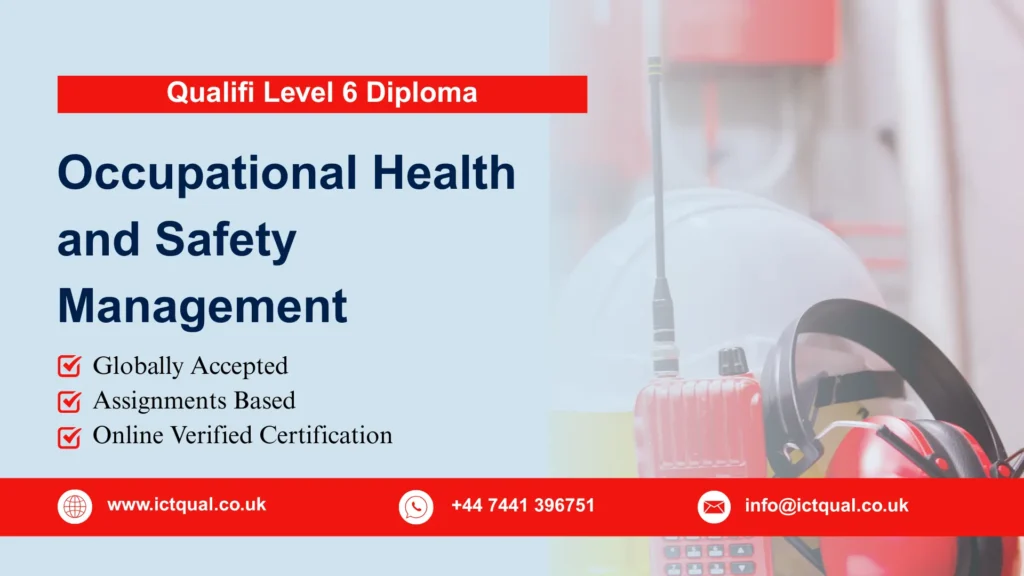
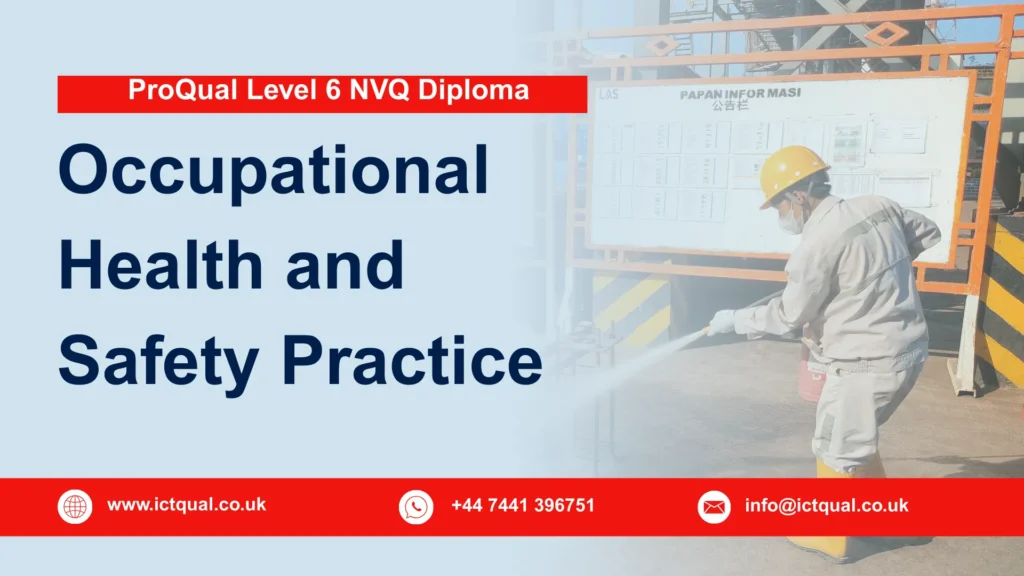
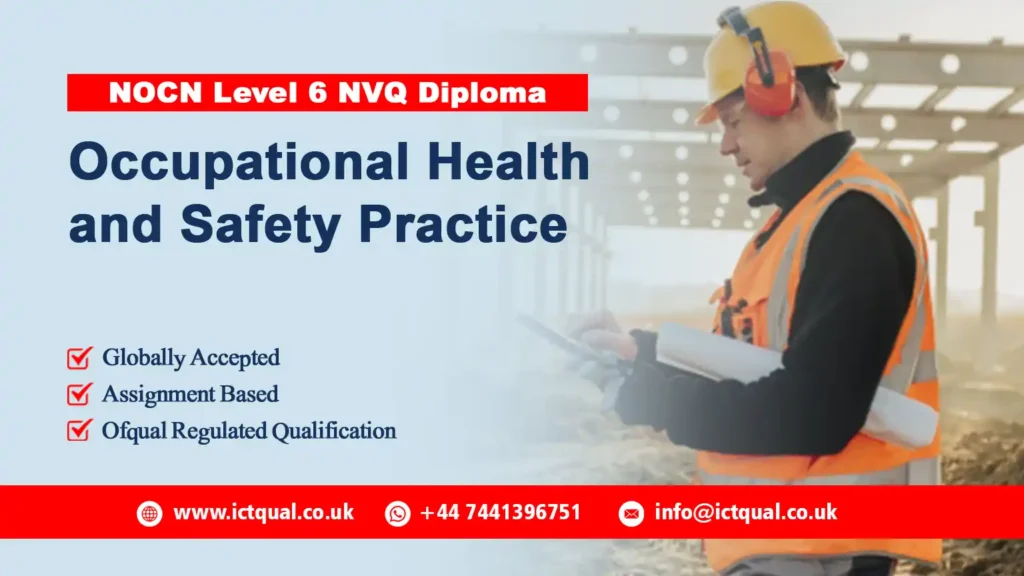
Level 6
Professional Level
Develop advanced competencies in safety management, auditing, regulatory compliance, accident prevention, and strategic health and safety implementation.
Ideal For: Experienced safety practitioners and health and safety managers.
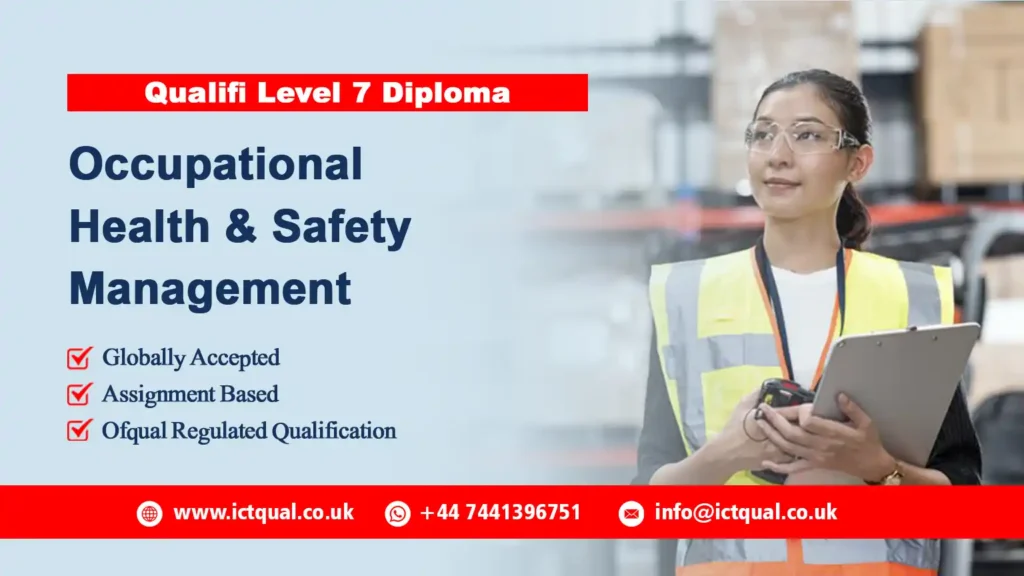
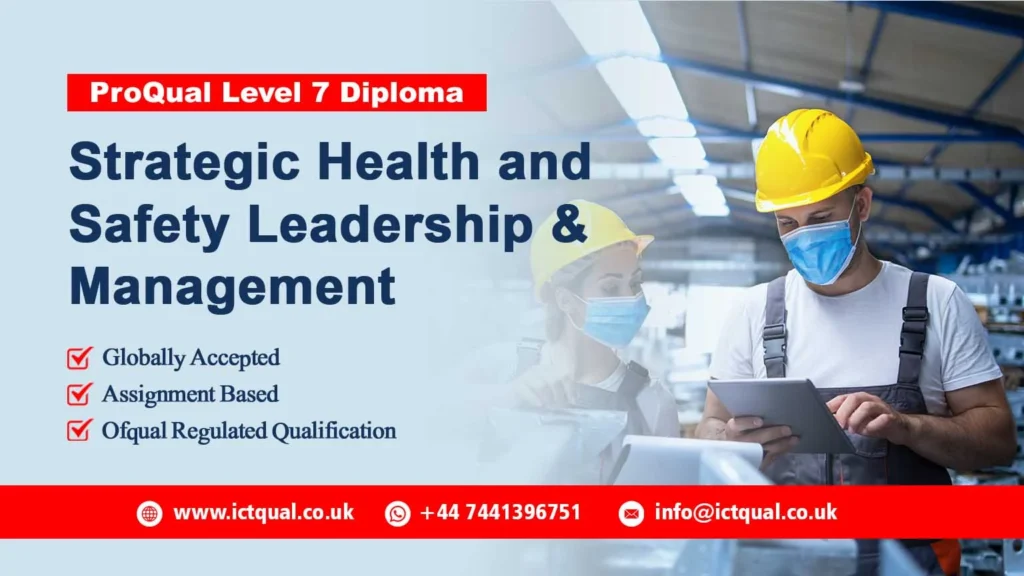
Level 7
Executive Level
Learn to design, implement, and evaluate advanced health and safety management systems while leading organisational safety transformation initiatives.
Ideal For: Senior Safety Managers and Corporate Health & Safety Professionals.
Level 8
Expert Level
Explore advanced research, policy development, strategic risk governance, and innovative approaches to occupational health and safety leadership in complex organisations.
Ideal For: Senior Executives, Consultants, Researchers, and Industry Leaders.
OUR COURSES
Advance Your Career in Health & Safety
Choose from a wide range of Occupational Health & Safety courses designed for professionals at every stage of their career.









Build a Safer Workplace and Advance Your Career
Gain industry-recognised Occupational Health & Safety qualifications designed to develop practical skills, improve workplace safety performance, and prepare professionals for rewarding careers in health and safety management.
Why Choose Occupational Health & Safety Qualifications?
Develop the Skills Employers Value Most
Occupational Health & Safety qualifications are designed to equip professionals with the practical knowledge, technical expertise, and leadership capabilities needed to create safer and more productive workplaces. As organisations across all industries place greater emphasis on workplace safety, compliance, and employee wellbeing, qualified health and safety professionals are increasingly in demand.
These qualifications provide a comprehensive understanding of modern health and safety practices while developing the essential skills employers seek when recruiting safety professionals, supervisors, managers, and organisational leaders.

Risk Assessment
Identify workplace hazards, evaluate risks, and implement effective control measures to prevent accidents, injuries, and operational disruptions.
Incident Investigation
Learn how to analyse workplace incidents, identify root causes, and recommend corrective actions that improve safety performance.
Safety Auditing
Develop the skills to conduct safety audits, workplace inspections, and compliance reviews to ensure effective health and safety management.
Legal Compliance
Gain an understanding of health and safety legislation, industry regulations, and organisational responsibilities to maintain compliance.
Workplace Hazard Control
Master techniques for identifying, controlling, and reducing workplace hazards to create safer and healthier working environments.
Health & Safety Leadership
Build leadership capabilities that help promote a strong safety culture, improve employee engagement, and drive continuous improvement.
Occupational Risk Management
Learn to assess, prioritise, and manage occupational risks using proactive strategies that protect people and business operations.
Emergency Preparedness & Response
Develop the knowledge and skills required to plan for emergencies, manage workplace incidents, and ensure effective response procedures during critical situations.
What Is Occupational Health & Safety?
Understanding the Importance of Workplace Health and Safety
Occupational Health & Safety (OH&S) refers to the policies, procedures, and practices implemented to protect employees, contractors, visitors, and other stakeholders from workplace hazards, injuries, illnesses, and accidents. It focuses on creating safe, healthy, and productive working environments by identifying risks, controlling hazards, and promoting employee wellbeing.
Effective Occupational Health & Safety management is essential for organisations of all sizes and industries, helping to reduce workplace incidents, improve operational efficiency, and ensure compliance with relevant health and safety regulations.

Definition
Occupational Health & Safety is the discipline concerned with preventing work-related injuries, illnesses, and fatalities by identifying workplace hazards, assessing risks, and implementing appropriate control measures to protect people and assets.
Importance
A strong health and safety culture helps organisations minimise accidents, reduce downtime, improve productivity, and protect their reputation. Occupational Health & Safety also contributes to employee wellbeing, operational continuity, and long-term business success.
Legal Responsibilities
Employers have a responsibility to provide a safe working environment, suitable training, safe equipment, and effective risk management processes. Employees also play an important role by following safety procedures, using protective equipment correctly, and reporting hazards or unsafe conditions.
Workplace Benefits
Implementing effective Occupational Health & Safety practices can deliver numerous benefits, including reduced workplace accidents, improved employee morale, increased productivity, lower absenteeism, better regulatory compliance, and enhanced organisational performance.
Employee Protection
Occupational Health & Safety measures are designed to protect workers from physical, chemical, biological, ergonomic, and psychosocial hazards. By reducing exposure to workplace risks, organisations can safeguard employee health, improve wellbeing, and create safer working environments for everyone
Career Opportunities in Occupational Health & Safety
Where Can Occupational Health & Safety Qualifications Take You?
Occupational Health & Safety qualifications can open doors to a wide range of rewarding career opportunities across industries such as construction, manufacturing, oil and gas, engineering, logistics, healthcare, utilities, and infrastructure. As organisations continue to prioritise workplace safety, compliance, and employee wellbeing, qualified health and safety professionals remain in high demand worldwide.
Whether you are beginning your career or advancing into a leadership position, these qualifications can help you develop the expertise needed to succeed in various health and safety roles.
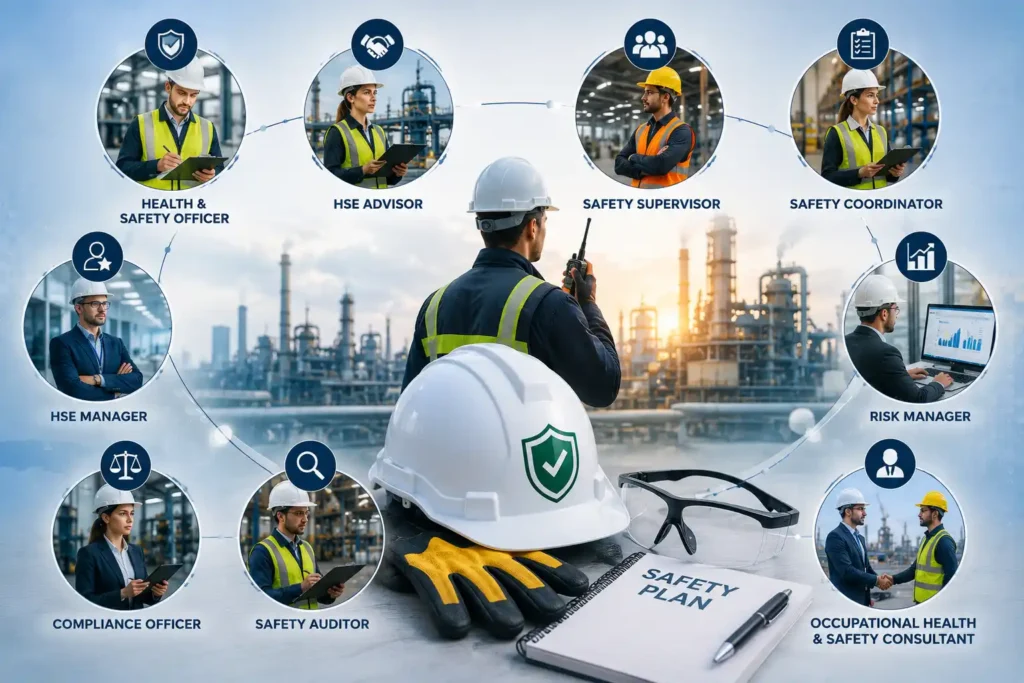
Health & Safety Officer
Monitor workplace safety, conduct inspections, identify hazards, and ensure compliance with health and safety procedures to maintain a safe working environment.
HSE Advisor
Provide expert guidance on health, safety, and environmental matters, helping organisations implement effective safety policies and risk management strategies.
Safety Supervisor
Oversee daily workplace operations, ensure employees follow safety procedures, and support the implementation of health and safety initiatives on-site.
Safety Coordinator
Coordinate safety programmes, training activities, inspections, and incident reporting processes while promoting a strong safety culture within the organisation.
HSE Manager
Lead organisational health, safety, and environmental programmes, manage compliance requirements, and develop strategies to improve overall safety performance.
Risk Manager
Identify, assess, and manage workplace risks to minimise operational disruptions, protect employees, and support business continuity objectives.
Compliance Officer
Ensure the organisation adheres to health and safety regulations, industry standards, and internal policies while maintaining effective compliance systems.
Safety Auditor
Conduct safety audits and compliance assessments, evaluate management systems, and recommend improvements to enhance workplace safety performance.
Occupational Health & Safety Consultant
Advise organisations on workplace safety strategies, risk management solutions, and compliance requirements to improve overall safety performance.
Occupational Health & Safety Trainer
Deliver health and safety training programmes, develop workforce competence, and promote best practices to create safer working environments.
With Occupational Health & Safety qualifications, you can develop the knowledge, practical skills, and leadership capabilities required to pursue diverse career pathways and contribute to safer, healthier, and more productive workplaces across a variety of sectors.
Industries That Require Occupational Health & Safety Professionals
Health and Safety Skills Are Essential Across Every Sector
Occupational Health & Safety professionals play a critical role in protecting employees, ensuring regulatory compliance, and reducing workplace risks across a wide range of industries. As organisations strive to create safer working environments and maintain operational excellence, qualified health and safety professionals are increasingly sought after in both public and private sectors.
Construction
Manage site safety, conduct risk assessments, oversee compliance, and help prevent workplace accidents in one of the world's highest-risk industries.
Oil & Gas
Support safe operations by managing hazards, implementing safety procedures, and ensuring compliance in complex and high-risk environments.
Manufacturing
Promote workplace safety by controlling operational risks, improving safety performance, and reducing incidents within production facilities.
Engineering
Help identify and mitigate workplace hazards while supporting safe project delivery, equipment operation, and technical processes.
Logistics
Ensure the safe movement of goods, manage transportation risks, and implement safety procedures across supply chain operations.
Warehousing
Improve workplace safety through effective hazard control, equipment safety management, and safe storage and handling practices.
Healthcare
Protect healthcare professionals, patients, and visitors by managing workplace risks, infection control measures, and safety compliance.
Energy
Support safe operations within power generation, renewable energy, and utility projects by implementing robust health and safety systems.
Utilities
Maintain safe working environments for employees involved in water, gas, electricity, and infrastructure services.
Aviation
Ensure compliance with strict safety regulations while supporting safe airport operations, maintenance activities, and aviation services.
Mining
Manage high-risk workplace hazards, implement safety controls, and contribute to the protection of workers in demanding mining environments.
Facilities Management
Oversee health and safety practices across commercial, industrial, and public facilities to ensure safe and compliant operations.
Build a Career Across Diverse Industries
Occupational Health & Safety qualifications provide transferable skills that are valued across virtually every sector. Whether you work in construction, healthcare, energy, logistics, or manufacturing, health and safety expertise can help you advance your career while making a meaningful contribution to workplace wellbeing and organisational success.
Benefits of Studying Occupational Health & Safety
Why Professionals Choose Health and Safety Qualifications
Enhanced Career Prospects
Gain valuable knowledge and recognised credentials that can help you progress into more advanced health and safety roles across various industries.
Increased Employability
Develop in-demand skills that employers actively seek, making you a stronger candidate for health and safety, compliance, and risk management positions.
Professional Recognition
Earn industry-recognised qualifications that demonstrate your competence, commitment, and expertise in occupational health and safety.
Higher Earning Potential
Qualified health and safety professionals often benefit from greater career advancement opportunities and improved salary prospects.
Improved Workplace Safety Performance
Learn how to identify hazards, manage risks, and implement effective safety measures that contribute to safer and healthier workplaces.
Leadership Development
Build the leadership and communication skills needed to influence workplace safety culture, manage teams, and drive continuous improvement.
Global Career Opportunities
Occupational Health & Safety skills are valued worldwide, opening opportunities to work across different industries and international markets.
Organisational Compliance & Risk Reduction
Develop expertise in health and safety regulations, auditing, and compliance management to help organisations minimise risks and meet legal requirements.