OTHM Level 6 Diploma in Occupational Health and Safety

(Ofqual-Regulated Qualification)

Start Learning Today

OTHM Level 6 Diploma in Occupational Health and Safety Overview

The OTHM Level 6 Diploma in Occupational Health and Safety is a UK Ofqual-regulated qualification designed to build strong professional knowledge in workplace health and safety. It helps learners understand how to manage risks, improve safety practices, and follow legal requirements in different work environments. This qualification is suitable for people who want to grow their careers in health and safety management roles.

The course covers important topics such as risk assessment, hazard control, incident investigation, and health and safety laws. Learners develop the ability to identify workplace dangers, reduce risks, and apply safe working methods in real situations. It also focuses on how to implement safety systems that protect workers and improve overall workplace performance.

This diploma also helps learners improve leadership, communication, and problem-solving skills. These skills are important for supervising teams, handling safety challenges, and making better decisions in the workplace. The course is useful in industries like construction, engineering, manufacturing, oil and gas, logistics, and healthcare.

Overall, the OTHM Level 6 Diploma supports career growth and further study. It prepares learners for higher-level roles in occupational health and safety and helps them build a strong professional future in safety management.

Prerequisites

Course Entry Requirements

To enroll in the OTHM Level 6 Diploma in Occupational Health and Safety, learners are generally expected to meet the following entry requirements:

  • Age Requirement: Learners should normally be at least 19 years old at the time of enrolment.
  • Educational Requirements: A Level 5 qualification or equivalent in occupational health and safety, management, engineering, or a related field is required or recommended.
  • Experience: Work experience in health and safety, construction, engineering, manufacturing, or related industries is beneficial but not always mandatory.
  • English Language Proficiency: Learners should have a good level of English reading, writing, and communication skills to complete assignments successfully.

Course Content

Advanced modules in occupational health and safety, risk management, and workplace compliance systems

The OTHM Level 6 Diploma in Occupational Health and Safety consists of 7 mandatory units for a combined total of 60 credits, 600 hours Total Qualification Time (TQT), and 220 Guided Learning Hours (GLH) for the completed qualification.

Mandatory Units 

  1. Health and Safety Management Principles and Policy
  2. Health and Safety Management Practice
  3. Risk and Incident Management
  4. Promoting a Positive Health and Safety Culture
  5. Maintaining a Safe Workplace Environment
  6. Health and Safety Law, Regulation and Influence
  7. Development of the Health and Safety Practitioner

Course Features

Duration: 6 to 18 months

Credits: 60

Online Learning

Get in Touch

+44 2035 764371

+44 7441 396751

info@ictqual.co.uk

www.ictqual.co.uk

Learning Outcomes

Practical ability to manage risks, apply safety laws, and improve workplace safety performance.

Learning outcomes for Level 6 Diploma in Occupational Health and Safety Management

Health and Safety Management Principles and Policy

  • Understand the principles of health and safety management and its organisational systems.
  •  Understand the principles of health and safety policy.
  • Be able to conduct a critical review of a health and safety policy in an organisation.
  • Be able to assess internal and external factors that influence health and safety practices.

Health and Safety Management Practice

  • Understand the process of planning and organising occupational health and safety practices in the workplace.
  • Understand the process of leading and controlling health and safety practices in the workplace.
  • Understand the process of reviewing the performance of health and safety practices in the workplace.
  • Understand the process of monitoring and auditing health and safety practices in the workplace.
  • Understand corporate social responsibilities and ethical codes of conduct and their impact on health and safety management.
  • Understand the critical factors in the management of occupational health and wellbeing in the workplace.

Risk and Incident Management

  • Understand the processes and strategies for identifying hazards and evaluating risk levels when carrying out risk assessments in an organisation.
  • Understand the strategies and techniques of risk control.
  • Understand the models of loss causation, analysis of loss data and the importance of incident investigation.
  • Understand processes and strategies to manage health and safety incidents in an organisation.

Promoting a Positive Health and Safety Culture

  • Understand key organisational. factors that influence the health and safety culture in the workplace.
  • Understand key human factors that influence health and safety performance and behaviour in the workplace.
  • Understand the impact of leadership, structure and consultation on the health and safety culture of an organisation.
  • Be able to develop a strategy to improve the health and safety culture of an organisation.

Maintaining a Safe Working Environment

  • Understand the range of factors to consider to maintain a safe work environment.
  • Understand the hazards, risks and controls applicable to a range of workplace contexts.
  • Understand the maintenance of fire safety and protection against explosion.
  • Understand safe storage, handling and management of hazardous substances, including biological agents
  • Understand safe management of work equipment and machinery

Health and Safety Law, Regulation and Influence

  • Understand international frameworks for legislation, regulation and enforcement.
  • Understand statutory and regulatory obligations for maintaining health and safety in an organisation.
  • Understand the industry and community roles in influencing and promoting local and national positive health and safety outcomes.

Development of the Health and Safety Practitioner

  • Understand roles and responsibilities of health and safety practitioners.
  • Be able to assess organisational competence and skills requirements for health and safety practitioners.
  • Be able to produce a personal and professional development plan in own area of responsibility as a health and safety practitioner.

Course Benefits

Enhances skills, career growth, and professional confidence in safety management roles.

Benefits of Occupational Health and Safety

The OTHM Level 6 Diploma in Occupational Health and Safety provides learners with strong professional knowledge and practical skills to manage workplace safety effectively. It supports career growth in health and safety roles across different industries.

  • Improves strong understanding of workplace health and safety principles and practices.
  • Helps learners gain practical skills in risk assessment, hazard control, and safety planning.
  • Supports career growth into supervisory and middle-level health and safety roles.
  • Builds knowledge of health and safety laws, regulations, and workplace compliance.
  • Enhances problem-solving and decision-making skills for safer work environments.
  • Increases job opportunities in construction, engineering, manufacturing, and related industries.
  • Strengthens professional confidence in managing workplace safety tasks and responsibilities.
  • Provides a strong pathway for further study in advanced occupational health and safety qualifications.
  • Helps organizations reduce workplace accidents and improve safety performance.
  • Develops leadership skills needed to support safety teams and workplace systems.

Career Opportunities

Opens pathways to supervisory and mid-level health and safety positions across industries.

The OTHM Level 6 Diploma in Occupational Health and Safety prepares learners for professional roles in workplace safety, risk management, and compliance across different industries.

  • Health and Safety Officer
  • Safety Supervisor
  • Risk Assessment Officer
  • HSE Coordinator
  • Compliance Officer
  • Occupational Health and Safety Advisor
  • Site Safety Officer
  • Safety Inspector
  • Construction Safety Officer
  • Environmental Health and Safety Assistant
  • Safety Consultant (junior level)
  • Workplace Safety Coordinator
  • Industrial Safety Officer
  • Health and Safety Auditor (assistant level)
  • Safety Compliance Assistant

Graduates can work in construction, engineering, manufacturing, oil and gas, logistics, healthcare, and public sector organizations.

Core Skills You Will Develop

Develops risk assessment, incident investigation, compliance, leadership, and safety inspection skills.

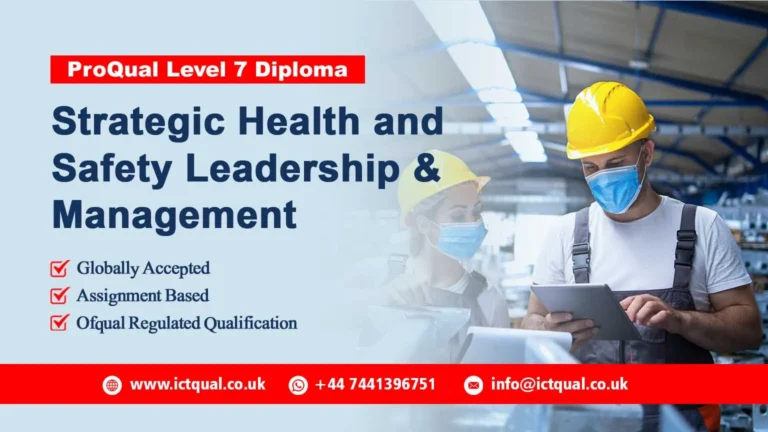
The OTHM Level 6 Diploma in Occupational Health and Safety develops essential professional skills needed to manage workplace safety and support compliance in different industries. It helps learners build strong practical abilities for health and safety roles.

  • Risk assessment and hazard identification in workplace environments.
  • Knowledge of occupational health and safety laws and compliance standards.
  • Incident reporting and basic root cause analysis skills.
  • Workplace safety inspection and auditing techniques.
  • Ability to apply safety control measures and preventive practices.
  • Understanding of health and safety management systems.
  • Problem-solving skills for managing workplace safety issues.
  • Communication skills for reporting safety risks and procedures.
  • Basic leadership skills for supporting safety teams and supervisors.
  • Emergency response and workplace safety planning skills.
  • Data recording and safety documentation skills.
  • Ability to support continuous improvement in workplace safety performance.

FAQs About OTHM Level 6 Diploma in Occupational Health and Safety

The main aim is to build strong knowledge of workplace safety systems, improve risk management skills, and prepare learners for supervisory and professional health and safety roles.

Modern industries require strict safety standards to protect workers and avoid legal issues. This qualification trains professionals to manage risks, follow regulations, and create safe working environments, which is essential in sectors like construction, oil and gas, manufacturing, and logistics.

Risk assessment is a core part because it helps identify hazards before accidents occur. The course trains learners to evaluate risks, apply control measures, and reduce workplace incidents, which is essential for maintaining safe working environments in all industries.

It provides clear understanding of occupational health and safety legislation and regulations. Learners gain the ability to apply legal requirements in real workplaces, ensuring organizations remain compliant and avoid penalties or safety violations.

Industries such as construction, manufacturing, engineering, oil and gas, logistics, and healthcare benefit greatly. These sectors require trained safety professionals to manage risks and ensure compliance with strict safety standards.

For detailed information about course fees, payment options, and enrolment, please feel free to contact our team through our Contact Page: 👉 Contact Us or whatsapp us.

Similar Posts