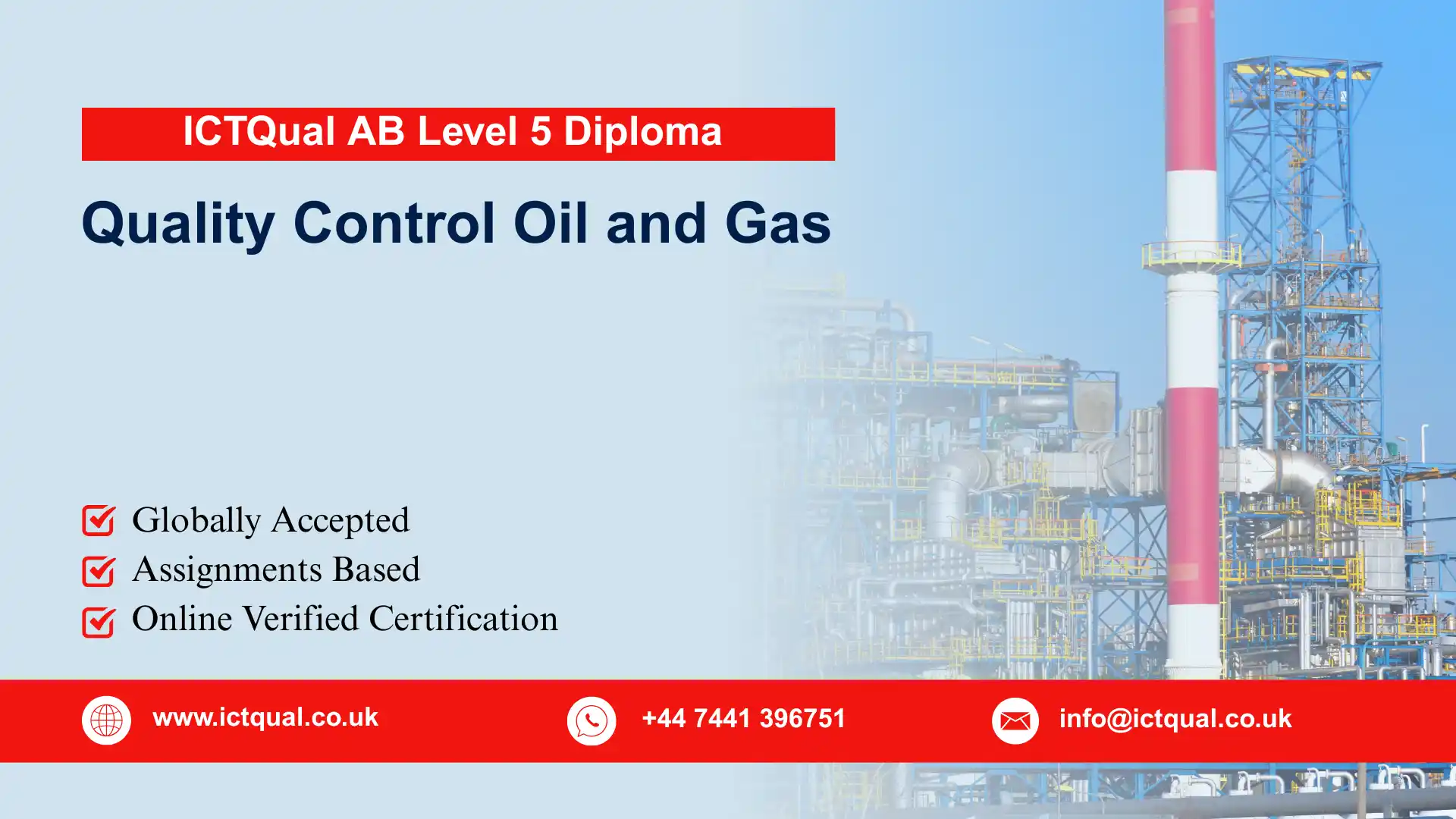
The ICTQual AB Level 5 Diploma in Quality Control – Oil and Gas is an advanced vocational qualification tailored for professionals seeking to take on leadership roles in quality assurance within the highly regulated and safety-critical oil and gas sector. As the industry faces increasing demands for operational efficiency, environmental responsibility, and compliance with international standards, this diploma equips learners with the expertise to implement, manage, and improve quality systems across exploration, drilling, refining, and distribution operations.
This course provides in-depth knowledge of quality control methodologies specific to the oil and gas industry, including non-destructive testing (NDT), inspection techniques, risk assessment, root cause analysis, and auditing processes. Learners will also explore global standards such as ISO 9001, ISO 29001, API specifications, and industry best practices. Through a combination of theoretical learning and practical applications, students will develop the skills necessary to maintain product and process integrity in both upstream and downstream operations.
Ideal for quality professionals, engineers, and technical staff aiming to advance their careers, this diploma prepares graduates to lead quality initiatives, manage compliance audits, and ensure continuous improvement in line with international regulatory expectations. It supports career progression into roles such as Quality Assurance Manager, Compliance Officer, or QHSE (Quality, Health, Safety, and Environment) Supervisor within oil and gas companies, contractors, and service providers globally.
Inspire College of Technologies UK is Directly Approved Training Centre of ICTQual AB
The ICTQual AB Level 5 Diploma in Quality Control – Oil and Gas offers a specialized and comprehensive approach to quality assurance within one of the world’s most complex and safety-sensitive industries. This advanced program is designed to provide learners with the technical expertise and strategic understanding required to oversee and enhance quality systems across various oil and gas operations. From upstream exploration to downstream processing and distribution, the course addresses quality challenges at every stage of the supply chain.
Learners will gain detailed knowledge of critical quality control practices, including inspection and testing methods, non-destructive testing (NDT), material traceability, process audits, defect prevention, and documentation control. The program also emphasizes compliance with industry-specific standards such as ISO 9001, ISO 29001, API Q1/Q2, and international regulatory frameworks. Practical components and case studies ensure that participants can apply best practices in real-world scenarios, ensuring operational excellence and risk mitigation.
Graduates of this diploma will be well-equipped to take on leadership roles in quality management, HSE compliance, and supplier evaluation within the oil and gas sector. The course prepares professionals for positions such as Quality Assurance Manager, QHSE Coordinator, Compliance Auditor, or Inspection Supervisor. It also serves as a pathway for continued professional development, including specialized certifications and higher-level qualifications in quality, safety, and operational management in energy industries.
This qualification, the ICTQual AB Level 5 Diploma in Quality Control Oil and Gas, consists of 10 mandatory units.
Mandatory Units
| Sr# | Unit Title | Level |
|---|---|---|
| 1 | Strategic Quality Management in Oil and Gas Projects | 5 |
| 2 | Advanced NDT and Inspection Procedures | 5 |
| 3 | International Codes, Standards, and Specifications (ASME, API, ISO) | 5 |
| 4 | Quality Risk Assessment and Control Planning | 5 |
| 5 | Auditing Techniques for Oil and Gas Quality Systems | 5 |
| 6 | Pipeline Construction Quality and Integrity Testing | 5 |
| 7 | Supply Chain Quality Control and Vendor Surveillance | 5 |
| 8 | Root Cause Analysis and Continuous Improvement Techniques | 5 |
| 9 | Leadership and Supervision in Quality Assurance Teams | 5 |
| 10 | Technical Reporting and Quality Performance Analysis | 5 |
The ICTQual AB Level 5 Diploma in Quality Control – Oil and Gas is designed for experienced professionals and technical personnel aiming to enhance their expertise and advance into leadership roles within the oil and gas industry’s quality management framework. This diploma is ideal for those who are already familiar with industrial operations and want to deepen their understanding of quality assurance systems, international standards, and regulatory compliance specific to the energy sector.
This course is particularly suitable for:
- Quality control inspectors and technicians in the oil and gas sector seeking formal recognition of their expertise and a pathway to more senior roles.
- Quality assurance professionals aiming to advance into supervisory or managerial positions and take on responsibilities such as system implementation, audits, and compliance oversight.
- Engineers, project managers, and operations personnel who want to integrate quality practices into exploration, drilling, refining, and pipeline management activities.
- HSE (Health, Safety, and Environment) officers or QHSE coordinators looking to specialize further in the quality aspects of safety and compliance programs.
- Consultants and auditors working in or with oil and gas companies who need advanced knowledge of ISO 9001, ISO 29001, and API standards.
- Professionals with a Level 3 or equivalent qualification in quality control, engineering, or oil and gas operations who are ready to progress to a higher level of responsibility.
- Contractors and suppliers to oil and gas companies who must adhere to strict quality assurance and inspection protocols across project lifecycles.
Whether you are involved in upstream, midstream, or downstream operations, this course provides the advanced skills and industry-specific insight needed to contribute to quality excellence, risk control, and regulatory compliance across the global oil and gas supply chain.
Here are the learning outcomes for each study unit:
Strategic Quality Management in Oil and Gas Projects
- Understand the principles of strategic quality management within oil and gas operations
- Develop quality strategies aligned with project objectives and regulatory requirements
- Evaluate the impact of quality planning on project performance and operational efficiency
Advanced NDT and Inspection Procedures
- Apply advanced non-destructive testing methods in various oil and gas applications
- Interpret NDT results to identify material flaws, structural issues, and equipment failures
- Select appropriate inspection techniques based on operational and environmental conditions
International Codes, Standards, and Specifications (ASME, API, ISO)
- Interpret and apply global standards relevant to oil and gas quality control
- Understand the implications of ASME, API, and ISO regulations on project compliance
- Ensure processes and materials meet international quality and safety benchmarks
Quality Risk Assessment and Control Planning
- Conduct risk assessments for quality failures in oil and gas systems
- Develop and implement effective quality control plans to mitigate risks
- Monitor and revise quality strategies based on risk evaluations and outcomes
Auditing Techniques for Oil and Gas Quality Systems
- Perform internal and external audits in accordance with industry best practices
- Identify non-conformities and recommend corrective actions
- Prepare structured audit reports for continuous quality assurance
Pipeline Construction Quality and Integrity Testing
- Apply quality control principles during pipeline construction phases
- Conduct integrity tests to assess pipeline reliability and safety
- Document inspection and testing results in compliance with regulatory guidelines
Supply Chain Quality Control and Vendor Surveillance
- Evaluate supplier quality performance and compliance with specifications
- Implement quality surveillance protocols for materials and equipment
- Collaborate with vendors to ensure consistent delivery of quality products
Root Cause Analysis and Continuous Improvement Techniques
- Identify underlying causes of quality failures and performance gaps
- Apply structured problem-solving tools to support continuous improvement
- Develop and implement corrective and preventive action plans
Leadership and Supervision in Quality Assurance Teams
- Demonstrate effective leadership in managing QA/QC teams
- Enhance communication and decision-making within quality control environments
- Motivate teams towards shared quality objectives and performance excellence
Technical Reporting and Quality Performance Analysis
- Produce clear, concise, and data-driven technical quality reports
- Analyse trends and metrics to evaluate quality performance
- Use reporting insights to guide future quality planning and improvements