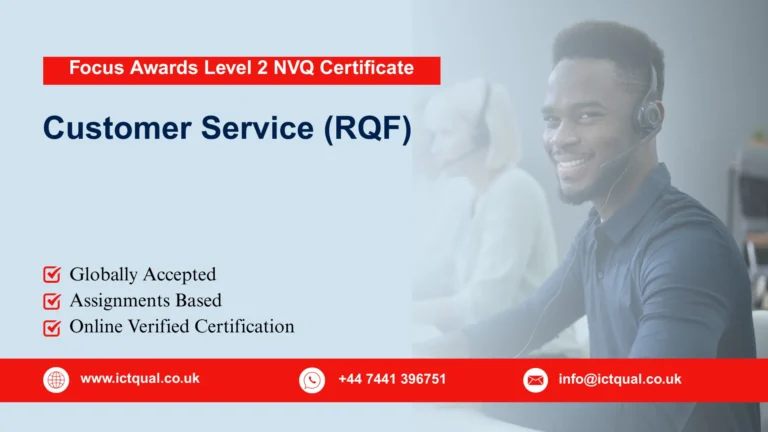
Focus Awards Entry Level Certificate for Introduction to Customer Service (Entry 3) (RQF)
Start Learning Today
Focus Awards Entry Level Certificate for Introduction to Customer Service (Entry 3) (RQF) Overview
The Focus Awards Entry Level Certificate for Introduction to Customer Service (Entry 3) (RQF) is a simple and supportive qualification designed for individuals who are new to customer service and want to build basic skills and confidence in working with people. It is ideal for learners who may not have previous experience and are looking for a friendly starting point to understand how customer service works in real-life situations.
This course introduces the core ideas of good customer service, helping learners understand what customers expect and how to respond in a helpful and polite way. It focuses on everyday communication skills, listening carefully, and learning how to deal with simple customer needs in a positive manner.
The qualification is designed in a practical and easy-to-follow way, making it suitable for learners who may need additional support in developing workplace skills. It also helps build confidence in speaking with customers, working as part of a team, and following basic instructions in a service environment.
Throughout the course, learners explore simple topics such as customer awareness, teamwork, communication, and basic problem-solving. These foundational skills are useful in many entry-level roles across retail, hospitality, and other customer-facing environments.
By the end of the qualification, learners will feel more prepared to take their first steps into customer service roles and further training opportunities.
Prerequisites
Course Entry Requirements
These clear entry requirements ensure the programme is well-suited to working professionals with relevant knowledge, experience, or academic backgrounds.
- Age Requirement: Learners are usually 14 years or older when starting this entry-level qualification.
- Educational Requirements: No formal qualifications are needed, as this course is designed for beginners.
- Experience: No previous work experience in customer service is required.
- English Language Proficiency: A basic understanding of English is helpful for simple communication and learning activities.
Course Content
Step-by-step modules for clear understanding
The Focus Awards Entry Level Certificate for Introduction to Customer Service (Entry 3) (RQF) qualification, learners must complete the two mandatory units achieving 4 credits and a minimum of 9 credits from the optional units.
Mandatory Units
- Legislation, Regulation and Procedures to Follow in Customer Service
- Introduction to Customer Service
Optional Units
- The Importance of Appearance and Behaviour in Customer Service
- Understand How to Deal with Queries and Requests
- Communicate Customers’ Problems with Others
- The Customer Service Job Role
- Handling Telephone Calls from Customers
- Communicate Effectively with Customers
- Effective Relationships with Customers and Colleagues
- Working in a Customer Focused Way
- Create a Good Impression to Customers
- Apply Legislation, Regulation and Organisational Procedures for Customer Service
- Deal with Queries and Requests
- Record and Communicate Customer Problems
- Working in Customer Service
- Contribute to Sales Activities in a Contact Centre
- Answer Telephone Calls from Customers
- Positive Communication with Customers
- Contribute to Effective Customer Service
- The Customer Service Experience
- Work in a Customer-Friendly Way
- Understanding the Principles and Practices of Internally Assuring the Quality of Assessment
- Internally Assure the Quality of Assessment
Course Features
Modules: 2
Credit: 13
Online Learning
Get in Touch
+44 2035 764371
+44 7441 396751
info@ictqual.co.uk
www.ictqual.co.uk
Follow Us
Learning Outcomes
Build confidence through practical knowledge
Legislation, Regulation and Procedures to Follow in Customer Service
By the end of this module, learners will be able to:
- Understand key legislation, regulations, and organisational procedures relevant to customer service.
- Apply legal and regulatory requirements in customer interactions.
- Ensure compliance with organisational policies and industry standards.
- Identify the impact of non-compliance on customers and organisations.
- Maintain ethical and professional service delivery at all times.
Introduction to Customer Service
By the end of this module, learners will be able to:
- Understand the purpose and principles of customer service.
- Identify different types of customers and their expectations.
- Recognise the role of customer service in organisational success.
- Demonstrate awareness of quality service standards.
- Apply basic customer service skills in workplace situations.
The Importance of Appearance and Behaviour in Customer Service
By the end of this module, learners will be able to:
- Understand the impact of personal appearance on customer perception.
- Demonstrate professional behaviour in customer service settings.
- Maintain a positive and customer-focused attitude.
- Adapt behaviour to meet organisational expectations.
- Create a positive impression on customers.
Understand How to Deal with Queries and Requests
By the end of this module, learners will be able to:
- Identify different types of customer queries and requests.
- Respond appropriately using correct procedures.
- Use questioning and listening techniques effectively.
- Provide accurate and timely information to customers.
- Escalate issues when necessary.
Communicate Customers’ Problems with Others
By the end of this module, learners will be able to:
- Record customer problems accurately and clearly.
- Communicate issues to relevant colleagues or departments.
- Follow organisational reporting procedures.
- Ensure confidentiality and data protection.
- Support timely resolution of customer problems.
The Customer Service Job Role
By the end of this module, learners will be able to:
- Understand roles and responsibilities within customer service jobs.
- Identify key skills required for customer service roles.
- Demonstrate awareness of workplace expectations.
- Work effectively within a customer service team.
- Contribute to organisational service goals.
Handling Telephone Calls from Customers
By the end of this module, learners will be able to:
- Handle incoming telephone calls professionally.
- Identify customer needs through effective questioning.
- Provide accurate information and solutions.
- Record call details appropriately.
- Maintain a positive telephone customer experience.
Communicate Effectively with Customers
By the end of this module, learners will be able to:
- Use clear and appropriate communication with customers.
- Adapt communication style to different customer needs.
- Apply active listening techniques.
- Resolve misunderstandings effectively.
- Maintain professionalism in all interactions.
Effective Relationships with Customers and Colleagues
By the end of this module, learners will be able to:
- Build positive relationships with customers and colleagues.
- Demonstrate teamwork and cooperation in the workplace.
- Maintain trust and professionalism in interactions.
- Handle conflicts appropriately.
- Support a positive working environment.
Working in a Customer Focused Way
By the end of this module, learners will be able to:
- Prioritise customer needs in daily work activities.
- Deliver consistent customer-focused service.
- Identify opportunities to improve customer experience.
- Work efficiently while maintaining service quality.
- Contribute to organisational customer service goals.
Create a Good Impression to Customers
By the end of this module, learners will be able to:
- Demonstrate professional behaviour in customer interactions.
- Communicate in a polite, clear, and confident manner.
- Maintain positive body language and attitude.
- Represent the organisation effectively.
- Build trust and confidence with customers.
Apply Legislation, Regulation and Organisational Procedures for Customer Service
By the end of this module, learners will be able to:
- Apply relevant legislation and organisational procedures in practice.
- Ensure compliance in customer service delivery.
- Follow ethical and legal standards consistently.
- Identify risks associated with non-compliance.
- Maintain professional accountability.
Deal with Queries and Requests
By the end of this module, learners will be able to:
- Respond to customer queries and requests efficiently.
- Use appropriate communication methods.
- Identify customer needs accurately.
- Provide solutions or escalate appropriately.
- Ensure customer satisfaction in responses.
Record and Communicate Customer Problems
By the end of this module, learners will be able to:
- Accurately document customer issues and complaints.
- Communicate problems to relevant departments.
- Use organisational systems for recording information.
- Maintain confidentiality and accuracy.
- Support problem resolution processes.
Working in Customer Service
By the end of this module, learners will be able to:
- Understand the structure and expectations of customer service roles.
- Apply workplace standards and procedures effectively.
- Demonstrate professionalism in service delivery.
- Work effectively as part of a customer service team.
- Contribute to organisational service objectives.
Contribute to Sales Activities in a Contact Centre
By the end of this module, learners will be able to:
- Identify sales opportunities during customer interactions.
- Promote products and services effectively.
- Use ethical selling techniques.
- Achieve organisational sales targets.
- Maintain customer satisfaction during sales processes.
Answer Telephone Calls from Customers
By the end of this module, learners will be able to:
- Answer calls professionally and efficiently.
- Identify customer needs quickly and accurately.
- Provide appropriate information and support.
- Record call details correctly.
- Maintain a positive customer experience.
Positive Communication with Customers
By the end of this module, learners will be able to:
- Use positive language and tone in all interactions.
- Build rapport with customers effectively.
- Handle difficult conversations professionally.
- Encourage customer trust and satisfaction.
- Maintain professionalism in communication.
Contribute to Effective Customer Service
By the end of this module, learners will be able to:
- Support delivery of high-quality customer service.
- Identify ways to improve service performance.
- Work collaboratively with colleagues.
- Follow organisational service standards.
- Contribute to customer satisfaction and retention.
The Customer Service Experience
By the end of this module, learners will be able to:
- Understand the full customer journey and experience.
- Identify key touchpoints in service delivery.
- Evaluate factors affecting customer satisfaction.
- Enhance customer experience through effective service.
- Apply improvements to service processes.
Work in a Customer-Friendly Way
By the end of this module, learners will be able to:
- Demonstrate friendly and approachable behaviour.
- Prioritise customer needs in all tasks.
- Maintain professionalism under pressure.
- Create a welcoming service environment.
- Support positive customer experiences.
Understanding the Principles and Practices of Internally Assuring the Quality of Assessment
By the end of this module, learners will be able to:
- Understand the principles of internal quality assurance (IQA).
- Evaluate assessment practices for validity, reliability, and fairness.
- Monitor assessment processes within organisational standards.
- Support consistency and quality in assessment decisions.
- Understand roles and responsibilities of internal quality assurers.
Internally Assure the Quality of Assessment
By the end of this module, learners will be able to:
- Plan and carry out internal quality assurance activities.
- Monitor and evaluate assessment decisions effectively.
- Provide feedback to assessors to improve practice.
- Ensure compliance with awarding organisation requirements.
- Contribute to continuous improvement in assessment quality.
Course Benefits
Improve your professional growth and confidence
Benefits of Customer Service (RQF)
This course is a great first step for anyone who wants to understand customer service in a simple and supportive way. It helps you build confidence in dealing with people and prepares you for entry-level roles where communication and basic workplace skills matter.
Core Skills You Will Develop
Strengthen your problem-solving abilities
This course helps you build simple but important skills that are useful when starting out in customer service or any job that involves working with people. It focuses on everyday abilities that make you more confident and comfortable in basic workplace situations.
Career Opportunities
Open doors to multiple industry roles
This qualification is a great starting point for anyone looking to take their first step into the world of work, especially in customer-facing environments. It helps you build the basic confidence and understanding needed to begin working in simple service roles where communication and teamwork matter. It is especially useful if you are new to employment and want to explore entry-level opportunities in retail, hospitality, or other service-based industries.
With experience, you can move into more skilled customer service or retail roles.
It also gives you a strong foundation to continue learning and progress to higher-level qualifications in customer service and related fields.