ProQual Level 5 Diploma in Fire Engineering Design8 Sections21 Lessons21 Quizzes60 Weeks
Lesson No : 3 Determine the mass flow of smoke and temperature in smoke layers.
In fire engineering, it is not sufficient to only understand the general behavior of smoke; it is equally important to measure and quantify its properties in order to make accurate design decisions. Engineers must determine how much smoke is generated during a fire and how its temperature evolves within a space. These parameters—mass flow of smoke and temperature of the smoke layer—are essential because they directly affect visibility, toxicity levels, heat exposure, and the overall performance of smoke control and ventilation systems.
As a fire progresses, hot gases rise due to buoyancy and accumulate beneath the ceiling, forming a distinct smoke layer. The development of this layer is dynamic, with its depth, temperature, and rate of spread changing over time. These characteristics influence how quickly conditions inside a building become hazardous for occupants and responders. By accurately calculating the mass flow of smoke and the temperature within the smoke layer, engineers can assess the rate of smoke accumulation, estimate available safe evacuation time, and design effective smoke management systems. This lesson explores the fundamental principles, influencing factors, and practical methods used to evaluate these critical parameters, providing a solid foundation for advanced fire safety design and analysis.
1.Determine the Mass Flow of Smoke Within a Smoke Layer
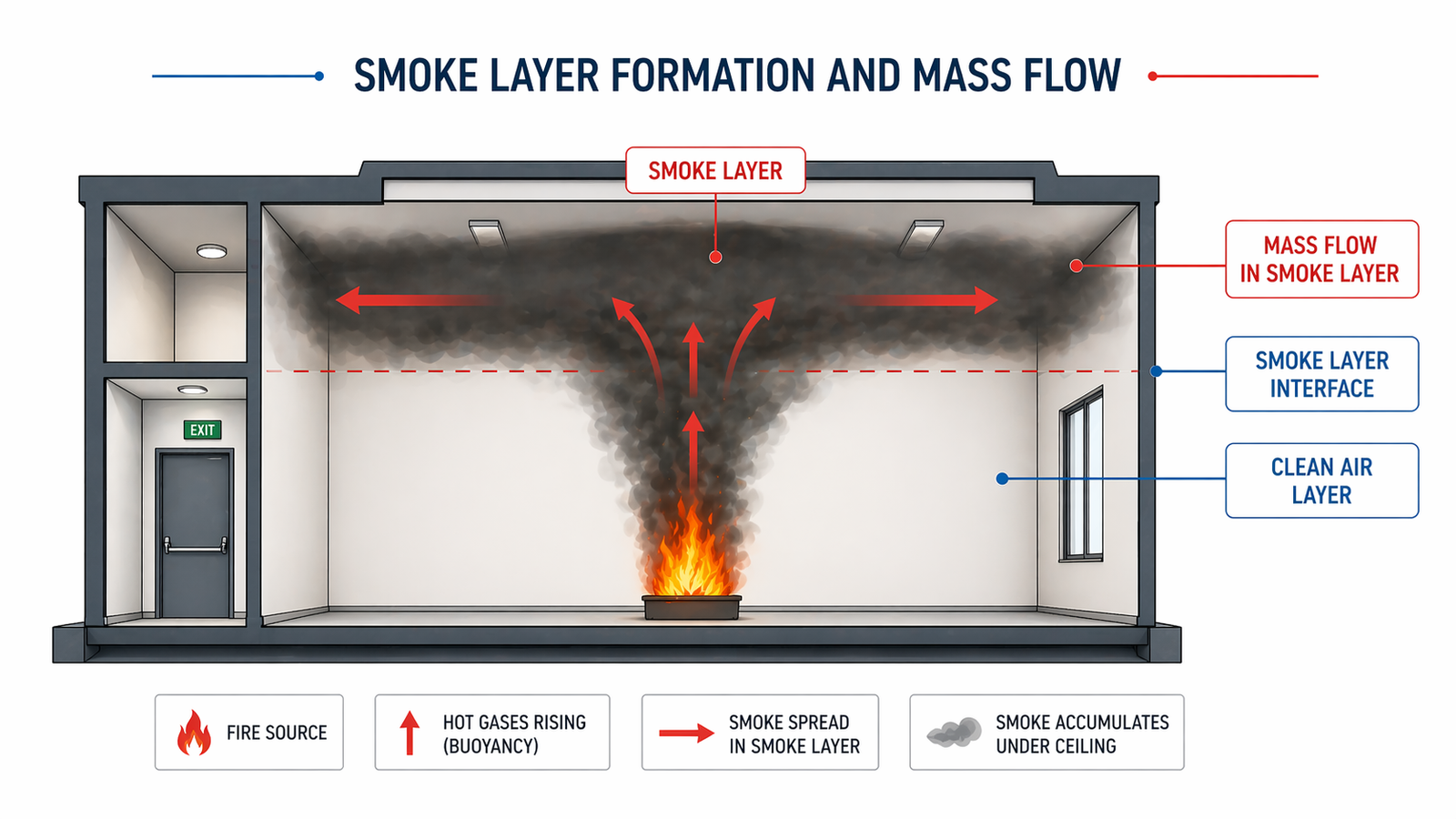
The determination of smoke mass flow within a smoke layer is a fundamental aspect of fire engineering analysis. During a fire, the rate at which smoke is generated and transported through a space directly affects how quickly hazardous conditions develop. Engineers must be able to quantify this flow in order to design effective smoke control systems, ensure safe evacuation, and maintain compliance with fire safety regulations.
Smoke mass flow is not a fixed value; it varies depending on fire characteristics, environmental conditions, and building configuration. A clear understanding of how smoke is produced, how it moves, and how it accumulates allows engineers to predict fire behavior more accurately. This section explains the concept of mass flow, the factors influencing it, and the methods used to determine it in practical fire engineering applications.
Understanding Mass Flow of Smoke
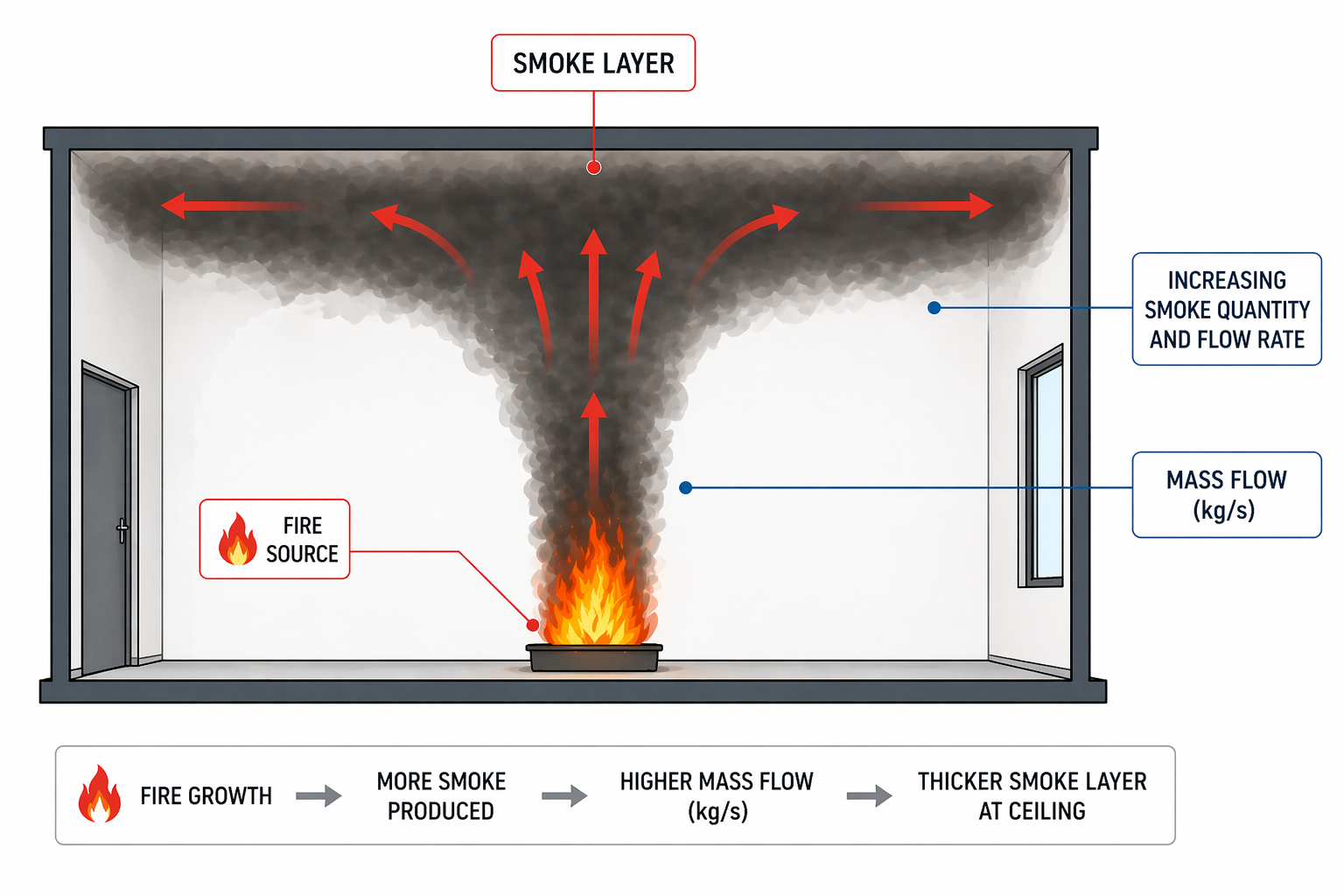
Mass flow of smoke refers to the rate at which smoke is generated and transported within a space during a fire. It is typically expressed in kilograms per second (kg/s) and represents the total mass of gases moving within the smoke layer.
- Indicates quantity of smoke produced
- Influences smoke layer thickness
- Affects visibility and toxicity
- Critical for ventilation design
In real fire scenarios, the rate of smoke production increases as the fire grows. This leads to a rapid buildup of smoke in enclosed spaces, reducing visibility and increasing the concentration of toxic gases. The thickness of the smoke layer is directly influenced by the mass flow rate, as higher flow rates result in faster accumulation near the ceiling.
From a design perspective, understanding mass flow is essential for sizing smoke extraction systems. If the system is not capable of handling the expected mass flow, smoke will accumulate faster than it can be removed, creating unsafe conditions. Therefore, accurate estimation of smoke mass flow is a critical step in fire safety design.
Factors Affecting Smoke Mass Flow
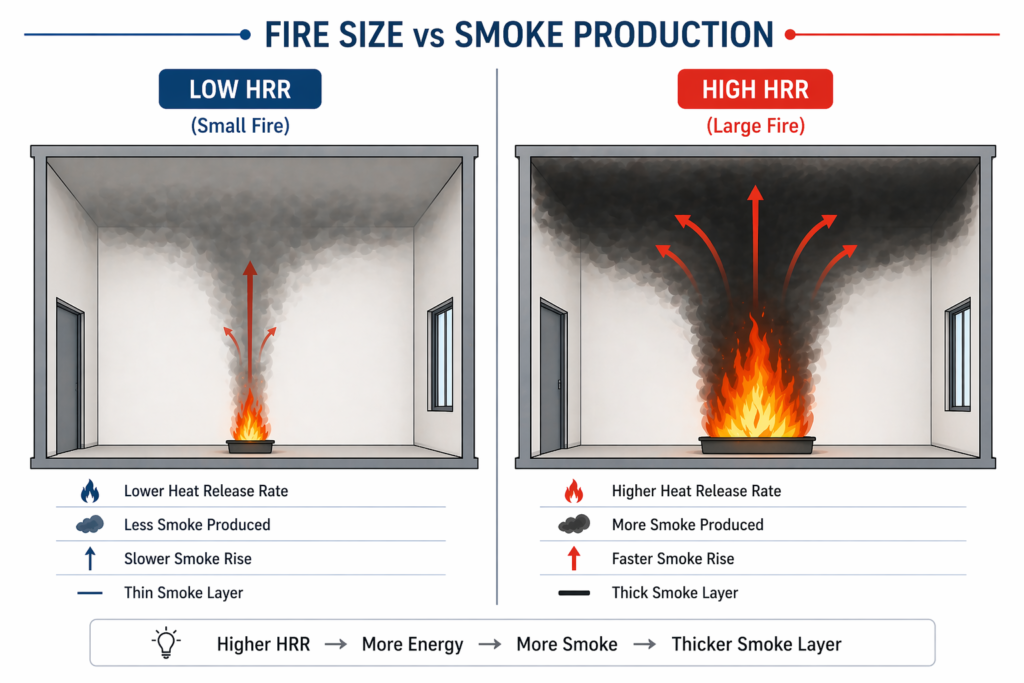
Fire Size (Heat Release Rate)
The size of the fire, commonly expressed as heat release rate (HRR), is the most significant factor influencing smoke mass flow. It represents the rate at which energy is released during combustion.
- Larger fires produce more smoke
- Directly proportional to smoke generation
- Measured in kilowatts (kW)
As the heat release rate increases, the amount of smoke generated also increases. This is because more fuel is being consumed, producing a greater volume of combustion products. Additionally, higher heat output creates stronger buoyant forces, causing smoke to rise more rapidly.
In practical applications, engineers use HRR values to estimate smoke production rates and design systems capable of handling peak fire conditions. Accurate estimation of fire size is therefore essential for determining mass flow.
Fuel Type
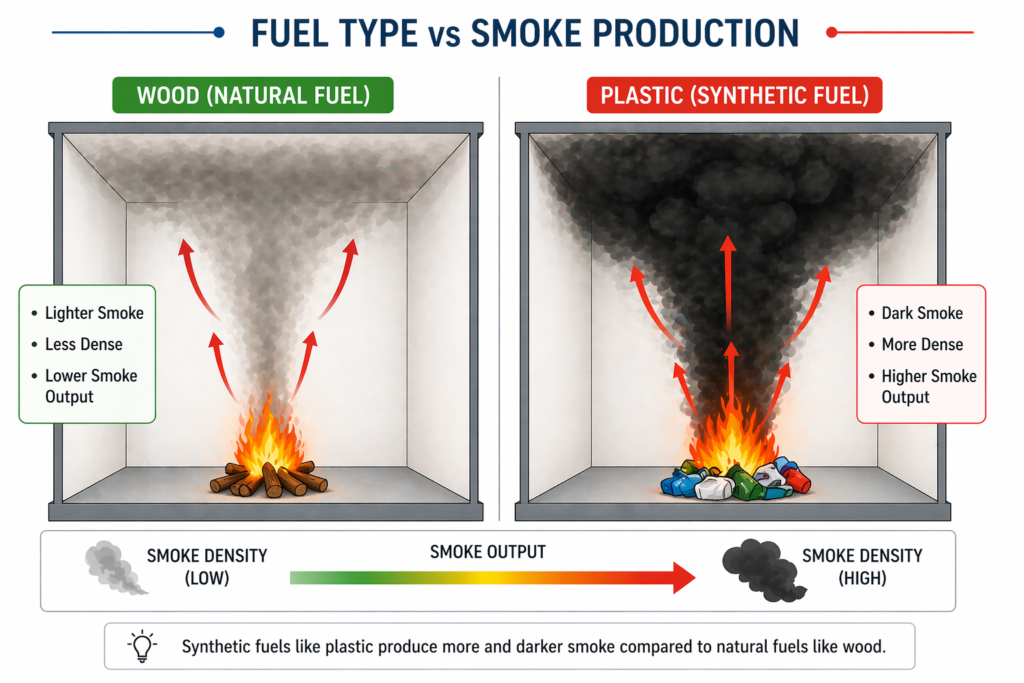
The type of material involved in a fire has a significant impact on smoke production. Different fuels produce varying amounts of smoke and combustion by-products.
- Synthetic materials produce dense smoke
- Natural materials produce less toxic smoke
- Smoke yield varies with combustion efficiency
Synthetic materials such as plastics tend to produce thick, dark smoke with high toxicity, while natural materials like wood generally produce less dense smoke. The efficiency of combustion also plays a role; incomplete combustion results in higher smoke production.
Understanding the characteristics of different fuels allows engineers to estimate smoke yield and adjust system design accordingly. This is particularly important in buildings where specific materials are commonly used.
Ventilation Conditions
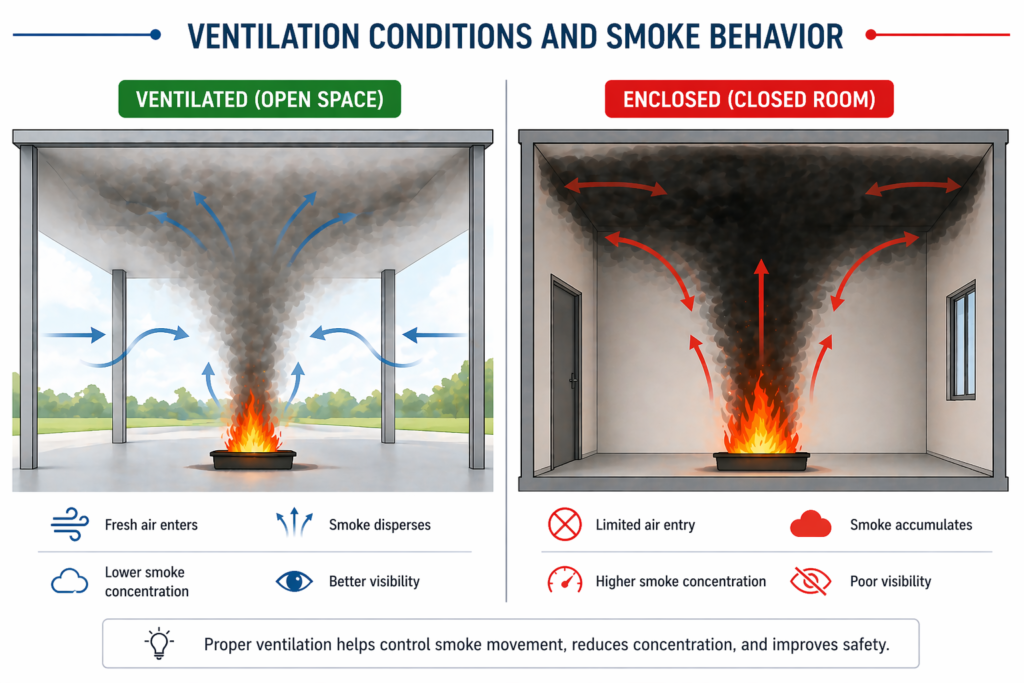
Ventilation plays a key role in determining how smoke is distributed within a space. It can either dilute smoke or allow it to accumulate.
- Open spaces allow smoke dispersion
- Enclosed spaces increase smoke accumulation
- Mechanical ventilation affects flow rate
In well-ventilated spaces, smoke can disperse more easily, reducing its concentration. In contrast, enclosed spaces with limited ventilation can experience rapid smoke buildup. Mechanical ventilation systems can either enhance smoke removal or, if poorly designed, contribute to its spread.
Engineers must consider ventilation conditions when calculating mass flow, as they influence both the quantity and movement of smoke within a building.
Compartment Geometry
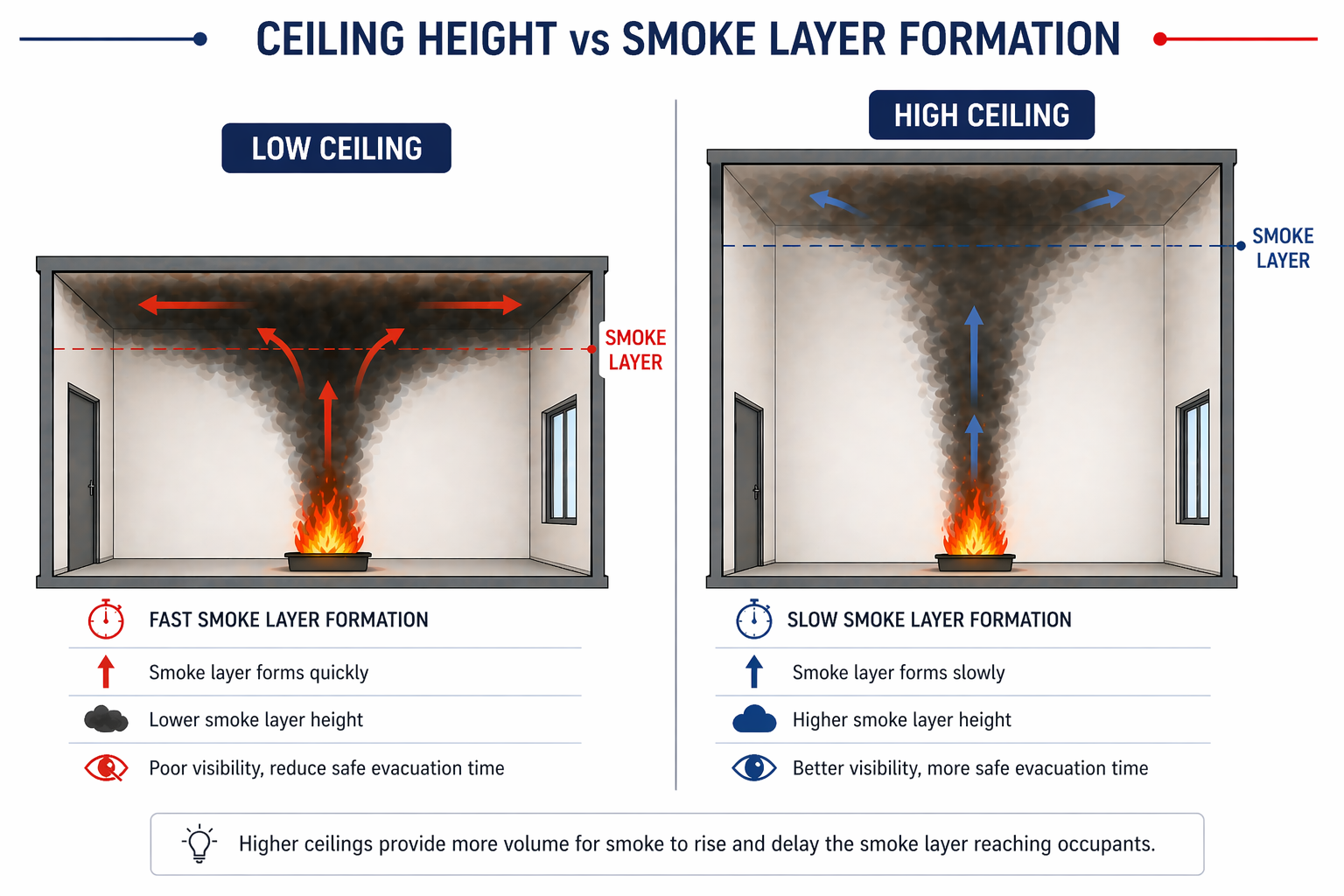
The geometry of a space, including its size and shape, has a significant influence on smoke behavior.
- Ceiling height influences smoke layer formation
- Larger volumes delay smoke accumulation
- Openings affect smoke movement
In spaces with high ceilings, smoke takes longer to accumulate to hazardous levels, providing more time for evacuation. Larger volumes also dilute smoke, reducing its concentration. However, openings such as doors and windows can create pathways for smoke movement, affecting its distribution.
The design of compartments must therefore be carefully considered to ensure that smoke behavior is predictable and manageable.
Basic Principle of Smoke Mass Flow
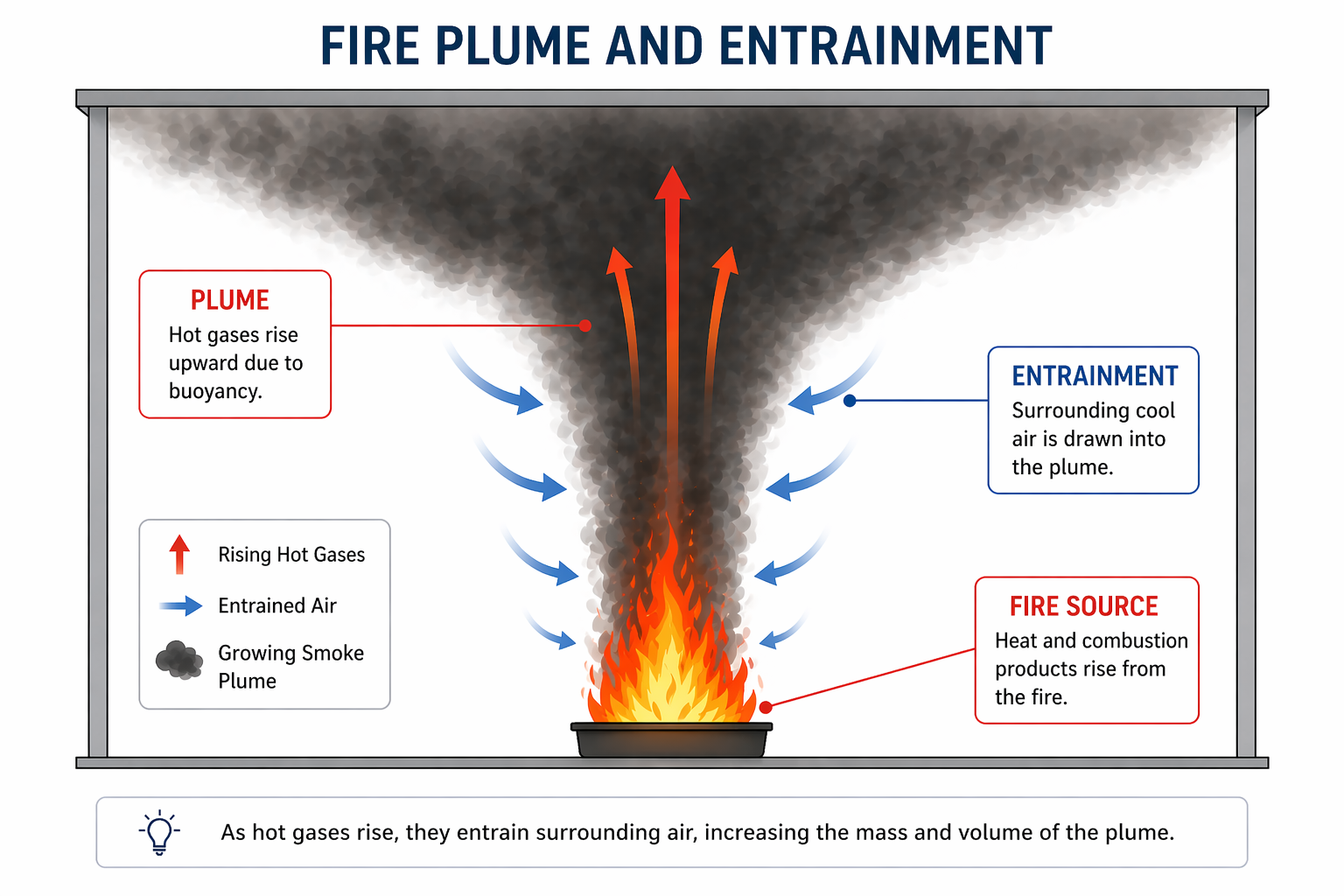
The mass flow of smoke is primarily governed by buoyancy and plume dynamics. These physical processes determine how smoke rises and spreads within a space.
- Hot gases rise due to density differences
- Entrainment of air increases smoke volume
- Smoke plume grows as it rises
When a fire occurs, the hot gases produced are less dense than the surrounding air, causing them to rise. As the smoke plume moves upward, it entrains surrounding air, increasing its volume and mass. This process continues as the plume rises, resulting in a larger and more complex smoke layer.
Understanding these principles is essential for predicting smoke behavior and designing effective control systems. Engineers must account for entrainment and plume growth when calculating mass flow, as these factors significantly increase the total volume of smoke.
Methods to Determine Mass Flow
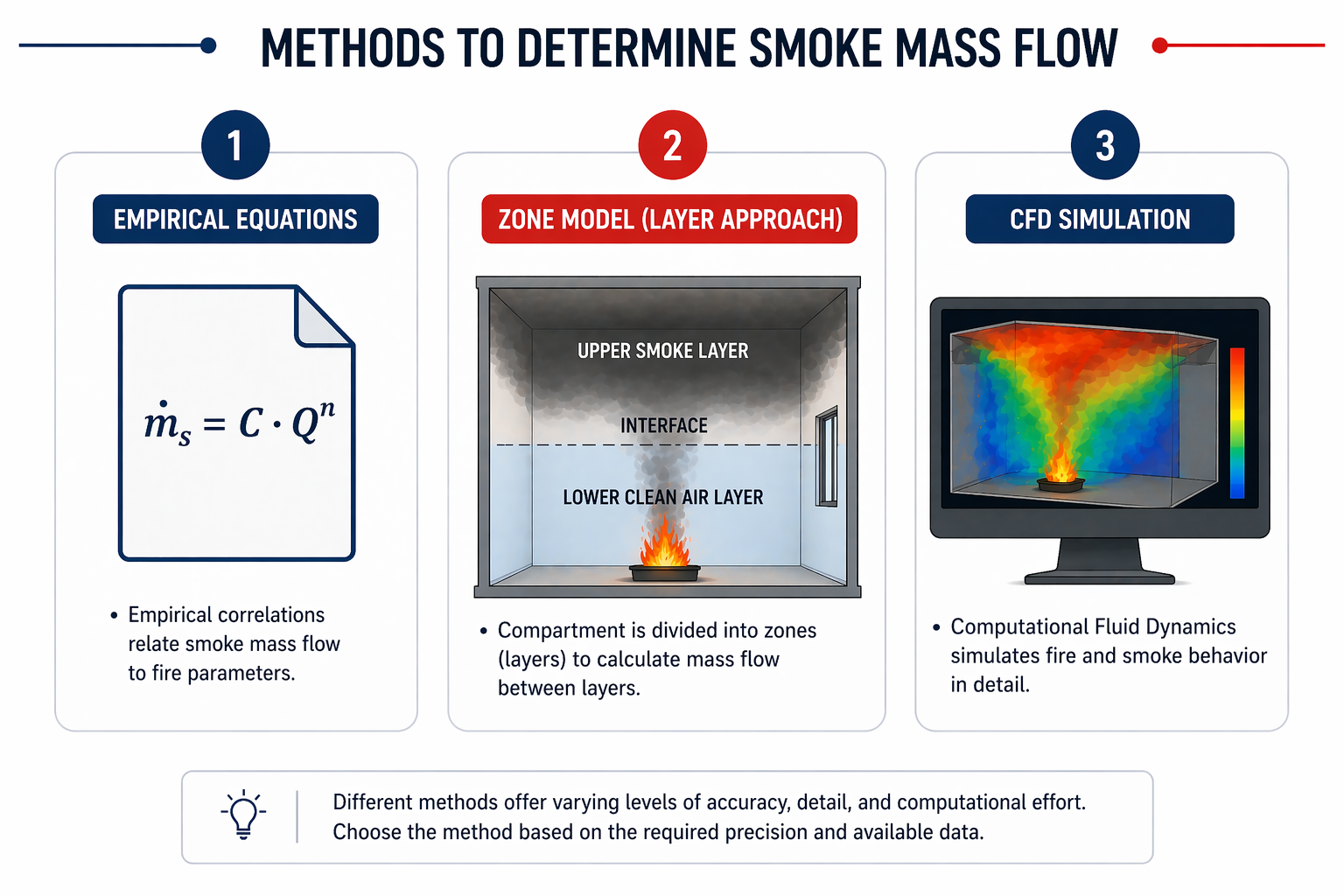
Empirical Correlations
Empirical correlations are widely used in fire engineering to estimate smoke mass flow based on experimental data.
- Based on fire plume equations
- Depend on height above fire source
- Provide quick estimations
These formulas are derived from controlled experiments and provide a practical way to estimate mass flow without complex calculations. They are particularly useful in early design stages.
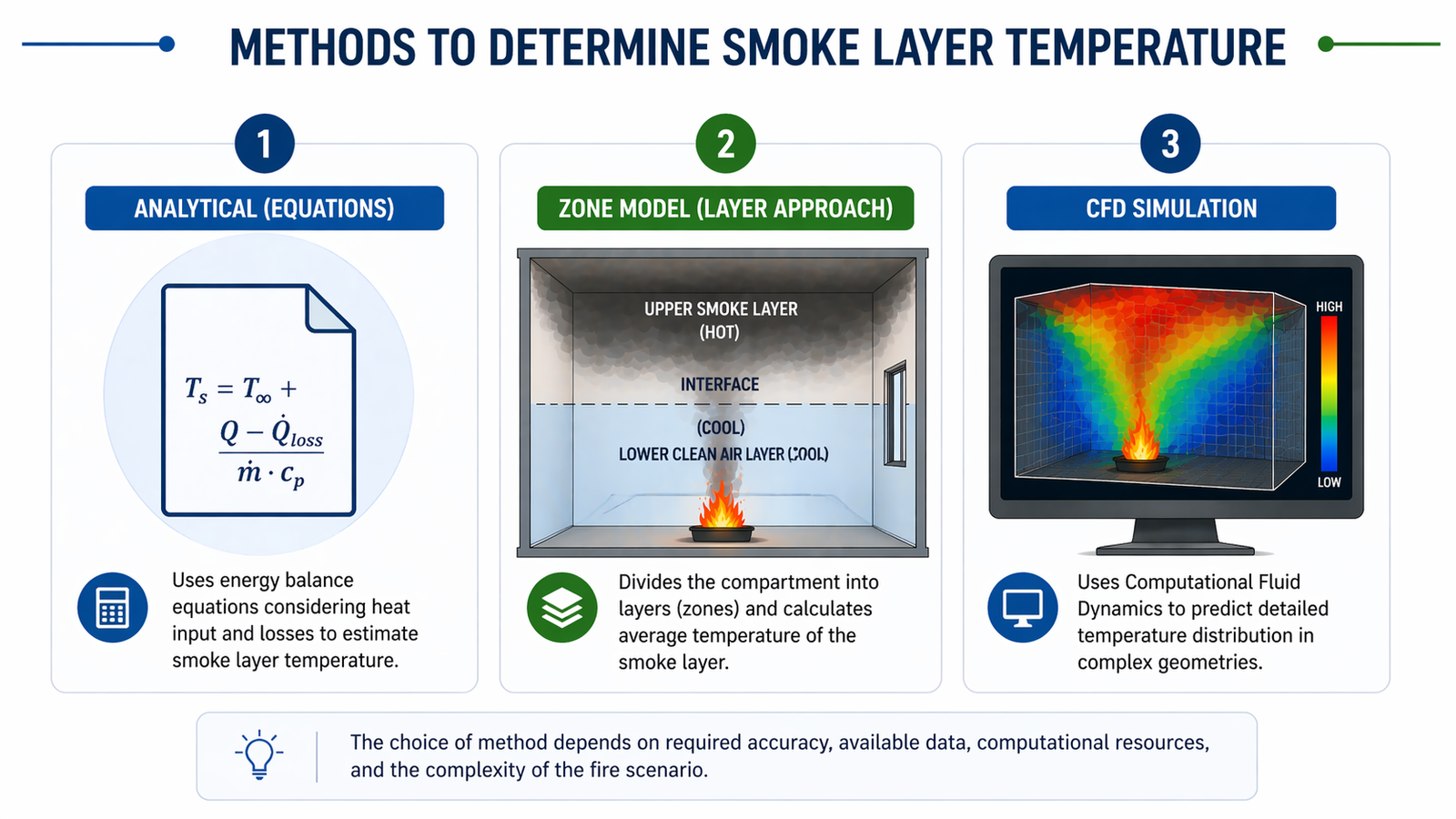
Zone Models
Zone models simplify the analysis by dividing a space into distinct layers.
- Upper smoke layer and lower clean layer
- Simplifies calculations
- Assumes uniform conditions in each layer
This approach allows engineers to estimate average conditions within each layer, making it easier to calculate mass flow and temperature. Zone models are commonly used in building fire safety design.
Computational Fluid Dynamics (CFD)
CFD simulations provide a detailed analysis of smoke movement and mass flow.
- Models complex smoke behavior
- Provides accurate predictions
- Used in performance-based design
CFD allows engineers to simulate real fire scenarios, taking into account building geometry, ventilation, and fire characteristics. While more complex, it provides highly accurate results.
Table: Factors Influencing Smoke Mass Flow
| Factor | Description | Impact on Mass Flow | Importance Level |
|---|---|---|---|
| Fire Size (HRR) | Energy released during combustion | Increases smoke generation | High |
| Fuel Type | Material involved in fire | Affects smoke density and yield | High |
| Ventilation | Airflow conditions | Controls smoke distribution | High |
| Compartment Geometry | Space size and layout | Influences accumulation rate | Medium |
| Entrainment | Air mixing with smoke plume | Increases total mass flow | High |
Importance of Mass Flow Determination
Determining smoke mass flow is essential for designing effective fire safety systems and ensuring occupant safety.
- Helps size smoke extraction systems
- Determines required airflow rates
- Supports evacuation planning
- Ensures compliance with fire safety standards
Accurate mass flow calculations enable engineers to design systems that can handle the expected smoke load during a fire. This ensures that smoke is removed efficiently, maintaining safe conditions for occupants and supporting firefighting operations.
In evacuation planning, mass flow data helps estimate how quickly smoke will accumulate, allowing engineers to determine available safe evacuation time. This information is critical for designing escape routes and emergency procedures.
The determination of smoke mass flow within a smoke layer is a key component of fire engineering design. By understanding the factors that influence smoke production and movement, engineers can accurately predict how smoke will behave during a fire.
Through the application of fundamental principles, empirical methods, and advanced simulation tools, it is possible to estimate mass flow with a high degree of accuracy. This information is essential for designing smoke control systems, ensuring safe evacuation, and maintaining compliance with fire safety standards.
Ultimately, accurate mass flow determination enhances the overall effectiveness of fire protection strategies, contributing to safer buildings and improved emergency response outcomes.