Skip to content
ICT Qualifications logo

Inspire College of Technologies

  • Home
  • QualificationsExpand
    • OTHM
    • ProQual AB
    • Qualifi
    • NOCN
    • RSPH
    • Qualsafe
    • ABMA
    • Focus Awards
    • OAL
    • IOSH
    • Degree ProgramsExpand
      • Masters top up
      • Bachelors top up
      • MBAs
    • Professional Qualifications
  • Contact Us
  • Certifications
  • CSCS Cards
  • Accredited CertificationsExpand
    • ProQual AC
    • ICTQual AB Accredited Certifications
    • Six Sigma Certifications
ICT Qualifications logo
Inspire College of Technologies
  • Home
  • Courses
  • ICTQual AB

ICTQual Level 3 Certified Energy Manager

Curriculum

  • 6 Sections
  • 30 Lessons
  • 30 Days
Expand all sectionsCollapse all sections
  • Unit 1 : Introduction to Energy Management
    This section provides learners with a foundational understanding of energy management and its importance in modern organisations, industries, and sustainable development practices. It introduces the basic concepts of energy usage, energy efficiency, conservation techniques, and the role of energy management in reducing operational costs and environmental impact. Learners will explore how effective energy management supports business performance, improves resource utilisation, and contributes to global sustainability goals. It also highlights the increasing demand for energy-conscious practices across commercial, industrial, and public sectors.Learners will gain insight into different types of energy sources, patterns of energy consumption, and the key principles involved in monitoring and controlling energy use. The content explains the responsibilities of an energy manager, common energy challenges faced by organisations, and the benefits of implementing energy-efficient systems and strategies. By the end of this section, learners will develop a clear understanding of how energy management supports environmental responsibility, regulatory compliance, cost reduction, and long-term organisational sustainability.
    10
    • 1.1
      Lesson 1: Understanding the Fundamental Concepts, Principles, and Objectives of Energy Management Across Multiple Sectors
    • 1.2
      Quiz no 1 : Understanding the Fundamental Concepts, Principles, and Objectives of Energy Management Across Multiple Sectors
      25 Questions
    • 1.3
      Lesson 2 : Identify the importance of energy efficiency, conservation, and sustainable practices in reducing operational costs and environmental impact
    • 1.4
      Quiz no 2 : Identify the importance of energy efficiency, conservation, and sustainable practices in reducing operational costs and environmental impact
      25 Minutes25 Questions
    • 1.5
      Lesson 3 : Explore essential tools, techniques, and strategies used to monitor, control, and optimise energy usage within organisations.
    • 1.6
      Quiz no 3 : Explore essential tools, techniques, and strategies used to monitor, control, and optimise energy usage within organisations.
      25 Minutes25 Questions
    • 1.7
      Lesson 4: Recognise the responsibilities and roles of energy managers in promoting sustainable energy practices and driving organisational change
    • 1.8
      Quiz No : 4 Recognise the responsibilities and roles of energy managers in promoting sustainable energy practices and driving organisational change.
      25 Minutes25 Questions
    • 1.9
      Lesson 5: Develop awareness of global energy trends and their implications for businesses and industries.
    • 1.10
      Quiz no 5 : Develop awareness of global energy trends and their implications for businesses and industries.
      25 Minutes25 Questions
  • Unit 2 : Technical and Operational Energy Management
    The Technical and Operational Energy Management provides learners with a comprehensive understanding of the technical systems and operational practices used to improve energy efficiency in industrial, commercial, and organisational environments. This chapter explores the management of energy-consuming systems such as HVAC, lighting, motors, boilers, and renewable energy technologies, while highlighting methods for reducing energy waste, improving system performance, and supporting sustainable operations.The chapter also examines operational energy management strategies including energy monitoring, maintenance planning, energy audits, performance measurement, and process optimisation. Learners will gain knowledge of how effective operational control and technical management contribute to cost reduction, environmental sustainability, regulatory compliance, and continual improvement in organisational energy performance.
    10
    • 2.1
      Lesson 1: Gain In-Depth Knowledge of Energy Systems, Equipment, and Technologies Commonly Used in Industrial, Commercial, and Residential Settings
    • 2.2
      Quiz 1: Gain In-Depth Knowledge of Energy Systems, Equipment, and Technologies Commonly Used in Industrial, Commercial, and Residential Settings
      25 Minutes25 Questions
    • 2.3
      Lesson 2 : Learn how to assess and optimise energy performance through technical upgrades, system improvements, and operational adjustments.
    • 2.4
      Quiz 2 : Learn how to assess and optimise energy performance through technical upgrades, system improvements, and operational adjustments.
      25 Minutes25 Questions
    • 2.5
      Lesson 3 : Analyse energy consumption patterns to identify areas for efficiency improvements and cost savings.
    • 2.6
      Quiz 3 : Analyse energy consumption patterns to identify areas for efficiency improvements and cost savings.
      25 Minutes25 Questions
    • 2.7
      Lesson 4 : Develop practical skills in implementing energy-saving measures and monitoring energy usage to ensure ongoing performance improvement.
    • 2.8
      Quiz 4 : Develop practical skills in implementing energy-saving measures and monitoring energy usage to ensure ongoing performance improvement.
      25 Minutes25 Questions
    • 2.9
      Lesson 5 : Understand how operational decisions, maintenance routines, and behavioural practices can directly impact energy efficiency.
    • 2.10
      Quiz 5 : Understand how operational decisions, maintenance routines, and behavioural practices can directly impact energy efficiency.
      25 Minutes25 Questions
  • Unit 3 : Energy Assessments, Measurements and Verification
    The Energy Assessments, Measurements, and Verification provides learners with a comprehensive understanding of how energy assessments, measurements, and verification processes are used to evaluate and improve energy performance within buildings, industrial facilities, and operational systems. Learners will explore the principles of energy auditing, energy data collection, monitoring techniques, and performance analysis used to identify energy consumption patterns and inefficiencies. The chapter also explains how accurate measurements support informed decision-making, regulatory compliance, sustainability objectives, and cost reduction strategies across different sectors. Emphasis is placed on the use of energy monitoring equipment, benchmarking methods, and data interpretation techniques that help organisations achieve effective energy management and operational efficiency.The chapter further introduces learners to measurement and verification (M&V) methodologies used to confirm energy savings achieved through energy efficiency improvements and conservation projects. Learners will understand how to establish energy baselines, calculate performance indicators, and evaluate the effectiveness of implemented energy-saving measures using recognised industry standards and reporting practices. In addition, the chapter highlights the importance of continuous monitoring, documentation, and performance validation in supporting long-term energy optimisation and environmental sustainability. By the end of this chapter, learners will be equipped with the practical knowledge and analytical skills required to conduct energy assessments and verify energy performance improvements in professional and industrial environments.
    10
    • 3.1
      Lesson1 : Acquire practical skills in conducting energy audits, assessments, and site inspections to identify energy-saving opportunities.
    • 3.2
      Quiz 1 : Acquire practical skills in conducting energy audits, assessments, and site inspections to identify energy-saving opportunities.
      25 Minutes25 Questions
    • 3.3
      Lesson 2 : Learn accurate methods for measurement, data collection, and verification of energy performance improvements.
    • 3.4
      Quiz 2 : Learn accurate methods for measurement, data collection, and verification of energy performance improvements.
      25 Minutes25 Questions
    • 3.5
      Lesson 3 : Develop the ability to analyse and interpret energy data, identifying trends, inefficiencies, and areas for intervention.
    • 3.6
      Quiz 3 : Develop the ability to analyse and interpret energy data, identifying trends, inefficiencies, and areas for intervention.
      25 Minutes25 Questions
    • 3.7
      Lesson 4 : Gain experience in compiling detailed energy reports and presenting findings to stakeholders for informed decision-making.
    • 3.8
      Quiz 4 : Gain experience in compiling detailed energy reports and presenting findings to stakeholders for informed decision-making.
      25 Minutes25 Questions
    • 3.9
      Lesson 5 : Understand how continuous monitoring and verification support long-term energy management strategies.
    • 3.10
      Quiz 5 : Understand how continuous monitoring and verification support long-term energy management strategies.
      25 Minutes25 Questions
  • Unit 4 : Regulatory and Legal Compliance and Carbon Management
    This chapter provides learners with a comprehensive understanding of regulatory requirements, legal obligations, and carbon management practices within modern organisations. It explores the importance of complying with environmental legislation, sustainability standards, energy efficiency regulations, and carbon reduction policies applicable in industrial, commercial, and public-sector environments.Learners will examine key environmental laws, international climate agreements, carbon reporting frameworks, and organisational responsibilities related to energy use, emissions control, and sustainability performance. The chapter also explains how businesses develop carbon management strategies to reduce greenhouse gas emissions, improve operational efficiency, and support environmental protection goals.Topics covered include carbon footprint assessment, regulatory compliance procedures, environmental audits, emissions monitoring, risk management, sustainability reporting, and continuous improvement practices. Learners will also understand the role of energy managers, environmental officers, and organisational leadership in maintaining legal compliance and achieving carbon reduction targets.By completing this chapter, learners will gain the knowledge and practical awareness required to support environmentally responsible operations, ensure compliance with relevant regulations, and contribute to effective carbon management and sustainability initiatives across various industries.
    10
    • 4.1
      Lesson 1 : Understand the legislative and regulatory frameworks governing energy management and environmental compliance.
    • 4.2
      Quiz 1 : Understand the legislative and regulatory frameworks governing energy management and environmental compliance.
      25 Minutes25 Questions
    • 4.3
      Lesson 2 : Learn about carbon management strategies, emissions reduction techniques, and their role in corporate sustainability.
    • 4.4
      Quiz 2 : Learn about carbon management strategies, emissions reduction techniques, and their role in corporate sustainability.
      25 Minutes25 Questions
    • 4.5
      Lesson 3 : Gain knowledge of relevant environmental laws, reporting standards, and compliance requirements across different regions.
    • 4.6
      Quiz 3 : Gain knowledge of relevant environmental laws, reporting standards, and compliance requirements across different regions.
      25 Minutes25 Questions
    • 4.7
      Lesson 4 : Develop practical skills to implement policies and strategies that ensure organisational adherence to energy and carbon regulations.
    • 4.8
      Quiz 4 : Develop practical skills to implement policies and strategies that ensure organisational adherence to energy and carbon regulations.
      25 Minutes25 Questions
    • 4.9
      Lesson 5 : Appreciate the impact of regulatory compliance on organisational reputation, financial performance, and sustainability goals.
    • 4.10
      Quiz 5 : Appreciate the impact of regulatory compliance on organisational reputation, financial performance, and sustainability goals.
      25 Minutes25 Questions
  • Unit 5 : Strategy and Planning in Energy Management
    The Strategy and Planning in Energy Management explores the principles and practices involved in developing effective energy management strategies and planning processes within organisations. It explains how strategic energy management helps improve energy efficiency, reduce operational costs, support environmental sustainability, and ensure compliance with energy regulations and standards. Learners will understand the importance of aligning energy objectives with organisational goals, conducting energy assessments, identifying energy-saving opportunities, and implementing structured action plans to optimise energy performance.The chapter also examines key areas such as energy policy development, resource planning, performance monitoring, risk assessment, renewable energy integration, and continuous improvement strategies. It highlights the role of leadership, data analysis, and modern energy management systems such as ISO 50001 in achieving long-term sustainability and operational efficiency. By the end of this chapter, learners will gain the knowledge required to support effective energy planning and contribute to sustainable energy management practices in various industrial and commercial environments.
    10
    • 5.1
      Lesson 1 : Develop comprehensive energy management strategies and plans aligned with organisational objectives and operational needs.
    • 5.2
      Quiz 1 : Develop comprehensive energy management strategies and plans aligned with organisational objectives and operational needs.
      25 Minutes25 Questions
    • 5.3
      Lesson 2 : Learn to set measurable goals, targets, and KPIs for energy efficiency and sustainability initiatives.
    • 5.4
      Quiz 2 : Learn to set measurable goals, targets, and KPIs for energy efficiency and sustainability initiatives.
      25 Minutes25 Questions
    • 5.5
      Lesson 3 : Understand the importance of engaging stakeholders, promoting collaboration, and fostering a culture of energy awareness.
    • 5.6
      Quiz 3 : Understand the importance of engaging stakeholders, promoting collaboration, and fostering a culture of energy awareness.
      25 Minutes25 Questions
    • 5.7
      Lesson 4 : Acquire skills in resource allocation, budgeting, and project management to successfully implement energy initiatives.
    • 5.8
      Quiz 4 : Acquire skills in resource allocation, budgeting, and project management to successfully implement energy initiatives.
      25 Minutes25 Questions
    • 5.9
      Lesson 5 : Evaluate the effectiveness of energy strategies and plans, making adjustments based on performance data and organisational feedback.
    • 5.10
      Quiz 5 : Evaluate the effectiveness of energy strategies and plans, making adjustments based on performance data and organisational feedback.
      25 Minutes25 Questions
  • Unit 6 : ISO 50001 Energy Management System
    The ISO 50001 Energy Management System is an internationally recognised framework designed to help organisations establish, implement, maintain, and improve effective energy management practices. It provides a structured approach for monitoring energy use, improving energy efficiency, reducing operational costs, and minimising environmental impact. By following ISO 50001 standards, organisations can develop energy policies, set measurable objectives, identify energy performance indicators, and continuously improve their energy performance in a systematic and sustainable manner.This energy management standard is applicable to organisations of all sizes and sectors, including manufacturing, construction, healthcare, education, and commercial industries. ISO 50001 supports businesses in meeting legal and regulatory energy requirements while promoting sustainability and corporate responsibility. The implementation of an ISO 50001 Energy Management System can lead to reduced energy consumption, lower carbon emissions, improved operational efficiency, and enhanced organisational reputation in competitive global markets.
    10
    • 6.1
      Lesson 1 : Gain a detailed understanding of the ISO 50001 standard, its requirements, and its role in systematic energy management.
    • 6.2
      Quiz 1 : Gain a detailed understanding of the ISO 50001 standard, its requirements, and its role in systematic energy management.
      25 Minutes25 Questions
    • 6.3
      Lesson 2 : Learn to design, implement, and maintain an ISO 50001-compliant energy management system tailored to organisational needs.
    • 6.4
      Quiz 2 : Learn to design, implement, and maintain an ISO 50001-compliant energy management system tailored to organisational needs.
      25 Minutes25 Questions
    • 6.5
      Lesson 3 : Understand the tangible benefits of ISO 50001 certification, including improved energy performance, cost reductions, and regulatory compliance.
    • 6.6
      Quiz 3 : Understand the tangible benefits of ISO 50001 certification, including improved energy performance, cost reductions, and regulatory compliance.
      25 Minutes25 Questions
    • 6.7
      Lesson 4 : Develop practical skills in conducting internal audits, managing documentation, and preparing for external certification audits.
    • 6.8
      Quiz 4 : Develop practical skills in conducting internal audits, managing documentation, and preparing for external certification audits.
      25 Minutes25 Questions
    • 6.9
      Lesson 5 : Explore continuous improvement methods to sustain energy efficiency and ensure the long-term success of the energy management system.
    • 6.10
      Quiz 5 : Explore continuous improvement methods to sustain energy efficiency and ensure the long-term success of the energy management system.
      25 Minutes25 Questions

Lesson 1: Understanding the Fundamental Concepts, Principles, and Objectives of Energy Management Across Multiple Sectors

Energy management is an essential part of modern business operations and environmental sustainability. Organisations across industries use energy to power equipment, lighting, heating, cooling, transportation, and production activities. Without proper management, energy can be wasted through inefficient systems, poor operational practices, and lack of monitoring. Effective energy management helps organisations reduce costs, improve operational performance, meet environmental responsibilities, and support long-term sustainability goals.

This lesson introduces learners to the fundamental concepts, principles, and objectives of energy management. It explains how energy is used in different workplaces, the importance of improving energy efficiency, and how organisations can reduce unnecessary consumption through practical strategies and continuous improvement practices.
1. Key Concepts of Energy Management

Understanding Energy Management

Energy management is the systematic process of planning, monitoring, controlling, and improving the way energy is used within an organisation, facility, or operational environment. It involves developing strategies and practical measures that help businesses use energy more effectively while maintaining productivity, safety, and operational performance. In modern industries, energy management has become an essential part of business operations because energy costs continue to rise and organisations are under increasing pressure to reduce environmental impact and improve sustainability.

The primary aim of energy management is to ensure that energy resources are used in the most efficient and responsible manner possible. This means reducing unnecessary energy consumption, improving operational efficiency, minimising waste, and supporting environmental protection initiatives. Effective energy management not only lowers utility expenses but also helps organisations improve equipment performance, comply with environmental regulations, and strengthen long-term business sustainability.

Energy management is not limited to large industrial facilities. It is relevant across all sectors, including offices, schools, hospitals, hotels, warehouses, retail centres, and transportation systems. Every workplace that uses electricity, fuel, heating, cooling, lighting, or machinery can benefit from proper energy management practices.

A successful energy management system normally includes several important activities:

  • Monitoring and recording energy consumption
  • Identifying areas where energy is being wasted
  • Analysing patterns of energy use
  • Improving the efficiency of equipment and systems
  • Implementing energy-saving technologies
  • Educating employees about responsible energy use
  • Reviewing energy performance regularly
  • Setting energy reduction targets and sustainability goals

Energy management also requires cooperation between management, technical staff, and employees. Even highly efficient equipment can waste energy if workers do not follow proper operational practices. For this reason, awareness, training, and organisational commitment are important parts of effective energy management programmes.

Energy Use

Definition of Energy Use

Energy use refers to the amount of energy consumed to operate equipment, machinery, buildings, vehicles, and systems during daily activities. Organisations rely on energy to carry out essential operations such as lighting, heating, cooling, manufacturing, communication, transportation, and information processing.

Energy is considered one of the most important operational resources in modern workplaces. Without energy, businesses would not be able to power machinery, maintain comfortable working conditions, operate computers, or provide essential services. However, excessive or poorly managed energy use can increase operational costs and create unnecessary environmental damage.

Understanding how energy is used within a workplace is the first step in improving energy performance. Organisations often analyse energy consumption patterns to identify where energy is being used efficiently and where improvements are required.

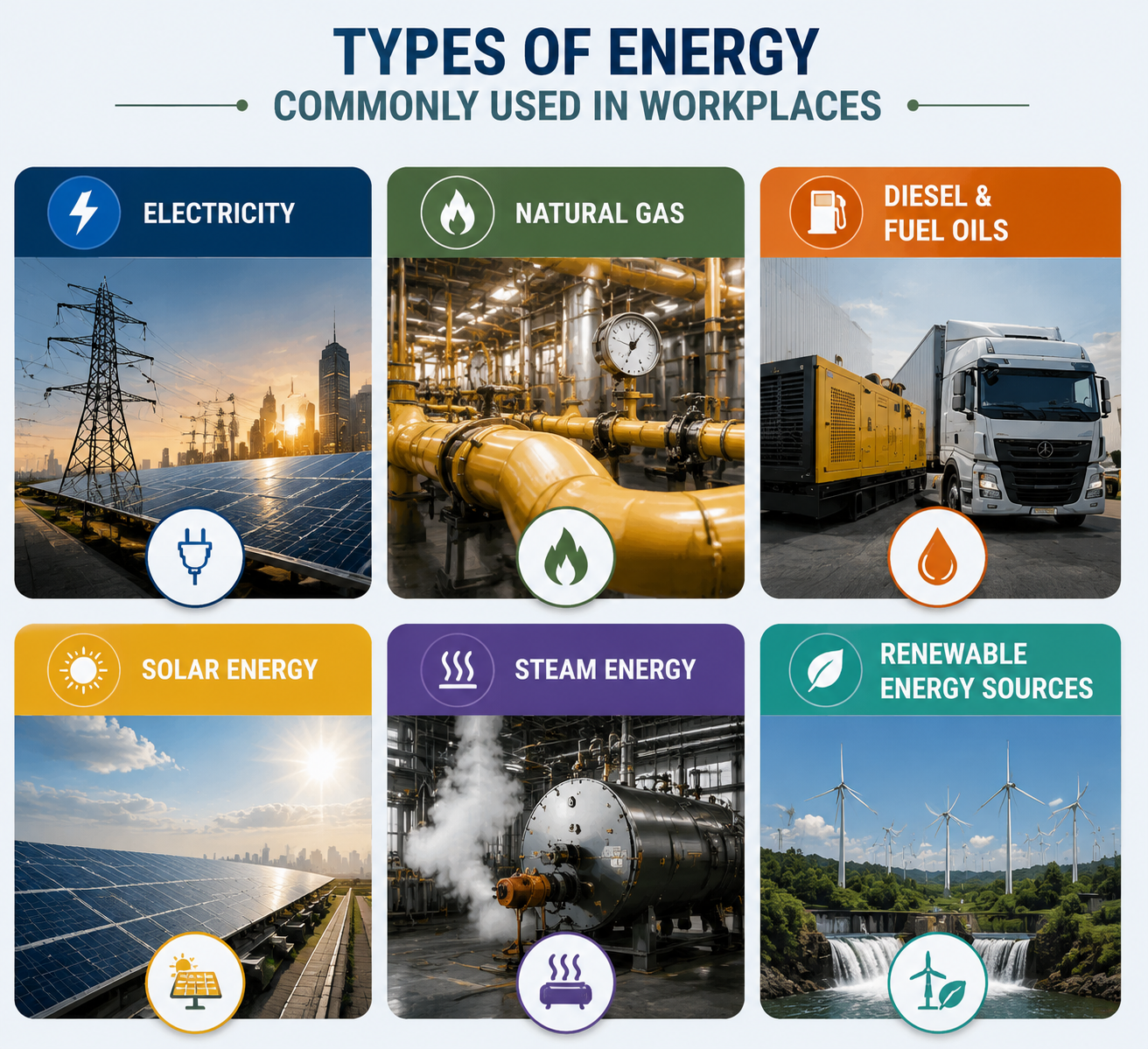
Types of Energy Commonly Used in Workplaces

Different industries and organisations use different forms of energy depending on the nature of their operations. The most common energy sources include:

Electricity

Electricity is one of the most widely used forms of energy in modern workplaces. It powers:

  • Lighting systems
  • Office equipment
  • Computers and servers
  • Production machinery
  • Refrigeration systems
  • Ventilation and cooling equipment

Electricity is essential in almost every sector because it supports both operational activities and workplace comfort.

Natural Gas

Natural gas is commonly used for:

  • Heating buildings
  • Operating industrial boilers
  • Water heating systems
  • Cooking equipment in hospitality businesses

Many industries prefer natural gas because it can provide large amounts of heat efficiently.

Diesel and Fuel Oils

Diesel fuel is frequently used in:

  • Transportation vehicles
  • Construction equipment
  • Backup generators
  • Agricultural machinery

Fuel oils are especially important in sectors that rely heavily on transportation and heavy machinery operations.

Renewable Energy Sources

Renewable energy is becoming increasingly important in modern energy management systems. Common renewable sources include:

  • Solar power
  • Wind energy
  • Hydropower
  • Biomass energy

These energy sources help organisations reduce dependence on fossil fuels and lower carbon emissions.

Steam Energy

Steam is commonly used in industrial operations for:

  • Heating processes
  • Sterilisation systems
  • Food production
  • Manufacturing operations

Large manufacturing facilities often use steam systems because they efficiently transfer heat during production processes.

Types of energy in the workplace

Examples of Energy Use in Different Working Environments

Manufacturing Industry

Manufacturing facilities are among the highest energy consumers because they rely on heavy machinery and continuous production systems. Energy is used to operate:

  • Industrial machines
  • Conveyor belts
  • Welding equipment
  • Compressors
  • Industrial ovens
  • Packaging systems
  • Ventilation systems

In manufacturing, even small improvements in energy efficiency can result in major cost savings due to the large scale of operations.

Commercial Buildings

Commercial offices use energy for both operational activities and employee comfort. Major energy-consuming systems include:

  • Lighting systems
  • Heating and air conditioning
  • Computers and IT servers
  • Office equipment
  • Elevators and escalators
  • Security and surveillance systems

Commercial buildings often focus on reducing electricity waste through automated lighting and smart temperature control systems.

Healthcare Sector

Hospitals and healthcare facilities require constant and reliable energy supplies because many medical services depend on electrical systems. Energy is used for:

  • Medical equipment
  • Surgical theatres
  • Refrigeration of medicines and vaccines
  • Air filtration systems
  • Emergency backup generators
  • Patient comfort systems

Because healthcare services operate 24 hours a day, energy management in hospitals is especially important for maintaining both safety and efficiency.Hospitality Sector

Hotels, restaurants, and hospitality businesses consume energy to maintain customer comfort and service quality. Common areas of energy use include:

  • Heating and cooling guest rooms
  • Laundry operations
  • Commercial kitchens
  • Refrigeration equipment
  • Decorative and functional lighting
  • Water heating systems

Hospitality businesses often implement energy-saving programmes to reduce utility costs while maintaining customer satisfaction.

Energy Efficiency

Definition of Energy Efficiency

Energy efficiency refers to using less energy to perform the same activity or achieve the same result. It focuses on improving the performance of systems, equipment, and operations so that less energy is wasted during use.

Energy efficiency does not mean reducing productivity or lowering the quality of work. Instead, it involves achieving maximum performance with minimum energy consumption. Efficient systems can complete the same tasks while consuming fewer resources, reducing operational expenses and environmental impact.

Energy efficiency is one of the most effective ways organisations can lower energy costs and improve sustainability without disrupting operations.

How Energy Efficiency Works

Energy-efficient technologies are designed to reduce losses during operation. For example:

  • LED lights convert more electricity into light rather than heat
  • Efficient motors require less electricity to operate
  • Improved insulation reduces heat loss from buildings
  • Smart controls prevent unnecessary energy use

These improvements help organisations achieve better energy performance over time.

Examples of Energy Efficiency Measures

Organisations can improve energy efficiency in many ways, including:

  • Replacing traditional lighting with LED systems
  • Installing energy-efficient heating and cooling equipment
  • Using automated building management systems
  • Upgrading outdated machinery
  • Improving insulation in walls and roofs
  • Installing motion-sensor lighting systems
  • Using energy-efficient appliances and office equipment
  • Applying preventive maintenance programmes

Benefits of Energy Efficiency

Energy efficiency provides a wide range of benefits for organisations, employees, customers, and the environment. By improving the way energy is used, businesses can reduce unnecessary consumption while maintaining or even improving operational performance. Energy-efficient practices support financial savings, environmental sustainability, equipment reliability, workplace safety, and long-term organisational growth.

In modern industries, energy efficiency is no longer considered an optional improvement. It has become an essential part of responsible business management because organisations face increasing energy costs, environmental regulations, and sustainability expectations. Implementing energy-efficient systems and practices helps organisations remain competitive while improving operational performance and reducing environmental impact.

Lower Energy Costs

One of the most important benefits of energy efficiency is the reduction in energy expenses. Energy-efficient equipment and systems consume less electricity, gas, or fuel while performing the same tasks. This allows organisations to significantly lower utility bills and operating costs.

For many businesses, energy costs represent a major portion of operational expenditure. Manufacturing plants, commercial buildings, hotels, hospitals, and transportation companies all consume large amounts of energy daily. Even small improvements in efficiency can produce substantial long-term financial savings.

Examples of Cost Reduction Through Energy Efficiency

  • Replacing traditional lighting with LED systems reduces electricity consumption.
  • Installing high-efficiency motors lowers power usage in industrial operations.
  • Upgrading insulation reduces heating and cooling expenses.
  • Using smart thermostats prevents unnecessary energy consumption.

Lower energy costs improve organisational profitability and allow businesses to invest resources into other areas such as staff development, equipment upgrades, and business expansion.

Improved Equipment Performance

Energy-efficient equipment is often designed using advanced technologies that improve operational reliability and performance. Modern efficient systems operate more smoothly, require less energy input, and perform tasks more effectively than outdated equipment.

Efficient equipment also experiences less strain during operation because it is designed to minimise energy losses and optimise performance. This reduces the risk of overheating, mechanical stress, and system failures.

Examples of Improved Performance

  • Energy-efficient motors provide smoother and more reliable operation.
  • Modern HVAC systems maintain stable indoor temperatures more effectively.
  • Efficient lighting systems provide better illumination with lower power consumption.
  • Automated control systems improve operational accuracy and consistency.

Improved equipment performance helps organisations maintain productivity, reduce downtime, and improve the quality of operations.

Reduced Environmental Impact

Energy efficiency plays a major role in protecting the environment by reducing energy consumption and lowering greenhouse gas emissions. Many traditional energy sources, such as coal, oil, and natural gas, produce carbon dioxide and other pollutants during energy generation. When organisations use less energy, they help reduce environmental pollution and conserve natural resources.

Reducing energy consumption also supports global sustainability efforts aimed at combating climate change and reducing environmental degradation.

Environmental Benefits of Energy Efficiency

  • Lower carbon emissions
  • Reduced air pollution
  • Reduced dependence on fossil fuels
  • Conservation of natural resources
  • Improved environmental sustainability
  • Support for renewable energy integration

Organisations that improve energy efficiency often enhance their environmental reputation and demonstrate corporate social responsibility.

Increased Productivity

Energy-efficient workplaces often create better operating conditions that support higher levels of productivity and employee performance. Efficient systems improve lighting quality, temperature control, air circulation, and equipment reliability, creating a safer and more comfortable working environment.

When employees work in comfortable and well-managed environments, they are generally more focused, motivated, and productive.

How Energy Efficiency Improves Productivity

  • Proper lighting reduces eye strain and fatigue.
  • Efficient ventilation improves indoor air quality.
  • Stable temperatures improve employee comfort.
  • Reliable equipment reduces operational interruptions.
  • Automated systems improve workflow efficiency.

In industrial settings, efficient machinery also improves production speed and operational consistency, helping organisations achieve higher output levels with lower energy consumption.

Reduced Maintenance Requirements

Modern energy-efficient equipment is often designed to operate more effectively and experience less wear and tear than older systems. Because efficient equipment uses energy more effectively, components are subjected to lower operational stress, which reduces the likelihood of breakdowns and equipment failures.

Reduced maintenance requirements help organisations save money on repairs, replacement parts, and maintenance labour.

Examples of Maintenance Benefits

  • LED lighting lasts significantly longer than traditional bulbs.
  • Energy-efficient motors experience less overheating and damage.
  • Modern HVAC systems require fewer repairs when properly maintained.
  • Automated systems detect faults before major failures occur.

Lower maintenance needs also reduce operational downtime, allowing organisations to maintain continuous productivity and service delivery.

Better Workplace Comfort

Energy-efficient systems help create more comfortable and healthier working environments for employees, customers, and visitors. Proper heating, cooling, ventilation, and lighting systems improve indoor conditions and support employee wellbeing.

Workplace comfort is important because poor indoor conditions can negatively affect concentration, health, morale, and productivity.

Areas Where Comfort Improves

Heating and Cooling

Efficient HVAC systems maintain stable indoor temperatures and prevent excessive heat or cold.

Lighting Quality

Modern lighting systems provide clearer and more consistent illumination while reducing glare and eye strain.

Indoor Air Quality

Efficient ventilation systems improve airflow and reduce indoor pollutants.

Noise Reduction

Modern energy-efficient equipment often operates more quietly, creating a more comfortable working environment.

Improved workplace comfort can lead to:

  • Higher employee satisfaction
  • Better customer experiences
  • Reduced absenteeism
  • Improved staff retention
  • Increased productivity

Enhanced Organisational Reputation

Organisations that prioritise energy efficiency are often viewed as environmentally responsible and socially conscious. Customers, investors, employees, and regulatory authorities increasingly prefer businesses that demonstrate commitment to sustainability and responsible resource management.

Energy-efficient organisations may gain:

  • Stronger public image
  • Increased customer trust
  • Better compliance with environmental standards
  • Improved competitiveness in the market

Many organisations also include energy efficiency initiatives in their corporate sustainability strategies to demonstrate long-term environmental commitment.

Support for Long-Term Sustainability

Energy efficiency supports sustainable development by helping organisations balance economic growth with environmental responsibility. Sustainable energy practices ensure that energy resources are used wisely without compromising future environmental and economic stability.

Long-term sustainability benefits include:

  • Reduced operational risks
  • Improved resource management
  • Lower environmental impact
  • Greater resilience against rising energy costs
  • Stronger compliance with future environmental regulations

By investing in energy efficiency, organisations create more sustainable and resilient operational systems that support long-term business success.

Energy Conservation

Definition of Energy Conservation

Energy conservation refers to reducing energy consumption through behavioural changes, operational improvements, and responsible usage practices. It focuses on avoiding unnecessary energy use and encouraging individuals and organisations to use energy more carefully.

Unlike energy efficiency, which often involves technological upgrades, energy conservation mainly depends on human behaviour and workplace habits.

Energy conservation plays an important role in reducing operational costs and supporting environmental sustainability.

Examples of Energy Conservation Practices

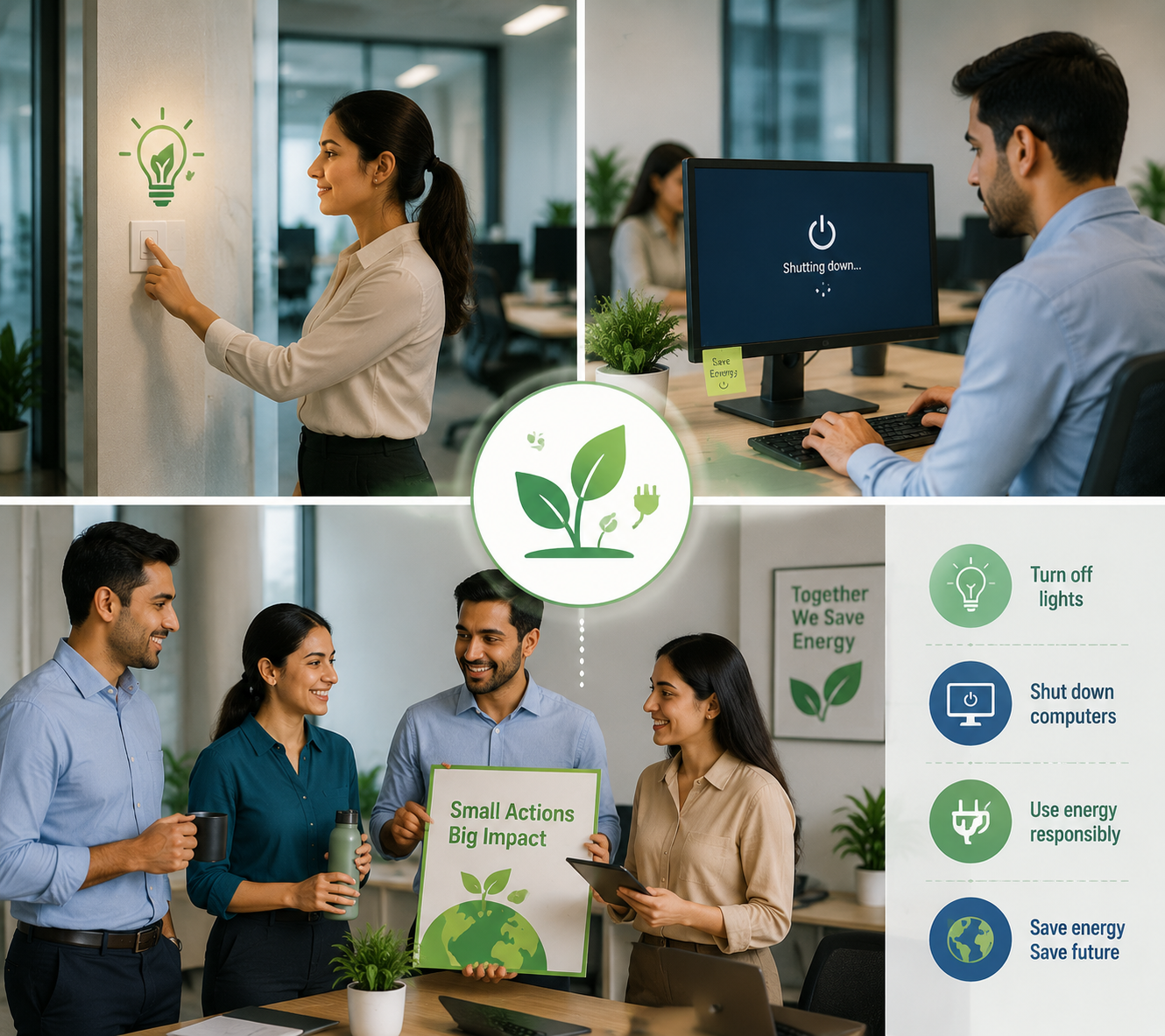
Common conservation practices include:

  • Turning off lights when rooms are empty
  • Shutting down computers after working hours
  • Reducing unnecessary heating and cooling
  • Limiting idle operation of machinery
  • Encouraging employees to report energy waste
  • Using natural daylight where possible
  • Reducing unnecessary travel and fuel use

Even simple conservation actions can produce significant energy savings when applied consistently across an organisation.

Importance of Employee Awareness

Employee behaviour has a major impact on workplace energy consumption. Organisations often introduce awareness programmes to encourage staff to:

  • Use equipment responsibly
  • Follow energy-saving procedures
  • Avoid unnecessary energy waste
  • Support sustainability initiatives

When employees actively participate in conservation efforts, organisations achieve better energy performance results.

Difference Between Energy Efficiency and Energy Conservation

Although energy efficiency and energy conservation are closely related, they are not the same. Both contribute to effective energy management but use different approaches to reduce energy consumption.

Energy EfficiencyEnergy Conservation
Focuses on improving technology and equipmentFocuses on changing behaviour and habits
Uses advanced systems to reduce energy wasteReduces unnecessary energy use
Maintains productivity with lower energy inputEncourages responsible energy usage
Often requires investment in modern equipmentUsually involves operational or behavioural changes
Example: Installing LED lighting systemsExample: Turning off lights when not needed
Example: Upgrading HVAC equipmentExample: Reducing heating during non-working hours

In most organisations, the best results are achieved when both energy efficiency measures and energy conservation practices are implemented together. Combining modern technology with responsible employee behaviour helps organisations reduce costs, improve sustainability, and achieve long-term energy management goals.

2. Main Principles of Energy Management

Energy management is based on a set of important principles that help organisations control energy consumption, improve operational performance, reduce unnecessary costs, and support environmental sustainability. These principles provide a structured approach for managing energy resources effectively across different industries and working environments.

The main principles of energy management include:

  • Reducing energy waste
  • Improving energy efficiency
  • Continuous monitoring and improvement

When these principles are properly implemented, organisations can achieve long-term energy savings, improve productivity, reduce environmental impact, and create more sustainable operations.

Reducing Energy Waste

Reducing energy waste is one of the most important principles of energy management. Energy waste occurs when energy is used inefficiently, unnecessarily, or without proper control. In many organisations, large amounts of energy are wasted every day due to outdated equipment, poor maintenance practices, inefficient building systems, and lack of employee awareness.

Energy waste not only increases operational costs but also places unnecessary pressure on energy resources and contributes to environmental pollution. Organisations that fail to control energy waste often experience higher electricity bills, reduced equipment efficiency, and lower operational performance.

The purpose of reducing energy waste is to ensure that energy is used only when necessary and in the most effective way possible. This requires organisations to identify areas where energy losses occur and implement corrective measures to improve efficiency.

Common Causes of Energy Waste

Energy waste can occur in almost every workplace if systems are not properly managed. Some of the most common causes include:

Leaving Equipment Running Unnecessarily

Many workplaces waste energy by leaving machinery, lighting, computers, and air conditioning systems operating when they are not required. Equipment that continues running during non-working hours consumes unnecessary electricity and increases operating costs.

Examples include:

  • Office computers left on overnight
  • Lights operating in empty rooms
  • Idle machinery continuing to consume power
  • Cooling systems operating in unoccupied spaces

Poor Insulation in Buildings

Buildings with poor insulation lose heat during winter and allow excessive heat entry during summer. This forces heating and cooling systems to work harder, increasing energy consumption.

Common insulation problems include:

  • Poorly insulated walls and roofs
  • Air leakage around doors and windows
  • Damaged insulation materials
  • Poorly sealed ventilation systems

Improving insulation helps maintain stable indoor temperatures and reduces energy demand.

Inefficient Lighting Systems

Traditional lighting systems, such as incandescent bulbs, consume large amounts of electricity and generate excessive heat. Poor lighting design can also result in unnecessary energy usage.

Examples of inefficient lighting include:

  • Outdated lighting technologies
  • Excessive lighting levels
  • Lights operating continuously without control systems
  • Lack of natural daylight usage

Replacing inefficient lighting with LED systems can significantly reduce electricity consumption.

Air Leaks in Compressed Air Systems

Compressed air systems are commonly used in industrial facilities, but air leaks can result in major energy losses. Even small leaks force compressors to work harder and consume more electricity.

Common causes of leaks include:

  • Damaged pipes
  • Loose fittings
  • Poor maintenance
  • Aging equipment

Regular inspection and maintenance help minimise these losses.

Overheating or Overcooling Buildings

Heating or cooling buildings beyond necessary levels wastes significant amounts of energy. Poor temperature control systems and incorrect thermostat settings often increase unnecessary energy consumption.

Examples include:

  • Excessive air conditioning during mild weather
  • Heating unused rooms
  • Simultaneous heating and cooling in different areas

Using automated temperature controls helps reduce these inefficiencies.

Poor Maintenance of Machinery and Equipment

Poorly maintained equipment generally consumes more energy because systems operate less efficiently when components are dirty, damaged, or worn out.

Maintenance-related issues include:

  • Dirty filters
  • Unlubricated machinery
  • Blocked ventilation systems
  • Misaligned motors and belts

Preventive maintenance programmes improve equipment efficiency and reduce energy waste.
Waste Reduction in Different Sectors

Energy waste occurs in almost every industry when energy is consumed inefficiently, unnecessarily, or without proper control measures. Different sectors use energy in different ways depending on their operational activities, equipment, building structures, and service requirements. As a result, each industry applies specific waste reduction strategies that match its operational needs and energy consumption patterns.

Reducing energy waste is an essential part of energy management because it helps organisations lower operational costs, improve efficiency, reduce environmental impact, and increase overall productivity. Waste reduction strategies may involve upgrading equipment, improving maintenance practices, changing employee behaviour, implementing automated systems, or improving operational planning.

Industries that successfully reduce energy waste often experience:

  • Lower electricity and fuel costs
  • Improved operational performance
  • Reduced environmental pollution
  • Increased equipment lifespan
  • Better workplace conditions
  • Improved sustainability performance

Manufacturing Sector

Manufacturing facilities are among the largest energy consumers because production operations often rely on heavy machinery, industrial heating systems, compressors, motors, conveyor systems, and continuous manufacturing processes. Many factories operate for long hours or even continuously throughout the day, resulting in high levels of electricity and fuel consumption.

Energy waste in manufacturing can occur through inefficient machinery, poor maintenance, heat losses, idle equipment, and unoptimised production processes. Because energy costs can represent a significant portion of manufacturing expenses, reducing energy waste is extremely important for improving profitability and maintaining competitive operations.

Manufacturing organisations focus heavily on improving process efficiency, reducing downtime, and ensuring that machinery operates at optimal performance levels.

Common Waste Reduction Practices in Manufacturing

Regular Equipment Maintenance

Regular maintenance is one of the most effective methods of reducing energy waste in industrial environments. Poorly maintained machinery often consumes more electricity because damaged or worn components force systems to work harder.

Preventive maintenance helps ensure that equipment operates efficiently and safely.

Maintenance Activities May Include:

  • Cleaning filters and ventilation systems
  • Lubricating moving components
  • Checking motor alignment
  • Inspecting belts and bearings
  • Replacing damaged parts
  • Monitoring machine performance

Well-maintained equipment operates more smoothly, experiences fewer breakdowns, and consumes less energy during production activities.

Using Energy-Efficient Motors

Industrial motors are widely used in manufacturing facilities to operate pumps, fans, compressors, conveyor belts, and production machinery. Traditional motors can consume large amounts of electricity, especially when operating continuously.

Modern high-efficiency motors are designed to:

  • Reduce electrical losses
  • Improve operational performance
  • Generate less heat
  • Operate more reliably

By replacing outdated motors with energy-efficient models, manufacturing facilities can significantly reduce electricity consumption while maintaining the same production capacity.

Optimising Production Schedules

Production planning has a major impact on energy consumption. Poorly organised production schedules may cause machinery to remain idle while still consuming electricity.

Manufacturing facilities improve efficiency by:

  • Scheduling production during off-peak energy periods
  • Reducing machine idle time
  • Coordinating production activities efficiently
  • Minimising unnecessary start-up and shutdown cycles

Optimised production scheduling improves workflow efficiency and reduces unnecessary energy demand.

Waste Heat Recovery Systems

Many industrial processes generate large amounts of excess heat during manufacturing operations. In traditional systems, this heat may simply be released into the environment, resulting in wasted energy.

Waste heat recovery systems capture excess heat and reuse it for other purposes such as:

  • Water heating
  • Space heating
  • Steam generation
  • Preheating production materials

Heat recovery systems improve overall energy efficiency and reduce fuel consumption within manufacturing facilities.

Monitoring Production Processes

Modern manufacturing plants use monitoring systems to analyse energy consumption across different production stages. Monitoring helps identify:

  • High-energy-consuming processes
  • Inefficient machinery
  • Unusual operating conditions
  • Energy losses during production

Automated monitoring systems provide real-time data that helps management make informed decisions about operational improvements and energy-saving opportunities.

Improving Compressed Air Systems

Compressed air systems are commonly used in manufacturing operations but are often a major source of energy waste due to leaks and inefficient operation.

Manufacturing facilities reduce waste by:

  • Repairing air leaks
  • Reducing unnecessary air pressure
  • Maintaining compressors properly
  • Switching off unused systems

Efficient compressed air management can produce substantial energy savings.

Employee Involvement in Manufacturing

Employees play an important role in reducing energy waste within industrial environments. Organisations often provide training programmes to encourage workers to:

  • Shut down unused machinery
  • Report equipment faults
  • Follow energy-saving procedures
  • Operate machinery efficiently

Employee awareness helps support long-term waste reduction efforts.

Commercial Offices

Commercial office buildings consume energy mainly for lighting, heating, ventilation, air conditioning, computers, elevators, communication systems, and office equipment. In many offices, energy waste occurs because of inefficient building systems, poor energy management practices, and lack of employee awareness.

Office buildings often operate for long hours and require comfortable indoor environments for employees and visitors. As a result, managing lighting, temperature, and equipment usage efficiently is essential for reducing energy waste and controlling operational costs.

Modern office buildings increasingly use smart technologies and automated systems to improve energy performance.

Common Waste Reduction Practices in Offices

Motion-Sensor Lighting

Lighting systems in offices can consume significant amounts of electricity, especially when lights remain switched on in empty rooms or unused areas.

Motion-sensor lighting systems automatically detect movement and switch lights on or off as needed. These systems are commonly installed in:

  • Meeting rooms
  • Washrooms
  • Corridors
  • Storage areas
  • Parking facilities

Motion sensors reduce unnecessary electricity consumption and improve overall lighting efficiency.

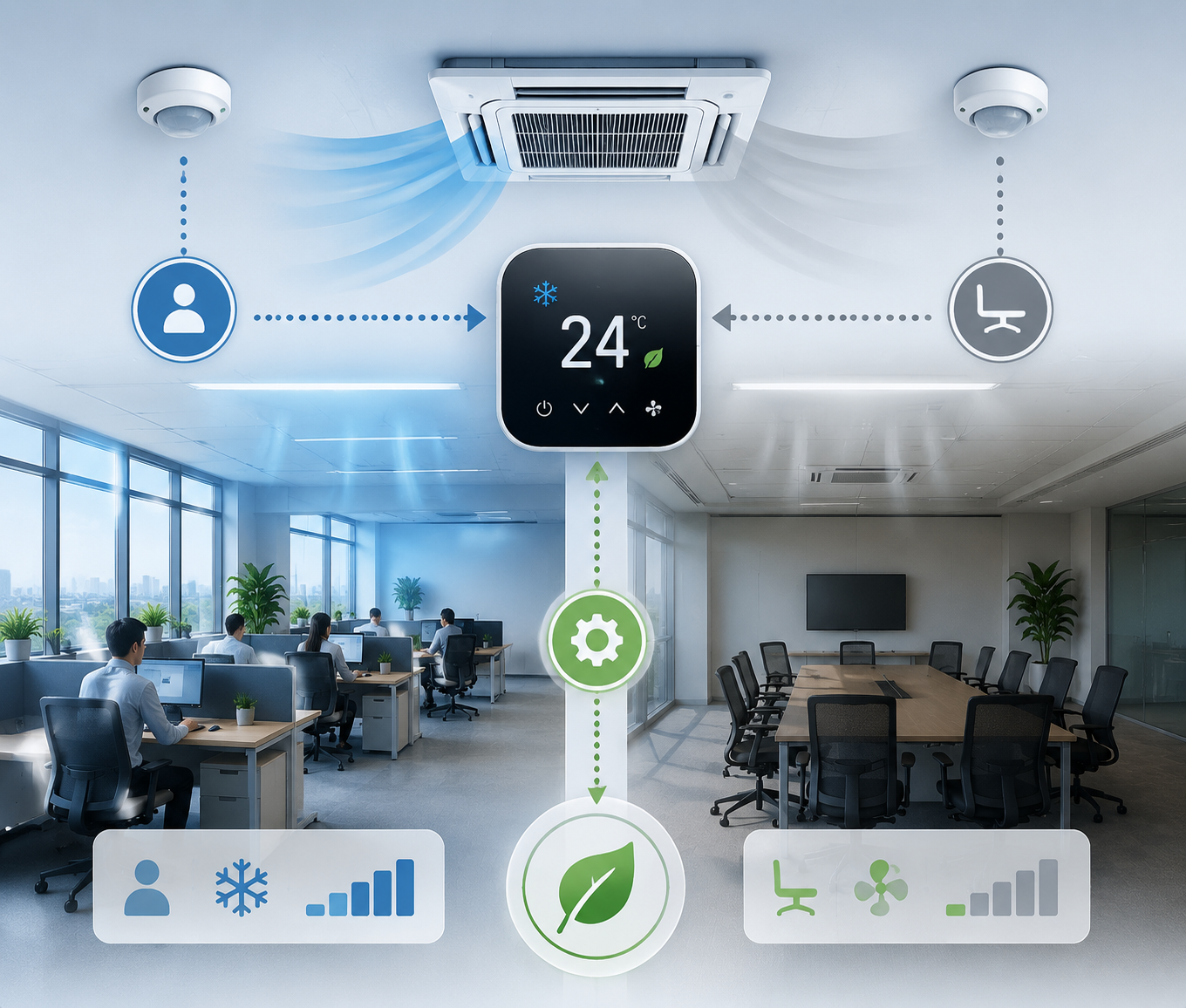
Smart Thermostats and Automated HVAC Controls

Heating and cooling systems are among the largest energy consumers in office buildings. Poor temperature management can result in excessive heating or cooling and unnecessary energy waste.

Smart thermostats automatically adjust temperatures based on:

  • Occupancy levels
  • Outdoor weather conditions
  • Time schedules
  • Building usage patterns

Automated HVAC systems improve energy efficiency while maintaining comfortable indoor conditions for employees.

Energy-Efficient Office Equipment

Modern office equipment is designed to consume less electricity and operate more efficiently.

Examples include:

  • Energy-efficient computers
  • Low-energy printers
  • LED monitors
  • Smart copiers
  • Energy-saving kitchen appliances

Many devices also include sleep modes or automatic shutdown functions that reduce electricity consumption during periods of inactivity.

Employee Awareness Programmes

Employee behaviour has a major influence on office energy consumption. Organisations often introduce awareness programmes to encourage responsible energy use.

Training programmes may encourage employees to:

  • Turn off lights when leaving rooms
  • Shut down computers after work
  • Avoid unnecessary printing
  • Use heating and cooling responsibly
  • Report maintenance problems

When employees actively support energy-saving initiatives, offices can significantly reduce energy waste.

Daylight Utilisation

Natural daylight can reduce the need for artificial lighting during daytime hours. Modern office buildings often include architectural features that maximise natural light usage.

Examples include:

  • Large windows
  • Open office layouts
  • Glass partitions
  • Skylights

Using natural daylight improves energy efficiency and creates healthier working environments.

Improving Building Insulation

Proper insulation helps office buildings maintain indoor temperatures more effectively.

Improved insulation reduces:

  • Heat loss during winter
  • Heat gain during summer
  • Heating and cooling energy demand

Energy-efficient windows and insulated walls improve building performance and reduce utility costs.

Service Industry

The service industry includes businesses such as hotels, restaurants, shopping centres, healthcare facilities, educational institutions, and retail stores. These organisations often consume large amounts of energy because they must maintain comfortable environments, provide continuous services, and operate various electrical systems throughout the day.

Service-based organisations focus heavily on customer comfort, operational reliability, and efficient facility management. Energy waste in these environments can increase operating costs and reduce profitability.

Reducing energy waste in the service sector requires careful management of lighting, heating, cooling, water usage, kitchen equipment, refrigeration systems, and building operations.

Common Waste Reduction Measures in Service Industries

Monitoring Utility Consumption

Service organisations regularly monitor electricity, gas, and water consumption to identify unusual usage patterns and inefficiencies.

Monitoring helps businesses:

  • Detect excessive energy use
  • Identify equipment faults
  • Compare energy performance over time
  • Improve operational control

Many organisations use smart meters and automated monitoring systems to track utility usage in real time.

Managing Operating Hours

Many systems consume energy even when business activity is low or buildings are partially unoccupied.

Service businesses reduce waste by controlling:

  • Lighting schedules
  • Air conditioning operation
  • Kitchen equipment usage
  • Ventilation systems
  • Heating systems

Automated scheduling systems help ensure that equipment operates only when necessary.

Upgrading Old Appliances and Equipment

Outdated appliances often consume significantly more electricity than modern energy-efficient alternatives.

Service organisations commonly upgrade:

  • Refrigerators
  • Air conditioning systems
  • Laundry equipment
  • Kitchen appliances
  • Water heating systems

Modern equipment improves efficiency, reduces operating costs, and enhances customer comfort.

Improving Building Systems

Modern heating, ventilation, and cooling systems improve energy efficiency while maintaining comfortable indoor conditions for customers and employees.

Efficient building systems may include:

  • Smart HVAC systems
  • Automated ventilation controls
  • Energy-efficient lighting
  • Water-saving technologies
  • Building automation systems

These technologies help businesses reduce waste while improving service quality.

Smart office HVAC control system

Encouraging Sustainable Practices

Employees in the service industry are encouraged to support sustainability initiatives during daily operations.

Examples include:

  • Switching off unused equipment
  • Managing water usage responsibly
  • Reducing unnecessary lighting
  • Supporting recycling programmes
  • Reporting maintenance issues

Employee participation is essential because staff interact directly with equipment and building systems throughout daily operations.

Hospitality Sector Waste Reduction

Hotels and restaurants apply additional waste reduction strategies because they operate continuously and require high levels of customer comfort.

Common hospitality energy-saving practices include:

  • Key-card activated room power systems
  • Energy-efficient laundry operations
  • Smart room temperature controls
  • Efficient kitchen ventilation systems
  • Water-saving fixtures

These measures help reduce operating costs while maintaining guest satisfaction.

Healthcare Sector Waste Reduction

Hospitals and healthcare facilities require reliable energy systems for medical operations, patient care, and safety.

Healthcare organisations reduce energy waste by:

  • Using efficient medical equipment
  • Upgrading ventilation systems
  • Improving building insulation
  • Monitoring energy-intensive systems
  • Managing lighting efficiently

Because healthcare facilities often operate 24 hours a day, energy management is especially important for controlling costs and maintaining operational reliability.

Improving Energy Efficiency

Improving energy efficiency is another major principle of energy management. It involves using modern technologies, advanced equipment, and improved operational practices to achieve maximum output while minimising energy consumption.

Energy efficiency focuses on reducing energy losses without affecting productivity or service quality. Efficient systems perform the same tasks using less electricity, fuel, or other energy resources.

Organisations improve energy efficiency to:

  • Reduce operational costs
  • Improve equipment performance
  • Increase productivity
  • Lower environmental impact
  • Support sustainability goals

Methods of Improving Energy Efficiency

Organisations use many different methods to improve efficiency depending on their industry and operational requirements.

Installing High-Efficiency Motors

Modern energy-efficient motors consume less electricity and operate more reliably than older models. High-efficiency motors are commonly used in industrial machinery, pumps, fans, and conveyor systems.

Benefits include:

  • Lower electricity consumption
  • Reduced heat generation
  • Improved reliability
  • Lower maintenance costs

Using Renewable Energy Technologies

Renewable energy technologies help organisations reduce dependence on traditional energy sources.

Examples include:

  • Solar panels
  • Wind turbines
  • Biomass systems
  • Geothermal heating systems

Renewable energy improves sustainability and lowers long-term energy costs.

Improving Ventilation Systems

Efficient ventilation systems improve airflow while consuming less energy. Proper ventilation also improves indoor air quality and workplace comfort.

Energy-efficient ventilation may include:

  • Variable speed fans
  • Automated airflow controls
  • Heat recovery ventilation systems

Upgrading Insulation Materials

Improved insulation reduces heat transfer and helps maintain indoor temperatures more effectively.

Better insulation reduces:

  • Heating costs during winter
  • Cooling costs during summer
  • Energy losses from buildings

Automating Building Management Systems

Modern building management systems automatically control lighting, heating, cooling, and ventilation according to occupancy and environmental conditions.

Automation improves efficiency by:

  • Reducing unnecessary energy usage
  • Optimising equipment performance
  • Monitoring energy consumption in real time

Sector Applications of Energy Efficiency

Energy efficiency is applied differently across industries because every sector has unique operational activities, equipment requirements, energy consumption patterns, and performance goals. Organisations implement energy-efficient technologies and operational improvements to reduce energy consumption while maintaining productivity, safety, and service quality.

Different sectors focus on improving efficiency in areas such as machinery operation, heating and cooling systems, lighting, transportation, production processes, and building management systems. The successful application of energy efficiency helps organisations lower operational costs, improve equipment performance, reduce environmental impact, and support long-term sustainability objectives.

Industries that invest in energy-efficient technologies often experience:

  • Reduced electricity and fuel consumption
  • Lower operational costs
  • Improved productivity and operational reliability
  • Reduced environmental pollution
  • Increased equipment lifespan
  • Better workplace comfort and safety
  • Improved sustainability performance

The following sections explain how different sectors apply energy efficiency measures according to their operational needs and working environments.

Manufacturing Sector

Manufacturing industries are among the largest consumers of energy because production facilities rely heavily on industrial machinery, heating systems, motors, compressors, pumps, conveyor systems, and automated production lines. Many manufacturing plants operate continuously for long hours, making energy efficiency extremely important for controlling production costs and maintaining operational performance.

In manufacturing environments, even small improvements in efficiency can produce significant long-term energy savings because of the large scale of industrial operations. Manufacturers often invest in advanced technologies, automated systems, and process optimisation techniques to reduce energy waste and improve production efficiency.

Energy efficiency in manufacturing not only reduces electricity and fuel consumption but also improves equipment reliability, reduces downtime, and increases production consistency.

Examples of Efficiency Improvements in Manufacturing

Variable Speed Drives

Variable speed drives are electronic systems used to control the speed and operation of electric motors according to operational demand. In many industrial processes, motors do not need to operate at full speed continuously. Traditional motors running at constant speeds often waste large amounts of electricity.

Variable speed drives improve efficiency by:

  • Adjusting motor speed automatically
  • Reducing unnecessary electricity usage
  • Lowering mechanical stress on equipment
  • Improving operational control
  • Reducing heat generation

These systems are commonly used in:

  • Pumps
  • Fans
  • Conveyor systems
  • Compressors
  • Industrial ventilation systems

Using variable speed drives can significantly reduce electricity consumption in manufacturing facilities.

Energy-Efficient Boilers

Industrial boilers are widely used for heating, steam generation, and manufacturing processes. Older boiler systems often consume excessive fuel because of poor combustion efficiency and heat losses.

Modern energy-efficient boilers are designed to:

  • Use fuel more effectively
  • Reduce heat losses
  • Improve temperature control
  • Lower emissions
  • Increase operational reliability

Efficient boilers help manufacturing facilities reduce fuel costs while maintaining consistent production performance.

Automated Production Systems

Automation plays an important role in improving manufacturing efficiency. Automated systems use sensors, control technologies, and computerised equipment to improve production accuracy and reduce unnecessary energy usage.

Automation improves efficiency by:

  • Reducing production errors
  • Minimising material waste
  • Controlling machinery more accurately
  • Reducing idle machine operation
  • Improving production speed and consistency

Automated systems also allow manufacturers to monitor energy consumption and identify areas where improvements are needed.

Heat Recovery Technologies

Many manufacturing processes generate large amounts of heat that would normally be lost to the surrounding environment. Heat recovery technologies capture this excess heat and reuse it for other industrial operations.

Recovered heat can be used for:

  • Water heating
  • Space heating
  • Steam production
  • Preheating raw materials
  • Industrial drying processes

Heat recovery systems improve overall energy efficiency and reduce fuel consumption in manufacturing plants.

Efficient Compressed Air Systems

Compressed air systems are essential in many manufacturing operations but can also consume large amounts of electricity. Inefficient compressors and air leaks often lead to major energy losses.

Manufacturing facilities improve compressed air efficiency by:

  • Repairing leaks
  • Using efficient compressors
  • Monitoring air pressure levels
  • Switching off unused equipment
  • Maintaining systems regularly

Efficient compressed air management reduces energy waste and improves operational performance.

Energy Monitoring and Process Optimisation

Modern manufacturing facilities often use energy monitoring systems to analyse production efficiency and identify areas of excessive energy consumption.

Monitoring systems help organisations:

  • Track energy use in real time
  • Detect equipment inefficiencies
  • Identify abnormal energy usage
  • Improve production planning
  • Support preventive maintenance

Process optimisation ensures that manufacturing operations use energy as efficiently as possible while maintaining productivity and product quality.
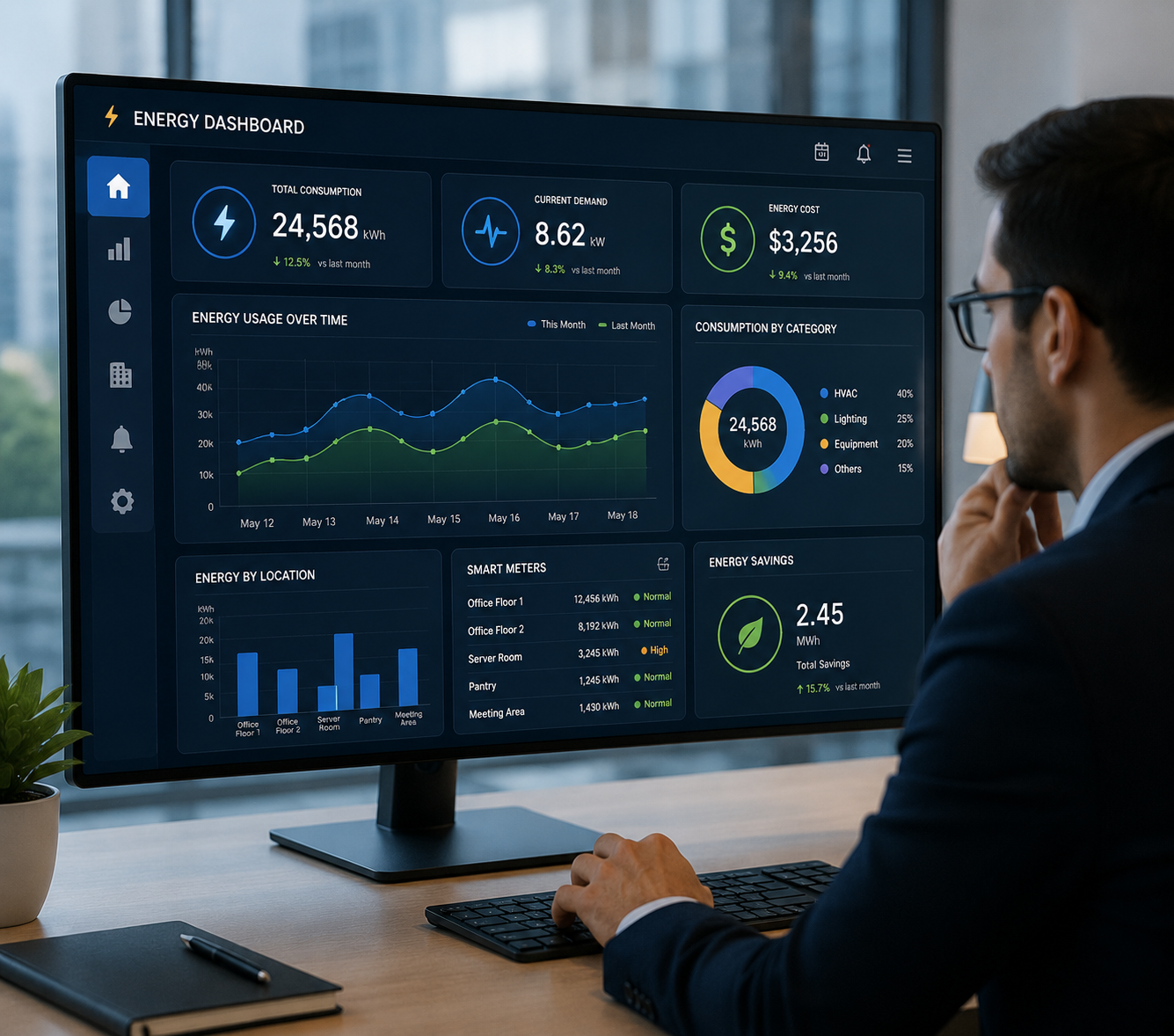
Energy analytics at the office desk

Commercial Buildings

Commercial buildings such as offices, shopping centres, educational institutions, hotels, and public facilities consume large amounts of energy for lighting, heating, cooling, ventilation, elevators, computers, and communication systems. Energy efficiency in commercial buildings focuses on improving building performance while maintaining comfortable indoor conditions for employees, customers, and visitors.

Modern commercial buildings increasingly use smart technologies and automated systems to manage energy consumption more effectively. Efficient building systems help reduce electricity costs, improve occupant comfort, and support environmental sustainability goals.

Common Efficiency Improvements in Commercial Buildings

Smart Lighting Systems

Lighting systems are one of the largest sources of electricity consumption in commercial buildings. Smart lighting systems automatically adjust lighting levels according to occupancy and daylight availability.

These systems may include:

  • Motion sensors
  • Daylight sensors
  • Automated dimming systems
  • Programmable lighting schedules

Smart lighting systems improve efficiency by ensuring that lights operate only when needed.

Benefits include:

  • Reduced electricity consumption
  • Lower lighting costs
  • Improved lighting control
  • Increased equipment lifespan

Automated HVAC Controls

Heating, ventilation, and air conditioning systems consume significant amounts of energy in commercial buildings. Automated HVAC systems use sensors and control technologies to maintain comfortable indoor temperatures while reducing unnecessary energy usage.

Automated controls adjust systems according to:

  • Occupancy levels
  • Indoor temperature conditions
  • Outdoor weather changes
  • Time schedules
  • Air quality requirements

Efficient HVAC systems improve both energy performance and occupant comfort.

Double-Glazed Windows

Windows play an important role in building energy efficiency because heat can easily enter or escape through poorly insulated glass surfaces.

Double-glazed windows contain two layers of glass separated by insulating air or gas. These windows improve energy performance by:

  • Reducing heat loss during winter
  • Limiting heat gain during summer
  • Improving indoor temperature stability
  • Reducing heating and cooling demand

Improved window insulation helps commercial buildings lower energy costs and improve occupant comfort.

Energy-Efficient Elevators and Escalators

Modern elevators and escalators are designed to consume less electricity while operating more efficiently.

Energy-efficient systems may include:

  • Regenerative drive technology
  • Smart standby modes
  • Efficient motor systems
  • LED lighting inside elevators

These improvements help reduce electricity usage in large commercial buildings.

Building Management Systems

Many commercial buildings use centralised building management systems to monitor and control energy consumption throughout the facility.

These systems manage:

  • Lighting systems
  • Heating and cooling equipment
  • Ventilation systems
  • Security systems
  • Water usage

Building management systems improve operational efficiency and allow facility managers to identify areas where energy savings can be achieved.

Improved Insulation and Building Design

Modern building designs focus heavily on energy efficiency through improved insulation and sustainable construction methods.

Efficiency improvements may include:

  • Insulated walls and roofs
  • Reflective roofing materials
  • Energy-efficient ventilation systems
  • Natural daylight integration
  • Sustainable construction materials

These features help reduce overall energy demand and improve environmental performance.

Transportation and Logistics

Transportation and logistics companies consume large amounts of fuel for moving goods, equipment, and passengers. Energy efficiency in this sector focuses mainly on reducing fuel consumption, improving vehicle performance, and optimising transportation operations.

Because fuel costs are a major operational expense, transport companies continuously look for ways to improve efficiency and reduce environmental impact.

Common Efficiency Practices in Transportation and Logistics

Fuel-Efficient Vehicles

Modern vehicles are designed with advanced technologies that improve fuel efficiency and reduce emissions.

Fuel-efficient vehicles may include:

  • Hybrid vehicles
  • Electric vehicles
  • Aerodynamically designed trucks
  • Low-emission engines
  • Lightweight vehicle materials

These technologies help transport companies reduce fuel consumption and operating costs.

Route Optimisation

Efficient route planning helps reduce unnecessary travel distances, traffic delays, and fuel consumption.

Route optimisation systems use:

  • GPS technology
  • Traffic monitoring software
  • Delivery scheduling systems
  • Real-time navigation tools

Efficient route planning improves delivery performance while reducing fuel usage and vehicle wear.

Reducing Vehicle Idle Time

Vehicles consume fuel even when stationary with engines running. Excessive idling wastes fuel and increases emissions.

Transport companies reduce idle time by:

  • Using automatic engine shutdown systems
  • Improving delivery scheduling
  • Training drivers in fuel-efficient driving practices
  • Reducing waiting times at loading areas

Reducing idle time improves fuel efficiency and lowers operational costs.

Fleet Maintenance

Regular vehicle maintenance is essential for maintaining fuel efficiency and operational reliability.

Maintenance activities may include:

  • Engine servicing
  • Tyre pressure monitoring
  • Oil changes
  • Air filter replacement
  • Brake inspections

Well-maintained vehicles consume less fuel and operate more efficiently.

Driver Training Programmes

Driver behaviour has a major impact on fuel consumption and vehicle performance. Transport organisations often provide training programmes that encourage:

  • Smooth acceleration and braking
  • Speed control
  • Fuel-efficient driving habits
  • Proper vehicle operation

Efficient driving practices reduce fuel usage, vehicle wear, and emissions.

Use of Alternative Energy Sources

Some transportation companies are adopting alternative energy solutions to improve sustainability and reduce fuel dependence.

Examples include:

  • Electric delivery vehicles
  • Hydrogen-powered vehicles
  • Biofuel technologies
  • Solar-powered charging systems

Alternative energy technologies support long-term environmental and operational sustainability goals.

Continuous Monitoring and Improvement

Energy management is an ongoing process that requires continuous monitoring, evaluation, and improvement. Organisations must regularly assess energy performance to identify new opportunities for savings and maintain efficiency improvements over time.

Without monitoring, organisations may fail to detect energy waste, equipment problems, or operational inefficiencies.

Importance of Monitoring Energy Use

Monitoring energy use is a fundamental part of modern energy management systems and plays a vital role in improving efficiency, reducing costs, and supporting environmental sustainability. It involves the continuous measurement, recording, and analysis of energy consumption across all areas of an organisation, including buildings, machinery, production processes, and support services. Without proper monitoring, energy waste often goes unnoticed, leading to unnecessary operational costs and reduced system performance.

A structured energy monitoring approach helps organisations gain a clear and detailed understanding of their energy profile. It allows them to identify how much energy is being consumed, which departments or equipment are responsible for high usage, and at what times energy demand peaks occur. This level of insight is essential for controlling energy-intensive operations and improving overall efficiency.

Key Importance and Benefits of Energy Monitoring

1. Understanding Energy Consumption in Detail
Energy monitoring provides accurate data on how energy is used across different systems and processes. This helps organisations move away from assumptions and base decisions on real, measurable evidence rather than estimates.

2. Identifying Inefficiencies and Energy Waste
By analysing consumption patterns, organisations can detect areas where energy is being wasted, such as machines running unnecessarily, poor insulation, outdated equipment, or inefficient operational practices. These inefficiencies can then be corrected to improve performance.

3. Detecting Abnormal Usage and System Failures
Sudden increases in energy usage often indicate problems such as equipment malfunction, electrical faults, or improper usage. Early detection allows maintenance teams to address issues before they develop into costly breakdowns or operational disruptions.

4. Improving Equipment Performance and Maintenance Planning
Energy data can reveal how efficiently equipment is operating. Machines that consume more energy than expected may require servicing, calibration, or replacement. This supports predictive maintenance strategies, reducing downtime and repair costs.

5. Measuring Effectiveness of Energy-Saving Measures
Organisations often implement energy-saving initiatives such as LED lighting, efficient HVAC systems, or automation controls. Monitoring helps evaluate whether these measures are actually delivering the expected savings and performance improvements.

6. Enhancing Operational Control and Efficiency
Real-time or regular monitoring allows managers to control energy usage more effectively. It supports better scheduling of operations, load balancing, and optimisation of energy-intensive processes during off-peak hours.

7. Reducing Operational and Utility Costs
One of the most direct benefits of energy monitoring is cost reduction. By eliminating waste and improving efficiency, organisations can significantly reduce electricity, gas, and fuel expenses over time.

8. Supporting Environmental and Sustainability Goals
Energy monitoring contributes to reducing carbon emissions and environmental impact. It helps organisations meet sustainability targets, comply with environmental regulations, and improve their corporate social responsibility (CSR) performance.

Strategic Importance for Management Decision-Making

Beyond day-to-day operations, energy monitoring plays a strategic role in long-term planning. It provides management with reliable data to make informed decisions about infrastructure upgrades, technology investments, and energy procurement strategies. For example, consistent high energy usage in a particular system may justify replacing it with a more efficient alternative.

It also supports budgeting and forecasting by providing historical energy consumption trends. This enables organisations to predict future energy costs more accurately and plan financial resources effectively.

Conclusion

Overall, monitoring energy use is not just a technical activity but a strategic necessity. It improves efficiency, reduces costs, enhances system reliability, and supports sustainability. Organisations that actively monitor and manage their energy consumption are better positioned to operate efficiently, remain competitive, and meet both financial and environmental objectives in the long term.

Monitoring Tools and Technologies

Modern organisations use various tools to monitor and manage energy performance.

Smart Meters

Smart meters provide real-time information about electricity, gas, or water consumption.

Benefits include:

  • Accurate monitoring
  • Immediate detection of unusual usage
  • Improved consumption analysis

Energy Management Software

Energy management software collects and analyses energy data from multiple systems and locations.

Functions include:

  • Data tracking
  • Performance reporting
  • Trend analysis
  • Energy forecasting

Utility Bill Analysis

Analysing utility bills helps organisations compare energy usage over time and identify abnormal consumption patterns.

Automated Monitoring Systems

Automated systems continuously monitor building operations and equipment performance.

These systems can:

  • Detect faults automatically
  • Adjust operational settings
  • Generate performance reports

Energy Audits

Energy audits involve detailed inspections of buildings, systems, and operational practices to identify energy-saving opportunities.

Audits help organisations:

  • Identify inefficient systems
  • Prioritise improvements
  • Develop energy management plans

Continuous Improvement Process

Continuous improvement is a structured approach used to maintain and enhance energy performance over time.

The process usually includes several stages:

Measuring Current Energy Use

Organisations first collect data to understand current energy consumption patterns and establish performance benchmarks.

Identifying Improvement Opportunities

Areas of inefficiency and waste are identified through inspections, monitoring, and data analysis.

Implementing Energy-Saving Actions

Organisations introduce corrective measures such as equipment upgrades, operational changes, or employee training programmes.

Monitoring Results

Energy performance is monitored after improvements are implemented to measure effectiveness and identify further opportunities.

Reviewing and Updating Strategies

Energy management plans are reviewed regularly to ensure continuous improvement and long-term sustainability.

Importance of Continuous Improvement

Continuous improvement helps organisations:

  • Maintain energy savings over time
  • Adapt to changing operational requirements
  • Improve sustainability performance
  • Reduce long-term operational costs
  • Enhance environmental responsibility
  • Support regulatory compliance

By continuously monitoring and improving energy performance, organisations can achieve long-term operational efficiency, financial savings, and environmental sustainability goals.

3. Objectives of Energy Management in Organisations

Energy management is an essential part of modern organisational operations because it helps businesses use energy resources efficiently while improving financial performance, operational reliability, and environmental sustainability. Organisations across industries implement energy management systems to achieve specific objectives that support long-term business success and responsible resource management.

The objectives of energy management are not limited to reducing electricity consumption alone. Effective energy management also focuses on improving productivity, reducing environmental impact, meeting legal requirements, supporting sustainability goals, and improving overall organisational performance.

As energy costs continue to increase and environmental concerns become more significant, organisations are placing greater importance on managing energy responsibly. Businesses that successfully achieve energy management objectives often experience improved operational efficiency, reduced costs, stronger public reputation, and better long-term sustainability.

The main objectives of energy management include:

  • Reducing operational costs
  • Improving operational performance
  • Protecting the environment
  • Achieving regulatory compliance
  • Supporting sustainability goals
  • Improving resource efficiency
  • Enhancing organisational reputation

Cost Reduction

One of the primary objectives of energy management is reducing operational costs. Energy expenses often represent a significant portion of organisational spending, particularly in industries such as manufacturing, transportation, healthcare, hospitality, and commercial building operations.

Electricity, fuel, heating, cooling, lighting, and machinery operation all require substantial amounts of energy. If energy is not managed properly, organisations may experience unnecessary financial losses due to inefficient systems, outdated equipment, and excessive energy consumption.

Energy management helps organisations identify areas where energy is being wasted and implement measures that reduce unnecessary consumption while maintaining productivity and operational performance.

Reducing energy costs improves financial stability and allows organisations to use resources more effectively in other business areas such as:

  • Staff development
  • Equipment upgrades
  • Research and innovation
  • Business expansion
  • Maintenance improvements

Workplace Example

A manufacturing factory may replace outdated electric motors with high-efficiency motor systems. Older motors often consume large amounts of electricity and operate less efficiently due to wear, poor design, or outdated technology.

Modern energy-efficient motors can:

  • Reduce electricity consumption
  • Improve operational reliability
  • Generate less heat
  • Lower maintenance requirements
  • Maintain or improve production output

As a result, the factory reduces electricity costs while continuing to operate at the same or higher production levels.

Benefits of Cost Reduction

Reducing energy costs is one of the most significant advantages of effective energy management. When organisations actively monitor and optimise their energy consumption, they can achieve substantial financial savings while also improving overall operational efficiency. These savings directly strengthen the organisation’s financial position and support long-term growth and sustainability.

Increased Profitability

One of the most immediate benefits of cost reduction is improved profitability. When energy consumption is reduced, overall operational expenses decrease, allowing organisations to retain a larger portion of their revenue as profit. Lower utility bills and improved efficiency in energy-intensive processes contribute directly to stronger financial performance and higher profit margins over time.

Better Budget Control

Effective energy cost reduction enables organisations to plan and manage their budgets more accurately. With reduced and more predictable energy expenses, financial forecasting becomes more reliable. This helps management allocate resources efficiently, avoid unexpected cost spikes, and maintain better control over monthly and annual operational budgets.

Reduced Operational Expenses

Energy-efficient practices lead to a significant reduction in day-to-day operational costs. These savings are not limited to electricity bills alone but also include reduced fuel consumption, lower maintenance requirements, and improved equipment lifespan. Efficient systems operate more smoothly, reducing wear and tear and decreasing the need for frequent repairs or replacements.

Improved Business Competitiveness

Lower operational costs give organisations a competitive advantage in the market. Businesses that spend less on energy and operations can often offer more competitive pricing to customers while maintaining healthy profit margins. This improves market positioning, increases customer attraction, and enhances overall business performance in competitive industries.

Greater Financial Stability

Reducing energy costs contributes to stronger financial stability, especially during periods of economic uncertainty or rising energy prices. Organisations that depend less on high energy consumption are better protected against price fluctuations in utilities and fuel markets. This stability allows for more consistent operations and long-term financial resilience.

Improved Investment Opportunities

Cost savings generated through energy efficiency can be redirected into more productive areas of the organisation. These may include investment in advanced technologies, staff development and training, process improvements, or business expansion. Instead of spending excessive funds on energy bills, organisations can use savings to drive innovation and future growth.

Overall, cost reduction through energy efficiency is not only about saving money but also about strengthening the entire organisation. It improves profitability, enhances financial planning, reduces operational burdens, and creates opportunities for reinvestment. Organisations that prioritise energy cost reduction are better positioned for sustainable success and long-term competitiveness.
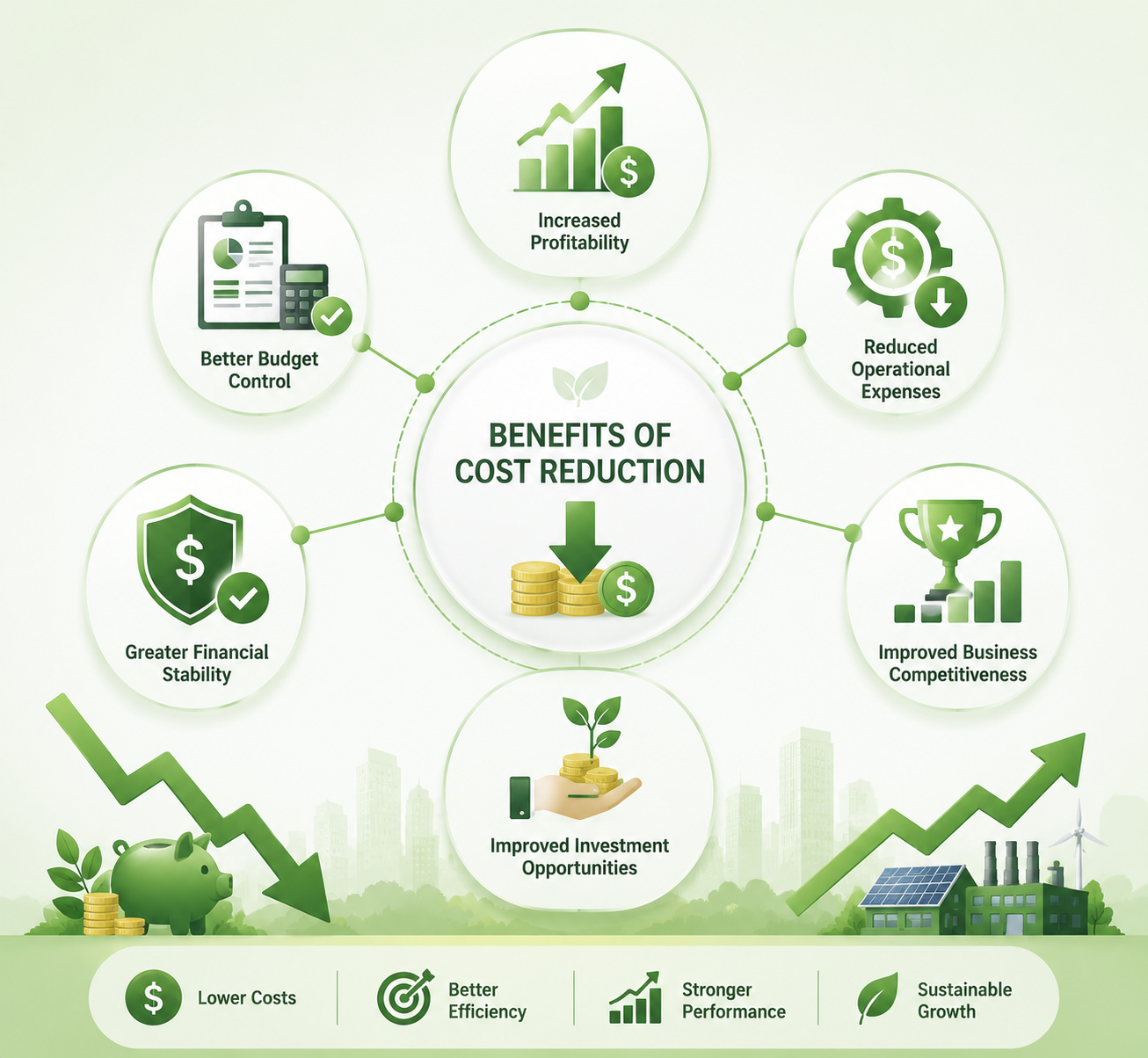
Benefits of Cost Reduction

Improved Operational Performance

Another major objective of energy management is improving operational performance throughout the organisation. Efficient energy systems help equipment, machinery, and building services operate more reliably and effectively.

Poor energy management often leads to equipment failures, unstable operating conditions, increased downtime, and reduced productivity. By improving energy efficiency and maintaining systems properly, organisations can enhance operational reliability and workplace performance.

Energy-efficient systems help create smoother operations by reducing unnecessary strain on equipment and improving system stability.

Examples of Improved Operational Performance

Efficient Lighting Systems

Modern lighting systems improve workplace visibility, reduce eye strain, and create more comfortable working environments for employees.

Improved lighting can contribute to:

  • Better employee concentration
  • Increased productivity
  • Reduced workplace accidents
  • Improved customer experience

Proper Equipment Maintenance

Regular maintenance helps machinery operate more efficiently and reduces the risk of unexpected breakdowns.

Well-maintained equipment:

  • Consumes less energy
  • Operates more reliably
  • Produces consistent performance
  • Experiences fewer operational interruptions

Automated Systems and Smart Controls

Automation improves operational accuracy by controlling systems according to actual demand and working conditions.

Examples include:

  • Automated HVAC systems
  • Smart lighting controls
  • Automated production systems
  • Energy monitoring technologies

Automation reduces human error and improves energy efficiency across operations.

Organisational Benefits of Improved Performance

Improving organisational performance through effective energy management, maintenance, and efficient operational systems delivers wide-ranging benefits. When equipment, processes, and workplace environments operate at optimal levels, organisations experience fewer disruptions, higher productivity, and stronger overall reliability. These improvements support long-term business stability, cost efficiency, and customer satisfaction.

Reduced Downtime

Reduced downtime is a key benefit of improved performance. When systems are properly maintained and operate efficiently, the risk of unexpected breakdowns is significantly lowered. This helps ensure that production processes and services continue without interruption. As a result, organisations can avoid costly delays, meet deadlines more consistently, and maintain smooth day-to-day operations.

Increased Productivity

Improved performance directly enhances employee productivity. When equipment functions reliably and workplace systems such as lighting, heating, and ventilation operate effectively, employees can work more comfortably and efficiently. Reduced interruptions and fewer technical issues allow staff to focus on their tasks, leading to higher output and better overall performance.

Improved Equipment Lifespan

Well-maintained and efficiently operated systems experience less strain during use, which significantly extends their lifespan. Regular maintenance, monitoring, and proper usage help prevent excessive wear and damage to equipment. This reduces the need for frequent replacements, lowers capital costs, and ensures long-term operational reliability.

Better Working Conditions

Efficient organisational systems contribute to improved workplace conditions. Properly functioning heating, cooling, ventilation, and lighting systems create a comfortable and safe environment for employees. Good working conditions reduce fatigue, improve concentration, and support employee wellbeing, which in turn enhances overall performance and job satisfaction.

Improved Service Quality

When organisational systems operate consistently and efficiently, service and product quality naturally improves. Reliable processes reduce errors, inconsistencies, and delays in production or service delivery. This ensures that customers receive a consistent standard of quality, strengthening trust, satisfaction, and brand reputation.

Greater Operational Reliability

Improved performance increases the overall reliability of organisational operations. Stable systems reduce the likelihood of sudden failures and unexpected disruptions, allowing businesses to operate more predictably. This reliability is essential for maintaining workflow continuity, meeting customer expectations, and achieving organisational goals effectively.

Conclusion

Overall, improved organisational performance provides significant operational and strategic advantages. It reduces downtime, increases productivity, extends equipment lifespan, enhances working conditions, and improves service quality. These combined benefits contribute to a more efficient, reliable, and sustainable organisation capable of achieving long-term success.
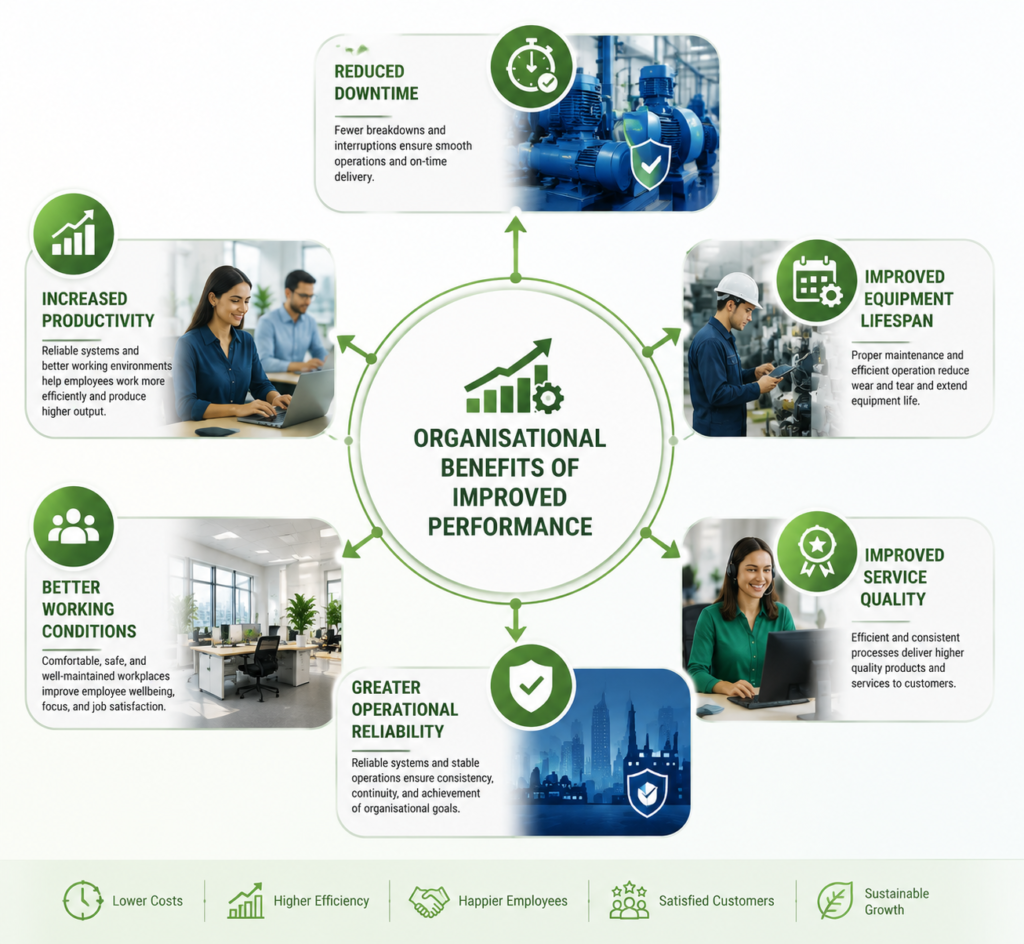
Organisational benefits of improved performance

Environmental Protection

Environmental protection has become one of the most important objectives of energy management. Organisations are increasingly expected to reduce their environmental impact and operate in environmentally responsible ways.

Traditional energy generation methods, particularly those using fossil fuels such as coal, oil, and natural gas, contribute significantly to greenhouse gas emissions, air pollution, and climate change. Excessive energy consumption increases environmental damage and places additional pressure on natural resources.

Energy management helps organisations reduce energy waste, improve efficiency, and lower environmental impact by reducing overall energy consumption and supporting cleaner energy solutions.

Environmental Benefits of Energy Management

Effective energy management plays a crucial role in reducing environmental impact and promoting sustainable development. By monitoring, controlling, and optimising energy use, organisations can significantly reduce their ecological footprint. This not only benefits the environment but also supports compliance with environmental regulations and enhances corporate social responsibility.

Lower Carbon Emissions

One of the most important environmental benefits of energy management is the reduction of carbon emissions. When organisations use less energy or switch to more efficient systems, the demand for fossil fuel-based energy production decreases. This results in a significant reduction in carbon dioxide (CO₂) and other greenhouse gases released into the atmosphere. Over time, this helps slow down climate change and reduces the organisation’s overall carbon footprint.

Reduced Air Pollution

Energy-efficient systems also contribute to lower levels of air pollution. Traditional energy generation methods, particularly those involving coal, oil, and gas, release harmful pollutants such as sulfur dioxide, nitrogen oxides, and particulate matter. By improving energy efficiency and reducing unnecessary energy use, organisations help decrease the demand for these polluting energy sources. This leads to cleaner air, improved public health, and a safer environment for surrounding communities.

Conservation of Natural Resources

Energy management supports the responsible use of natural resources by reducing dependency on non-renewable energy sources. Fossil fuels such as coal, oil, and natural gas are limited and take millions of years to form. Efficient energy use ensures that these resources are consumed more slowly, helping to preserve them for future generations. In addition, efficient systems also reduce excessive water usage in energy production processes, further supporting environmental conservation.

Support for Renewable Energy Use

A strong energy management system encourages organisations to adopt cleaner and more sustainable energy sources. Renewable energy technologies help reduce reliance on fossil fuels and lower environmental impact. Common renewable energy options include:

Solar power systems that convert sunlight into electricity
Wind energy systems that generate power using wind turbines
Biomass energy systems that produce energy from organic materials
Hydropower systems that generate electricity from flowing water

By integrating these renewable sources, organisations can significantly reduce greenhouse gas emissions and improve long-term energy sustainability.

Improved Environmental Sustainability

Energy management contributes to overall environmental sustainability by promoting efficient resource use and reducing waste. Organisations that implement energy-efficient practices help protect ecosystems, reduce environmental degradation, and support global sustainability goals. These efforts also align with international environmental standards and policies aimed at achieving a greener and more sustainable future.

Conclusion

In summary, energy management provides significant environmental benefits, including lower carbon emissions, reduced air pollution, conservation of natural resources, and increased use of renewable energy. By adopting energy-efficient practices, organisations play an important role in protecting the environment and ensuring long-term ecological balance for future generations.

Workplace Example

A commercial office building may install solar panels to generate renewable electricity for lighting, office equipment, and building operations.

By using solar energy, the organisation can:

  • Reduce dependence on fossil fuels
  • Lower electricity costs
  • Reduce greenhouse gas emissions
  • Improve sustainability performance
  • Enhance environmental reputation

This demonstrates how energy management supports both environmental and financial objectives.

Regulatory Compliance

Regulatory compliance is a key objective of energy management because many organisations are legally required to follow environmental laws, energy efficiency regulations, and sustainability standards set by government authorities and international regulatory bodies. These regulations are designed to control energy consumption, reduce carbon emissions, protect natural resources, and promote environmentally responsible business practices.

Energy management supports organisations in meeting these legal requirements by improving energy efficiency, reducing unnecessary consumption, and ensuring that operational activities align with approved environmental standards. In modern industries, compliance is not optional; it is a mandatory requirement that directly affects whether an organisation can legally operate in a specific sector or region.

As environmental regulations become stricter worldwide, organisations must continuously improve their energy performance to avoid legal risks and ensure long-term operational stability. Energy management systems provide structured processes for monitoring energy use, maintaining records, and ensuring ongoing compliance with relevant laws and standards.

Failure to comply with energy and environmental regulations can lead to serious consequences such as:

  • Legal penalties and court actions
  • Heavy financial fines and compensation costs
  • Restrictions on business operations
  • Temporary or permanent closure of facilities
  • Loss of licences or certifications
  • Damage to brand reputation and public trust
  • Reduced investor and stakeholder confidence

Because of these risks, organisations invest in formal energy management systems to ensure compliance with all applicable environmental legislation and industry requirements. These systems also support accurate reporting, documentation, and continuous monitoring of energy performance.

Importance of Regulatory Compliance

Avoiding Legal Penalties

One of the most important reasons for ensuring regulatory compliance is to avoid legal consequences. Organisations that fail to meet environmental or energy efficiency requirements may face enforcement actions, fines, or legal proceedings.

Energy management helps organisations to:

  • Meet legal energy performance requirements
  • Follow environmental protection laws
  • Maintain required reporting and documentation standards
  • Prevent violations of regulatory frameworks

By ensuring compliance, organisations reduce legal risks and maintain uninterrupted business operations.

Meeting Government Regulations

Governments introduce energy and environmental regulations to reduce pollution, improve energy efficiency, and promote sustainable development. Organisations must align their operations with these rules to remain compliant.

Energy-efficient practices help organisations to:

  • Reduce total energy consumption
  • Meet carbon emission targets
  • Comply with building energy performance standards
  • Follow industry-specific environmental rules
  • Improve energy reporting accuracy

For example, commercial buildings may need to meet minimum energy efficiency ratings, while manufacturing companies may be required to report and control emissions. Energy management ensures these requirements are consistently achieved.

Improving Public Reputation

Compliance with environmental regulations significantly improves an organisation’s public image. In today’s market, customers, investors, and stakeholders prefer organisations that demonstrate environmental responsibility and ethical business practices.

Organisations that comply with regulations are often seen as:

  • Environmentally responsible
  • Trustworthy and ethical
  • Sustainable and forward-thinking
  • Professionally reliable

A strong compliance record enhances brand reputation, builds customer loyalty, and increases competitiveness in both local and international markets.

Demonstrating Corporate Responsibility

Regulatory compliance also reflects an organisation’s commitment to corporate responsibility. It shows that the organisation is focused not only on financial performance but also on environmental protection and sustainable development.

Through effective energy management, organisations demonstrate responsibility by:

  • Reducing carbon emissions
  • Minimising environmental impact
  • Using natural resources efficiently
  • Supporting clean energy initiatives
  • Following ethical operational practices

This strengthens stakeholder confidence and supports long-term organisational credibility.

Supporting Industry Standards

Many industries operate under recognised national and international energy and environmental standards. These standards ensure consistency, efficiency, and sustainability across different sectors.

Energy management helps organisations comply with standards such as:

  • Energy efficiency performance frameworks
  • Environmental management system requirements
  • Sustainability certification standards
  • Industry-specific compliance guidelines

Following these standards ensures organisations remain competitive and aligned with best global practices.

Improving Business Opportunities

Compliance with energy and environmental regulations can also create new business opportunities. Many clients, governments, and international organisations require proof of compliance before awarding contracts or forming partnerships.

Energy management helps organisations to:

  • Qualify for government and international tenders
  • Meet supplier sustainability requirements
  • Attract environmentally conscious investors
  • Strengthen partnership opportunities
  • Improve eligibility for green certifications and projects

Strong compliance performance often becomes a competitive advantage in modern markets.

Supporting Sustainability Goals

Supporting sustainability is a major objective of energy management. Sustainability involves balancing economic development, environmental protection, and responsible resource use to ensure long-term stability for both organisations and society.

Energy management contributes to sustainability by reducing energy waste, improving efficiency, and encouraging responsible use of natural resources. These improvements help organisations maintain productivity while reducing their environmental impact.

In today’s business environment, sustainability is a core expectation from customers, governments, investors, and communities. Organisations that adopt sustainable practices are better positioned for long-term success and resilience.

Energy management supports sustainability by integrating environmental responsibility into everyday operational decisions and long-term strategic planning.

Sustainability Actions in Energy Management

Using Renewable Energy

One of the most effective sustainability strategies is the use of renewable energy sources. These energy sources reduce reliance on fossil fuels and significantly lower environmental impact.

Common renewable energy options include:

  • Solar energy systems for electricity generation
  • Wind energy systems for large-scale power supply
  • Biomass energy for heating and fuel production
  • Renewable heating and cooling technologies

By adopting renewable energy, organisations reduce emissions and improve long-term energy security.

Reducing Energy Waste

Reducing energy waste is essential for achieving sustainability. Unnecessary energy consumption increases costs and environmental damage.

Energy management supports waste reduction by:

  • Eliminating inefficient operational practices
  • Upgrading outdated systems and equipment
  • Improving maintenance procedures
  • Monitoring energy use continuously
  • Promoting responsible employee behaviour

Lower energy waste leads to reduced environmental impact and improved resource conservation.

Improving Resource Efficiency

Resource efficiency focuses on using energy, water, and raw materials in the most effective way possible. It ensures that organisations achieve maximum output with minimum environmental impact.

This includes:

  • Optimising electricity and fuel use
  • Reducing water consumption
  • Minimising material waste in operations
  • Improving recycling and reuse systems

Efficient resource use supports both environmental sustainability and cost reduction.

Promoting Sustainable Operations

Sustainable operations are designed to reduce environmental impact while maintaining productivity and service quality. These practices are integrated into daily business activities.

Examples include:

  • Energy-efficient production methods
  • Environmentally friendly building design
  • Green procurement policies
  • Waste reduction strategies
  • Sustainable supply chain practices

These actions help organisations operate responsibly and efficiently.

Encouraging Employee Participation

Employee involvement is essential for achieving sustainability goals because staff directly influence energy use in daily operations.

Organisations encourage employees to:

  • Follow energy-saving procedures
  • Reduce unnecessary energy consumption
  • Report inefficiencies and faults
  • Participate in sustainability training
  • Support recycling and conservation efforts

Active employee participation ensures sustainability practices are consistently applied across the organisation.

Supporting Long-Term Environmental Goals

Energy management contributes to global environmental objectives such as climate change reduction, carbon neutrality, and sustainable development.

Through effective energy management, organisations help to:

  • Reduce greenhouse gas emissions
  • Support global climate action targets
  • Conserve natural resources for future generations
  • Promote clean and sustainable technologies
  • Strengthen environmental resilience

By aligning operations with long-term environmental goals, organisations contribute to a more sustainable global future.

Importance of Energy Management Objectives

The objectives of energy management are interrelated and work together to support the overall improvement and long-term success of an organisation. Energy management is not focused on a single outcome; instead, it integrates financial, operational, environmental, and strategic goals to ensure that energy resources are used in the most efficient and responsible way possible.

When organisations effectively implement energy management systems, they achieve multiple benefits at the same time. These include reduced operational costs, improved system performance, lower environmental impact, enhanced compliance with regulations, and stronger sustainability outcomes. The combined effect of these improvements contributes directly to organisational stability, growth, and competitiveness.

Energy management objectives also help organisations create a structured approach to decision-making. Instead of reacting to high energy costs or equipment failures, organisations can proactively monitor energy use, identify inefficiencies, and implement long-term improvement strategies. This proactive approach leads to better control over resources and more predictable operational performance.

In modern business environments, where energy costs are increasing and environmental expectations are becoming stricter, energy management objectives play a crucial role in ensuring that organisations remain efficient, responsible, and competitive.

When organisations successfully achieve energy management objectives, they are able to:

  • Improve long-term business performance by reducing unnecessary energy consumption and increasing operational efficiency
  • Reduce operational risks by identifying energy inefficiencies, preventing equipment failures, and ensuring system reliability
  • Increase competitiveness by lowering operational costs and improving productivity compared to competitors
  • Support environmental responsibility by reducing emissions, conserving natural resources, and promoting cleaner energy use
  • Improve workplace efficiency by creating better working conditions through reliable lighting, heating, cooling, and equipment performance
  • Strengthen organisational reputation by demonstrating commitment to sustainability, compliance, and responsible business practices
  • Create more sustainable operations by integrating energy efficiency into daily activities and long-term strategic planning

These objectives are not isolated; they reinforce each other. For example, reducing energy waste not only lowers costs but also improves environmental performance and enhances system reliability. Similarly, improving operational efficiency supports both financial savings and sustainability goals.
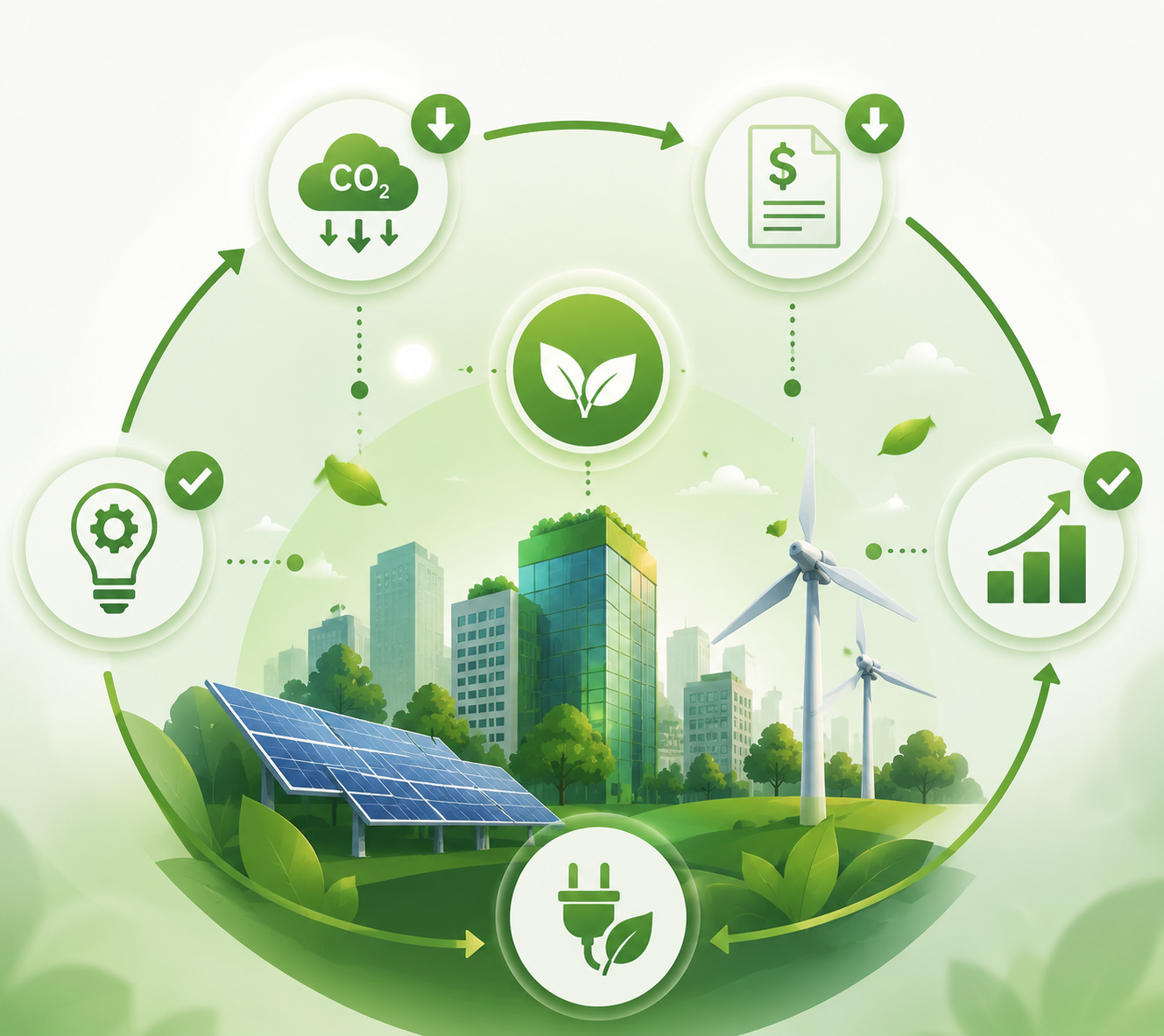
Green city sustainability flow diagram

Overall, energy management objectives provide a clear framework for organisations to operate efficiently while maintaining a balance between economic performance and environmental responsibility. By understanding and applying these objectives, organisations can develop strong, resilient, and future-ready systems that support long-term success, sustainability, and responsible resource use.
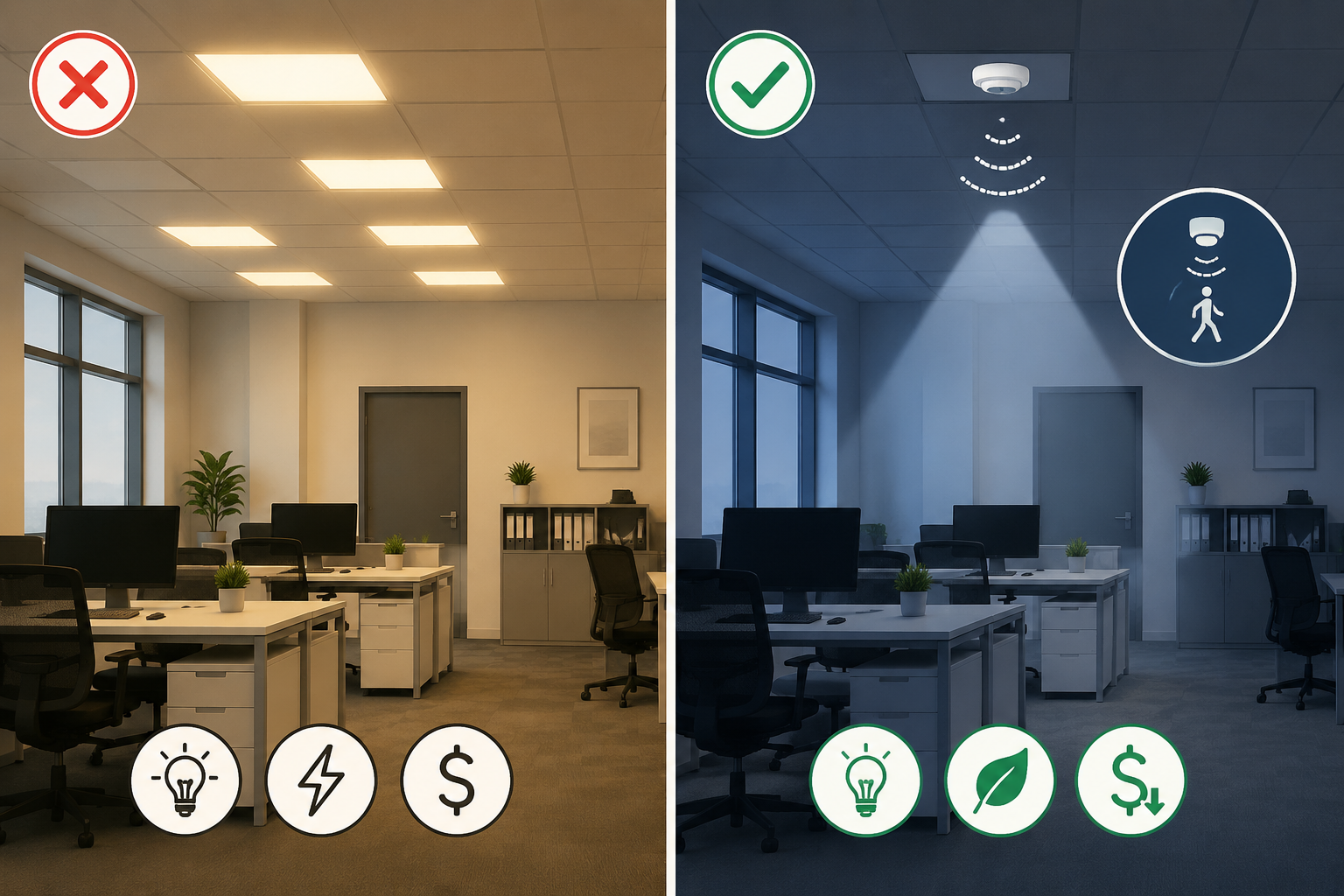
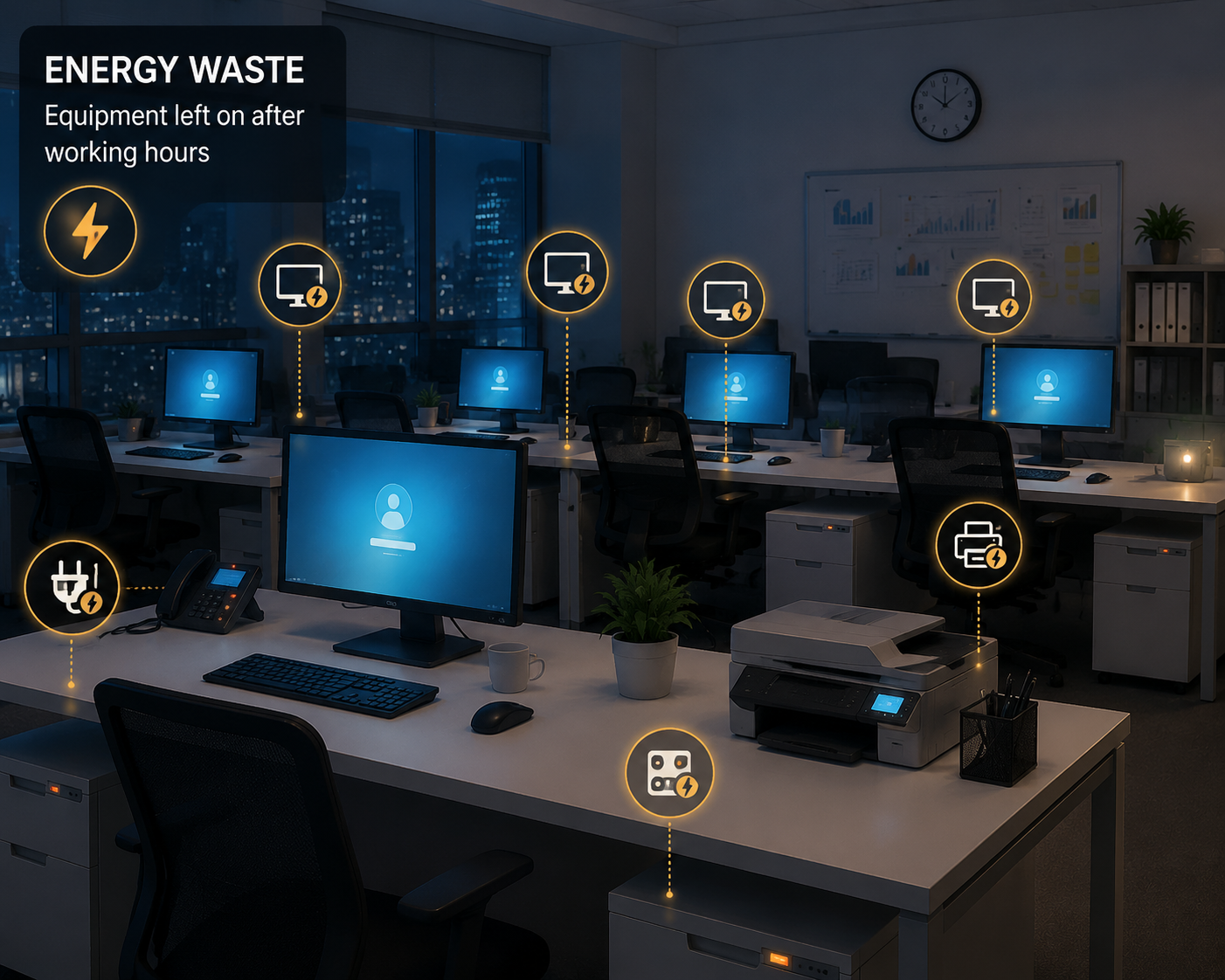
4. Applying Energy Management Knowledge in a Workplace Scenario

Applying energy management knowledge in real workplace situations is essential for understanding how theoretical concepts translate into practical improvements. In actual organisational environments, energy inefficiencies are often caused by daily operational habits, outdated systems, lack of monitoring, and insufficient awareness among employees. By analysing these issues and applying structured energy management principles, organisations can significantly improve energy performance, reduce costs, and enhance sustainability outcomes.

Workplace Scenario

A medium-sized office building is experiencing consistently high electricity costs every month. Upon closer observation, the building management team identifies several operational inefficiencies. Employees frequently leave computers, monitors, and lighting systems switched on after working hours. In addition, the air conditioning system continues to operate even when meeting rooms and certain office areas are not in use.

The building currently lacks a structured energy monitoring system, and there are no automated controls in place to regulate energy use. Employee awareness regarding energy conservation is also limited, leading to careless energy usage throughout daily operations. As a result, the organisation is facing increased electricity bills, unnecessary energy waste, and reduced operational efficiency.

The management team decides to implement energy management strategies to improve efficiency, reduce costs, and promote responsible energy usage across the workplace.

Analysis of Energy Issues

A comprehensive evaluation of the office building reveals multiple interconnected energy inefficiencies that are contributing to excessive electricity consumption, increased operational costs, and reduced overall energy performance. These issues are not caused by a single factor but rather a combination of behavioural habits, lack of automation, absence of monitoring systems, and insufficient energy awareness among staff.

When energy usage is not properly controlled or monitored, even small inefficiencies can accumulate over time and result in significant financial losses. In this case, the building management team identifies several critical problem areas that require immediate attention and structured energy management interventions.

Lights Left On Unnecessarily

One of the most common sources of energy waste in the office building is the continuous operation of lighting systems in unoccupied areas. Lights are frequently left switched on in meeting rooms, corridors, washrooms, storage areas, and individual workspaces even when these spaces are not in use.

This issue highlights two major underlying problems: the absence of automated lighting control systems and insufficient awareness among employees regarding energy conservation practices. Without proper control mechanisms, lighting systems depend entirely on manual switching, which increases the likelihood of human error and negligence.

Over time, this unnecessary lighting leads to:

  • Continuous electricity consumption in empty spaces
  • Increased operational energy costs
  • Reduced efficiency of building energy systems
  • Unnecessary strain on lighting infrastructure

This type of waste is particularly significant in large office environments where multiple lighting zones operate simultaneously throughout the day.

Office lighting comparison efficiency vs waste

Computers and Office Equipment Left Running

Another major source of energy inefficiency is the improper use of office equipment, particularly computers, monitors, printers, and other electronic devices. Many of these devices remain powered on after working hours or during long periods of inactivity.

Even when not actively in use, office equipment continues to consume standby or idle power. This phenomenon, often referred to as “phantom load” or “vampire energy consumption,” significantly increases total electricity demand over time.

The key issues identified include:

  • Computers left running overnight or during weekends
  • Monitors and printers not switched off after use
  • Lack of automatic power-saving or shutdown settings
  • Continuous standby energy consumption across multiple devices

This behaviour results in unnecessary energy waste and contributes to higher electricity bills without providing any operational benefit.

Energy waste in the office at night

Continuous Operation of Air Conditioning Systems

The building’s heating, ventilation, and air conditioning (HVAC) system is operating continuously without proper adjustment based on occupancy levels or environmental conditions. This means that cooling or heating is being provided even in areas that are not currently in use.

Meeting rooms, unused offices, and low-occupancy zones are being conditioned unnecessarily, leading to excessive energy consumption. The lack of zoning control or automated temperature regulation further increases inefficiency.

Key issues include:

  • HVAC systems running regardless of occupancy
  • Lack of temperature zoning for different areas
  • No automatic adjustment based on working hours
  • Inefficient cooling or heating of unoccupied spaces

This continuous operation significantly increases electricity usage and places unnecessary strain on HVAC equipment, leading to higher maintenance costs and reduced system lifespan.

Lack of Energy Monitoring Systems

A critical weakness in the building’s energy management structure is the absence of proper energy monitoring systems. The facility does not currently use smart meters, energy tracking software, or automated data collection systems to analyse energy consumption patterns.

Without monitoring tools, it becomes extremely difficult for management to:

  • Identify where energy is being wasted
  • Track consumption trends over time
  • Detect unusual spikes in energy usage
  • Evaluate the performance of energy-saving initiatives
  • Make informed operational decisions

This lack of visibility means that energy inefficiencies often go unnoticed for long periods, resulting in continuous waste and missed opportunities for improvement.

Energy monitoring is essential because it provides the data required for effective decision-making and long-term energy planning.

Poor Employee Awareness

Employee behaviour plays a significant role in overall energy consumption within the office. In this case, employees have not been adequately trained or informed about energy conservation practices and their importance.

As a result, many routine actions contribute unintentionally to energy waste. These include leaving equipment on, using lighting inefficiently, and failing to follow basic energy-saving procedures.

Key issues related to employee awareness include:

  • Lack of formal energy efficiency training
  • Limited understanding of energy costs and impacts
  • Absence of workplace energy policies or reminders
  • Inconsistent energy-saving behaviour among staff

This lack of awareness leads to missed opportunities for simple but effective energy-saving actions that could significantly reduce consumption.

Combined Impact of Identified Issues

When all these problems are considered together, their combined effect on the organisation is substantial. The interaction of inefficient lighting, unmanaged equipment usage, uncontrolled HVAC systems, lack of monitoring, and poor employee awareness results in:

  • Significantly higher electricity bills
  • Continuous and unnecessary energy waste
  • Reduced operational efficiency
  • Increased environmental impact
  • Greater strain on building systems and equipment
  • Lower overall sustainability performance

These issues demonstrate the urgent need for a structured and well-implemented energy management strategy.

Practical Actions for Improvement

To address the identified inefficiencies, the organisation introduces a series of targeted energy management solutions. These measures are designed to improve control, reduce waste, and enhance overall energy performance across the building.

Installing Automated Lighting Controls

One of the most effective initial improvements is the introduction of automated lighting control systems throughout the building. These systems are designed to reduce unnecessary lighting usage by ensuring that lights operate only when required.

Motion sensor technology is installed in key areas such as meeting rooms, corridors, washrooms, storage spaces, and low-traffic zones. These sensors detect movement and automatically control lighting based on occupancy.

The system operates in the following way:

  • Lights automatically switch on when movement is detected
  • Lights automatically switch off when no movement is detected for a set period
  • Lighting levels are adjusted based on usage patterns
  • Manual override options are available for specific requirements

This automated approach eliminates the risk of lights being left on in empty spaces and significantly reduces electricity consumption.

The benefits of this system include:

  • Reduced unnecessary energy usage
  • Lower electricity costs
  • Improved operational efficiency
  • Extended lifespan of lighting systems
  • Enhanced sustainability performance

By implementing automated lighting controls, the organisation takes an important step toward improving energy efficiency and reducing avoidable energy waste.

Implementing Employee Awareness Programmes

A structured energy awareness programme is introduced to educate employees about responsible energy use. Training sessions and workplace reminders encourage staff to adopt energy-saving behaviours.

Employees are guided to:

  • Turn off lights when leaving rooms
  • Shut down computers and equipment after use
  • Avoid unnecessary energy consumption
  • Report energy inefficiencies or faults
  • Support organisational sustainability initiatives

Improving employee behaviour plays a key role in reducing overall energy waste.

Eco-friendly office energy savings guide

Upgrading HVAC Control Systems

The air conditioning system is upgraded with programmable thermostats and automated controls. These systems regulate temperature based on occupancy levels, working hours, and environmental conditions.

This ensures that heating and cooling systems operate efficiently and only when required, significantly reducing unnecessary energy consumption.

Implementing Energy Monitoring Systems

Smart meters and energy management software are installed to monitor electricity usage in real time. These systems allow management to:

  • Track energy consumption across different areas
  • Identify unusual usage patterns
  • Monitor peak demand periods
  • Evaluate system performance
  • Support data-driven decision-making

Energy monitoring provides valuable insights that help continuously improve efficiency.

Scheduling Automatic Equipment Shutdowns

Computer systems and office equipment are configured to automatically shut down or enter low-energy modes after office hours or periods of inactivity. This reduces standby power consumption and ensures that equipment is not left running unnecessarily.

Automated shutdown scheduling helps maintain consistent energy-saving practices throughout the organisation.

Expected Outcomes

After implementing the proposed energy management measures, the organisation is expected to experience significant and measurable improvements across financial performance, operational efficiency, environmental impact, and workplace behaviour. These outcomes are the result of combining technological improvements, behavioural change, and continuous monitoring systems that together create a more controlled and efficient energy environment.

In the short term, the organisation will begin to notice immediate reductions in unnecessary energy consumption, particularly in areas such as lighting, HVAC systems, and office equipment usage. Over time, these improvements will develop into long-term operational savings and more sustainable energy practices across the entire building.

The expected outcomes include:

Reduced Electricity Bills Due to Lower Energy Consumption

One of the most immediate and visible outcomes is a reduction in monthly electricity costs. By eliminating unnecessary energy use, such as lights left on in empty rooms, idle office equipment, and inefficient air conditioning operation, the total energy demand of the building will decrease significantly.

Lower electricity consumption directly results in:

  • Reduced utility bills
  • Lower peak demand charges
  • More predictable energy expenditure
  • Improved financial control over operational budgets

This financial saving can then be redirected towards other organisational priorities such as equipment upgrades, staff training, or further sustainability initiatives.

Minimized Energy Waste Across Lighting, HVAC, and Office Equipment

The implementation of automated systems and improved energy practices will significantly reduce energy waste across all major consumption areas.

Key improvements include:

  • Lighting systems operating only when spaces are occupied
  • HVAC systems adjusting automatically based on occupancy and temperature needs
  • Office equipment entering energy-saving or shutdown modes when not in use
  • Reduced standby power consumption from electronic devices

This leads to a more efficient use of energy resources and eliminates unnecessary consumption throughout the building.

Improved Environmental Performance Through Reduced Carbon Emissions

As energy consumption decreases, the organisation’s environmental impact also reduces. Lower electricity usage means fewer greenhouse gas emissions associated with energy production, particularly if the energy supply is derived from fossil fuels.

Environmental improvements include:

  • Reduced carbon dioxide emissions
  • Lower overall environmental footprint
  • Improved air quality impact through reduced energy generation demand
  • Stronger contribution to sustainability and climate goals

This helps the organisation align with environmental regulations and global sustainability standards.

Increased Employee Awareness and Responsibility Regarding Energy Use

The introduction of energy awareness programmes and training initiatives leads to positive behavioural change among employees. Staff become more conscious of how their actions impact energy consumption and organisational costs.

Expected behavioural improvements include:

  • Turning off lights when leaving rooms
  • Shutting down computers and equipment after use
  • Using HVAC systems more responsibly
  • Reporting energy inefficiencies or faults
  • Actively supporting sustainability initiatives

Over time, this creates a workplace culture that supports continuous energy efficiency and responsible resource usage.

Enhanced Operational Efficiency Through Better System Control and Automation

The integration of automated lighting systems, smart HVAC controls, and energy monitoring tools significantly improves overall operational efficiency within the organisation.

These systems allow for:

  • Real-time control of energy usage
  • Automatic adjustment of lighting and temperature based on occupancy
  • Reduced manual intervention in energy management
  • Improved coordination between different building systems
  • More consistent and reliable energy performance

This results in smoother daily operations, reduced human error, and improved system reliability.

Improved Equipment Lifespan Due to Reduced Unnecessary Usage

Energy-efficient practices and better system control reduce unnecessary strain on electrical and mechanical equipment. When devices are used more efficiently and only when required, their operational stress is significantly reduced.

This leads to:

  • Longer lifespan of lighting systems, HVAC units, and office equipment
  • Reduced frequency of breakdowns and repairs
  • Lower maintenance and replacement costs
  • Improved reliability of building systems

As a result, the organisation benefits from better return on investment for its equipment and infrastructure.

Better Data Visibility for Future Energy Planning and Decision-Making

The introduction of energy monitoring systems provides the organisation with detailed and accurate data about energy consumption patterns across different areas of the building.

This improved visibility allows management to:

  • Identify high-energy-consuming areas and systems
  • Track energy usage trends over time
  • Measure the effectiveness of energy-saving initiatives
  • Make informed decisions about future investments
  • Develop long-term energy reduction strategies

With access to reliable data, the organisation can move from reactive energy management to a proactive, data-driven approach that supports continuous improvement.

Overall Impact of Expected Outcomes

Collectively, these outcomes demonstrate how structured energy management practices can transform organisational performance. By combining technology, employee engagement, and continuous monitoring, the organisation achieves improvements that extend beyond cost savings.

The overall impact includes:

  • Stronger financial stability
  • Improved operational performance
  • Enhanced environmental responsibility
  • Increased workplace efficiency
  • Long-term sustainability development
  • Better strategic decision-making capability

Ultimately, these improvements show that effective energy management is not only about reducing energy use, but also about building a more efficient, responsible, and future-ready organisation.

Conclusion

Energy management is a vital discipline that enables organisations to improve efficiency, reduce operational costs, and support environmental sustainability. By understanding key concepts such as energy use, energy efficiency, and energy conservation, organisations can identify opportunities for improvement across different operational areas.

The principles of reducing energy waste, improving efficiency, and continuously monitoring performance provide a strong foundation for achieving long-term energy savings and operational excellence. When these principles are applied effectively in real workplace scenarios, organisations can significantly enhance performance while reducing environmental impact.

Ultimately, energy management helps organisations build more efficient, responsible, and sustainable operations. It supports better decision-making, improves workplace performance, ensures regulatory compliance, and contributes to global sustainability goals. Learners who understand and apply these concepts are better prepared to support energy-efficient practices across a wide range of industries and professional environments.

Quiz no 1 : Understanding the Fundamental Concepts, Principles, and Objectives of Energy Management Across Multiple Sectors
Next

Follow Us

Linkedin LinkedinWhatsApp WhatsAppFacebook FacebookInstagram InstagramYouTube YouTubePinterest PinterestTikTok TikTok

Accreditations

  • ProQual
  • OTHM
  • Qualifi
  • NOCN
  • RSPH

About Us

Inspire College of Technologies

Registered in England & Wales No. 14328367
UKPRN: 10091985
CSCS Registration Number : 15360661

Reach Us

Unit 3, Abercorn Commercial Centre, Manor Farm Road, Wembley, London, England, HA01AN
Monday - Friday, 9:30 am – 5:30 pm
T: 02035 764371
M: +44 7441 396751
Email: info@ictqual.co.uk

Important Links

  • Home
  • About Us
  • Contcat Us
  • Qualifications
  • Privacy Policy

Copyright © 2026 Inspire College of Technologies

Registered Organization in England and Wales No 14328367.

Registered in UK Register of Learning Providers UKPRN 10091985.

Scroll to top
WhatsApp us
  • Home
  • Qualifications
    • OTHM
    • ProQual AB
    • Qualifi
    • NOCN
    • RSPH
    • Qualsafe
    • ABMA
    • Focus Awards
    • OAL
    • IOSH
    • Degree Programs
      • Masters top up
      • Bachelors top up
      • MBAs
    • Professional Qualifications
  • Contact Us
  • Certifications
  • CSCS Cards
  • Accredited Certifications
    • ProQual AC
    • ICTQual AB Accredited Certifications
    • Six Sigma Certifications

Modal title

Main Content
Search