
Complete Guide to Fire Safety: Types & Career Opportunities
Every year, thousands of fires occur across homes, workplaces, and industrial facilities, leading to devastating injuries, loss of life, and millions in property damage. From electrical faults and human negligence to flammable materials and outdated safety systems, fire hazards are a constant threat. Understanding fire safety is no longer optional—it is a crucial responsibility for individuals, organizations, and communities worldwide. Implementing proper fire prevention measures, protection systems, and emergency response plans not only saves lives but also ensures legal compliance and minimizes financial losses.
Fire safety is a comprehensive field that encompasses fire hazard identification, fire prevention strategies, risk assessment, emergency preparedness, and workplace compliance. Organizations like HSE and SafetyCulture emphasize that regular training and awareness are critical for reducing fire-related incidents, while professionals equipped with proper certifications are in high demand globally.
With the growing emphasis on workplace safety, industrial regulations, and public awareness, fire safety has become an essential career path. Professionals trained in fire risk assessment, fire engineering design, inspection of fire-resistant systems, and fire stopping play a pivotal role in safeguarding environments and enhancing safety standards. Whether your goal is to protect your home, workplace, or pursue a rewarding career in fire safety, this guide provides everything you need to understand fire hazards, preventive measures, safety systems, and the most relevant courses and certifications to build expertise in this life-saving field.
What is Fire Safety?
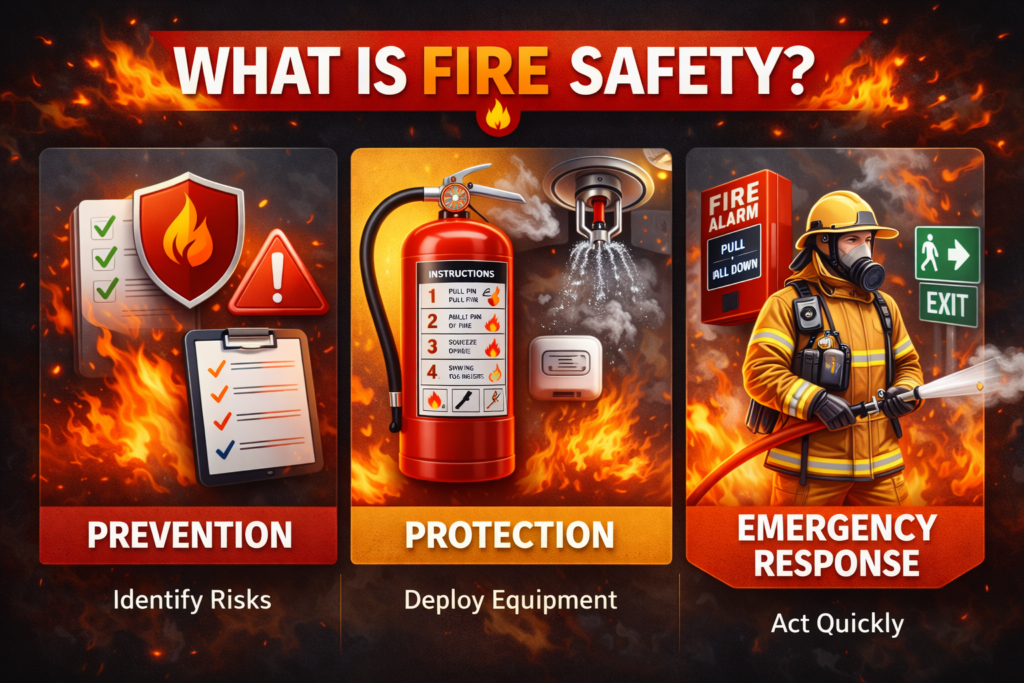
Fire safety basically means doing everything you can to stop fires before they start and protect people and property if they do. It’s not just about installing a fire extinguisher or putting up signs—it’s a complete system of precautions, planning, and awareness. Fires can happen anywhere—at home, in offices, factories, or even outdoor spaces—and the damage can be huge if you’re not prepared. Think of faulty wiring, unattended stoves, flammable materials, or just human mistakes—these are all triggers that can turn a small spark into a major disaster. That’s why fire safety is not only a legal requirement in many industries but also a moral responsibility for everyone.
At its core, fire safety has three main parts, and each is equally important. First is prevention—this is about spotting hazards before they cause trouble. It’s checking electrical systems, keeping flammable items safe, training staff in safety practices, and making sure everyone knows what could go wrong. The second part is protection through systems. This is where alarms, sprinklers, fire doors, and extinguishers come into play.
Even if a fire starts, these systems can limit damage, give you time to react, and save lives. The third part is emergency response and evacuation planning. It doesn’t matter how good your prevention or protection is; if people don’t know how to react when a fire breaks out, things can go badly fast. That’s why clear escape plans, fire drills, and proper communication are critical.
Fire safety today goes beyond the basics. Modern approaches include fire risk assessment, smart detection systems, and compliance with national and international regulations. Companies and organizations that take fire safety seriously don’t just follow the law—they also reduce losses, protect employees, and build trust.
And for individuals, understanding these principles can even open doors to careers in fire safety, like fire risk assessment, engineering design, and emergency planning. In short, fire safety isn’t a one-time thing; it’s an ongoing process. It’s about thinking ahead, being prepared, and taking responsibility—so that whether it’s your home, office, or factory, everyone stays safe, and disasters are minimized.
Why is Fire Safety Important?
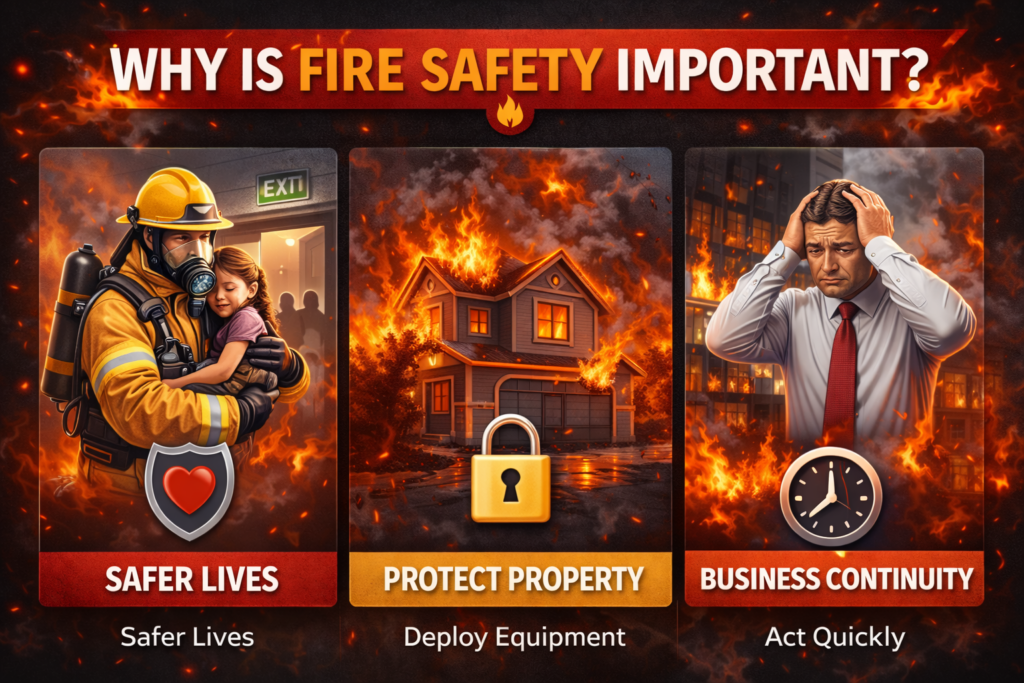
Fire safety is not just a set of rules—it is a critical component of protecting lives, property, and even entire businesses. Every year, thousands of people are injured or killed due to preventable fire incidents, and millions of pounds worth of property and assets are lost. From residential fires caused by unattended cooking or faulty wiring to industrial fires in factories and warehouses, the consequences can be devastating. Beyond the immediate damage, fires can lead to long-term disruption, legal consequences, and even environmental hazards.
Protecting Lives
The most obvious reason fire safety matters is human life. Proper fire safety measures—like smoke detectors, fire alarms, emergency exits, and employee training—ensure that people can escape safely during emergencies. In workplaces, fire drills and evacuation plans can literally mean the difference between life and death. Children, the elderly, and people with disabilities are particularly vulnerable, making fire safety planning even more crucial in homes and public spaces.
Protecting Property and Assets
Fires can destroy homes, offices, machinery, and critical infrastructure within minutes. Implementing fire safety systems—sprinklers, fire extinguishers, fire doors, and containment barriers—limits damage and prevents small incidents from becoming catastrophic losses. This not only saves money but also preserves operational continuity for businesses.
Legal Compliance and Liability
In many countries, fire safety is a legal requirement. Businesses, schools, and public facilities must comply with national and local regulations, like the UK’s Regulatory Reform (Fire Safety) Order or OSHA standards in the US. Failure to comply can lead to hefty fines, insurance complications, and legal action. Proper fire safety protocols also protect organizations from liability in case of accidents, making compliance both a moral and financial necessity.
Risk Reduction and Prevention
Fire safety is primarily about risk reduction. Identifying hazards, performing regular inspections, and adopting preventive measures significantly reduce the chances of fire incidents. This includes maintaining electrical systems, safe handling of flammable materials, proper storage, and employee awareness programs. Organizations that actively implement fire safety measures are far less likely to experience costly accidents.
Business Continuity and Operational Safety
Beyond people and property, fires can disrupt entire business operations, halting production, causing data loss, and affecting client trust. Companies with strong fire safety measures can maintain operational continuity even during minor fire incidents, ensuring that their workforce, infrastructure, and data remain protected.
Environmental Protection
An often-overlooked aspect of fire safety is its role in protecting the environment. Industrial fires can release toxic smoke, chemicals, and pollutants into the air, water, and soil. Effective fire prevention and containment systems reduce environmental damage, making fire safety critical not just for humans but for the planet as well.
Supporting Career Growth
For professionals, understanding the importance of fire safety opens doors to specialized careers like fire risk assessment, fire engineering, and safety management. Organizations actively seek trained professionals to implement and maintain fire safety protocols, highlighting the growing demand in this field.
Real-Life Impact
Consider this: According to global studies, over 1.3 million fires occur annually, causing thousands of deaths and billions in economic losses. Proper fire safety measures could prevent a significant portion of these tragedies. Whether in your home, workplace, or community, implementing fire safety is not just smart—it’s essential.
Types of Fire Safety Measures
Fire safety measures are the foundation of preventing fire incidents and minimizing their impact. They can be broadly divided into three main categories: Fire Prevention, Fire Protection Systems, and Fire Emergency Response. Each of these plays a critical role in keeping people, property, and businesses safe.
1. Fire Prevention
Prevention is the first and most crucial step in fire safety. By identifying potential hazards and reducing risks before they escalate, you can stop fires from starting in the first place. Key fire prevention measures include:
- Regular inspection of electrical systems
- Ensure wiring, sockets, and appliances are in good condition
- Prevent sparks or short circuits that could ignite fires
- Safe storage of flammable materials
- Keep chemicals, fuel, and combustible materials in designated fireproof containers
- Follow proper labeling and handling procedures
- Proper housekeeping practices
- Remove clutter and unnecessary combustible items
- Ensure corridors, stairwells, and exits are clear at all times
- Maintenance of heating and cooking equipment
- Regularly service heaters, stoves, and industrial machinery
- Avoid overloading electrical outlets
- Employee awareness and training
- Educate staff about fire hazards and safe practices
- Promote a culture of safety and vigilance
2. Fire Protection Systems
Even with preventive measures, fire can still occur. Fire protection systems are designed to detect, control, and limit the spread of fire, giving people time to react and minimizing damage. Essential fire protection measures include:
- Fire alarms and detection systems
- Early warning systems that alert occupants instantly
- Smoke detectors, heat sensors, and automatic alarm triggers
- Fire extinguishers
- Portable devices for controlling small fires before they escalate
- Types include water, foam, CO2, and powder extinguishers depending on the hazard
- Sprinkler systems
- Automatic sprinklers activate to suppress fire in its early stages
- Reduces structural damage and increases occupant safety
- Fire doors and compartmentalization
- Contain the spread of fire between rooms or sections
- Protect critical areas like server rooms, storage areas, and escape routes
- Signage and emergency lighting
- Clearly marks exit routes and safety equipment
- Helps occupants navigate safely during smoke or power failure
3. Fire Emergency Response
Preparedness is key to minimizing loss during a fire. Emergency response measures ensure that people can evacuate safely and efficiently while reducing property and environmental damage. Important steps include:
- Evacuation plans
- Clearly defined routes for quick and safe exit
- Assigned roles for staff during emergency situations
- Emergency exits
- Regularly maintained and free from obstruction
- Clearly marked with illuminated signs
- Fire drills and training
- Practice evacuations regularly to improve response time
- Train staff to use extinguishers and other safety equipment
- Communication protocols
- Systems to alert all occupants and contact emergency services quickly
- Ensure mobile alarms, intercoms, or apps are functional
- Post-incident review
- Analyze the cause and effectiveness of safety measures
- Update plans to prevent future incidents
Common Causes of Fire Hazards
Understanding the causes of fire hazards is the first step toward preventing devastating incidents. Fires rarely start without a trigger, and identifying these triggers allows individuals and organizations to implement targeted prevention strategies. While basic causes are widely known, the details and real-world examples often determine how effectively a fire can be prevented.
1. Electrical Faults and Short Circuits
Electrical failures are among the leading causes of fires globally. Faulty wiring, damaged plugs, outdated circuits, or improperly installed electrical appliances can easily ignite a fire.
- Example: A frayed wire in an office building can cause sparks that ignite nearby paper or fabric.
- Prevention: Regular inspection, upgrading old wiring, and installing circuit breakers reduce risk.
2. Overloaded Power Systems
Using too many devices on a single circuit or extension cord can generate excess heat and lead to fires. Overloaded sockets are common in homes, offices, and industrial setups.
- Example: Connecting multiple heaters, computers, and kitchen equipment to a single outlet can trigger overheating.
- Prevention: Use dedicated circuits for high-power devices and avoid daisy-chaining extension cords.
3. Flammable Chemicals and Materials
Improper storage of flammable liquids, gases, or chemicals is a major fire hazard in factories, labs, and even homes. Many fires occur when volatile materials come into contact with heat sources or sparks.
- Examples: Paint thinner, cleaning solvents, propane, and petrol stored in non-compliant containers.
- Prevention: Store flammable materials in fireproof cabinets, follow labeling requirements, and keep them away from ignition sources.
4. Human Negligence
Human error is a leading cause of preventable fires. Careless behavior like leaving cooking unattended, improper disposal of cigarette butts, or ignoring safety instructions can quickly escalate into emergencies.
- Example: Kitchen fires, electrical appliance misuse, or arson due to negligence.
- Prevention: Awareness campaigns, fire safety training, and strict adherence to safety protocols can reduce incidents.
5. Poor Maintenance of Equipment
Neglected machinery, heating systems, or industrial equipment can malfunction and cause fires. Dust accumulation, worn-out parts, and lack of routine checks increase risk.
- Example: An unmaintained boiler or furnace may overheat, igniting nearby combustible material.
- Prevention: Implement regular maintenance schedules, inspections, and service contracts for critical equipment.
6. Additional Causes Often Overlooked
- Open flames and sparks: Candles, welding, and industrial sparks can ignite nearby flammables.
- Natural causes: Lightning strikes or extreme heat in dry seasons can trigger fires, especially outdoors.
- Faulty fire safety equipment: Non-functional extinguishers or alarms can turn small fires into disasters.
Fire Safety in the Workplace
Fire safety in the workplace is not just a legal requirement—it’s a critical operational necessity. Every year, workplace fires cause thousands of injuries, fatalities, and millions in financial losses. From offices and factories to warehouses and laboratories, the risk of fire exists in almost every work environment. Employers and employees alike must take fire safety seriously, as it protects lives, property, and ensures business continuity.
Implementing proper fire safety measures is a shared responsibility. Employers are legally obligated to follow national fire safety regulations, conduct risk assessments, and maintain equipment, while employees must understand procedures, participate in drills, and act responsibly to prevent accidents.
Key Responsibilities of Employers
- Conducting Fire Risk Assessments
- Identify potential hazards, evaluate the likelihood and impact of fire incidents
- Prioritize high-risk areas and implement preventive measures
- Example: Regularly inspect electrical panels, storage areas, and machinery for fire risks
- Installing Safety Equipment
- Ensure the workplace has functional fire alarms, smoke detectors, sprinklers, and fire extinguishers
- Maintain clear and illuminated emergency exits, fire doors, and escape routes
- Example: In manufacturing facilities, install heat sensors near flammable chemicals
- Training Employees
- Conduct regular fire safety training and drills
- Educate staff on how to use fire extinguishers, evacuation procedures, and emergency communication
- Example: Office employees trained to respond quickly if alarms are triggered during working hours
- Maintaining Emergency Exits
- Keep exits free from obstructions at all times
- Clearly label escape routes and ensure they meet building safety codes
- Example: Periodic inspection to verify exit doors open easily and lights function during power outages
Employee Responsibilities
- Awareness of Fire Procedures
- Know emergency plans, assembly points, and alarm signals
- Understand their role during an evacuation (e.g., assisting visitors or colleagues)
- Participation in Drills
- Take fire drills seriously to improve reaction time and reduce panic
- Practice proper use of extinguishers and evacuation techniques
- Reporting Hazards
- Alert management immediately if equipment is faulty or potential fire hazards are observed
- Example: Leaking chemicals, exposed wires, or blocked fire doors should be reported promptly
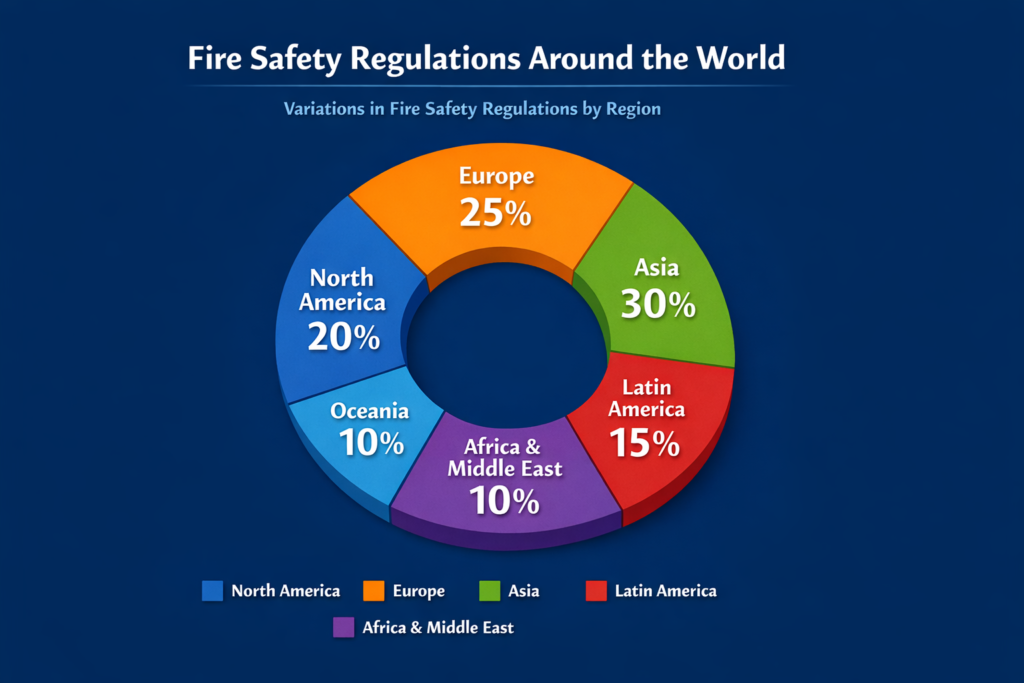
Workplace Fire Safety Regulations Around the World
| Country | Regulatory Authority / Law | Key Fire Safety Requirements |
|---|---|---|
| United Kingdom | HSE (Health and Safety Executive) | Fire risk assessments, emergency exits, employee training |
| United States | OSHA (Occupational Safety & Health Admin) | Sprinklers, alarm systems, fire drills, hazard signage |
| Canada | NFPA & Provincial Codes | Smoke detectors, fire extinguishers, evacuation plans |
| Australia | Safe Work Australia | Fire suppression systems, risk management plans |
| India | National Building Code, Fire Services | Fire alarms, hydrants, emergency exits, safety training |
Global Fire Safety Compliance Overview
Fire Safety Equipment and Systems
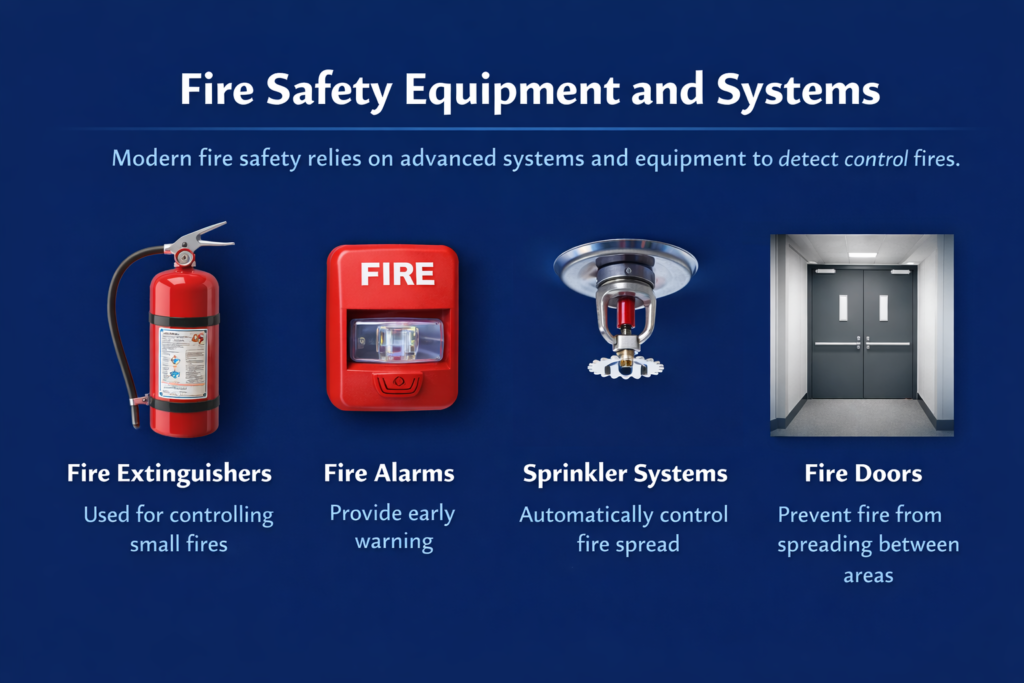
Modern fire safety depends heavily on advanced equipment and systems designed to detect, control, and contain fires before they escalate. These tools not only protect lives and property but also ensure compliance with safety regulations and reduce operational disruption. Understanding how each system works and when to use it is crucial for every workplace and home.
1. Fire Extinguishers
Fire extinguishers are the first line of defense against small fires and can prevent them from spreading into larger, uncontrollable incidents.
- Types of extinguishers: Water, foam, CO2, powder, wet chemical (depending on the fire source)
- Best practices: Place extinguishers at accessible locations, maintain them regularly, and train staff on proper usage
- Example: A small electrical fire in an office can be quickly controlled with a CO2 extinguisher, preventing evacuation and damage
2. Fire Alarms and Detection Systems
Early detection is key to minimizing casualties and property damage. Fire alarms alert occupants immediately, giving them time to evacuate safely.
- Components: Smoke detectors, heat sensors, manual alarm points
- Integration: Modern systems can be linked to sprinklers, emergency lighting, and building management systems
- Example: In factories, heat sensors connected to alarms can trigger sprinklers and notify fire services automatically
3. Sprinkler Systems
Sprinklers are designed to automatically suppress fires, reducing the chance of large-scale damage. They are especially critical in high-risk areas such as warehouses, laboratories, and data centers.
- Types: Wet pipe, dry pipe, pre-action, deluge systems
- Maintenance: Regular testing ensures proper operation during emergencies
- Benefit: Sprinklers can contain fire until the fire department arrives, often preventing total loss of property
4. Fire Doors and Compartmentation
Fire doors and compartmentalization prevent fires from spreading between rooms or zones, buying valuable time for evacuation and reducing structural damage.
- Features: Self-closing mechanisms, fire-resistant materials
- Placement: Key areas include stairwells, server rooms, storage areas, and corridors
- Example: A fire starting in a storage room can be contained by a fire door, protecting offices and equipment nearby
5. Additional Modern Fire Safety Equipment
- Emergency lighting and illuminated exit signs – Ensure safe evacuation during power outages or smoke-filled environments
- Fire blankets – Ideal for small kitchen fires or chemical spills
- Automated fire suppression systems – Common in high-risk industrial environments, such as gas plants or IT server rooms
- Fire hose reels – For manual firefighting when professional help is on the way
Careers in Fire Safety
Fire safety is one of the fastest-growing and most in-demand fields globally. As organizations across industries—construction, oil and gas, manufacturing, healthcare, and education—prioritize the protection of lives, property, and assets, the need for skilled professionals has never been higher. Careers in fire safety not only offer job security and growth opportunities but also a chance to make a real difference in people’s lives.
Why a Career in Fire Safety?
- High Demand: Every sector requires trained fire safety professionals for compliance and risk mitigation
- Diverse Opportunities: From inspections to engineering and management, there are roles to match different skills and interests
- Global Relevance: Fire safety regulations exist worldwide, making trained professionals eligible for international roles
- Impactful Work: Protect lives, prevent disasters, and contribute to safer work environments
Popular Career Options
- Fire Safety Officer
- Responsible for ensuring compliance with fire safety laws, conducting risk assessments, and implementing emergency plans
- Example: In a manufacturing plant, a Fire Safety Officer monitors equipment, emergency exits, and drills to prevent accidents
- Fire Risk Assessor
- Specializes in identifying potential fire hazards, evaluating risks, and recommending corrective measures
- Certification: ProQual Level 5 Diploma in Fire Risk Assessment
- Example: Assessing office buildings or factories to create risk management plans and emergency procedures
- Fire Protection Engineer
- Designs, installs, and maintains fire suppression systems, alarms, and safety equipment to prevent and control fires
- Requires knowledge of fire codes, engineering principles, and safety standards
- Example: Designing sprinkler systems and fire doors for new construction projects
- Fire Safety Inspector / Auditor
- Conducts audits and inspections to ensure compliance with safety regulations
- Reports non-compliance and recommends improvements
- Works in industries like healthcare, education, and government facilities
- Emergency Response Coordinator
- Develops emergency response plans, trains employees, and coordinates drills
- Ensures workplaces can respond efficiently during incidents
Essential Skills & Certifications
- Knowledge of fire safety regulations, building codes, and risk assessment methodologies
- Training in fire extinguisher use, emergency response, and evacuation planning
- Certifications that enhance credibility and employability:
Career Growth & Opportunities
| Role / Level | Typical Duties | Industries / Workplaces | Approx. Salary (USD) |
|---|---|---|---|
| Entry-Level: Fire Safety Officer | Risk assessments, maintain fire equipment, assist in drills | Offices, warehouses, hospitals | $3,200 to $9,600 per month |
| Junior: Fire Risk Assessor | Hazard identification, prepare reports, recommend corrective measures | Corporate, industrial sites, consultancies | $45,000 to $65,000 annually |
| Mid-Level: Fire Protection Engineer | Design suppression systems, compliance, collaboration with teams | Construction projects, factories, engineering firms | $105,000 and $135,000 USD |
| Mid-Level: Fire Safety Inspector / Auditor | Inspections, enforce compliance, recommend improvements | Government, healthcare, consultancy | $70,000 and $95,000 USD |
| Advanced: Emergency Response Coordinator / Safety Manager | Lead safety teams, develop plans, conduct training | Large corporations, industrial plants, government | $85,000–$100,000+ annually |
| Expert / Consultant | Specialized fire engineering, hazardous material management, audits | Consultancy firms, multinational corporations | $150–$200 per hour |
Fire Safety Courses and Certifications
If you want to build a successful career in fire safety, enrolling in professional courses is the best step forward. These courses provide practical knowledge, industry standards, and internationally recognized certifications.
Recommended Fire Safety Courses
- ICTQual Level 3 Diploma in Industrial Fire Safety Management
- ProQual Level 5 Diploma in Fire Risk Assessment
- ProQual Level 5 Award in Fire Engineering Design
- ProQual Level 3 Award in the Inspection and Testing of Fire-Rated Intumescent Coatings
- ProQual Level 5 Diploma in Fire Safety and Risk Management
- ProQual Level 5 Diploma in Passive Fire Protection Inspection
- ProQual Level 2 Award for Fire Marshals
These courses are designed to meet international safety standards and improve employability in global markets.
Benefits of Studying Fire Safety Courses
Enrolling in professional fire safety courses offers numerous advantages for individuals looking to build a rewarding career, enhance skills, and make a real impact in workplaces and communities. These courses are not just educational—they are a gateway to practical expertise, global opportunities, and professional recognition.
Key Benefits of Studying Fire Safety Courses
- Enhances Career Opportunities Worldwide
- Opens doors to roles such as Fire Safety Officer, Fire Risk Assessor, Fire Protection Engineer, and Safety Manager
- Professionals are in demand across industries including construction, healthcare, manufacturing, and oil & gas
- Certification allows eligibility for international positions in multinational organizations
- Provides Practical and Technical Skills
- Learn to conduct fire risk assessments, operate fire safety equipment, and design fire prevention systems
- Develop hands-on skills in emergency response, fire drills, and hazard management
- Apply knowledge directly in workplaces to prevent fire incidents
- Increases Earning Potential
- Certified professionals often earn higher salaries compared to non-certified staff
- Advanced qualifications and specialized courses can lead to senior roles with significantly higher compensation
- Ensures Compliance with Safety Regulations
- Courses cover national and international fire safety standards and building codes
- Prepares professionals to help organizations comply with regulations, avoiding legal penalties and fines
- Builds Professional Credibility and Recognition
- Certification demonstrates expertise and commitment to workplace safety
- Enhances trust with employers, clients, and regulatory authorities
- Establishes a foundation for long-term career growth and specialization
How to Choose the Right Fire Safety Course
Selecting the right course is essential for career growth.
Consider the following factors:
- Course level (beginner to advanced)
- Accreditation and recognition
- Industry relevance
- Career goals