
Top 10 Fire Safety Hazards You Must Know in 2026
Fire is one of the most severe and unpredictable hazards in everyday life, posing significant risks to homes, workplaces, and industrial environments. Fire Safety Hazards are conditions, materials, or behaviors that increase the likelihood of a fire igniting and spreading, often causing devastating damage to property and endangering lives. According to the 2026 National Fire Safety Report, electrical faults alone account for over 40% of fire incidents, while kitchen accidents and improperly stored flammable materials remain leading contributors to fire emergencies worldwide.
Understanding these hazards is essential for anyone responsible for safety, whether at home, in an office, or within an industrial facility. Early identification and prevention of fire hazards not only protect lives and valuable assets but also ensure compliance with safety regulations and reduce potential financial losses.
This guide provides a comprehensive overview of the top 10 fire safety hazards, along with practical prevention strategies, step-by-step risk assessment checklists, and guidance on modern fire prevention technology. It also includes emergency response plans, making it a complete resource for preparing against fire risks. With the support of tables, charts, and infographics, this guide transforms complex fire safety information into actionable advice, enabling homeowners, employees, and business owners to effectively identify, manage, and minimize fire hazards before they become emergencies.
What Are Fire Safety Hazards?
A fire safety hazard is any situation, material, or condition that increases the likelihood of a fire starting or spreading. These hazards can appear in homes, workplaces, or industrial settings, and even small oversights can lead to catastrophic consequences. Understanding what constitutes a fire hazard is the first step toward preventing accidents, protecting lives, and safeguarding property.
Difference Between Fire Hazard and Fire Risk
It’s important to distinguish between a fire hazard and a fire risk:
| Aspect | Fire Hazard | Fire Risk |
|---|---|---|
| Definition | The actual source or condition that can ignite a fire | The likelihood of a fire occurring and the potential impact it could have |
| Purpose | Identifies what can cause a fire | Evaluates how likely and severe a fire could be |
| Examples | Exposed electrical wiring, unattended stoves, piles of flammable materials | An industrial factory storing chemicals without safety measures, high-risk areas with potential severe damage |
| Focus | Potential to start a fire | Probability and severity of a fire event |
| Measurement | Qualitative: presence of hazard | Quantitative or qualitative: likelihood (High, Medium, Low) and potential damage |
| Action | Remove or control the hazard | Implement safety measures, prevention strategies, and emergency planning |
Common Types of Fire Hazards
Fire hazards can take many forms depending on the environment. Some of the most common include:
- Electrical Hazards: Faulty wiring, overloaded sockets, and damaged electrical appliances are the leading causes of fires in both homes and offices. Poor maintenance or outdated electrical systems can drastically increase fire risk.
- Kitchen Hazards: Kitchens are high-risk areas for fires due to hot oil, unattended cooking, and gas leaks. Even small negligence, like leaving a pan on the stove, can lead to a major fire incident.
- Flammable Materials: Materials such as gasoline, chemicals, paper, cardboard, and textiles can ignite easily if stored improperly or exposed to heat sources. Proper storage in fireproof containers is essential to prevent accidents.
- Industrial Hazards: Factories and industrial sites face additional hazards, including sparks from machinery, welding activities, and chemical spills. Lack of regular maintenance, insufficient training, or ignoring safety protocols can significantly increase fire risk in these environments.
By understanding these hazards in detail, individuals and organizations can take proactive steps to prevent fires, reduce risks, and ensure a safer environment for everyone.
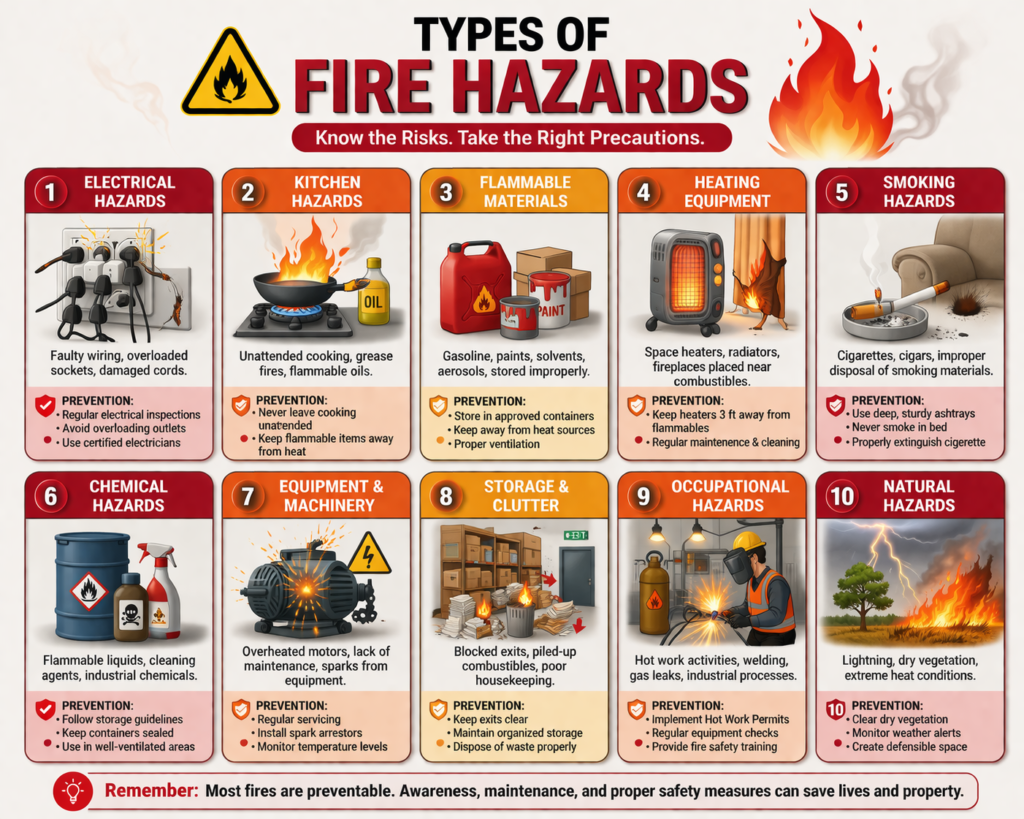
Top 10 Fire Safety Hazards
1. Electrical Fire Hazards
- Causes: Short-circuits, overloaded sockets, faulty wiring
- Prevention Tips:
- Regular inspections by certified electricians
- Avoid overloading circuits
- Replace damaged wires and plugs
2. Kitchen Fire Hazards
- Causes: Unattended cooking, hot oil spills, gas leaks
- Prevention Tips:
- Never leave cooking unattended
- Keep a fire blanket nearby
- Clean grease buildup regularly
3. Flammable Materials & Improper Storage
- Causes: Gasoline, chemicals, paper, textiles stored improperly
- Prevention Tips:
- Use fireproof cabinets
- Label chemicals clearly
- Keep away from heat sources
4. Blocked Fire Exits
- Causes: Furniture or clutter obstructing exits
- Prevention Tips:
- Keep exits clear at all times
- Conduct regular inspections
5. Faulty Fire Alarms & Detectors
- Causes: Expired batteries, outdated devices
- Prevention Tips:
- Test alarms monthly
- Replace and maintain devices as recommended
6. Overloaded Power Sockets
- Causes: Multiple plugs on one socket causing overheating
- Prevention Tips:
- Use surge protectors
- Distribute devices across multiple circuits
7. Poorly Maintained Fire Extinguishers
- Causes: Expired, inaccessible, or untrained use
- Prevention Tips:
- Check expiry dates
- Train staff/family on usage
8. Smoking-Related Hazards
- Causes: Indoor smoking, careless cigarette disposal
- Prevention Tips:
- Implement no-smoking zones
- Use proper disposal methods
9. Industrial Machinery Hazards
- Causes: Overheating machinery, sparks, chemical spills
- Prevention Tips:
- Regular equipment maintenance
- Staff training on fire safety
10. Seasonal / Weather-Related Hazards
- Causes: Dry seasons, electrical storms increasing fire risk
- Prevention Tips:
- Install surge protectors
- Create firebreaks around properties
Fire Hazard Risk & Prevention Table
| Hazard Type | Common Causes | Risk Level | Prevention Tips |
|---|---|---|---|
| Electrical | Short-circuit, faulty wiring | High | Certified electricians, inspections |
| Kitchen | Oil fires, unattended cooking | Medium | Fire blankets, never leave stove unattended |
| Flammable Materials | Improper storage | High | Fireproof cabinets, safe labeling |
| Machinery | Overheating, sparks | High | Maintenance, staff training |
| Smoking | Indoor smoking, careless disposal | Medium | No-smoking zones, safe disposal |
Step-by-Step Fire Risk Assessment Checklist
Conducting a fire risk assessment is one of the most effective ways to prevent accidents, protect lives, and safeguard property. Whether at home, in an office, or within an industrial facility, following a structured checklist ensures that no potential hazards are overlooked. Here is a comprehensive, step-by-step guide to assessing and managing fire risks:
1. Identify Potential Hazards
The first step in any fire risk assessment is to recognize all possible sources of fire in your environment. Hazards can be obvious or hidden, so a careful inspection is necessary.
Examples of Common Hazards:
- Electrical: Overloaded sockets, damaged wires, malfunctioning appliances
- Kitchen: Unattended cooking, hot oil, gas leaks
- Flammable Materials: Chemicals, cleaning agents, paper, cardboard
- Industrial: Welding sparks, machinery overheating, fuel storage
2. Evaluate the Risk: High, Medium, Low
Once hazards are identified, it’s important to assess their risk level. This step helps prioritize which hazards need immediate attention.
How to Evaluate Risk:
- High Risk: A hazard that is likely to cause a fire and could result in severe injury or damage (e.g., exposed wiring in a busy office)
- Medium Risk: A hazard that has moderate likelihood or impact (e.g., unattended laundry near a heat source)
- Low Risk: A hazard with low probability or minimal potential damage (e.g., stored paper far from heat sources)
3. Implement Preventive Measures
After evaluating risk, the next step is to put effective safety measures in place to reduce or eliminate hazards.
Examples of Preventive Actions:
- Replace damaged wiring and repair faulty appliances
- Store flammable materials in fireproof cabinets
- Keep fire exits clear and accessible
- Install smoke detectors, fire alarms, and sprinkler systems
- Conduct regular inspections and maintenance
4. Train Staff and Family
A fire safety plan is only effective if everyone knows their role in preventing and responding to fires.
Training Steps:
- Conduct fire drills regularly to ensure everyone knows evacuation routes
- Teach proper use of fire extinguishers
- Educate on safe storage of chemicals and flammable materials
- Assign responsibilities (e.g., fire wardens in workplaces or responsible adults at home)
5. Monitor and Review Regularly
Fire risk assessment is not a one-time task. Hazards can develop over time, so continuous monitoring and periodic reviews are essential.
How to Monitor Effectively:
- Schedule monthly or quarterly inspections
- Update risk levels when new equipment, materials, or processes are introduced
- Keep a fire logbook documenting checks, incidents, and corrective actions
- Review and revise the fire safety plan after drills or incidents
Industry-Specific Fire Safety Hazards
| Industry | Common Hazards | Prevention |
|---|---|---|
| Residential | Kitchens, electrical appliances | Fire blankets, certified electricians |
| Schools/Universities | Labs, electrical panels | Regular inspection, emergency drills |
| Hospitals | Oxygen tanks, electrical equipment | Training, safety signs |
| Industrial | Machinery, chemical storage | Maintenance, fire-resistant materials |
Modern Fire Prevention Technology: Protecting Homes and Workplaces in 2026
Advancements in technology have dramatically improved our ability to prevent fires before they start and respond effectively when they occur. Modern fire prevention tools combine automation, real-time alerts, and intelligent monitoring, making fire safety more proactive than ever. Here are the key technologies that are transforming fire prevention today:
1. Smart Smoke Detectors with IoT Alerts
Traditional smoke alarms alert occupants with a loud sound, but modern smart smoke detectors go a step further. These devices connect to the Internet of Things (IoT), allowing them to:
- Send real-time alerts to your smartphone or wearable device if smoke is detected
- Automatically notify emergency services in severe cases
- Integrate with other smart home devices, such as sprinklers or lighting systems, to guide safe evacuation
Example: A smart detector can send an alert to your phone while you are at work, giving you time to call the fire department or check the premises remotely.
Benefits:
- Faster detection and response
- Reduced property damage
- Peace of mind when away from home or office
2. Automated Sprinkler Systems and Heat Sensors
Modern fire prevention in commercial and industrial facilities relies heavily on sprinkler systems and heat sensors. Unlike older systems that only respond after flames appear, today’s systems are intelligent and responsive:
- Heat sensors detect abnormal temperature increases and trigger sprinklers automatically
- Some systems can target the exact area where heat or smoke is detected, minimizing water damage
- Integration with alarm systems ensures immediate evacuation alerts
Example: In a warehouse storing flammable materials, heat sensors can activate sprinklers in the specific section, preventing a small fire from spreading across the building.
Benefits:
- Rapid suppression of fires before they escalate
- Minimized property damage
- Increased safety for occupants
3. Fire Safety Apps for Training, Monitoring, and Emergency Preparedness
Technology isn’t limited to physical devices. Fire safety apps provide critical support for both prevention and education:
- Training Modules: Interactive tutorials for employees or household members on fire extinguisher usage, evacuation drills, and hazard identification
- Monitoring Tools: Digital checklists to ensure fire alarms, extinguishers, and exits are regularly inspected and maintained
- Emergency Alerts: Apps can provide step-by-step guidance during a fire, including evacuation routes and safety instructions
Example: A factory manager can use a fire safety app to schedule monthly inspections, track safety compliance, and even run simulated fire drills, all from a smartphone or tablet.
Benefits:
- Improved awareness and preparedness
- Streamlined inspection and reporting processes
- Accessible guidance in emergencies
Why Investing in Modern Fire Prevention Technology Matters
In today’s world, prevention is always better than reaction. Incorporating smart detectors, automated sprinkler systems, and digital fire safety tools ensures:
- Faster detection and response times
- Reduced risk of injury or death
- Lower financial losses due to property damage
- Greater confidence and peace of mind for occupants and managers
Emergency Response Plan: How to Act Safely During a Fire
Even with the best preventive measures, fires can still occur. A well-prepared emergency response plan ensures that everyone knows exactly what to do, minimizing injuries, protecting property, and potentially saving lives. The key is to stay calm, follow clear steps, and act quickly.
1. Evacuate Safely
Your first priority during a fire is getting yourself and others out of danger safely.
Steps for Safe Evacuation:
- Stay low to the ground: Smoke rises, so crawling helps you avoid inhalation
- Know your exits: Identify all available exits in advance, including secondary routes
- Avoid elevators: Always use stairs; elevators may fail or open into fire
- Assist vulnerable individuals: Help children, elderly, or people with disabilities
- Move quickly but calmly: Panic increases accidents; focus on orderly evacuation
Example: In a home, ensure everyone knows a pre-designated meeting spot outside, such as a neighbor’s driveway or front yard.
2. Call Emergency Services Immediately
Once you are safe, contact professional help without delay.
Steps:
- Dial your local emergency number (e.g., 911, 999, or local fire department)
- Provide clear information: location, nature of fire, number of people inside
- Stay on the line until help arrives and follow the operator’s instructions
Example: In an office building, assign one person to call emergency services while others evacuate.
3. Use a Fire Extinguisher if Safe
Only attempt to use a fire extinguisher if:
- The fire is small and manageable
- You have a clear escape route behind you
- You are trained on proper use
Steps for Using an Extinguisher (PASS Method):
- Pull the pin
- Aim at the base of the fire
- Squeeze the handle
- Sweep from side to side
Warning: If the fire grows, evacuate immediately—do not risk your safety.
Example: A small grease fire in a kitchen can be put out with a Class K extinguisher or fire blanket, but never use water.
4. Assemble at a Safe Location
After evacuation, gather at a pre-determined safe meeting point.
Steps:
- Ensure everyone is accounted for
- Do not re-enter the building until firefighters declare it safe
- Provide first-aid assistance if necessary
Example: Homeowners can designate a neighbor’s yard; offices can have a marked assembly area in a parking lot.
Additional Tips for an Effective Emergency Plan:
- Keep a fire escape map posted in key locations
- Conduct regular fire drills for all occupants
- Train staff or family on extinguisher use and evacuation procedures
- Include special plans for children, elderly, or pets
Get Certified in Fire Safety – Check Out Our Courses
Upgrade your skills and knowledge with our specialized fire safety courses. Whether you’re aiming to enhance workplace safety, comply with regulations, or gain professional certification, these courses provide practical training and expert guidance to keep you and others safe.
- Fire Safety Awareness – Understand basic fire hazards, prevention, and safety procedures.
- Fire Warden / Fire Marshal Training – Become a certified fire marshal to lead emergency response.
- Fire Extinguisher Training – Hands-on training for proper use of different types of fire extinguishers.
- Fire Risk Assessment – Learn to identify risks and conduct professional fire risk assessments.
Conclusion
Fire safety is not just a precaution—it is a critical responsibility that directly impacts the protection of lives, property, and business continuity. Understanding Fire Safety Hazards and how they develop is the first step toward preventing potentially devastating incidents. By identifying the top fire hazards, applying effective preventive measures, conducting regular fire risk assessments, and adopting modern fire prevention technologies, individuals and organizations can significantly reduce the likelihood and impact of fire-related emergencies in 2026 and beyond.
However, knowledge alone is not enough. Consistent action is essential. Regular inspections, proper maintenance of equipment, safe storage of materials, and continuous training ensure that fire safety measures remain effective over time. Whether at home, in the workplace, or within industrial environments, creating a culture of fire safety awareness is key to long-term protection.