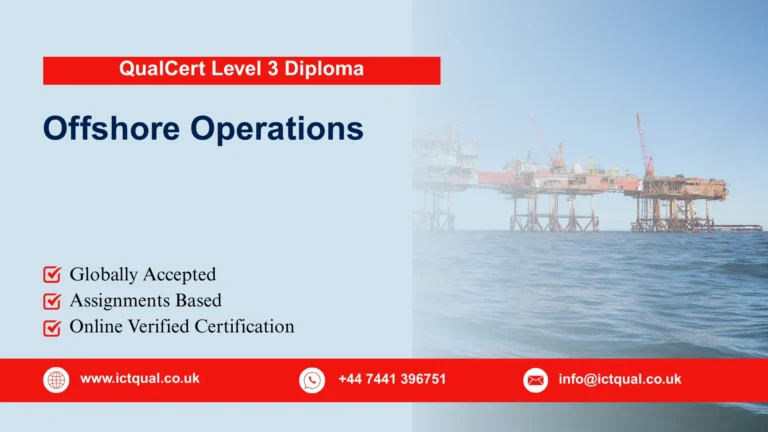
QualCert Level 3 Diploma in Oil and Shipping Operations

Accredited by QualCert

Start Learning Today

The QualCert Level 3 Diploma in Oil and Shipping Operations is a foundation-level qualification designed to help learners understand the essential functions of the global oil, gas, and maritime logistics sectors. This course offers a simple yet thorough introduction to how oil products are handled, transported, stored, and managed across international shipping routes. It also explains key operational procedures, safety standards, and documentation used in the industry, making it an excellent starting point for anyone planning to enter this field.

Learners gain a clear understanding of how shipping operations support the energy supply chain. The qualification covers important topics such as vessel operations, cargo movement, marine safety practices, port procedures, and the overview of oil trading and distribution. By using easy-to-follow language and real-world examples, the course helps students build solid knowledge even if they are completely new to the oil and shipping environment. This makes it ideal for beginners who want to pursue a career in maritime logistics or offshore supply chain roles.

The QualCert Level 3 Diploma in Oil and Shipping Operations is also highly suitable for individuals already working in related industries who wish to strengthen their knowledge and boost their career opportunities. With growing demand in global energy and maritime transport, this course gives learners the confidence, skills, and industry awareness needed to progress toward advanced-level qualifications and future job roles. It is a valuable starting point for building a strong professional path in oil operations, shipping support, and supply chain coordination.

Prerequisites

Course Entry Requirements

The QualCert Level 3 Diploma in Oil and Shipping Operations is designed to be accessible for new learners. The entry criteria are simple and make it easy for anyone to start.

  • Minimum Age
    Applicants must be 16 years or older to ensure readiness for the course.
  • Educational Background
    A basic school-level education or similar learning background is recommended.
  • Work Experience
    No experience is required, making the course suitable for beginners and those exploring the industry.
  • Industry Interest
    A general interest in shipping, oil logistics, or global trade is helpful for better understanding.
  • Language Proficiency
    Learners should have a good level of English to follow lessons and complete coursework.

These requirements are kept simple so more learners can join confidently. Anyone motivated to build skills in oil and shipping operations can begin their learning journey here.

Course Content

Detailed Curriculum Structure

The QualCert Level 3 Diploma in Oil and Shipping Operations is a 60-credit qualification with a Total Qualification Time (TQT) of 300 hours, including 210 Guided Learning Hours (GLH). This program is meticulously crafted to deliver focused and efficient skill development in the field of project management.

Unit Ref#Unit TitleCreditsGLHTQT
QC06153 – 1Introduction to the Oil and Shipping Industry103550
QC06153 – 2Fundamentals of Tanker Operations and Vessel Types103550
QC06153 – 3Cargo Handling, Storage and Port Operations103550
QC06153 – 4Health, Safety and Environmental Standards in Oil Shipping103550
QC06153 – 5International Trade Documentation and Compliance in Oil Transport103550
QC06153 – 6International Trade Documentation and Compliance in Oil Transport103550

Introduction to the Oil and Shipping Industry

  • Understand the role of oil and shipping in global trade and energy supply
  • Identify the main types of oil cargoes and their transportation methods
  • Recognise the importance of shipping routes and international markets
  • Explain the contribution of oil shipping to the global economy
  • Demonstrate awareness of the structure of the oil and maritime industries
  • Analyse current trends and challenges in oil and shipping operations
  • Understand the interconnection between oil logistics and supply chains

Fundamentals of Tanker Operations and Vessel Types

  • Identify different types of oil tankers and their specific functions
  • Understand the design and operational features of tanker vessels
  • Explain the processes involved in loading, transporting, and discharging oil cargoes
  • Recognise the importance of stability, ballast, and cargo management in tankers
  • Apply knowledge of international regulations governing tanker operations
  • Demonstrate awareness of safety procedures in tanker management
  • Analyse the role of technology in modern tanker operations

Cargo Handling, Storage and Port Operations

  • Understand the principles of oil cargo handling and storage
  • Identify the role of ports and terminals in oil shipping operations
  • Explain the procedures for safe loading and unloading of oil cargoes
  • Recognise the risks associated with handling hazardous cargoes
  • Apply knowledge of international safety standards in port operations
  • Analyse the impact of automation and technology on port efficiency
  • Demonstrate awareness of environmental and security considerations in oil storage and handling

Health, Safety and Environmental Standards in Oil Shipping

  • Understand international conventions governing oil shipping safety
  • Apply knowledge of MARPOL and SOLAS requirements to oil transport
  • Recognise the importance of pollution prevention and spill response
  • Identify health and safety risks in oil shipping operations
  • Develop awareness of risk management strategies in hazardous environments
  • Analyse case studies of safety and environmental incidents in oil transport
  • Demonstrate the ability to apply compliance standards in professional practice

International Trade Documentation and Compliance in Oil Transport

  • Identify the key documents used in oil shipping and international trade
  • Explain the purpose and function of bills of lading, charter parties, and certificates
  • Recognise the importance of accurate documentation for compliance and efficiency
  • Apply knowledge of customs and regulatory requirements in oil transport
  • Analyse the risks of non-compliance in international oil trade
  • Demonstrate awareness of digital documentation and electronic data exchange
  • Understand the role of documentation in dispute resolution and liability management

Professional Communication and Customer Service in Oil Logistics

  • Understand the importance of effective communication in oil shipping operations
  • Apply professional communication skills in written, verbal, and digital contexts
  • Recognise the role of customer service in building client trust and satisfaction
  • Develop strategies for managing client relationships in oil logistics
  • Apply conflict resolution techniques in customer service situations
  • Demonstrate awareness of cultural sensitivity in international business communication
  • Strengthen teamwork, interpersonal, and problem-solving skills for professional growth

This diploma is designed to give learners practical knowledge and real industry awareness, helping them build a strong foundation in oil logistics and shipping operations. The course offers several valuable benefits that support both beginners and professionals.

Key Benefits

  • Strong Understanding of Oil and Shipping Basics
    Gain clear knowledge of how oil cargo is handled, stored, and transported across global shipping routes.
  • Improved Awareness of Maritime Procedures
    Learn essential processes related to port operations, vessel activities, and industry documentation.
  • Knowledge of Safety and Compliance Standards
    Understand key safety rules, handling guidelines, and operational requirements used in the oil and maritime sectors.
  • Foundation for Future Career Growth
    Build the skills needed to move into entry-level roles and progress toward higher qualifications in logistics and energy operations.
  • Industry-Relevant Skills for Real Work Environments
    Develop useful skills such as coordination, observation, record-keeping, and understanding operational workflows.
  • Ideal for Both New Learners and Industry Workers
    Suitable for beginners wishing to explore the field as well as professionals seeking to strengthen their understanding.

These benefits help learners gain practical skills and confidence to step into the oil and shipping sector. The course provides a strong starting point for anyone aiming to grow in maritime logistics or energy operations.

Course Features

Duration: 210 GLH

6 Modules

Online Learning

Get in Touch

+44 2035 764371

+44 7441 396751

info@inspirecollege.co.uk

www.inspirecollege.co.uk
FAQ's About QualCert Level 3 Diploma in Oil and Shipping Operations

This course is open to anyone who wants to learn about oil logistics, shipping procedures, and maritime operations. It is suitable for beginners who have no previous knowledge, as well as individuals already working in related sectors who want to strengthen their understanding. Students, job seekers, and professionals looking for career growth can all apply.

Graduates can explore opportunities in several industries, including oil and gas services, maritime shipping companies, logistics firms, port operations, offshore support, storage and distribution facilities, and global trade organizations. These sectors often look for people who understand basic operations and documentation.

Yes, the QualCert Level 3 Diploma is widely accepted by employers and training bodies in many countries. It is designed to meet international industry standards, making it useful for learners who wish to explore global job opportunities in oil and maritime operations.

Learners can apply for entry-level roles such as operations assistant, shipping support staff, logistics coordinator trainee, port services assistant, or documentation clerk. The diploma also prepares students for further studies that can lead to roles in cargo handling, marine operations, or supply chain management.

This diploma helps you develop a strong set of practical and industry-relevant skills. You will learn how oil cargo is handled, how shipping operations work, and how to read and prepare basic documentation. The course also improves your understanding of safety procedures, port activities, and vessel operations. In addition, you will build useful skills like attention to detail, problem-solving, coordination, and basic operational planning. These abilities are valuable for starting a career in oil logistics, maritime services, or global supply chain roles.

This qualification is ideal if you want a simple, structured, and reliable introduction to the oil and shipping sector. It helps you understand real industry processes, improves your operational awareness, and builds confidence to apply for jobs or move toward higher-level training. It is affordable, beginner-friendly, and industry-relevant.

Similar Posts