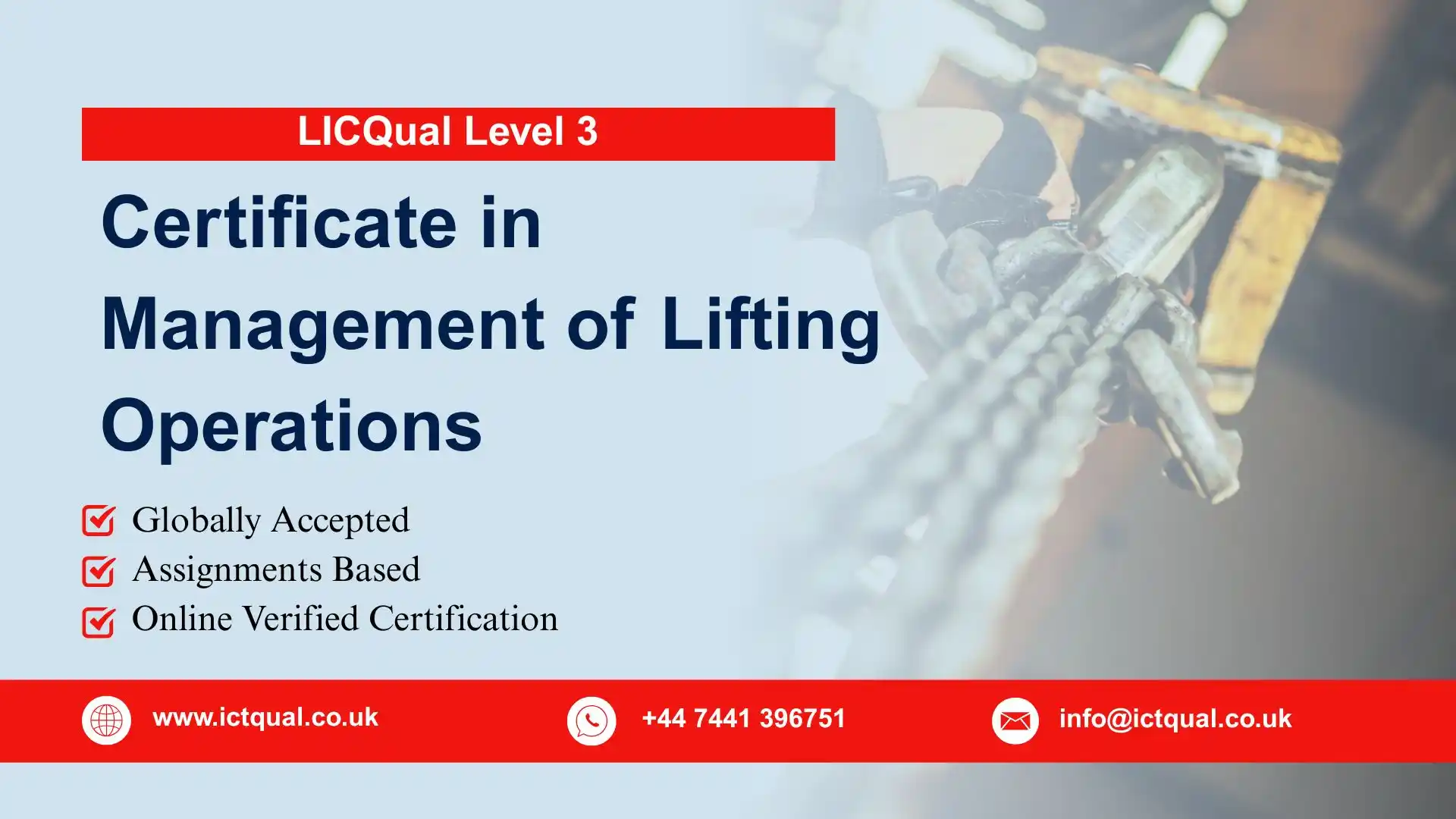
The LICQual Level 3 Certificate in Management of Lifting Operations is a globally recognized qualification designed to equip professionals with the skills, knowledge, and confidence to safely and effectively manage lifting operations across various industries. This course is ideal for supervisors, lifting managers, and site personnel responsible for overseeing crane operations, rigging activities, and lifting procedures on-site. Whether you’re seeking compliance with international standards or looking to elevate your leadership in high-risk environments, this program is your pathway to operational excellence.
Lifting operations are among the most hazardous tasks in industrial and construction sectors, and the role of a competent lifting manager is pivotal in ensuring safety, efficiency, and legal compliance. LICQual Level 3 Certificate in Management of Lifting Operations provides in-depth insights into the planning, risk assessment, coordination, and control of lifting tasks, ensuring that all operations are carried out to the highest safety and regulatory standards. With this certification, learners will be able to demonstrate both technical competence and managerial oversight in lifting operations.
Structured to meet real-world industry demands, the course incorporates both theoretical foundations and practical applications. Participants will explore essential topics such as lifting equipment inspection, load calculation, legal responsibilities, lifting plans, and communication protocols. Real-life scenarios, case studies, and interactive learning modules ensure a comprehensive understanding of critical lifting operations management concepts.
One of the standout features of this course is its alignment with global safety frameworks and industry best practices. Whether you’re working in oil and gas, construction, marine, logistics, or heavy industry, the skills acquired from this qualification can be applied across a multitude of settings. The training is tailored to ensure learners can identify potential hazards, reduce risks, and lead lifting teams with confidence and competence.
Enrolling in the LICQual Level 3 Certificate in Management of Lifting Operations signifies a commitment to safety, professionalism, and operational excellence. It opens doors to career advancement and positions you as a responsible and knowledgeable leader in the field of lifting and hoisting. Upon completion, learners will not only possess a valuable certification but also a transformative learning experience that supports career development and workplace safety.
The LICQual Level 3 Certificate in Management of Lifting Operations is meticulously designed to provide learners with a solid grounding in the core principles, legislation, and practical elements involved in lifting operations management. The course starts with a detailed examination of current legal requirements, industry codes of practice, and the responsibilities of individuals involved in lifting activities. It ensures that participants understand the legal implications of their role and how to comply with national and international safety regulations.
A significant focus of the course is on the technical planning and execution of lifting operations. Learners are introduced to key topics such as identifying load characteristics, selecting appropriate lifting equipment, understanding lifting accessories, and calculating safe working loads. This technical competence is paired with leadership and decision-making skills, ensuring learners can plan, supervise, and execute lifting operations with precision and safety.
Additionally, the LICQual Level 3 Certificate in Management of Lifting Operations course explores risk assessment methodologies, hazard identification, and the development of lifting plans. Learners gain the skills needed to coordinate with lifting teams, signalers, crane operators, and site managers to ensure cohesive and safe operations. By understanding communication protocols and site coordination, learners can effectively reduce the likelihood of accidents and ensure smooth project execution.
The course is delivered through a combination of interactive learning materials, real-world case studies, and practical assessments that reflect actual site conditions. This approach helps bridge the gap between theory and practice, allowing learners to apply what they’ve learned in a practical context. Graduates of the program emerge as competent professionals capable of leading lifting operations with a strong focus on safety, compliance, and operational efficiency.
The LICQual Level 3 Certificate in Management of Lifting Operations qualification consists of 6 mandatory units required for completion.
Mandatory Units
| Unit# | Unit Title |
| 1 | Introduction to Lifting Operations Management |
| 2 | Legal and Regulatory Compliance |
| 3 | Risk Assessment and Control Measures |
| 4 | Communication and Team Management during Lifting Operations |
| 5 | Planning and Execution of Lifting Operations |
| 6 | Health and Safety in Lifting Operations |
The LICQual Level 3 Certificate in Management of Lifting Operations is ideal for professionals involved in planning, supervising, or managing lifting activities in various sectors. This course is perfectly suited for:
- Anyone Aspiring to Advance in the Lifting and Hoisting Industry – Professionals looking to improve their credentials and step into leadership roles in high-risk environments.
- Lifting Operation Managers – Individuals responsible for planning and overseeing lifting tasks on construction or industrial sites.
- Site Supervisors and Foremen – Professionals involved in coordinating lifting teams and ensuring safe execution of lifting activities.
- Appointed Persons (Lifting) – Those designated to take responsibility for lifting operations in line with legal and safety requirements.
- Crane Coordinators and Controllers – Personnel who manage crane operations and need a comprehensive understanding of lifting protocols.
- Rigging and Lifting Supervisors – Individuals supervising rigging crews and ensuring the correct use of lifting equipment.
- HSE Officers and Safety Inspectors – Safety professionals seeking in-depth knowledge of lifting operations to enhance compliance and safety audits.
- Project Engineers and Construction Managers – Those overseeing site operations and requiring a working knowledge of safe lifting practices.
Upon completing this Course students will be able to:
Introduction to Lifting Operations Management
Upon completion of this unit, learners will be able to:
- Understand the fundamental principles and responsibilities of managing lifting operations in various industries.
- Identify the key components involved in the safe and efficient management of lifting tasks.
- Demonstrate knowledge of different types of lifting equipment and their appropriate applications.
- Recognize the importance of proper planning, risk management, and coordination in lifting operations.
Legal and Regulatory Compliance
Upon completion of this unit, learners will be able to:
- Understand the legal and regulatory frameworks that govern lifting operations.
- Explain the key laws, standards, and industry regulations related to lifting equipment and operations.
- Ensure lifting operations are compliant with national and international safety regulations.
- Identify the roles and responsibilities of employers, employees, and supervisors in maintaining compliance.
Risk Assessment and Control Measures
Upon completion of this unit, learners will be able to:
- Conduct thorough risk assessments to identify hazards associated with lifting operations.
- Develop and implement control measures to minimize risks and ensure safety during lifting activities.
- Evaluate potential risks related to equipment, personnel, and environment, and apply effective solutions.
- Understand the importance of continuous monitoring and reassessment of risks during operations.
Planning and Execution of Lifting Operations
Upon completion of this unit, learners will be able to:
- Develop comprehensive plans for lifting operations, including selecting appropriate equipment and personnel.
- Demonstrate the ability to assess the site, plan for contingencies, and identify potential obstacles to safe lifting operations.
- Coordinate and oversee the safe execution of lifting operations, ensuring efficient use of resources.
- Ensure that all operational plans comply with safety standards and meet operational objectives.
Communication and Team Management during Lifting Operations
Upon completion of this unit, learners will be able to:
- Understand the importance of clear communication in managing lifting operations.
- Develop skills for effective communication among team members, supervisors, and stakeholders during operations.
- Demonstrate leadership and team management skills to ensure a coordinated and safe lifting operation.
- Resolve conflicts and ensure the team works together to maintain safety and efficiency throughout the lifting process.
Health and Safety in Lifting Operations
Upon completion of this unit, learners will be able to:
- Identify potential health and safety risks associated with lifting operations and implement preventive measures.
- Understand the significance of personal protective equipment (PPE) and safety protocols in lifting operations.
- Promote a culture of health and safety within the team, ensuring that all personnel are trained and adhere to safety standards.
- Monitor ongoing safety throughout lifting operations and take corrective action when necessary to maintain a safe work environment.