
Level 6 QA/QC Terminology Explained
Introduction To Unit
Quality Management Systems form the absolute backbone of successful engineering operations across the United Kingdom. Operating at a senior level within this sector requires significantly more than just theoretical awareness; it demands the professional judgment to apply these systems dynamically within complex project environments. This document bridges the gap between high-level management theory and on-site reality, focusing heavily on vocational competency and executive decision-making. By rigorously matching established terminology to site-based execution, professionals learn to translate abstract concepts into tangible engineering practices. This ensures strict compliance with domestic frameworks, such as the Building Safety Act and the Construction (Design and Management) Regulations, driving operational excellence across every phase of an engineering lifecycle.
Main Document Purpose
- To connect theoretical quality terminology directly with site-based engineering applications.
- To establish a clear understanding of vocational competencies required for high-level management.
- To eliminate workplace confusion between abstract definitions and their practical, daily relevance.
- To foster complex decision-making skills relevant to UK-based construction and engineering sectors.
- To strictly guide the development and review of practical working documentation on site.
Terminology Application Guide
This section maps critical industry terminology to real-world engineering scenarios. Understanding these connections is vital for professionals tasked with overseeing comprehensive quality frameworks and ensuring absolute compliance with domestic building standards.
- Quality Assurance: This involves proactive process management and systemic planning. Application: Auditing a structural steel fabricator before they are awarded a contract to ensure their processes align seamlessly with UKCA marking requirements.
- Quality Control: This is the reactive verification of physical output on site. Application: Conducting non-destructive testing on pipe welds at a petrochemical facility to verify integrity against precise project specifications.
- Inspection Test Plan: A structured document outlining verification points throughout a process. Application: Managing a multi-stage sign-off process for foundation pouring, ensuring critical hold points are respected by all subcontractors before any further work proceeds.
- Traceability: The ability to verify the history, application, or location of an item. Application: Maintaining strict records of material certificates for reinforcing bars used in a high-rise core, ensuring every batch can be linked directly back to the original UK steel mill.
- Non-Conformance Report: A formal document detailing an deviation from agreed standards. Application: Issuing a report when delivered precast concrete panels fail to meet the dimensional tolerances specified in the approved structural drawings, preventing installation.
- Corrective Action: Immediate steps taken to rectify an identified issue or defect. Application: Instructing the immediate rework of an out-of-tolerance anchor bolt installation before the main structural steel columns are erected.
- Hold Point: A mandatory verification stage where work cannot proceed without approval. Application: Halting the backfilling of a trench until the newly installed drainage pipework has been formally inspected and signed off by the principal engineer.
- Method Statement: A detailed document describing exactly how a task will be executed safely. Application: Reviewing the proposed sequence for lifting heavy plant machinery onto a completed roof structure to ensure all quality and safety protocols are integrated.
- Calibration: The adjustment of equipment to ensure its measurements are accurate. Application: Mandating the weekly verification of torque wrenches used by site teams for structural bolting, logging the results in the site registry.
- Defect Liability Period: The set timeframe post-handover where the contractor is responsible for faults. Application: Monitoring structural settlement or surface cracking in a newly completed commercial facility and organizing the necessary remedial works.
Quality System Frameworks
Implementing a robust operational framework requires deep situational awareness and the ability to adapt established standards to bespoke engineering challenges. A system is only as effective as its active integration into daily site activities. Senior professionals must continuously evaluate existing operational procedures, identifying gaps where documentation fails to reflect actual working practices. By reviewing how systems are deployed across various project phases, leaders can enforce strict adherence to design specifications. This proactive approach mitigates overarching risks and safeguards project integrity without relying on overly bureaucratic or inefficient processes. True competency lies in making these frameworks invisible yet highly effective drivers of daily site operations.
UK Standards Integration
- Alignment of site activities with stringent domestic regulatory frameworks and building codes.
- Utilization of established quality models to drive systemic reliability across engineering supply chains.
- Application of the Construction Regulations to embed safety and quality into the design phase.
- Development of robust internal auditing schedules to maintain ongoing compliance and operational excellence.
- Integration of environmental and structural mandates specific to regional UK planning authorities.
Continuous Improvement Methodologies
Driving change within an established engineering environment requires a highly strategic approach to problem-solving and process optimization. Leaders must champion initiatives that progressively elevate site standards and systematically reduce operational waste.
- Root Cause Analysis: Investigating well beyond the immediate, visible symptoms to find the underlying systemic failures that allowed a defect to occur.
- Process Mapping: Visually charting complex engineering workflows to identify hidden bottlenecks in the quality inspection pipeline.
- Standardization: Creating uniform, easily repeatable procedures for recurring engineering tasks to completely eliminate individual operator variability.
- Preventive Action: Implementing rigorous tool box talks and revising operational procedures immediately following a near-miss quality event to prevent future occurrences.
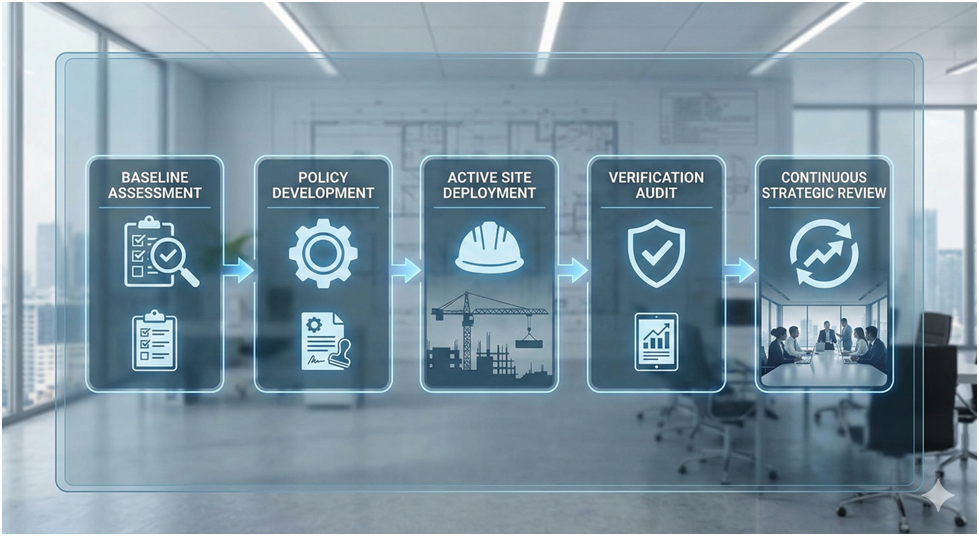
Implementation Flow Diagram
Below is a text-based flow representation of a standard implementation sequence. The process begins with the initial baseline assessment, moving systematically through policy development, site deployment, and concluding with a rigorous verification audit. Each step represents a critical juncture where executive oversight is absolutely necessary to ensure the transition from theoretical planning to practical execution remains seamless and fully aligned with overriding project objectives.
Evaluating System Performance
- Monitoring right-first-time delivery rates across all major structural installations.
- Tracking the frequency and closure rates of non-conformance reports on site.
- Assessing supply chain reliability through regular, unannounced material compliance checks.
- Evaluating the long-term effectiveness of preventive measures implemented after major quality deviations.
- Reviewing the efficiency of document control systems in maintaining updated site drawings.
Competency And Professional Judgment
Operating effectively requires professionals to make balanced, highly informed decisions when faced with conflicting project pressures. Maintaining unwavering quality standards while simultaneously managing aggressive commercial timelines is the ultimate test of vocational capability.
- Evaluating complex risk factors when considering proposed deviations from standard operational procedures.
- Authorizing critical site interventions and work stoppages when physical quality metrics fall below acceptable engineering thresholds.
- Mentoring junior engineering staff to recognize the critical, legal importance of accurate documentation and daily reporting.
- Navigating disputes between subcontractors regarding responsibility for overlapping quality defects.
Required Learner Task
You are required to demonstrate your practical competency by focusing strictly on one core aspect of quality management. Your objective is to show exactly how overarching management systems are effectively translated into functional, working site documents. For this task, your sole focus is on producing comprehensive evidence of “Implemented QMS documentation”. You must provide a highly detailed set of working documentation that has been actively deployed on a real engineering project. This submission must clearly illustrate how the site-specific procedures align completely with broader company policies and all relevant domestic regulatory standards. The documentation should reflect complex decision-making and demonstrate a clear understanding of vocational application within the UK engineering sector.
Final Submission Guidelines
- Ensure all provided documentation is clearly indexed and logically structured for professional review.
- Strictly remove or completely redact any commercially sensitive information prior to final submission.
- Verify that the provided evidence aligns exclusively with the single requested documentation criteria.
- Confirm that all referenced regulations, laws, and standards are strictly domestic to the United Kingdom.
- Ensure the submitted work reflects the standard expected of a senior engineering professional.