
ProQual Level 5: Photo Analysis of Fire Door Installations
Introduction: The Critical Art of Professional Reflection
Welcome to the Knowledge Provision Task (KPT) focusing on Reflective Practice for Unit 3: Inspecting and Testing of Fire Resisting Door Installations.
In the passive fire protection industry, achieving a Level 5 Diploma means you are no longer just following a checklist; you are an authoritative practitioner capable of complex problem-solving and independent judgement. However, even the most experienced inspectors encounter unique, highly stressful, or technically ambiguous situations on site that challenge their understanding of UK regulations and testing procedures.
How you process these challenging experiences dictates your professional growth. This is where the “Reflective Account” becomes a vital competency tool. A reflective account is not a simple diary entry of what you did. It is a rigorous, analytical breakdown of a workplace event, examining why you made specific decisions, how you applied the law under pressure, and what you learned to improve your future practice. Under the Regulatory Reform (Fire Safety) Order 2005 (RRO), demonstrating continuous professional competence is a legal expectation.
This task is designed to train you in structured vocational reflection. You will be presented with a complex, high-friction scenario. You will then use a structured reflective framework to analyze the event, directly fulfilling the requirements of your assessment plan.
Targeted Evidence Category
This Knowledge Provision Task strictly targets the following evidence requirement from your Assessment Plan:
- 3. Reflective Accounts
- Specific Evidence:Personal Reflections on Fire Stopping Inspections Conducted
A. Knowledge Guide: The Framework of a Level 5 Reflective Account
To write a legally and vocationally robust reflective account, you must move beyond basic descriptive writing (“I went to site, I inspected a door, it failed”). You must engage in critical analysis.
For this qualification, we utilize the Inspector’s Critical Reflection Cycle. This framework ensures your reflection directly ties back to the learning outcomes of Unit 3: Understanding regulations, knowing the procedure, and practical testing capabilities.
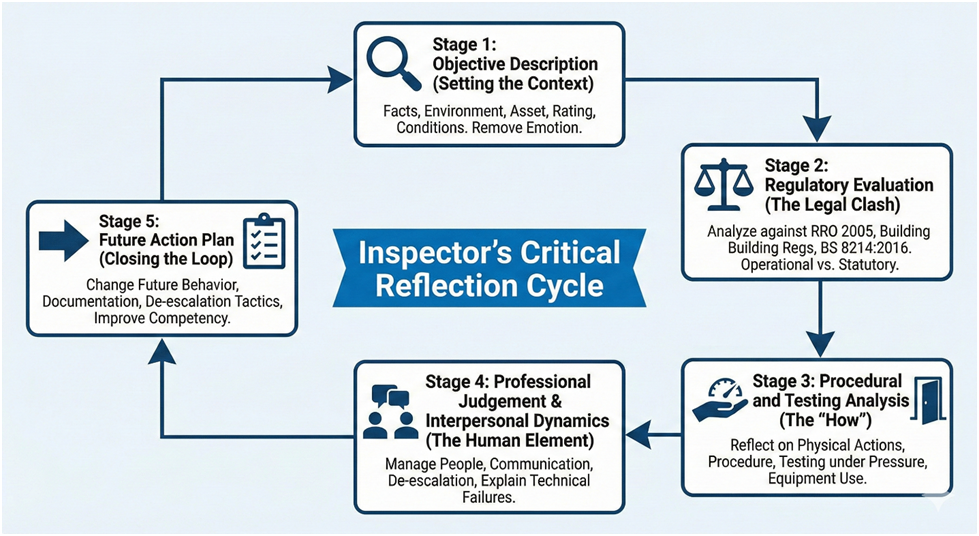
Stage 1: Objective Description (Setting the Context) Before you analyze, you must establish the facts. What was the environment? What was the specific asset being inspected?
- Vocational Focus: Clearly state the building type, the required fire rating of the door assembly (e.g., FD30S, FD60), and the exact physical conditions you encountered. Remove all emotion from this stage.
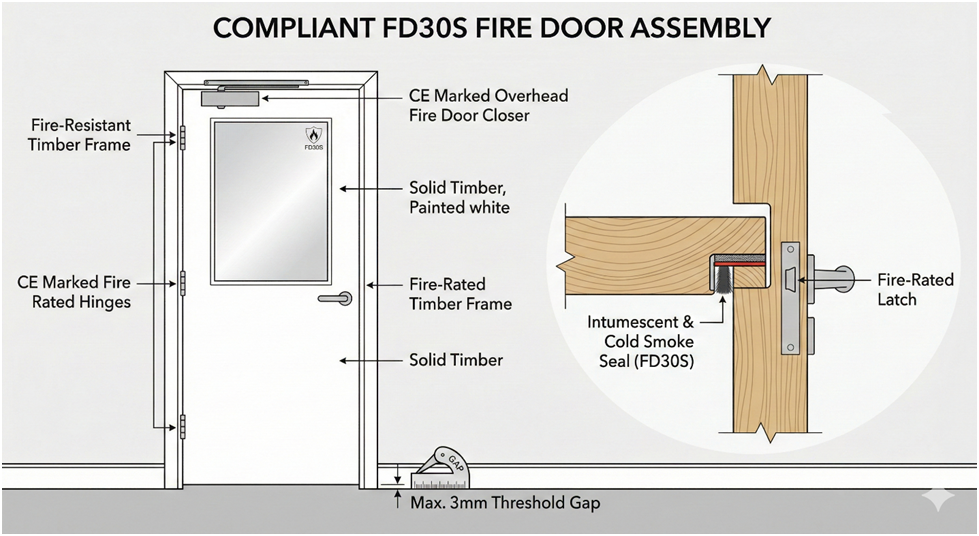
Stage 2: Regulatory Evaluation (The Legal Clash) This is where you analyze the situation against UK Law. When an inspection goes wrong or faces pushback, it is usually a clash between operational desires and statutory requirements.
- Vocational Focus: How did the situation challenge your understanding of the RRO 2005 or Building Regulations Approved Document B? Did the client try to use a loophole? How did you use BS 8214:2016 to anchor your legal standing? You must reflect on how confident you felt wielding these regulations in a live environment.
Stage 3: Procedural and Testing Analysis (The “How”) Reflect on your physical actions. Did you execute the inspection procedure correctly despite external pressures?
- Vocational Focus: If a client was shouting at you, did you still take the time to use your calibrated gap gauge accurately? Did you miss checking the top edge for certification because you were distracted? Reflect on the physical testing of the fire door installation. Did the door closer fail, and how did you diagnose that failure under pressure?
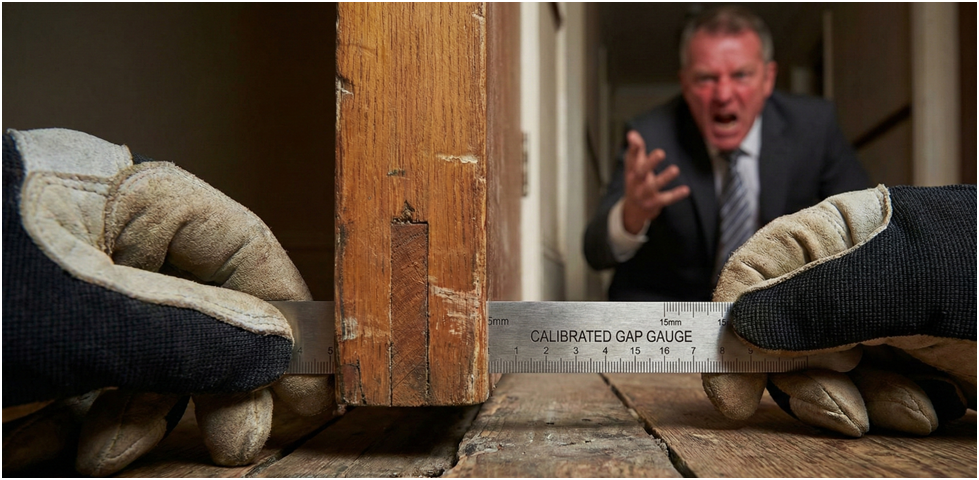
Stage 4: Professional Judgement & Interpersonal Dynamics (The Human Element) A Level 5 Inspector must manage people as well as doors. Fire safety often costs money and disrupts aesthetics, leading to hostile clients or dismissive contractors.
- Vocational Focus: Reflect on your communication. Were you too aggressive in your condemnation? Were you too passive, allowing a dangerous situation to persist longer than it should have? How did you explain complex technical failures (like intumescent seal mechanics) to a layman building manager?
Stage 5: Future Action Plan (Closing the Loop) A reflective account is useless if it doesn’t change your future behavior.
- Vocational Focus: What will you do differently on your next site visit? Will you carry different documentation? Will you change your de-escalation tactics? How has this specific inspection improved your overall competency in testing fire resisting doors?
B. The Workplace Scenario: The Heritage Clash at “The Grand Regent”
To complete this KPT, you must adopt the persona of the Lead Inspector in the following scenario and write your reflective account as if you just experienced this event today.
The Environment: You were contracted to conduct a full fire door audit at “The Grand Regent,” a prestigious, Grade II listed heritage hotel built in 1885. It is a high-risk sleeping accommodation environment. The client is the Hotel General Manager, a man fiercely protective of the building’s historic aesthetic and highly concerned about upcoming VIP guests.
The Inspection Reality: You were tasked with inspecting the primary corridor cross-doors on the 3rd floor (Required Rating: FD30S – protecting the main evacuation stairwell).
Upon visual inspection and physical testing, you discovered a catastrophic suite of unauthorized alterations:
The Seals: The original intumescent strips and cold smoke brushes had been entirely removed and replaced with decorative, carved mahogany timber strips that offered zero fire resistance but “matched the Victorian aesthetic.”
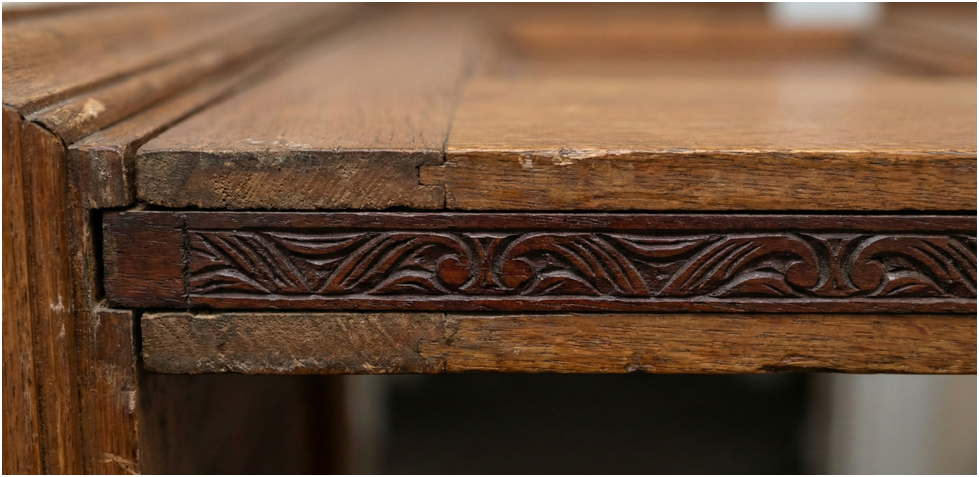
- The Ironmongery: The heavy-duty, CE-marked overhead door closers had been removed because they were “ugly.” They were replaced with concealed, non-certificated floor springs that lacked the tension to close the heavy doors. Furthermore, the fire-rated stainless-steel hinges were swapped for antique, cast-iron domestic hinges that were cracking under the door’s weight.
- The Gaps: Due to the historic, sagging floorboards, the threshold gaps beneath the doors measured between 18mm and 22mm.
The Conflict: You immediately approached the Hotel General Manager to issue an urgent verbal warning before writing your report. You informed him that the doors had been stripped of their fire resistance and the 20mm threshold gaps would allow toxic smoke to flood the escape routes in minutes, putting hundreds of sleeping guests at severe risk.
The Manager became highly aggressive. He stated: “You clearly don’t understand Heritage Law. We have a Grade II listing; we are legally exempt from modern building regulations if it ruins the aesthetic. I paid a fortune for those antique hinges. You will pass these doors, or I will ensure your company never works in the luxury hospitality sector again. Do not write this down.”
Your Action (The Pre-determined Outcome): Despite the threats and the high-pressure environment, you stood your ground. You calmly explained that under the RRO 2005, life safety entirely supersedes heritage aesthetics, and there are no exemptions that allow for the total removal of compartmentation. You refused to alter your findings. You issued a Critical Non-Conformance Report, condemned the 15 sets of corridor doors, and immediately escalated the issue to the local Fire and Rescue Service (FRS) liaison due to the imminent risk to sleeping guests, resulting in the temporary closure of the 3rd floor.
C. Learner Task: Personal Reflection on Fire Stopping Inspections Conducted
Now that you have “survived” the inspection at The Grand Regent, you must write a formal Reflective Account for your Level 5 portfolio.
Using a blank word-processor document, write a comprehensive reflection (minimum 1200 words) using the Inspector’s Critical Reflection Cycle detailed in the Knowledge Guide.
You must address the following highly specific prompts within your reflection:
1. Context & The Regulatory Conflict (Understanding Regulations)
- Task: Reflect on the moment the Manager claimed “Heritage Law” exempted him from fire safety. How did you feel internally when faced with this legal misinformation? Detail exactly how you relied on your knowledge of the RRO 2005 (specifically Article 17) and Approved Document B to internally validate your stance before responding. Reflect on the immense responsibility of prioritizing life safety over a client’s commercial and aesthetic demands.
2. Procedural Integrity Under Duress (Knowing the Procedure & Testing)
- Task: Reflect on the physical act of testing those specific doors. When you realized the client was hostile, did it change how you used your gap gauge or how you inspected the antique ironmongery? Discuss the technical realities of the failures you found. Reflect deeply on the mechanics of the 22mm threshold gap and the removed intumescent seals—how did visualizing the physics of smoke and fire spread in that specific corridor solidify your decision to condemn the doors?
3. Professional Judgement and Communication (The Human Element)
- Task: Critically analyze your handling of the Hotel Manager. Reflect on your communication style. Did you manage to de-escalate his aggression, or did your insistence on the regulations escalate the tension? Could you have explained the concept of “notional doors” or heritage-approved fire safety upgrades (like specialized intumescent paints or discrete drop-down seals) better to soften the blow? Evaluate your decision to escalate to the Fire and Rescue Service. Was it an overreaction, or the only professional choice left?
4. Action Plan for Future Practice
- Task: Conclude your reflective account with concrete steps for the future. What specific lessons will you take from “The Grand Regent” into your next inspection in a complex workplace? Will you change your pre-inspection briefing with clients? How has this intense experience improved your overall competency as a Level 5 Passive Fire Protection Inspector?
Final Assessment Notes: To meet the stringent requirements of your ProQual diploma, ensure your tone is introspective but highly professional. Avoid purely emotional rants; focus on vocational competency and regulatory adherence.
Ensure that all documents are authentic, relevant, and properly organized for easy reference by inserting your name and signature after writing PROVIDED BY/ PREPARED BY either at the start or end of EACH document. Confidentiality is crucial – anonymize any sensitive information before submission. Use clear indexing and labeling for smooth assessment review. This structured evidence portfolio will effectively demonstrate your ability to monitor and maintain quality in passive fire protection within construction projects.