
Hazard Management in Learning Environments
Introduction
In the context of facilitating one-to-one learning, the tutor is often the “Responsible Person” on the ground. While the organization drafts the Health and Safety Policy, it is the individual facilitator who must implement it. If the policy remains a document on a server, it is legally worthless. It only gains value when it is translated into active Hazard Management within the specific learning environment.
This Knowledge Provision Task (KPT) bridges the gap between the boardroom and the classroom. It equips you with the strategic knowledge to understand why the policy exists (the Business Case) and the practical competence to apply it (Hazard Management) to protect your individual learner. This ensures that your facilitation is not only educational but also legally compliant and physically safe.
Part A: Comprehensive Knowledge Guide
Guideline: Prepare a professional briefing note for senior management detailing the business case for robustly implementing the Health and Safety Policy. Demonstrate how the policy acts as the definitive mandate that authorizes the resources and organizational priority required for successful and legally compliant Control of Health and Safety Risks.
1. The Strategic Mandate: The Policy as the “License to Operate”
In UK vocational training, the Health and Safety Policy is not a suggestion; it is a statutory requirement under Section 2(3) of the Health and Safety at Work etc. Act 1974 (HSWA). For a facilitator working one-to-one with a learner, this policy is the definitive mandate.
- The Authorization of Resources:
Often, facilitators struggle to get the necessary resources (e.g., specific PPE for a learner, a quiet room for safeguarding conversations, or ergonomic equipment). The Policy is the key to unlocking these resources.
- The Argument: If the Policy states “We will provide a safe learning environment,” then the organization must authorize the budget to make that happen.
- Vocational Application: When you, as a tutor, conduct a risk assessment for an individual learner and identify a hazard (e.g., “Noise levels are too high for effective communication”), you cite the Policy to demand the “Control Measure” (e.g., soundproofing or noise-canceling headsets). The Policy transforms your request from a “preference” to a “compliance requirement.”
2. The Business Case for Robust Implementation
When briefing management (or justifying your own safety practices), you must articulate the “Business Case.” Robust hazard management is not a cost; it is an investment in viability.
- Pillar 1: The Legal Business Case (Compliance & Liability)
- The Law: The Management of Health and Safety at Work Regulations 1999 (Regulation 3) requires suitable and sufficient risk assessment. Failure to implement this during one-to-one sessions leaves the organization open to criminal prosecution and unlimited fines.
- The 1:1 Context: Liability is heightened in one-to-one scenarios. Unlike a classroom where supervision is general, in 1:1 facilitation, the “Duty of Care” is concentrated. If a learner is injured while under your direct, exclusive supervision, the claim of negligence is harder to defend unless you can prove you implemented the policy robustly.
- The Cost of Failure: Legal fees, HSE intervention charges (Fee for Intervention), and potential custodial sentences for gross negligence manslaughter.
- Pillar 2: The Financial Business Case (Direct & Indirect Costs)
- Direct Costs: Sick pay for an injured learner, repair costs for damaged equipment, and increased insurance premiums.
- Indirect Costs: The “Iceberg Effect.” For every £1 of direct cost, there are £10-£36 of indirect costs (HSE statistics). These include:
- Investigation time (your time taken away from teaching).
- Loss of reputation (employers will stop sending learners to your center).
- Learner attrition (the injured learner drops out, resulting in lost funding).
- The Argument: Implementing the policy (e.g., spending £50 on a risk assessment check) is infinitesimally cheaper than the cost of an accident.
- Pillar 3: The Moral & Pedagogical Business Case (Duty of Care)
- Safeguarding: In one-to-one learning, “Safety” includes Safeguarding. A robust policy implementation ensures that lone-working protocols are followed, protecting both the learner and the tutor from allegations.
- Maslow’s Hierarchy: A learner cannot learn if they feel unsafe. The brain’s survival mechanism (the amygdala) overrides the learning center (the prefrontal cortex). Therefore, hazard management is a prerequisite for educational success. If you want high achievement rates, you must have high safety standards.
3. Operationalizing the Policy: From Mandate to Management
How does a “Briefing Note” translate to the shop floor? It moves through the Hazard Management Hierarchy.
- Step 1: Identification (The Policy in Action)
The Policy mandates that you assess risk. Your competence is how you assess it. In a 1:1 session, you must scan the specific environment.
- Example: You are teaching a learner to use IT equipment. The Policy says “Prevent Musculoskeletal Disorders.” You implement this by assessing the chair height and screen position for that specific learner.
- Step 2: Control (The Hierarchy of Control)
The Management Regulations 1999 (Schedule 1) define the Principles of Prevention. You must apply these in order:
- Eliminate: Can we do this task without the hazard? (e.g., simulate the chemical reaction instead of doing it for real).
- Reduce: Use lower voltage? Less toxic chemicals?
- Isolate: Put a guard on the machine.
- Control: Safe Systems of Work (your teaching method).
- PPE: The last resort (goggles, gloves).
- Step 3: Safeguarding Integration
In one-to-one learning, “Hazard Management” also covers the hazard of abuse or false allegation.
- Policy Implementation: Ensure the viewing panel in the door is clear (transparency). Ensure the learner knows they can leave at any time (empowerment). Ensure professional boundaries are maintained. This is “Risk Management” of the human element.
Part B: The Vocational Competency Task
Task Context:
You are a Vocational Tutor delivering a specific one-to-one learning session. The organization has a generic Health and Safety Policy, but it is your responsibility to implement it for this specific learner in this specific environment.
You are preparing for a session that involves either a physical activity (e.g., using tools, moving objects) or a significant interaction in a private space (requiring safeguarding controls).
The Task:
You must produce the primary operational document that proves you have implemented the Health and Safety Policy and managed the hazards for this individual. You are required to conduct a Session-Specific Risk and Safeguarding Assessment.
Step-by-Step Task Instructions:
- Review the Environment (The Inspection):
- Before the learner arrives (or with the learner as a teaching point), physically inspect the learning space.
- Look for “Slips, Trips, and Falls” hazards (cables, bags).
- Look for “Environmental” hazards (lighting, temperature, noise).
- Look for “Safeguarding” hazards (is the room too isolated? Is there a line of sight?).
- Consult the Learner (The Individual Need):
- Policy implementation requires consulting the “employee” (or learner). Ask them: “Is there anything in this setup that causes you difficulty?”
- Vocational Example: The learner might have a back injury you didn’t know about. A standard chair is a hazard to them. You must manage this.
- Define the Controls (The Management):
- For every hazard identified, list a specific control.
- Generic Control: “Be careful.” (This is insufficient).
- Specific Control: “Tutor to tape down trailing cable. Learner to adjust chair to lumbar support setting. Door to remain unlocked.”
- Document the Management (The Evidence):
- You must create a formal record. In a legal defense, the phrase is: “If it isn’t written down, it didn’t happen.”
- This document serves as your proof that you have “Controlled Health and Safety Risks” and “Implemented Policy.”
- Sign-Off (The Contract):
- Hazard management is a shared responsibility. You must sign it, and (ideally) the learner should sign or acknowledge it, confirming they understand the controls.
Part C: The Evidence Output
To complete this KPT, you must generate and submit the following single specific piece of evidence from the Unit 3 Assessment Plan.
“Documentation demonstrating management of risks and safeguarding during one-to-one sessions.”
(Note: This is the critical evidence. It is not an essay about risk; it is the Risk Assessment Document itself. It demonstrates that you have taken the “Knowledge” of the policy and converted it into the “Performance” of managing the hazard).
Part D: Exemplar Structure for the Evidence
To assist you in generating the correct evidence, here is the required structure for the “Risk and Safeguarding Management Document”:
ONE-TO-ONE RISK & SAFEGUARDING MANAGEMENT RECORD
Unit: Facilitate Learning and Development for Individuals
Learner Name: [Name]
Date: [Date]
Location: [Specific Room/Workshop]
Part 1: Policy Compliance Statement
“This assessment is conducted in accordance with the Organizational Health and Safety Policy Section 4 (Lone Working) and the Management of Health and Safety at Work Regulations 1999.”
Part 2: Hazard Identification & Control (Physical)
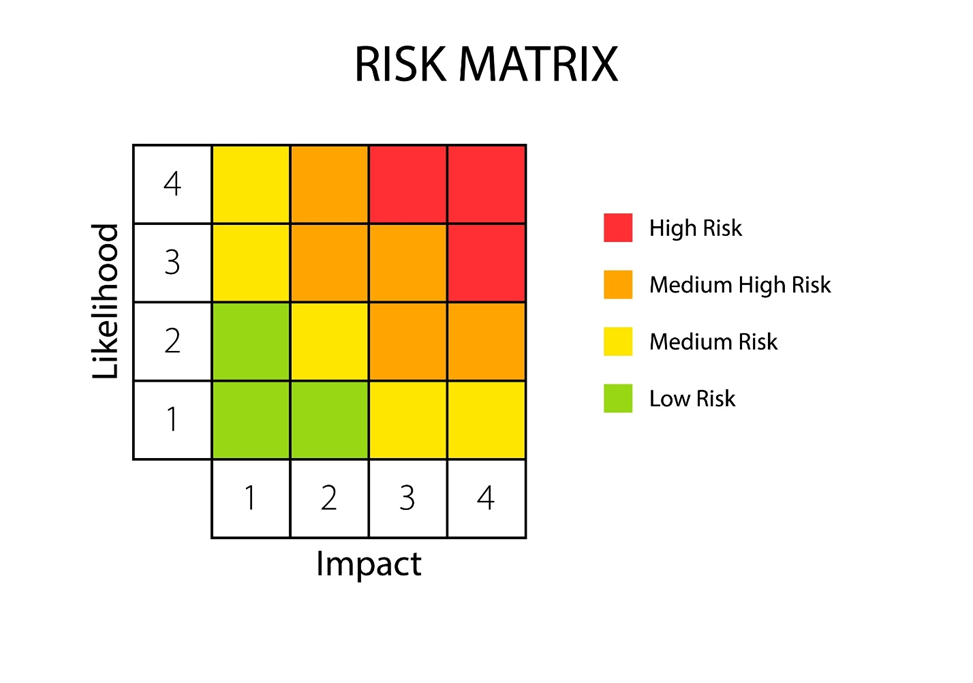
| Hazard Category | Specific Risk Identified | Risk Level (H/M/L) | Control Measures Implemented (The Management) |
| Slips/Trips | Trailing laptop cable across the walkway. | Medium | Cable cover installed. Learner briefed on location. |
| Ergonomics | Learner using display screen for >1 hour. | Low | Workstation adjusted to eye level. 5-minute break scheduled at 10:45. |
| Equipment | Use of sharp scissors for craft activity. | High | Scissors issued only for duration of task. Counted out/in. Safety briefing given. |
Part 3: Safeguarding & Lone Working Controls (Psychological)
| Hazard Category | Specific Risk Identified | Control Measures Implemented |
| Lone Working | Session is in an isolated office. | Door viewing panel remains uncovered. “In/Out” board updated at reception. |
| Professional Boundaries | Physical contact required for guiding manual skill. | Consent explicitly requested from learner before contact. Explanation given: “I am going to guide your hand now.” |
Part 4: Emergency Procedures
- Fire Exit: Check complete. Route clear.
- First Aid: Kit located in Room 101.
Part 5: Confirmation
Learner Acknowledgement: I have received the safety briefing and understand the controls.
Signed (Learner): ________________________
Conclusion
By completing this task, you are demonstrating that you understand the “Business Case” for safety—that it is the foundation of all professional practice. You have moved beyond the theoretical “Briefing Note” to the practical application of Hazard Management. You have used the Policy as a tool to authorize your actions, and you have produced the definitive “Documentation demonstrating management of risks” required by the Assessment Plan. This proves your competence in “assisting individual learners” by ensuring their learning journey is not interrupted by preventable harm.