
Building Workplace Relation
“ProQual NVQ Diploma Guide: Knowledge Application Task for Workplace Relationships”
Introduction and Purpose
In Building Workplace Relation, professionals must integrate knowledge, skills, and interpersonal abilities to respond effectively to challenges. A Knowledge Application Task allows learners to apply theoretical understanding to realistic workplace scenarios, combining multiple elements such as hazard identification, reporting, root cause analysis, and corrective action planning.
This task also emphasizes the soft skills needed for maintaining good working relationships, including:
- Building trust and goodwill when communicating issues.
- Informing relevant people in the correct level of detail and urgency.
- Offering guidance and encouraging questions or alternative suggestions.
- Resolving disagreements in ways that preserve respect and collaboration.
The purpose of this KPT is to develop learners’ integrated thinking, problem-solving, and professional communication skills, while reinforcing compliance with UK legal and regulatory requirements.
Scenario Overview
Learners are presented with a realistic workplace incident or non-conformance scenario. This scenario includes:
- Observed hazards or unsafe conditions
- Incomplete or unclear documentation
- Conflicting opinions among site personnel
- Potential risk to personnel, equipment, or the environment
Example Scenario:
During a routine inspection of a concrete pour on a construction site, a learner notices the following:
- Fresh concrete has not been adequately cured in one section, potentially affecting strength.
- Workers have left formwork tools scattered nearby, creating a tripping hazard.
- A subcontractor disputes the inspection method used by the site engineer.
- The site supervisor has not been informed of these issues yet.
Learners must respond to the scenario using a structured, systematic approach, addressing both technical and relational aspects.
Step 1: Hazard Identification
Learners must:
- Identify all hazards present in the scenario, such as:
- Structural hazards (e.g., improperly cured concrete)
- Environmental hazards (e.g., wet surfaces, waste materials)
- Safety hazards (e.g., tripping hazards from scattered tools)
- Prioritize hazards based on risk to personnel and project integrity.
- Record hazards in a hazard log or inspection form using clear, professional language.
Note: Proper hazard documentation is crucial to inform colleagues and supervisors effectively while maintaining trust and credibility.
Step 2: Documentation
Learners should:
- Complete a Non-Conformance Report (NCR) or Inspection Record, ensuring:
- Accurate description of the hazard or non-conformanceIdentification of responsible personnel (if applicable)Recommended immediate actions
- Stakeholders to be informed (site manager, safety officer, subcontractor, quality team)
- Ensure clarity and detail without being unnecessarily punitive, promoting positive working relationships.
UK Legal Context:
- Health and Safety at Work Act 1974: obligation to maintain safe work conditions.
- CDM Regulations 2015: duty holders must ensure effective coordination and communication.
Step 3: Root Cause Analysis
Learners must investigate why the non-conformance or hazard occurred:
- Concrete curing issue: Were procedures followed according to site method statements and BS EN 12390?
- Tripping hazards: Were housekeeping protocols ignored or misunderstood?
- Dispute among personnel: Was communication or documentation unclear, leading to disagreements?
Tools for analysis may include:
- 5 Whys: Asking why repeatedly until the root cause is identified.
- Cause-and-effect diagram: Visualizing contributing factors for clarity.
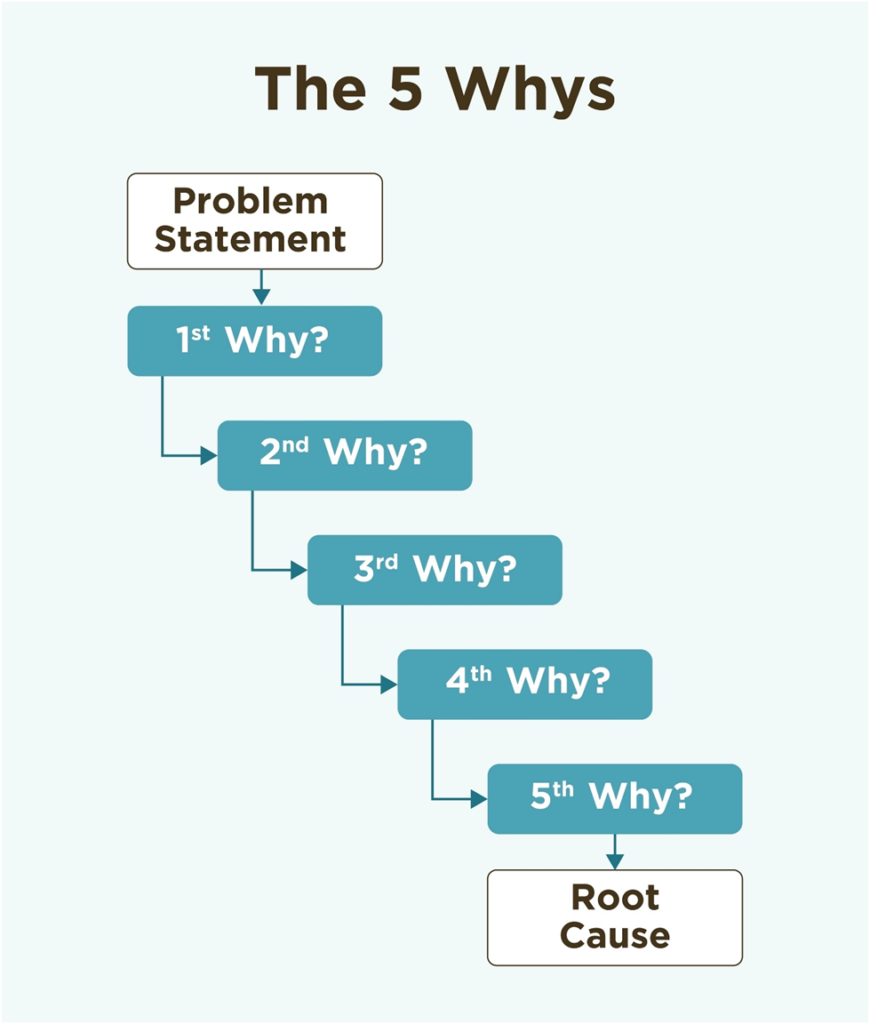
Learners must summarize findings professionally, avoiding blame, and focusing on systemic improvements.
Step 4: Corrective and Preventive Actions
Learners must propose actionable solutions, including:
- Immediate corrective measures:
- Re-inspect and properly cure affected concrete.
- Clear tripping hazards and reinforce housekeeping standards.
- Mediate discussion with subcontractor to clarify inspection procedures.
- Preventive measures for the future:
- Update work instructions and inspection protocols.
- Schedule toolbox talks on concrete curing and site housekeeping.
- Introduce clear communication channels for reporting non-conformances.
Good Occupational Relationships:
- Recommendations should encourage collaboration.
- Communicate respectfully to all personnel involved.
- Address differences of opinion without causing offense
Step 5: Communication and Reporting
Learners must develop a communication plan to ensure all relevant personnel are informed:
- Site supervisor: Urgent update with suggested actions.
- Quality team: Documentation of NCR and inspection notes.
- Subcontractor team: Clarification of inspection method and expectations.
- Team members: Awareness of hazards to prevent incidents.
Communication should be:
- Accurate, concise, and professional
- Appropriate in urgency and level of detail
- Inclusive of opportunities for clarification and feedback
Step 6: Reflection
Learners must reflect on:
- How their actions promoted trust and goodwill on site
- How correct communication prevented misunderstandings and potential conflicts
- How the process reinforced safety, compliance, and collaborative working relationships
Reflection Guidance: 200–300 words summarizing lessons learned and interpersonal insights.
Learner Task
Task Instructions:
- Review the provided workplace scenario.
- Complete the following:
- Hazard identification log
- Non-Conformance Report (NCR) or inspection record
- Root cause analysis using 5 Whys or cause-and-effect diagram
- Corrective and preventive action plan
- Communication plan for informing all relevant personnel
- Submit a reflection report explaining how the task reinforced good occupational relationships, collaboration, and trust.
Format:
- Written document in Word or PDF
- Include tables, diagrams, or charts where appropriate
- Ensure professional language and UK regulatory references are included
Submission Guidelines
- Submit all documents as a single PDF or Word file.
- Include clearly labeled sections for each task step.
- Ensure proper referencing of UK laws and site procedures.
- Reflection section must be included.
Assessment Criteria:
- Accurate identification and prioritization of hazards
- Completeness and clarity of documentation
- Logical and evidence-based root cause analysis
- Practical and effective corrective/preventive measures
- Professional, collaborative communication strategies
- Reflection demonstrates understanding of good occupational working relationships