
ISO Certification: Complete Guide to Benefits, Process & Requirements
ISO certification is a globally recognized standard that ensures organizations meet international best practices in quality, safety, and efficiency. Businesses across industries pursue ISO certification to enhance credibility, improve operational processes, and build customer trust. With increasing global competition, understanding ISO certification, its benefits, process, and requirements is essential for companies aiming to achieve excellence and sustainability.
ISO certification provides a structured approach to management systems, helping businesses align their processes with international standards. By implementing ISO standards, organizations can ensure consistent quality, reduce risks, and access new market opportunities. This guide will cover everything you need to know about ISO certification, including its types, benefits, steps, and requirements.
1. What is ISO Certification?
ISO certification is an official recognition from an accredited body that a company meets one or more international ISO standards. Achieving ISO certification confirms that an organization’s management system aligns with global best practices, ensuring consistent quality, safety, and efficiency. ISO certification demonstrates a company’s commitment to excellence in areas such as environmental responsibility, occupational health and safety, and information security. Businesses with ISO certification gain credibility, build customer trust, and improve operational performance. By implementing ISO standards and maintaining compliance, organizations can enhance their reputation, access global markets, and achieve long-term sustainable growth.
What Does ISO Stand For?
ISO stands for the International Organization for Standardization, an independent, non-governmental body that develops global standards for businesses, industries, and government organizations. The name “ISO” comes from the Greek word isos, meaning “equal,” emphasizing consistency and uniformity in international practices. These standards provide a framework for maintaining quality, safety, environmental management, and information security, helping organizations around the world implement best practices. Adhering to these standards ensures compliance with internationally recognized guidelines, enhances operational efficiency, and supports consistent delivery of products and services that meet global expectations.
Purpose of ISO Standards
The main purpose of international standards is to promote uniformity, quality, and safety across industries worldwide. By implementing these standards, organizations can establish effective management systems, optimize workflows, minimize errors, and boost overall efficiency. They also help businesses meet legal and regulatory requirements while ensuring consistent performance. Following recognized global standards allows companies to deliver high-quality products and services that satisfy customer expectations. Adopting these best practices enhances operational processes, builds credibility, strengthens customer trust, and supports sustainable, long-term growth for the organization in competitive markets.
Importance of ISO Certification
ISO certification is important because it:
- Confirms a company’s commitment to quality, safety, and efficiency.
- Helps build customer confidence and satisfaction.
- Enhances reputation and credibility in the global market.
- Opens new opportunities for international trade and partnerships.
- Provides a framework for continuous improvement.
2. Types of ISO Certification
“Different ISO standards focus on different aspects of business management. Some of the most widely implemented ISO certifications include ISO 9001 for quality management, ISO 45001 for occupational health and safety, ISO 14001 for environmental management, and ISO 27001 for information security.”
ISO Standard Focus Area Key Benefit ISO 9001 Quality Management Consistent Product Quality ISO 45001 Occupational Health & Safety Safer Workplace ISO 14001 Environmental Management Sustainable Operations ISO 27001 Information Security Data Protection
Different ISO standards focus on different aspects of business management. Some of the most widely implemented ISO certifications include:
ISO 9001: Quality Management System
ISO 9001 ensures that an organization consistently delivers high-quality products and services. It focuses on customer satisfaction, continuous improvement, and efficiency in processes. ISO 9001 certification is ideal for companies aiming to enhance operational excellence and competitiveness.
ISO 45001: Occupational Health and Safety
ISO 45001 focuses on workplace safety and employee health. Organizations with this certification demonstrate their commitment to preventing workplace hazards, reducing accidents, and fostering a safe work environment.
ISO 14001: Environmental Management
ISO 14001 helps businesses minimize their environmental impact. It provides guidelines for sustainable practices, waste reduction, and compliance with environmental regulations. ISO 14001 certification is increasingly important as sustainability becomes a global priority.
ISO 27001: Information Security Management
ISO 27001 focuses on securing sensitive data and information systems. It ensures organizations implement risk management procedures and maintain the confidentiality, integrity, and availability of information. This certification is crucial for companies handling sensitive client or internal data.
3. Benefits of ISO Certification
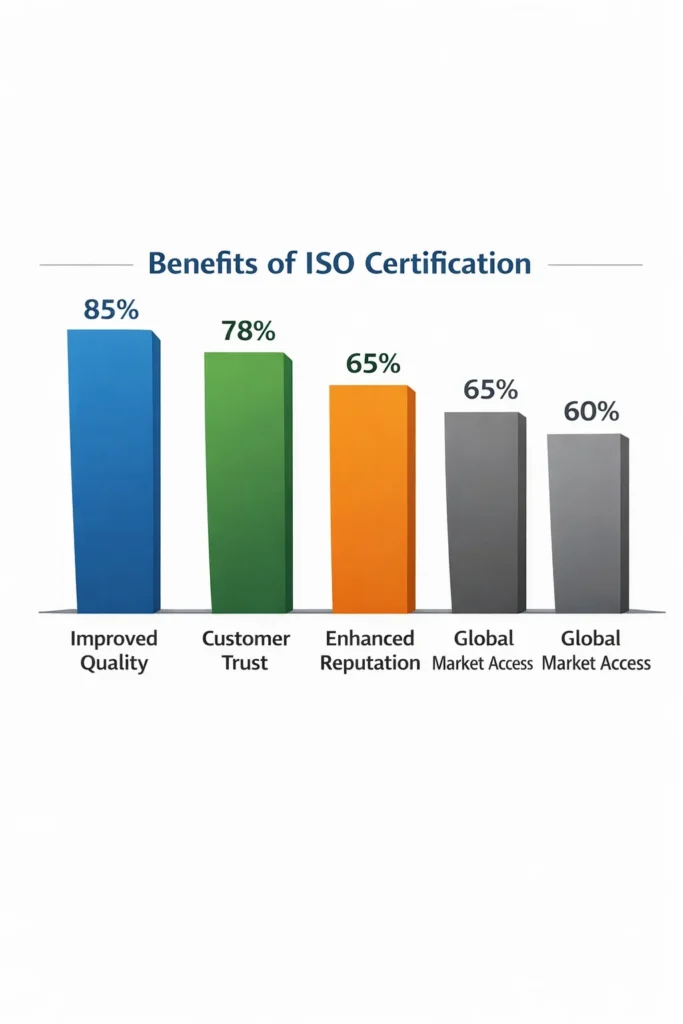
ISO certification brings numerous advantages to organizations. Key benefits include:
Improves Products and Service Quality
It ensures that businesses follow international standards for quality management. This results in consistent, high-quality products and services that meet customer expectations.
Builds Customer Trust
Customers and partners are more likely to trust organizations with ISO certification. It demonstrates commitment to quality, safety, and reliability, improving brand reputation and loyalty.
Enhances Business Reputation
ISO certification positions a company as a professional and reliable organization in its industry. A strong reputation can help attract new clients and retain existing ones.
Access to Global Markets
ISO certification is recognized worldwide, enabling businesses to expand internationally. Many global clients and suppliers require ISO certification as a prerequisite for partnerships.
4. Steps to ISO Certification
Achieving ISO certification involves several structured steps. Following a systematic process ensures a smooth implementation.
Step 1: Choose the Appropriate ISO Standard
Identify the ISO standard that aligns with your business objectives. Common choices include ISO 9001 for quality, ISO 45001 for health and safety, ISO 14001 for environmental management, and ISO 27001 for information security.
Step 2: Conduct Gap Analysis
Perform a gap analysis to compare current processes with ISO standard requirements. This helps identify areas that need improvement before certification.
Step 3: Implement ISO Management System
Develop and implement well-defined policies, procedures, and operational processes that align with recognized international standards. At this stage, strong leadership involvement and comprehensive employee training are essential. These efforts ensure that staff understand the new requirements, follow standardized practices effectively, and contribute to maintaining consistent quality, safety, and operational efficiency across the organization.
Step 4: Internal Audit
Perform an internal audit to verify that all management systems align with established standards. Identify any gaps or non-conformities and implement corrective actions to ensure compliance. This process strengthens operational effectiveness, improves consistency, and prepares the organization for formal audits, supporting overall quality, safety, and efficiency objectives.
Step 5: Certification Audit
Hire an accredited certification body to conduct the formal audit. Completing this audit successfully confirms that your organization meets international standards, demonstrating compliance, operational excellence, and adherence to best practices, ultimately validating the quality, safety, and efficiency of your processes for stakeholders and global recognition.
5. ISO Certification Requirements
“Below is a detailed visual guide outlining the essential requirements and roadmap for achieving ISO Certification:
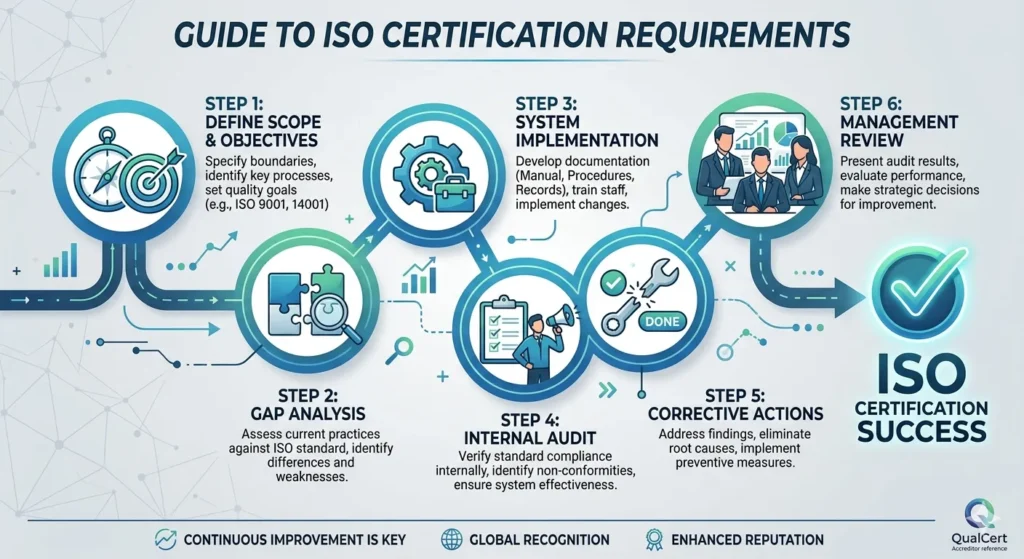
Organizations must meet specific requirements to achieve ISO certification. These include:
Documentation
Maintain proper documentation of processes, policies, and procedures to demonstrate compliance with ISO standards. This documentation is reviewed during audits.
Employee Training
Ensure all employees are trained on ISO standards relevant to their roles. Training improves awareness, competency, and compliance throughout the organization.
Process Implementation
Implement the required processes and systems consistently. Effective execution ensures the organization meets the quality, safety, and efficiency standards defined by ISO.
6. Key Takeaways
Adopting international standards allows businesses to enhance quality, credibility, and overall operational performance. These standards provide a structured framework for management systems, ensuring consistent results, improved efficiency, and satisfied customers. Understanding the different types, benefits, processes, and requirements enables organizations to implement these standards strategically, supporting long-term growth and competitiveness.
Implementing such standards requires careful planning, commitment, and continuous improvement. The advantages — including higher-quality products, stronger reputation, increased customer trust, and access to global markets — make adherence to recognized best practices a valuable investment for any organization seeking sustainable success and international recognition.