
Environmental Engineering Scope, Salary & Career Opportunities in the UK (2026)
Environmental engineering has become one of the fastest-growing and most future-focused professions in the United Kingdom. As the UK continues investing in sustainability, renewable energy, Net Zero targets, smart infrastructure, and environmental protection, the demand for qualified environmental engineers is increasing across multiple industries. From water treatment and waste management to sustainable construction and carbon reduction projects, environmental engineers are playing a critical role in building a cleaner and more sustainable future.
In 2026, environmental engineering is no longer limited to traditional pollution control roles. Modern environmental engineers now work in renewable energy, green construction, environmental consultancy, infrastructure planning, manufacturing, environmental compliance, and ESG (Environmental, Social, and Governance) management. Companies across the UK are actively seeking professionals who can help them reduce environmental impact, meet sustainability regulations, and improve operational efficiency.
For students, graduates, and professionals considering a career in this field, environmental engineering offers strong job security, competitive salaries, international career opportunities, and long-term career growth. This complete UK guide explains the scope of environmental engineering, salary expectations, career opportunities, required skills, industries hiring in 2026, and the future demand for environmental engineers in the UK.
What is Environmental Engineering?
Environmental engineering is a branch of engineering that focuses on protecting the environment and improving public health through sustainable engineering solutions. Environmental engineers design systems and technologies that reduce pollution, manage waste, improve water quality, support renewable energy projects, and ensure compliance with environmental regulations.
Environmental engineering combines principles from:
- Civil engineering
- Chemical engineering
- Sustainability management
- Environmental science
- Public health
- Renewable energy systems
Environmental engineers work on projects that help organisations reduce environmental risks while improving efficiency and sustainability.
Key Responsibilities of Environmental Engineers
Environmental engineers in the UK may work on:
- Water treatment and wastewater systems
- Air pollution control systems
- Waste management and recycling projects
- Environmental impact assessments
- Sustainable construction projects
- Renewable energy systems
- Environmental monitoring and auditing
- Carbon reduction strategies
- Climate adaptation projects
- Environmental compliance and regulation
Environmental engineers are employed by private companies, government organisations, engineering consultancies, construction firms, manufacturing industries, and energy companies.
Why Environmental Engineering is Growing Rapidly in the UK
The environmental engineering sector in the UK is expanding due to increasing environmental concerns, stricter regulations, and large-scale sustainability investments. The UK government’s long-term Net Zero strategy and green economy initiatives are creating strong demand for environmental professionals.
UK Net Zero Targets
The UK has committed to achieving Net Zero carbon emissions by 2050. This has significantly increased investments in:
- Renewable energy
- Sustainable infrastructure
- Green construction
- Carbon reduction technologies
- Environmental compliance systems
As industries work toward sustainability goals, environmental engineers are needed to design environmentally responsible solutions.
Growth of Renewable Energy Projects
The UK renewable energy sector is growing rapidly, particularly in:
- Wind energy
- Solar energy
- Hydrogen projects
- Smart energy systems
- Energy-efficient infrastructure
Environmental engineers support these projects by ensuring environmental sustainability and regulatory compliance.
Environmental Regulations and Compliance
UK businesses must comply with strict environmental laws and sustainability regulations. Environmental engineers help organisations:
- Reduce emissions
- Improve waste management
- Meet environmental standards
- Conduct environmental audits
- Manage environmental risks
This has created high demand for environmental consultants and compliance specialists.
Scope of Environmental Engineering in the UK (2026)
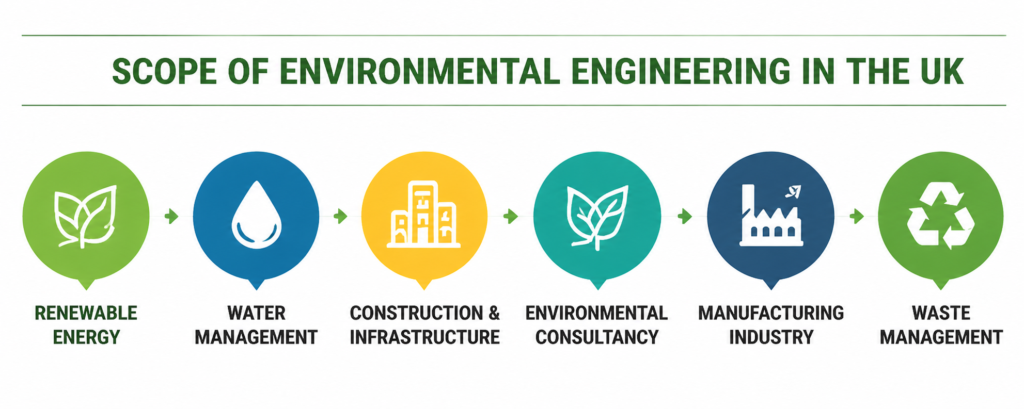
The scope of environmental engineering in the UK is vast and continuously growing. Environmental engineers can work across a wide range of industries, including renewable energy, construction, water management, waste management, manufacturing, and environmental consultancy. This diversity makes environmental engineering a highly flexible, in-demand, and future-focused career with strong long-term opportunities.
1. Water Treatment and Wastewater Management
Water management is one of the biggest employment sectors for environmental engineers in the UK. Environmental engineers help design and maintain systems for clean water supply, wastewater treatment, flood prevention, and sustainable water conservation projects.
Environmental engineers work on:
- Drinking water treatment systems
- Wastewater treatment plants
- Flood management systems
- Water recycling projects
- Sustainable drainage systems
2. Renewable Energy Industry
The rapid growth of renewable energy in the UK is creating strong career opportunities for environmental engineers. Professionals in this field work on sustainable energy projects such as wind farms, solar power systems, energy efficiency solutions, and carbon reduction initiatives.
Environmental engineers contribute to:
- Wind farm projects
- Solar energy systems
- Energy efficiency programs
- Carbon reduction initiatives
- Sustainable energy planning
3. Construction and Infrastructure
Environmental engineers are playing an increasingly important role in modern construction and infrastructure projects. They help develop sustainable buildings, manage environmental risks, reduce pollution, and ensure projects comply with environmental regulations and sustainability standards.
Key responsibilities include:
- Environmental impact assessments
- Sustainable building systems
- Waste reduction strategies
- Site contamination management
- Air and noise pollution control
4. Environmental Consultancy
Environmental consultancy has become one of the most sought-after career paths for environmental engineers in the UK. Environmental consultants help businesses improve sustainability, reduce environmental impact, and comply with environmental laws and regulations.
Environmental consultants help businesses:
- Meet environmental regulations
- Reduce environmental impact
- Conduct risk assessments
- Improve sustainability performance
- Develop ESG strategies
5. Manufacturing and Industrial Sector
Manufacturing industries across the UK increasingly rely on environmental engineers to improve sustainability and minimise environmental impact. These professionals help companies reduce emissions, improve energy efficiency, manage waste responsibly, and meet environmental compliance standards.
Environmental engineers in manufacturing focus on:
- Waste reduction
- Energy efficiency
- Environmental compliance
- Pollution prevention
- Sustainable production systems
Environmental Engineering Salary in the UK (2026)
Environmental engineering salaries in the UK can vary significantly depending on several important factors, including professional experience, educational qualifications, technical specialisation, industry sector, geographic location, and professional certifications. Entry-level environmental engineers generally earn lower salaries while experienced professionals, consultants, and senior environmental managers can achieve substantially higher income levels.
Professionals working in high-demand sectors such as renewable energy, environmental consultancy, infrastructure development, and sustainability management often receive more competitive salary packages. Similarly, environmental engineers employed in major cities like London, Manchester, and Bristol may earn higher salaries due to increased demand, large-scale infrastructure projects, and higher living costs.ing increasingly competitive due to rising demand for sustainability professionals.
Average Environmental Engineering Salary in the UK
| Career Level | Estimated Average Salary |
|---|---|
| Graduate Environmental Engineer | £22,000 – £30,000 |
| Junior Environmental Engineer | £28,000 – £35,000 |
| Mid-Level Environmental Engineer | £35,000 – £50,000 |
| Senior Environmental Engineer | £50,000 – £70,000+ |
| Environmental Consultant | £32,000 – £65,000+ |
| Environmental Manager | £42,000 – £75,000+ |
Graduate environmental engineers in the UK usually start with salaries ranging from £20,000 to £28,000 per year. With experience, advanced technical skills, and industry expertise, environmental engineering professionals can earn between £40,000 and £65,000 or more, particularly in senior, consultancy, and management roles.
Environmental Engineering Salaries in Major UK Cities
| UK City | Average Salary Range |
|---|---|
| London | £35,000 – £75,000 |
| Manchester | £40,000 – £52,000 |
| Glasgow | £45,000 – £53,000 |
| Bristol | £40,000 – £48,000 |
| Birmingham | £38,000 – £46,000 |
Environmental engineering professionals in London generally earn higher salaries because of the city’s large-scale infrastructure developments, sustainability initiatives, renewable energy investments, and high demand for environmental expertise.
Top Career Opportunities in Environmental Engineering
Environmental engineering offers a wide range of career opportunities across industries such as renewable energy, construction, water management, manufacturing, environmental consultancy, waste management, and sustainability management. As environmental regulations and sustainability initiatives continue growing in the UK, environmental engineering professionals are becoming increasingly valuable across both public and private sectors. This makes environmental engineering a highly versatile, future-focused, and rewarding career path in 2026.
Environmental Engineer
Environmental engineers design, develop, and implement systems that reduce environmental impact and improve sustainability. They work on projects related to pollution control, environmental protection, water treatment, and sustainable infrastructure development.
Typical responsibilities include:
- Pollution control systems
- Water treatment design
- Environmental risk assessment
- Sustainability planning
- Environmental monitoring
- Waste management solutions
Environmental engineers are employed in industries such as construction, renewable energy, manufacturing, and environmental consultancy.
Environmental Consultant
Environmental consultants advise organisations on environmental compliance, sustainability strategies, and environmental risk management. They help businesses reduce environmental impact and comply with UK environmental regulations.
Their work may involve:
- Environmental audits
- Sustainability reporting
- ESG compliance
- Environmental impact assessments
- Regulatory guidance
- Carbon reduction planning
Environmental consultancy is one of the most popular and rapidly growing career paths in the UK environmental sector.
Water Resource Engineer
Water resource engineers specialise in water management systems and sustainable water conservation projects. Their work is essential for maintaining clean water supplies and improving wastewater infrastructure.
Key responsibilities include:
- Water supply systems
- Flood risk management
- Wastewater treatment
- Sustainable drainage systems
- Water conservation projects
- Water quality improvement
This sector continues growing due to increasing demand for sustainable water infrastructure in the UK.
Sustainability Consultant
Sustainability consultants help organisations achieve environmental sustainability goals and reduce carbon emissions. They support businesses in developing sustainable operational practices and improving environmental performance.
Typical duties include:
- Sustainability assessments
- ESG strategy development
- Carbon footprint analysis
- Energy efficiency planning
- Sustainable business solutions
- Net Zero planning
Sustainability consulting is becoming highly valuable as more UK organisations focus on environmental responsibility and ESG compliance.
Environmental Compliance Officer
Environmental compliance officers ensure businesses and organisations comply with environmental laws, policies, and industry regulations. They play a key role in environmental risk management and regulatory compliance.
Responsibilities may include:
- Environmental inspections
- Compliance reporting
- Environmental audits
- Risk assessments
- Regulatory documentation
- Sustainability monitoring
This role is important across manufacturing, construction, infrastructure, and energy industries.
Air Quality Specialist
Air quality specialists monitor pollution levels and develop strategies to improve air quality in industrial, commercial, and urban environments. Their work helps protect public health and reduce environmental pollution.
Typical areas of work include:
- Air pollution monitoring
- Emission control systems
- Environmental data analysis
- Industrial pollution management
- Air quality assessments
Air quality management is becoming increasingly important in UK cities and infrastructure projects.
Waste Management Specialist
Waste management specialists develop systems for sustainable waste disposal, recycling, and resource recovery. They help organisations reduce waste and improve environmental sustainability.
Key responsibilities include:
- Recycling systems
- Waste reduction strategies
- Sustainable disposal methods
- Hazardous waste management
- Circular economy projects
- Resource recovery systems
Waste management careers are expanding as industries focus more on sustainability and environmental efficiency.
Health, Safety and Environment (HSE) Advisor
HSE advisors manage workplace health, safety, and environmental compliance. Many environmental engineering professionals move into HSE roles because of their knowledge of environmental regulations and risk management.
Typical duties include:
- Workplace safety assessments
- Environmental compliance monitoring
- Risk management
- Sustainability practices
- Health and safety training
- Regulatory inspections
HSE professionals are in strong demand across construction, manufacturing, oil and gas, and infrastructure sectors in the UK.
Skills Required for Environmental Engineering Careers
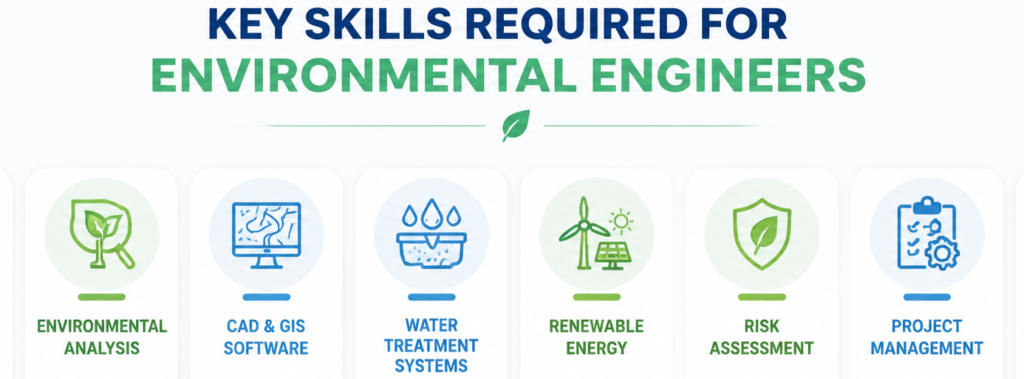
A successful career in environmental engineering requires a strong combination of technical knowledge, analytical thinking, problem-solving abilities, and effective communication skills. Environmental engineers must be able to manage complex environmental challenges, develop sustainable solutions, and work with different industries, regulatory authorities, and project teams.
Technical Skills
Important technical skills include:
- Environmental assessment
- Water treatment systems
- CAD software
- GIS mapping
- Environmental monitoring
- Data analysis
- Sustainability planning
- Environmental auditing
Analytical and Problem-Solving Skills
Environmental engineers need strong analytical and problem-solving skills to identify complex environmental challenges and develop effective, practical, and sustainable engineering solutions. These skills help professionals assess environmental risks, interpret technical data, and improve environmental performance across different industries.
Communication Skills
Environmental engineers often work with:
- Government agencies
- Construction teams
- Clients
- Regulatory authorities
- Sustainability departments
Strong communication and reporting skills are essential.
Best Industries Hiring Environmental Engineers in the UK
Environmental engineers work across a wide range of industries in the UK, including renewable energy, construction, manufacturing, water management, environmental consultancy, waste management, and infrastructure development.
Top Hiring Industries in 2026
- Renewable energy
- Construction and infrastructure
- Water utilities
- Manufacturing
- Environmental consultancy
- Oil and gas
- Government agencies
- Waste management
- Sustainability consulting
- Transport and infrastructure
The renewable energy and sustainability sectors are expected to generate substantial environmental engineering opportunities over the coming years.
Best UK Cities for Environmental Engineering Jobs
Several cities across the UK provide excellent career opportunities for environmental engineering professionals due to increasing investments in sustainability, renewable energy, smart infrastructure, and environmental development projects. These cities offer strong demand for skilled environmental engineers across multiple industries.
| UK City | Key Environmental Engineering Opportunities |
|---|---|
| London | Environmental consultancy, renewable energy, ESG management, sustainable construction, infrastructure projects |
| Manchester | Green construction, sustainability projects, smart infrastructure, environmental consultancy |
| Bristol | Renewable energy, environmental innovation, sustainability initiatives, green technology companies |
| Glasgow | Renewable energy, water management, infrastructure development, environmental consultancy |
| Birmingham | Infrastructure upgrades, sustainable transport, smart city projects, environmental compliance systems |
Environmental Engineering vs Civil Engineering
Although environmental engineering and civil engineering are closely related fields, they focus on different areas of engineering and development. Civil engineering mainly focuses on designing and constructing infrastructure such as roads, bridges, buildings, and transportation systems. In contrast, environmental engineering focuses on sustainability, environmental protection, pollution control, renewable energy, and resource management.
Environmental engineers work on projects related to water treatment, waste management, environmental compliance, and climate sustainability, while civil engineers are more involved in structural and infrastructure development. As sustainability and environmental regulations continue expanding across the UK, environmental engineering is becoming increasingly important in modern infrastructure and development projects.
Qualifications Needed for Environmental Engineering Careers
To build a successful career in environmental engineering, students and professionals typically need relevant technical qualifications and practical industry knowledge. Environmental engineering courses in the UK help learners develop skills in sustainability, environmental protection, renewable energy, and environmental management.
Popular Environmental Engineering Qualifications
- Environmental engineering diplomas
- Sustainability and ESG certifications
- Environmental management courses
- Renewable energy qualifications
- Health and safety training programs
- Engineering and sustainability degrees
These qualifications can improve employability and support career progression in industries such as environmental consultancy, renewable energy, construction, manufacturing, and infrastructure development.
Key Subjects Covered in Environmental Engineering Courses
Environmental engineering programs commonly include:
- Environmental science
- Water treatment systems
- Waste management
- Renewable energy technologies
- Environmental law and compliance
- Sustainability management
- Risk assessment
- Engineering principles
As sustainability and environmental protection continue becoming major priorities in the UK, environmental engineering qualifications are becoming increasingly valuable for long-term career growth and professional development.
Future of Environmental Engineering in the UK
The future of environmental engineering in the UK looks extremely strong as sustainability, climate responsibility, and environmental protection continue becoming major priorities across industries. With increasing government investment in Net Zero targets, renewable energy, green infrastructure, and environmental compliance, the demand for environmental engineering professionals is expected to grow significantly in 2026 and beyond.
Expansion of Renewable Energy
The UK renewable energy sector is expanding rapidly, creating excellent career opportunities for environmental engineers. Professionals in this field are increasingly involved in:
- Wind energy projects
- Solar energy systems
- Hydrogen infrastructure
- Smart energy technologies
- Energy efficiency solutions
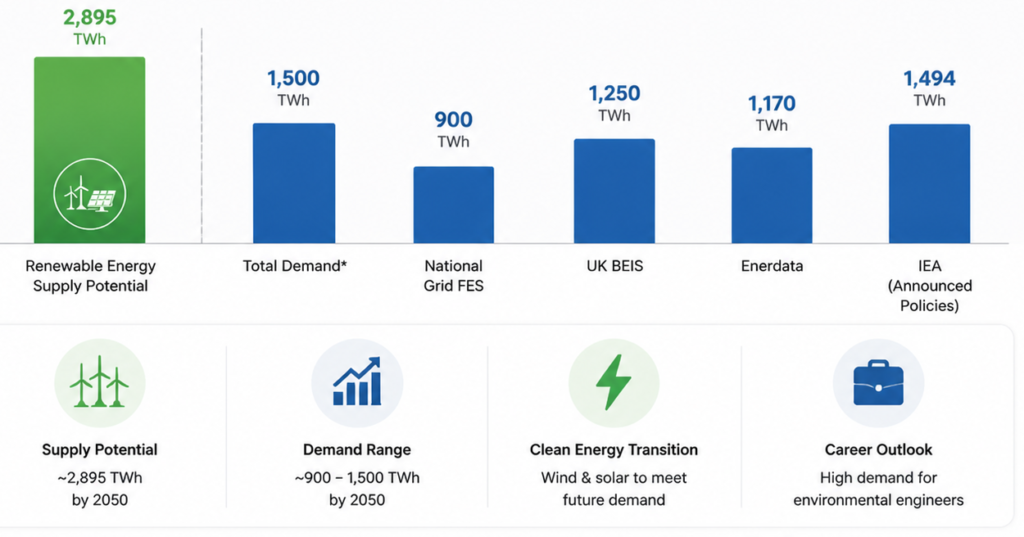
As the UK continues transitioning toward cleaner energy sources, environmental engineers will play a key role in supporting sustainable energy development.
Growth of ESG and Sustainability Reporting
Businesses across the UK are investing heavily in ESG (Environmental, Social, and Governance) compliance and sustainability reporting. Environmental engineers are becoming essential for helping organisations improve environmental performance and meet sustainability goals.
Key areas include:
- Carbon reduction planning
- Sustainability assessments
- Environmental audits
- ESG strategy implementation
- Environmental risk management
This growing focus on corporate sustainability is creating new career opportunities in consultancy, compliance, and sustainability management.
Smart Cities and Green Infrastructure
Many UK cities are investing in smart infrastructure and sustainable urban development projects. Environmental engineers contribute to the development of:
- Sustainable transport systems
- Smart infrastructure projects
- Green buildings
- Water conservation technologies
- Climate adaptation systems
The expansion of green infrastructure projects is expected to increase demand for environmental engineering expertise across the UK.
AI and Environmental Monitoring
Artificial intelligence and advanced technologies are transforming environmental monitoring and sustainability management. Environmental engineers now use modern digital tools to improve environmental performance and data analysis.
These technologies include:
- Environmental data systems
- Smart monitoring technologies
- Predictive sustainability analytics
- Digital environmental modelling
- Automated environmental reporting
As technology continues advancing, environmental engineers with digital and sustainability expertise are likely to become even more valuable in the future job market.
Is Environmental Engineering a Good Career in the UK?
Environmental engineering is considered one oEnvironmental engineering is widely considered one of the most promising and future-focused engineering careers in the UK. With increasing investments in sustainability, renewable energy, green infrastructure, and environmental protection, the demand for qualified environmental engineers continues to grow across multiple industries.
This profession offers several long-term career benefits, including:
- Strong future job demand
- Competitive salary opportunities
- International career prospects
- Career stability and progression
- Opportunities across diverse industries
- Sustainability and climate-focused work
As environmental regulations become stricter and the UK continues working toward Net Zero goals, environmental engineers are expected to remain highly valuable in sectors such as renewable energy, construction, manufacturing, environmental consultancy, and infrastructure development. The profession also provides opportunities to contribute positively to environmental protection, renewable energy development, and sustainable infrastructure.
Conclusion
Environmental engineering has become one of the most valuable and future-focused engineering careers in the UK. With increasing investments in sustainability, renewable energy, environmental protection, and green infrastructure, the demand for skilled environmental engineers continues to grow across multiple industries. Environmental engineers play an important role in helping organisations reduce environmental impact, improve sustainability performance, and comply with environmental regulations.
In 2026 and beyond, environmental engineering is expected to offer strong career opportunities, competitive salaries, long-term job stability, and international career potential. From renewable energy and water management to ESG compliance and smart infrastructure projects, the scope of environmental engineering continues expanding rapidly, making it an excellent career choice for individuals interested in sustainability, innovation, and environmental development.