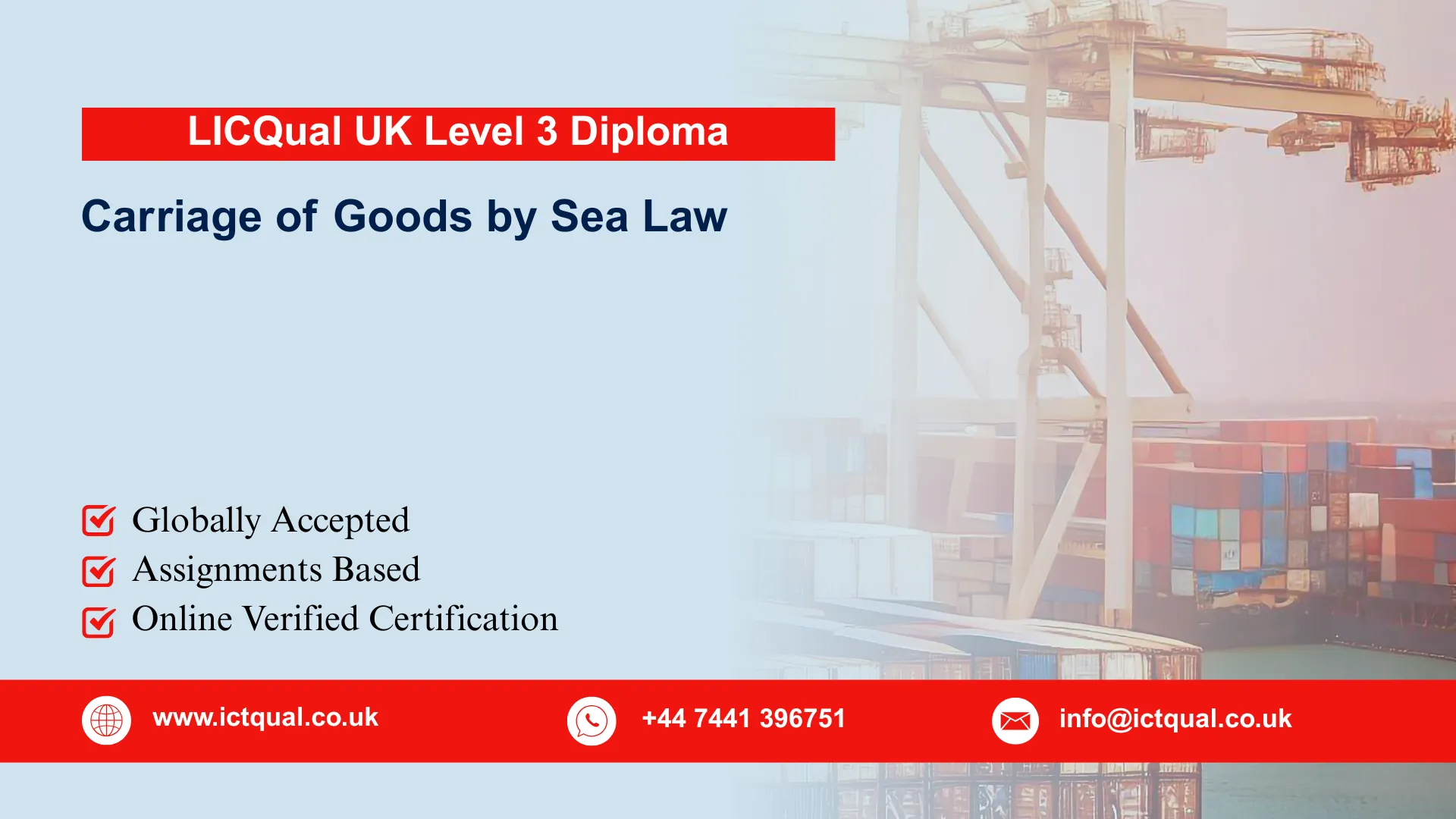
UK Level 3 Diploma in Carriage of Goods by Sea Law | LICQual
The carriage of goods by sea is one of the oldest and most vital pillars of international trade. Every day, millions of tons of cargo are transported across oceans, connecting producers and consumers worldwide. Yet behind this vast movement lies a complex framework of laws and regulations that safeguard contracts, protect stakeholders, and ensure smooth operations. Without a clear understanding of maritime law, disputes over liability, cargo damage, and contractual obligations could disrupt global commerce.
The LICQual UK Level 3 Diploma in Carriage of Goods by Sea Law emphasizes the importance of legal knowledge in the shipping industry. Professionals who understand the principles of carriage law are better equipped to handle contracts, resolve disputes, and maintain compliance with international standards. As global trade continues to expand, the demand for individuals with expertise in maritime law grows stronger. For learners, mastering this area is not just about legal rules—it is about securing the integrity of global supply chains and supporting the future of international trade.
Program Outline
The LICQual UK Level 3 Diploma in Carriage of Goods by Sea Law is a structured qualification designed to provide learners with essential knowledge of maritime legal frameworks. Comprising 6 specialized units and worth 60 credits, the program introduces learners to the fundamentals of shipping contracts, liability issues, international conventions, and dispute resolution.
This section of the article explains how the diploma equips learners with the ability to understand the legal responsibilities of carriers, shippers, and consignees. It highlights the type of learners the course is aimed at, the skills they will gain, and the career pathways available upon completion. Readers will also discover how this internationally recognized qualification opens opportunities in shipping companies, logistics firms, law practices, and trade organizations, making it a valuable credential for anyone aspiring to build a career in the carriage of goods by sea law.
Unit Structure
| Qualification | Unit Title | Credits | GLH |
| LICQ2201291-1 | Introduction to Carriage of Goods by Sea Law | 10 | 40 |
| LICQ2201291-2 | Contracts of Carriage and Charter Parties | 10 | 40 |
| LICQ2201291-3 | Bills of Lading and Shipping Documentation | 10 | 40 |
| LICQ2201291-4 | Rights, Liabilities, and Responsibilities of Carriers and Shippers | 10 | 40 |
| LICQ2201291-5 | International Conventions Governing Sea Carriage | 10 | 40 |
| LICQ2201291-6 | Professional and Legal Skills for Maritime Careers | 10 | 40 |
Who Can Benefit
The LICQual UK Level 3 Diploma in Carriage of Goods by Sea Law is designed for individuals who want to build a career in maritime law, shipping, or logistics. This program is especially valuable for those who face challenges such as understanding complex contracts, resolving disputes, or ensuring compliance with international conventions. It helps learners gain confidence, improve employability, and prepare for roles where legal knowledge of sea carriage is essential.
Ideal Learners
- Students aspiring to start a career in maritime law.
- Entry‑level professionals seeking structured training in shipping contracts and liability.
- Logistics staff who want to strengthen their knowledge of legal compliance.
- Shipping company employees preparing for roles in documentation and dispute resolution.
- Trade and transport professionals transitioning into legal aspects of shipping.
- Law graduates interested in specializing in carriage of goods by sea.
- Career changers looking for an internationally recognized qualification in maritime law.
- Ambitious learners who want to develop practical skills for global trade and shipping.
What You’ll Be Able to Do
1. Introduction to Carriage of Goods by Sea Law
Learners will be able to:
- Explain the fundamental principles of carriage of goods by sea law.
- Identify the key parties involved in sea carriage and their roles.
- Demonstrate understanding of the legal framework governing maritime transport.
- Recognize the importance of sea law in international trade and logistics.
- Apply basic legal concepts to real‑world shipping scenarios.
- Analyze how sea law supports global commerce and supply chains.
2. Contracts of Carriage and Charter Parties
Learners will be able to:
- Explain the different types of contracts of carriage and their applications.
- Demonstrate understanding of voyage, time, and bareboat charter parties.
- Analyze the rights and obligations of shipowners and charterers.
- Apply knowledge of contract terms to practical shipping case studies.
- Evaluate the impact of charter party clauses on trade and operations.
- Recognize the role of contracts in minimizing disputes in maritime trade.
3. Bills of Lading and Shipping Documentation
Learners will be able to:
- Explain the functions and legal significance of bills of lading.
- Identify different types of bills of lading and their uses in trade.
- Demonstrate understanding of shipping documents in international commerce.
- Apply knowledge of bills of lading to cargo ownership and transfer of rights.
- Evaluate the role of documentation in ensuring smooth trade operations.
- Recognize the importance of accuracy and compliance in shipping paperwork.
4. Rights, Liabilities, and Responsibilities of Carriers and Shippers
Learners will be able to:
- Demonstrate understanding of the legal duties of carriers and shippers.
- Analyze liabilities for loss, damage, or delay of goods in transit.
- Apply knowledge of exemptions and limitations of liability in sea law.
- Evaluate the balance of rights and responsibilities in carriage contracts.
- Recognize the role of liability rules in protecting trade stakeholders.
- Assess how disputes over liability are resolved in maritime law.
5. International Conventions Governing Sea Carriage
Learners will be able to:
- Explain the purpose and scope of conventions such as Hague‑Visby, Hamburg, and Rotterdam Rules.
- Demonstrate understanding of how conventions harmonize global shipping law.
- Apply convention rules to practical carriage of goods scenarios.
- Analyze the differences between major international maritime conventions.
- Evaluate the impact of conventions on carriers, shippers, and insurers.
- Recognize the importance of compliance with international maritime law.
6. Professional and Legal Skills for Maritime Careers
Learners will be able to:
- Demonstrate effective communication and negotiation skills in maritime contexts.
- Apply problem‑solving and critical thinking to shipping law challenges.
- Recognize the importance of ethics and compliance in maritime practice.
- Develop employability skills for entry‑level roles in shipping and logistics.
- Apply legal knowledge to practical case studies in sea carriage.
- Build confidence in applying theoretical knowledge to professional practice.