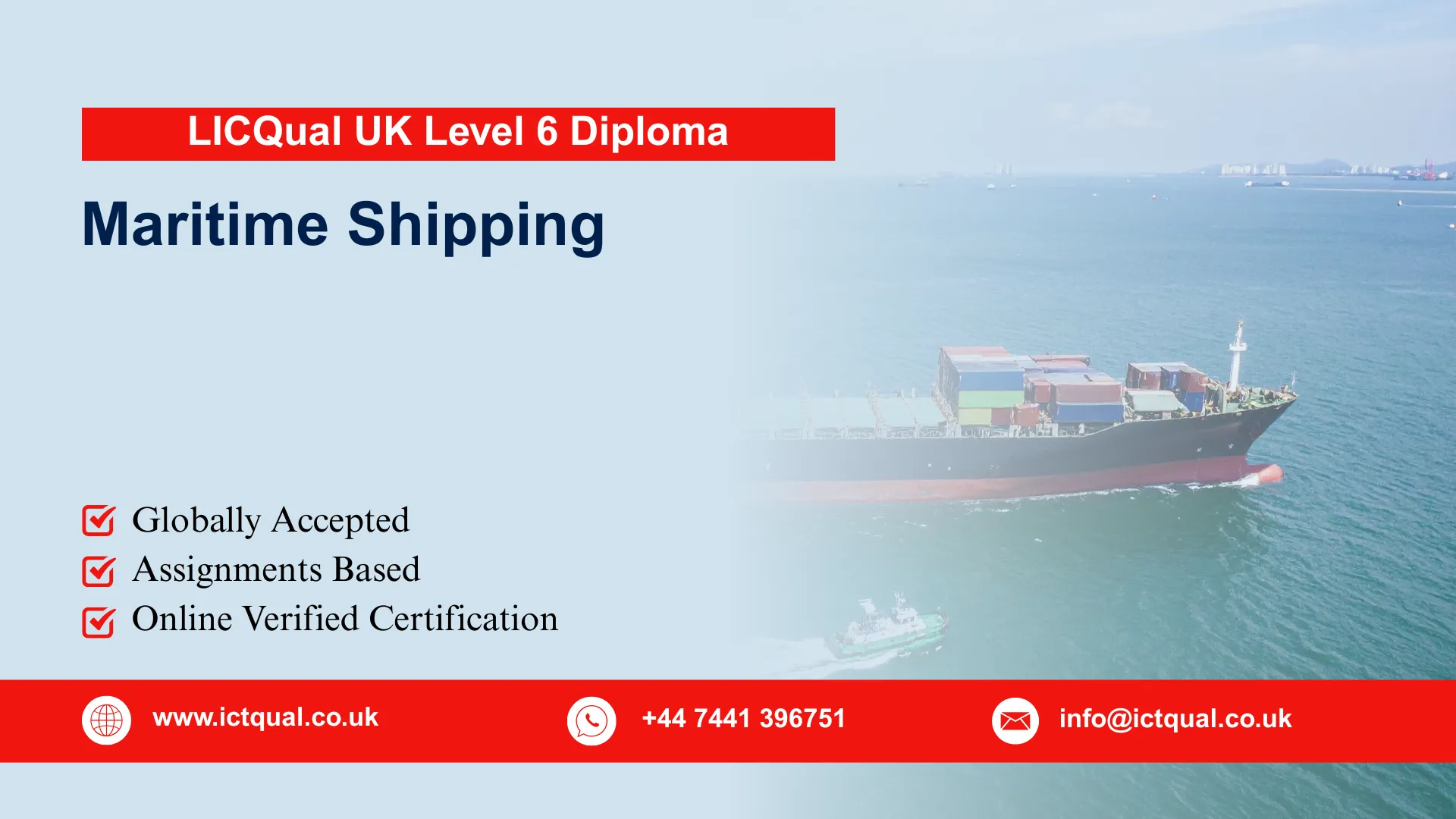
LICQual UK Maritime Shipping Diploma Level 6
Maritime shipping is the backbone of international trade, ensuring that goods, energy resources, and raw materials reach every corner of the globe. Without efficient shipping operations, global commerce would stall, supply chains would collapse, and economies would struggle to function. The industry is not only vast but also highly complex, requiring professionals who can navigate international regulations, manage large‑scale logistics, and uphold safety and sustainability standards.
The LICQual UK Level 6 Diploma in Maritime Shipping reflects the growing need for advanced expertise in this critical sector. At this level, the focus is on leadership, strategic decision‑making, and mastering the operational challenges that define modern maritime trade. As shipping continues to evolve with technology and environmental demands, the importance of highly skilled professionals has never been greater. For ambitious learners, excelling in maritime shipping is the gateway to shaping the future of global commerce and securing senior roles in one of the world’s most influential industries.
Program Outline
The LICQual UK Level 6 Diploma in Maritime Shipping is an advanced qualification designed to prepare learners for senior responsibilities in the shipping and logistics sector. Structured into 6 specialized units and worth 120 credits, the program provides a comprehensive framework for developing expertise in maritime operations, compliance, and leadership.
This section of the article outlines how the diploma equips learners with the ability to oversee complex shipping procedures, manage cargo and port operations, and ensure adherence to international maritime standards. It highlights the type of learners the course is aimed at, the advanced skills they will gain, and the career pathways available upon completion. Readers will also discover how this internationally recognized qualification opens opportunities in shipping companies, logistics firms, port authorities, and global trade organizations, making it a valuable credential for professionals seeking to progress into leadership roles in maritime shipping.
Unit Structure
| Qualification | Unit Title | Credits | GLH |
| LICQ2201284-1 | Strategic Maritime Shipping Management | 20 | 80 |
| LICQ2201284-2 | Advanced Maritime Law and Risk Management | 20 | 80 |
| LICQ2201284-3 | Global Supply Chain and Maritime Logistics | 20 | 80 |
| LICQ2201284-4 | Port Economics and International Trade Policy | 20 | 80 |
| LICQ2201284-5 | Sustainable Maritime Shipping and Environmental Management | 20 | 80 |
| LICQ2201284-6 | Research Project in Maritime Shipping Operations | 20 | 80 |
Who Can Benefit
The LICQual UK Level 6 Diploma in Maritime Shipping is designed for individuals who want to advance their careers in the global shipping industry by moving into leadership and management roles. This program is especially valuable for professionals who face challenges such as meeting international compliance standards, managing complex maritime operations, and leading diverse teams in high‑pressure environments. It helps learners strengthen their expertise, gain confidence, and prepare for senior positions where maritime shipping is central to global trade and logistics.
Ideal Learners
- Experienced shipping staff aiming for supervisory or managerial positions.
- Logistics professionals seeking advanced training in maritime operations and compliance.
- Port authority employees who want to expand their knowledge of cargo and vessel management.
- Trade and transport specialists preparing for international shipping leadership roles.
- Maritime safety officers looking to enhance decision‑making and regulatory expertise.
- Supply chain managers transitioning into global shipping operations.
- Career changers seeking an internationally recognized qualification in maritime shipping.
- Ambitious learners who want to build strategic skills for global trade opportunities.
What You’ll Be Able to Do
1. Strategic Maritime Shipping Management
Learners will be able to:
- Apply advanced management theories to global maritime shipping organizations.
- Evaluate strategic decision‑making processes in shipping and logistics operations.
- Analyze competitive advantages and market positioning in international shipping.
- Develop leadership, communication, and problem‑solving skills for senior roles.
- Formulate strategies for sustainable growth in shipping and logistics companies.
- Assess the impact of globalization and digital transformation on maritime management.
2. Advanced Maritime Law and Risk Management
Learners will be able to:
- Interpret international maritime conventions, contracts, and compliance frameworks.
- Evaluate the legal responsibilities of shipowners, charterers, and cargo stakeholders.
- Apply knowledge of marine insurance, liabilities, and dispute resolution.
- Analyze risk management strategies in shipping operations and port activities.
- Assess the role of regulatory bodies in enforcing maritime safety and security.
- Demonstrate critical understanding of case studies in maritime law and arbitration.
3. Global Supply Chain and Maritime Logistics
Learners will be able to:
- Analyze the integration of maritime shipping within global supply chains.
- Evaluate multimodal transport systems and their role in international trade.
- Apply logistics planning techniques to optimize cost, time, and efficiency.
- Assess the impact of technology and digital platforms on supply chain visibility.
- Demonstrate knowledge of customs procedures, Incoterms, and trade compliance.
- Develop solutions for managing risks and disruptions in global logistics networks.
4. Port Economics and International Trade Policy
Learners will be able to:
- Evaluate the economic role of ports in facilitating global trade and logistics.
- Analyze port pricing, competition, and efficiency models.
- Assess the influence of international trade agreements and policies on shipping.
- Apply knowledge of port development, investment, and infrastructure planning.
- Examine the relationship between port economics and regional economic growth.
- Demonstrate understanding of global trade flows and their impact on maritime transport.
5. Sustainable Maritime Shipping and Environmental Management
Learners will be able to:
- Evaluate the environmental impact of shipping operations on oceans and ecosystems.
- Apply knowledge of IMO regulations, MARPOL, and green shipping practices.
- Analyze strategies for reducing emissions, fuel consumption, and carbon footprint.
- Assess the role of innovation and technology in sustainable maritime operations.
- Demonstrate awareness of corporate social responsibility in shipping management.
- Develop sustainability frameworks for long‑term maritime industry compliance.
6. Research Project in Maritime Shipping Operations
Learners will be able to:
- Design and conduct independent research on a maritime shipping or logistics topic.
- Apply advanced research methodologies and data analysis techniques.
- Critically evaluate academic and industry sources to support findings.
- Present evidence‑based solutions to real‑world shipping and logistics challenges.
- Demonstrate project management, critical thinking, and problem‑solving skills.
- Produce a professional research report aligned with international academic standards