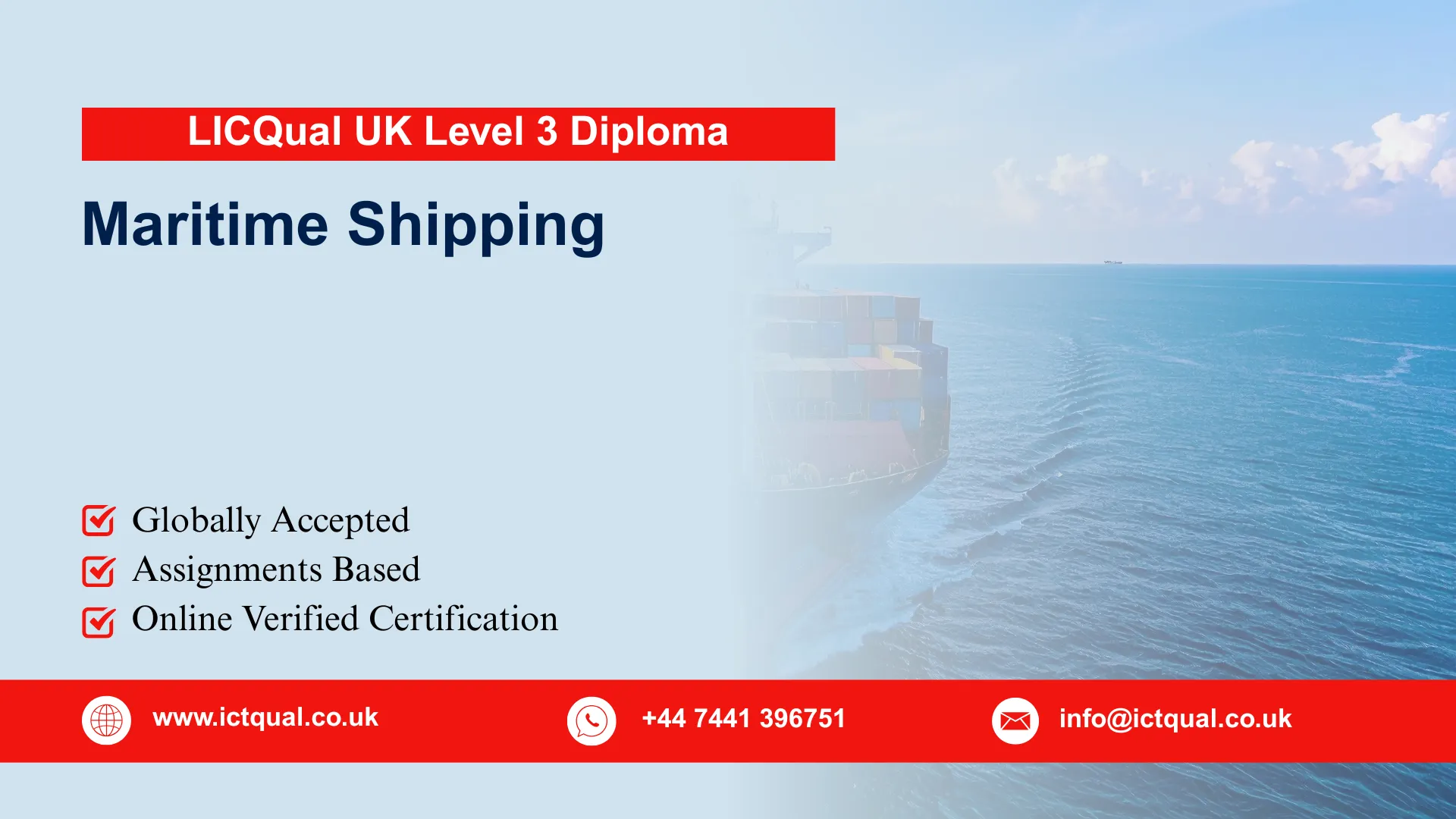
LICQual UK Maritime Shipping Diploma Level 3
Maritime shipping is the lifeline of global trade, carrying more than 80% of the world’s goods across oceans and connecting nations through commerce and industry. Every container, vessel, and port operation represents a critical link in the chain that keeps economies moving and supply lines secure. Yet behind this vast network lies a demand for skilled professionals who understand the complexities of shipping logistics, safety standards, and international regulations.
The LICQual UK Level 3 Diploma in Maritime Shipping reflects the growing importance of training individuals to meet these challenges. As global trade expands and sustainability becomes a priority, the maritime sector requires professionals who can balance efficiency with responsibility. This field is not only about transporting goods—it is about safeguarding international trade, ensuring compliance, and supporting the smooth functioning of global supply chains. For those who aspire to be part of this vital industry, mastering maritime shipping is the gateway to a career that shapes the future of world commerce.
Program Outline
The LICQual UK Level 3 Diploma in Maritime Shipping is a structured qualification designed to provide learners with a strong foundation in the shipping and logistics sector. Comprising 6 specialized units and worth 60 credits, the program introduces essential knowledge and practical skills required to work effectively in maritime operations.
This section of the article explains how the diploma prepares learners to understand shipping procedures, international trade practices, port operations, and compliance with global maritime standards. It highlights the type of learners the course is aimed at, the skills they will gain, and the career pathways available upon completion. Readers will also discover how this internationally recognized qualification opens opportunities in shipping companies, logistics firms, port authorities, and global trade organizations, making it a valuable credential for anyone aspiring to build a career in maritime shipping.
Unit Structure
| Qualification | Unit Title | Credits | GLH |
| LICQ2201283-1 | Introduction to Maritime Shipping Industry | 10 | 40 |
| LICQ2201283-2 | Fundamentals of Shipping Operations | 10 | 40 |
| LICQ2201283-3 | International Trade and Maritime Logistics | 10 | 40 |
| LICQ2201283-4 | Maritime Law and Shipping Regulations | 10 | 40 |
| LICQ2201283-5 | Port and Terminal Operations | 10 | 40 |
| LICQ2201283-6 | Career Development in Maritime Shipping | 10 | 40 |
Who Can Benefit
The LICQual UK Level 3 Diploma in Maritime Shipping is designed for individuals who want to enter or progress in the global shipping industry. This program is especially valuable for those who face challenges such as understanding international trade rules, managing port operations, or meeting compliance standards. It helps learners gain confidence, improve employability, and prepare for roles where maritime shipping is central to global commerce.
Ideal Learners
- Students aspiring to start a career in maritime shipping and logistics.
- Entry‑level professionals seeking structured training in port operations and trade compliance.
- Shipping company staff who want to strengthen their knowledge of cargo handling and documentation.
- Logistics employees preparing for international shipping and supply chain roles.
- Port authority staff aiming to improve efficiency and operational management skills.
- Trade and transport professionals transitioning into maritime shipping careers.
- Career changers looking for an internationally recognized qualification in maritime operations.
- Ambitious learners who want to develop practical skills for global shipping opportunities.
What You’ll Be Able to Do
1. Introduction to Maritime Shipping Industry
Learners will be able to:
- Explain the global importance of the maritime shipping industry in international trade.
- Identify different types of vessels and their roles in transporting goods worldwide.
- Describe the functions of key stakeholders such as shipping companies, ports, and regulators.
- Analyze current trends and challenges shaping the maritime shipping sector.
- Demonstrate awareness of career opportunities within the maritime and logistics industry.
- Recognize the contribution of shipping to economic growth and global connectivity.
2. Fundamentals of Shipping Operations
Learners will be able to:
- Understand the core principles of vessel operations, cargo handling, and stowage.
- Apply knowledge of essential shipping documents such as bills of lading and charter parties.
- Explain the processes involved in loading, securing, and discharging cargo safely.
- Evaluate the importance of safety, compliance, and efficiency in shipping operations.
- Demonstrate knowledge of shipping routes, schedules, and operational planning.
- Assess the role of technology in improving shipping operations and logistics efficiency.
3. International Trade and Maritime Logistics
Learners will be able to:
- Explain the relationship between maritime shipping, global trade, and supply chain management.
- Identify major international trade routes and their impact on shipping operations.
- Apply knowledge of Incoterms, customs procedures, and trade documentation.
- Evaluate the role of logistics in connecting ports, warehouses, and distribution networks.
- Analyze challenges in global logistics such as cost, time, and risk management.
- Demonstrate understanding of multimodal transport and integrated logistics solutions.
4. Maritime Law and Shipping Regulations
Learners will be able to:
- Understand the framework of international maritime law and conventions (IMO, SOLAS, MARPOL).
- Apply knowledge of shipping contracts, liabilities, and marine insurance.
- Explain the legal responsibilities of shipowners, charterers, and cargo stakeholders.
- Evaluate compliance requirements for safety, security, and environmental protection.
- Analyze case studies of maritime disputes and regulatory enforcement.
- Demonstrate awareness of ethical and legal standards in global shipping operations.
5. Port and Terminal Operations
Learners will be able to:
- Explain the functions and operations of ports, terminals, and cargo handling facilities.
- Apply knowledge of container management, warehousing, and storage systems.
- Evaluate the role of technology and automation in modern port operations.
- Assess the importance of safety, security, and environmental management in ports.
- Analyze the economic and strategic role of ports in global trade and logistics.
- Demonstrate skills in planning and managing efficient port and terminal operations.
6. Career Development in Maritime Shipping
Learners will be able to:
- Apply professional communication and teamwork skills in maritime contexts.
- Demonstrate leadership and problem‑solving abilities relevant to shipping operations.
- Evaluate career pathways and progression opportunities in the maritime industry.
- Develop a personal career plan aligned with global shipping and logistics opportunities.
- Understand the role of continuous learning and professional development in shipping.
- Demonstrate employability skills required for entry‑level roles in maritime shipping.