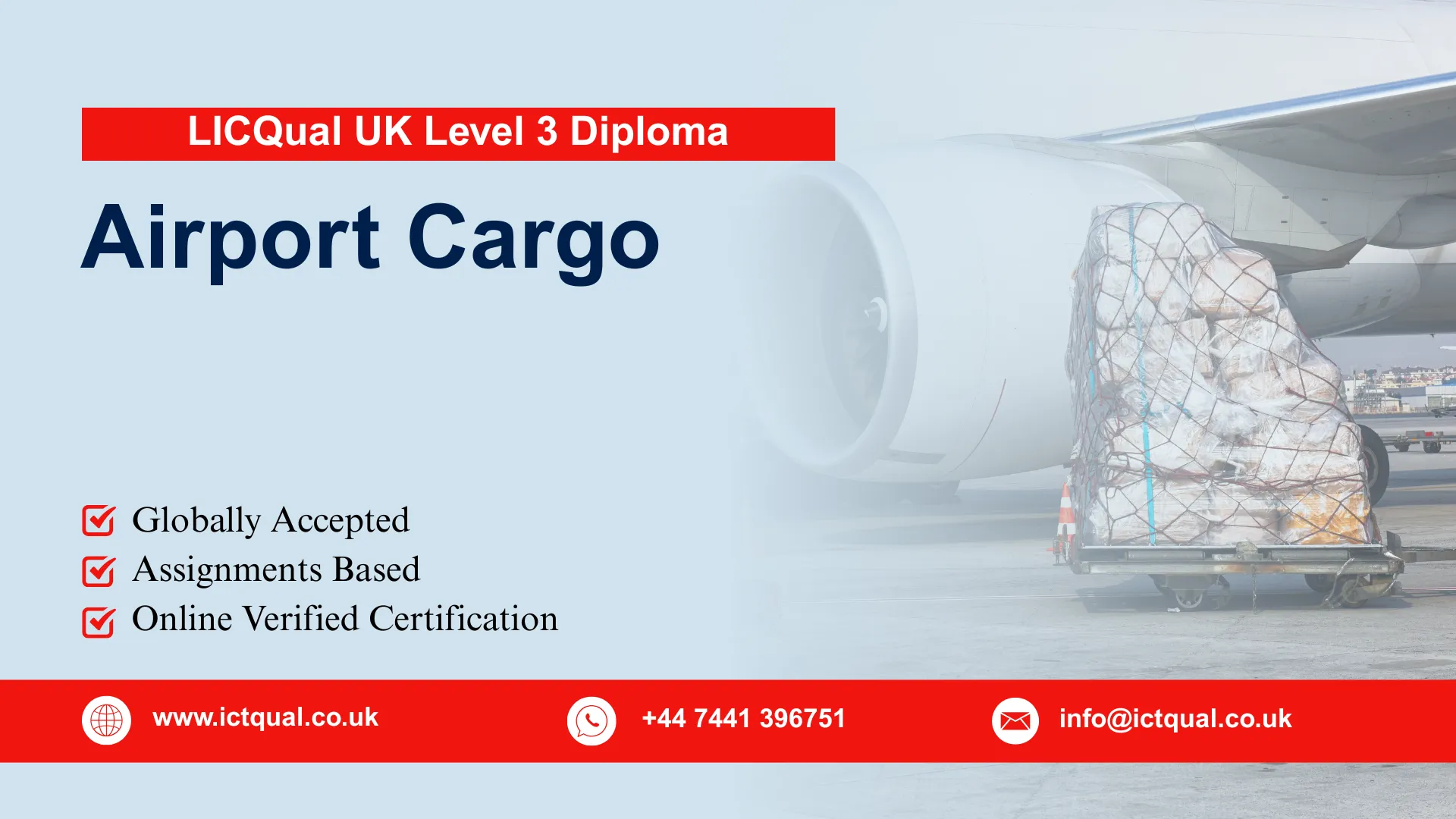
LICQual UK Level 3 Diploma in Cargo Handling
Airport cargo operations are a vital part of global aviation, yet many professionals face challenges in understanding complex logistics, safety standards, and international compliance requirements. Beginners often struggle with the technical aspects of cargo handling, while experienced staff may find it difficult to keep pace with evolving regulations and modern industry practices. These gaps can lead to inefficiencies, safety risks, and limited career progression in a competitive aviation environment.
The LICQual UK Level 3 Diploma in Airport Cargo provides a practical solution by offering structured training that builds both foundational knowledge and applied skills. Designed around industry needs, the program covers essential areas such as cargo safety procedures, international aviation regulations, risk management, occupational health, and effective communication in cargo operations. Learners gain confidence in handling cargo securely, ensuring compliance, and contributing to efficient airport logistics.
With six specialized units and 120 credits, this internationally recognized qualification prepares participants for diverse roles in airport cargo management, airline logistics, and aviation safety. Whether you are starting your career or seeking to enhance existing expertise, the diploma offers a clear pathway to professional growth and global opportunities in the aviation cargo sector
Program Outline
The LICQual UK Level 3 Diploma in Airport Cargo is a structured qualification designed to provide learners with essential knowledge and practical skills in aviation cargo operations. Delivered through 6 specialized units and worth 60 credits, the program focuses on the critical aspects of airport cargo management and safety. Learners explore international cargo regulations, secure handling procedures, risk management, occupational health standards, and compliance with aviation frameworks. The course also emphasizes effective communication and teamwork, ensuring participants can contribute to efficient and safe cargo operations within airports and airlines.
By combining theoretical understanding with practical application, this diploma prepares learners to meet industry demands confidently. It is suitable for individuals beginning their careers in aviation logistics as well as professionals seeking to enhance their expertise in cargo handling and compliance. Recognized internationally, the qualification supports career growth across airport operations, airline logistics, and aviation safety organizations.
Unit Structure
| Qualification | Unit Title | Credits | GLH |
| LICQ2201257-1 | Introduction to Air Cargo Operations | 10 | 40 |
| LICQ2201257-2 | Cargo Handling & Storage Procedures | 10 | 40 |
| LICQ2201257-3 | Aviation Safety, Security & Dangerous Goods Awareness | 10 | 40 |
| LICQ2201257-4 | Documentation & Customs Procedures | 10 | 40 |
| LICQ2201257-5 | Customer Service in Cargo Operations | 10 | 40 |
| LICQ2201257-6 | ICT & Tracking Systems in Cargo | 10 | 40 |
Who Can Benefit
- Learners beginning a career in aviation who want a UK Level 3 Diploma in Airport Cargo to build strong foundational skills.
- Airline staff aiming to improve their knowledge of cargo handling, safety procedures, and compliance with international standards.
- Airport operations employees seeking to develop practical expertise in secure cargo management and logistics.
- Aviation trainees who want to gain confidence in risk assessment, occupational health, and cargo safety practices.
- Cargo supervisors and inspectors looking to enhance their qualifications and progress into senior roles.
- Graduates interested in specializing in airport cargo operations to access global career opportunities.
- Experienced aviation professionals wishing to formalize their skills with an accredited international qualification.
- Occupational health and safety practitioners planning to transition into aviation logistics and broaden their career scope.
What You’ll Be Able to Do
1. Introduction to Air Cargo Operations
By the end of this unit, learners will be able to:
- Explain the structure of the global air cargo industry, including the roles of airlines, freight forwarders, and ground handling agents.
- Identify different types of cargo and their specific handling requirements.
- Describe the end‑to‑end process of airport cargo operations from acceptance to delivery.
- Apply international standards (ICAO/IATA) to basic cargo operations.
- Evaluate the importance of air cargo in global trade and supply chain management.
- Demonstrate awareness of career pathways and professional roles in airport cargo logistics.
2. Cargo Handling & Storage Procedures
By the end of this unit, learners will be able to:
- Apply safe handling techniques for general, perishable, and special cargo.
- Demonstrate correct loading, unloading, and storage procedures in compliance with IATA Cargo Handling Manual (ICHM).
- Inspect cargo for damage, irregularities, and compliance with safety standards.
- Implement correct stowage and securing methods to maintain cargo integrity.
- Evaluate warehouse layout and storage systems for efficiency and safety.
- Use best practices to minimize risks of cargo damage and operational delays.
3. Aviation Safety, Security and Dangerous Goods Awareness
By the end of this unit, learners will be able to:
- Identify categories of dangerous goods and restricted items in line with ICAO/IATA regulations.
- Apply correct labeling, packaging, and documentation procedures for dangerous goods.
- Demonstrate awareness of aviation security protocols, including screening and access control.
- Explain the impact of non‑compliance on safety, security, and legal liability.
- Apply risk management principles to prevent incidents in cargo operations.
- Promote a safety and security culture within airport cargo environments.
4. Documentation and Customs Procedures
By the end of this unit, learners will be able to:
- Prepare and interpret key cargo documents such as Air Waybills, manifests, and consignment notes.
- Explain customs clearance processes for imports, exports, and transshipments.
- Apply international trade compliance standards, including WTO and WCO guidelines.
- Identify common errors in documentation and their impact on cargo movement.
- Demonstrate the ability to complete customs declarations accurately and efficiently.
- Evaluate the role of digitalization in modern customs and documentation systems.
5. Customer Service in Cargo Operations
By the end of this unit, learners will be able to:
- Demonstrate effective communication skills with shippers, freight forwarders, and regulatory authorities.
- Apply customer service principles to resolve complaints and claims in cargo operations.
- Evaluate customer expectations in the context of airport cargo logistics.
- Implement service quality standards to enhance customer satisfaction and retention.
- Use problem‑solving techniques to manage service disruptions and delays.
- Promote a customer‑centric culture within airport cargo operations.
6. ICT and Tracking Systems in Cargo
By the end of this unit, learners will be able to:
- Operate cargo management systems, barcoding, and RFID technologies for cargo tracking.
- Apply digital tools to monitor cargo movement in real time.
- Evaluate the role of ICT in enhancing transparency, efficiency, and security in cargo logistics.
- Demonstrate knowledge of emerging technologies such as blockchain and IoT in cargo tracking.
- Analyze data from ICT systems to improve decision‑making and operational performance.
- Ensure compliance with data security and confidentiality standards in cargo ICT systems.