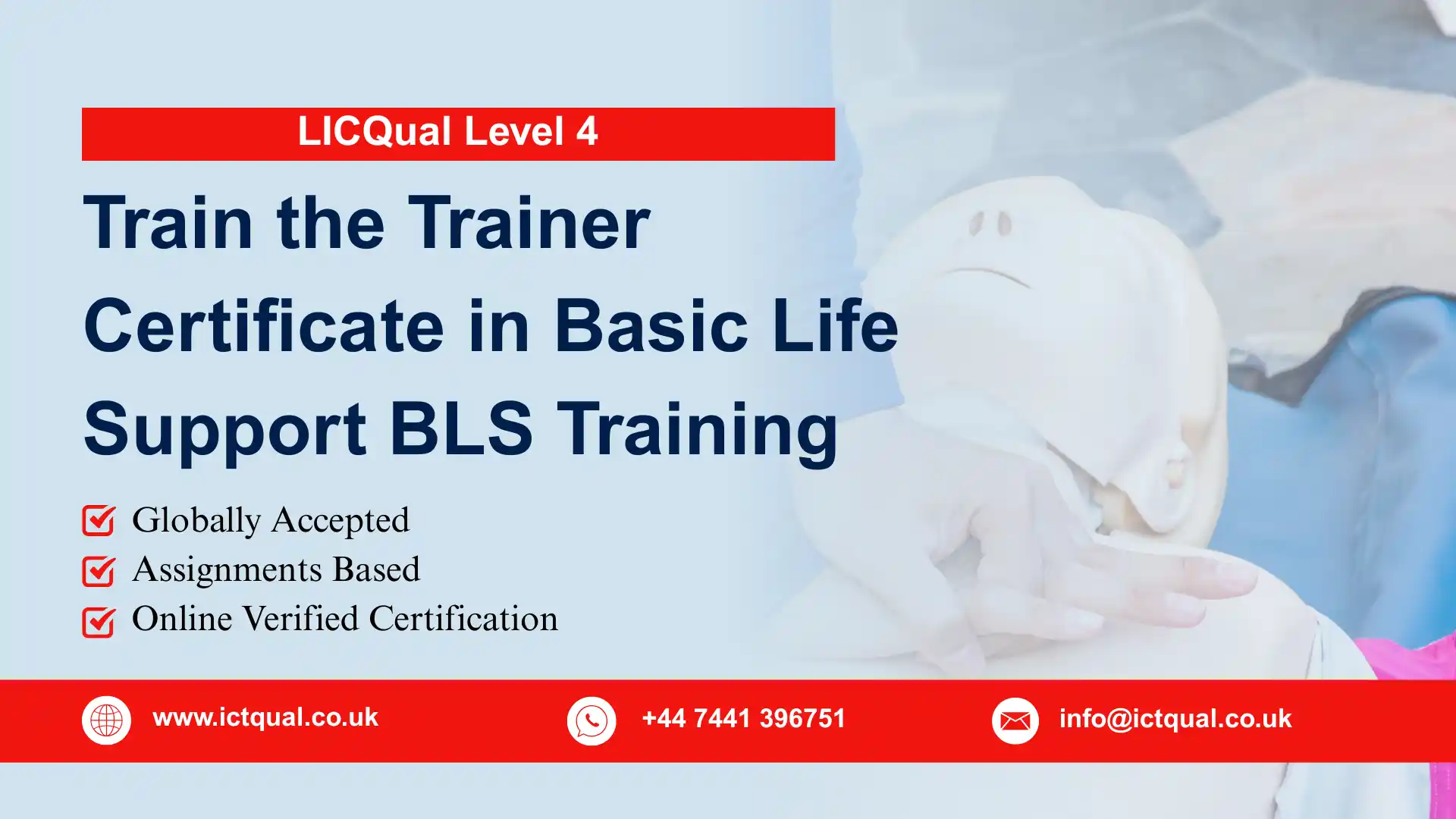
The LICQual Level 4 Train the Trainer Certificate in Basic Life Support (BLS) Training is a comprehensive qualification designed for individuals who wish to deliver certified BLS training in healthcare, education, corporate, and community settings. This internationally recognized program equips learners with the advanced knowledge and instructional skills needed to teach life-saving techniques with confidence and professionalism.
With cardiac arrest and medical emergencies being leading causes of workplace and public fatalities, the demand for qualified BLS trainers has never been greater. This course focuses on the critical areas of cardiopulmonary resuscitation (CPR), automated external defibrillator (AED) usage, airway management, and emergency response procedures. Participants not only learn how to apply these life-saving interventions but also how to effectively transfer this knowledge to others.
What sets this certification apart is its dual focus on subject expertise and instructional mastery. The LICQual Level 4 Train the Trainer Certificate in Basic Life Support (BLS) Training prepares learners to deliver structured and compliant training sessions in line with current international resuscitation guidelines. It is designed for healthcare professionals, first aid trainers, safety officers, and other roles requiring teaching capability in life support skills.
Throughout the course, learners explore adult learning principles, course design methodology, classroom management techniques, and performance evaluation tools. They will also receive hands-on practice in delivering BLS instruction, ensuring they can confidently teach learners across various professional and community contexts. Emphasis is placed on clarity, confidence, compliance, and competence.
Completing the LICQual Level 4 Train the Trainer Certificate in Basic Life Support (BLS) Training allows individuals to become certified BLS instructors, eligible to deliver accredited BLS courses to employees, students, or the general public. It opens doors to career opportunities in training consultancy, healthcare education, emergency services, and beyond—where high-quality instruction can make the difference between life and death.
The LICQual Level 4 Train the Trainer Certificate in Basic Life Support (BLS) Training course offers a specialized pathway for professionals who wish to develop and deliver BLS training that meets industry and regulatory standards. It empowers participants to transform clinical knowledge into structured educational experiences that ensure skill retention and real-world application.
This course is ideal for professionals working in healthcare, emergency response, occupational safety, or any role that involves responsibility for health and safety training. It addresses the gap between being clinically competent in life support and being able to teach it effectively. Learners will gain the skills to facilitate BLS sessions that are engaging, accurate, and tailored to their audience’s needs.
In addition to life support instruction techniques, the course explores key components of trainer development, including session planning, learner assessment, regulatory compliance, and course documentation. Trainers will also learn how to manage scenarios, respond to learner questions, and use training equipment effectively. The curriculum is both practical and evidence-based.
Upon completion, graduates of the LICQual Level 4 Train the Trainer Certificate in Basic Life Support (BLS) Training will have the authority and confidence to conduct certified BLS courses. This credential not only validates their instructional competence but also enhances their career prospects in education, healthcare, training consultancy, and public safety sectors.
The LICQual Level 4 Train the Trainer Certificate in Basic Life Support BLS Training qualification consists of 6 mandatory units required for completion.
Mandatory Units
| Unit# | Unit Title |
| 1 | Principles of Advanced Cardiac Life Support |
| 2 | Advanced Airway Management Techniques |
| 3 | Defibrillation Techniques with AED |
| 4 | Managing Medical Emergencies and Trauma |
| 5 | Scene Management and Risk Assessment |
| 6 | Legal and Ethical Considerations in Emergency Care |
- Healthcare Professionals and Clinical Staff
Nurses, paramedics, and medical practitioners who want to become certified instructors in Basic Life Support training. - First Aid and Emergency Response Trainers
Existing first aid educators seeking to expand their qualifications and teach accredited BLS programs. - Health and Safety Officers
Workplace safety coordinators responsible for delivering mandatory emergency response and CPR training in their organizations. - Occupational Health and Safety (OHS) Managers
Professionals overseeing employee safety compliance who need to deliver certified life-saving skills training. - Educational and Vocational Instructors
Teachers and trainers in medical, nursing, or technical institutes aiming to offer BLS instruction as part of their curriculum. - Corporate Training Specialists
In-house trainers tasked with preparing staff to handle medical emergencies in office or industrial environments. - Freelance Trainers and Consultants
Independent educators looking to add Basic Life Support to their portfolio of certified training offerings. - Emergency Service Personnel Transitioning into Education
Firefighters, police officers, or EMTs moving into training and development roles within the public or private sector. - Voluntary and Community Leaders
Individuals involved in community programs, NGOs, or volunteer services who want to teach life-saving skills to the public. - Anyone Interested in Delivering Certified BLS Training
Aspiring trainers who want to start a career in healthcare education or first aid instruction with a formal teaching qualification.
Upon completing this Course students will be able to:
Principles of Advanced Cardiac Life Support
- Understand the core principles of Advanced Cardiac Life Support (ACLS) and how they integrate with Basic Life Support (BLS) practices.
- Recognize the pathophysiology of cardiac arrest and related emergencies.
- Demonstrate high-quality CPR, including advanced techniques for adults and children.
- Understand the role of medications in managing cardiac emergencies, including adrenaline, atropine, and amiodarone.
Advanced Airway Management Techniques
- Identify and implement advanced airway management techniques for unconscious casualties, including the use of endotracheal intubation, laryngeal mask airways (LMAs), and bag-valve-mask (BVM) ventilation.
- Assess and manage airway obstructions and apply the appropriate methods based on the severity of the obstruction.
- Understand the importance of securing and maintaining a clear airway to prevent hypoxia and improve survival chances.
Defibrillation Techniques with AED
- Learn the correct procedures for using an Automated External Defibrillator (AED) in various emergency scenarios, including analyzing rhythms and delivering shocks when necessary.
- Understand how to integrate AED usage with ongoing CPR to enhance the casualty’s chances of survival.
- Recognize when defibrillation is appropriate and how to minimize the risks associated with its use.
Managing Medical Emergencies and Trauma
- Learn to manage common medical emergencies such as stroke, anaphylaxis, heart attack, and respiratory failure.
- Gain knowledge of trauma care, including severe bleeding, fractures, spinal injuries, and shock.
- Demonstrate first aid for life-threatening conditions, including the use of tourniquets, bandages, and splints to stabilize casualties before professional medical help arrives.
Scene Management and Risk Assessment
- Conduct a thorough scene assessment to ensure the safety of both the casualty and the responder.
- Understand and apply principles of risk management in emergency situations.
- Manage the immediate environment effectively, ensuring appropriate responses based on the circumstances and the severity of the emergency.
Legal and Ethical Considerations in Emergency Care
- Understand the legal and ethical obligations of providing emergency care, including consent, patient autonomy, and confidentiality.
- Recognize the Good Samaritan laws and other protections for responders in emergency situations.
- Know how to protect your professional integrity while delivering emergency care in high-pressure situations.