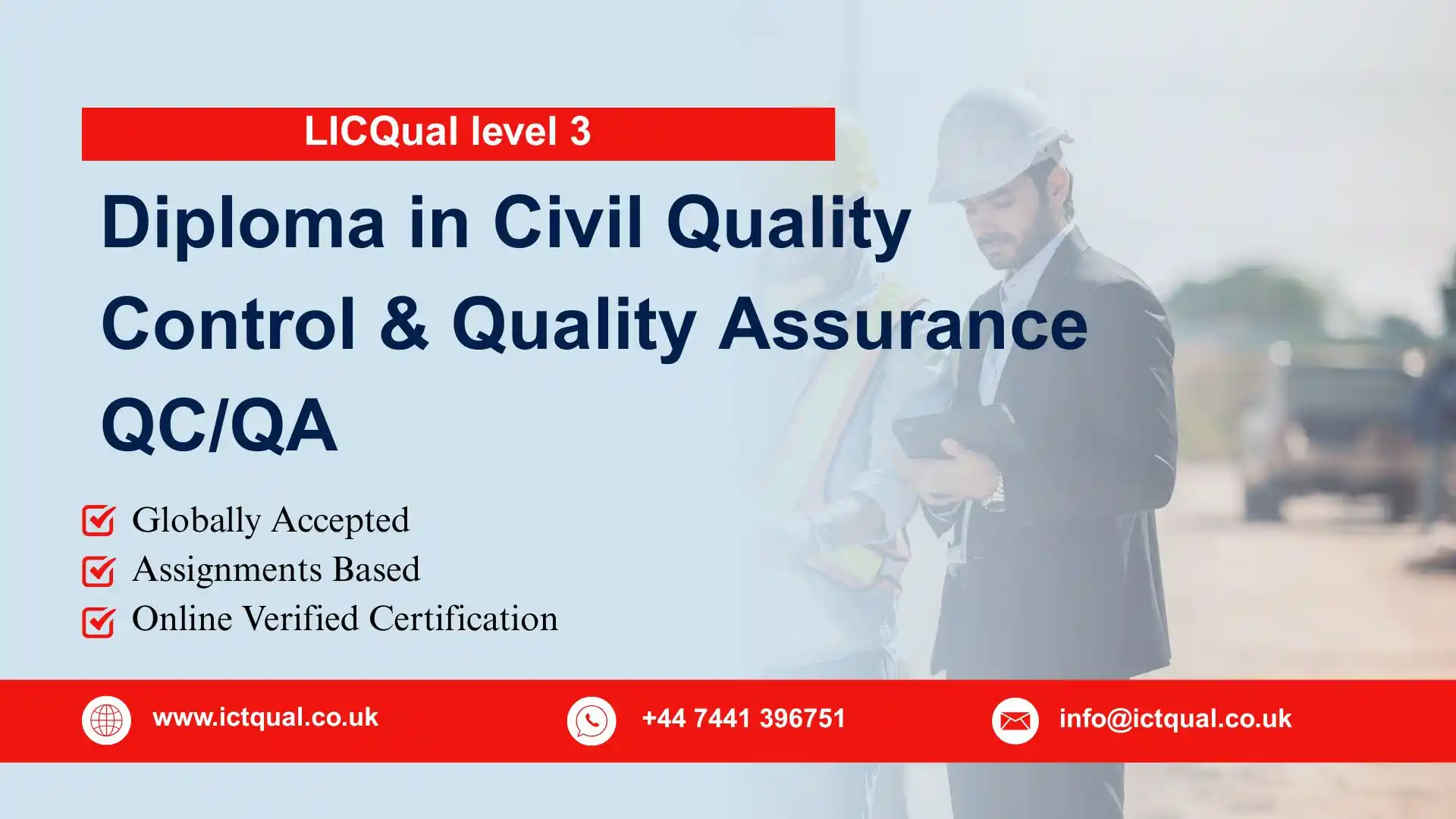
In the construction industry, ensuring that civil engineering projects meet the highest standards of quality and safety is of utmost importance. The LICQual Level 3 Diploma in Civil Quality Control and Quality Assurance (QC/QA) is a professional qualification designed to equip individuals with the essential skills needed to oversee and maintain quality throughout all phases of civil engineering projects. Whether you’re working on highways, bridges, or large infrastructure projects, this course prepares you to ensure that everything is completed to specification.
This diploma offers a comprehensive introduction to the principles of quality control and assurance, giving learners the foundational knowledge necessary to perform inspections, identify defects, and apply corrective actions in civil engineering projects. Focusing on both theoretical and practical elements, the course blends industry-standard techniques with real-world application, ensuring that graduates are ready to take on challenging roles in construction management, quality assurance, and compliance.
The LICQual Level 3 Diploma is designed for professionals and newcomers alike. It is ideal for those who want to advance in their careers as civil quality control technicians, site supervisors, or quality assurance officers. Whether you’re looking to formalize your existing skills or break into the field, this diploma opens doors to a wide range of opportunities within the civil engineering and construction industries.
One of the standout features of this course is its emphasis on compliance with international standards, including ISO 9001, ASTM, and BS EN standards. Students will be trained in the essential tools and techniques needed to assess the quality of materials, workmanship, and overall project outcomes. By the end of the program, learners will be proficient in using advanced inspection tools and documenting quality processes to ensure compliance.
By enrolling in the LICQual Level 3 Diploma in Civil QC/QA, you are positioning yourself for career success in an industry that demands high standards. The diploma not only enhances your technical skills but also boosts your ability to manage quality processes effectively across construction sites, contributing to safer, more efficient, and compliant civil engineering projects.
The LICQual Level 3 Diploma in Civil Quality Control and Quality Assurance (QC/QA) provides a robust understanding of quality management within the civil engineering sector. The course delves deep into essential aspects such as inspection methodologies, testing protocols, and quality assurance documentation. Students learn how to assess the quality of materials, including soil, concrete, and aggregates, while ensuring that the construction process aligns with industry standards and regulations.
Throughout the program, learners are introduced to various quality control tools and techniques, such as Non-Conformance Reports (NCRs), Inspection Test Plans (ITPs), and defect tracking systems. These practical tools enable students to oversee quality assurance processes effectively and ensure all project milestones are met with accuracy and compliance. The course also focuses on risk management and preventive measures, helping students identify potential quality issues before they arise.
One of the unique aspects of this diploma is its emphasis on documentation and reporting. Civil engineering quality control relies heavily on accurate and consistent documentation to maintain traceability and accountability. Students will become proficient in generating essential reports, tracking quality checks, and ensuring that project documentation is in line with legal and industry requirements, safeguarding the success of any construction project.
Upon completion of this course, learners will possess the skills to oversee quality assurance operations on civil engineering projects of varying complexity. Whether working in public infrastructure, residential, or commercial construction, students will be equipped with the ability to monitor compliance, improve processes, and enforce quality standards, making them an invaluable asset to any team in the civil engineering industry.
The LICQual Level 3 Diploma in Civil Quality Control and Quality Assurance QC/QA qualification consists of 6 mandatory units required for completion.
Mandatory Units
| Unit# | Unit Title |
| 1 | Introduction to Quality Control and Assurance in Civil Engineering |
| 2 | Construction Standards and Regulatory Compliance |
| 3 | Quality Control Processes and Tools |
| 4 | Material Testing and Inspection |
| 5 | Risk Management in Quality Assurance |
| 6 | Project Documentation and Reporting. |
The LICQual Level 3 Diploma in Civil Quality Control and Quality Assurance QC/QA is specifically designed for individuals who:
- Entry-level civil engineers or engineering technicians who want to specialize in quality control and assurance within the civil engineering sector
- Construction site supervisors or quality control assistants looking to formalize their skills and gain an internationally recognized qualification in QC/QA
- Graduates from civil engineering or construction-related programs who wish to enhance their qualifications with practical QC/QA expertise
- Project engineers and site managers who want to deepen their understanding of quality processes and documentation in civil engineering projects
- Professionals transitioning from other roles in civil engineering or construction into quality assurance and control roles
- Quality control inspectors or testing technicians who are responsible for ensuring materials and work meet required specifications and industry standards
- Individuals seeking to work in large-scale infrastructure projects such as highways, bridges, or commercial and residential developments
- Companies or organizations in the construction and infrastructure sectors who want to upskill their team members and improve project quality management
Upon completing this Course students will be able to:
1. Introduction to Quality Control and Assurance in Civil Engineering
By the end of this unit, learners will be able to:
- Define the concepts of quality control and quality assurance in the context of civil engineering projects.
- Explain the significance of maintaining quality standards in civil engineering construction and its impact on project success.
- Differentiate between quality control and quality assurance roles and responsibilities.
- Identify key stakeholders involved in the quality management process and their contributions.
2. Construction Standards and Regulatory Compliance
By the end of this unit, learners will be able to:
- Identify major construction standards and codes applicable to civil engineering projects.
- Evaluate the importance of regulatory compliance in ensuring safe and sustainable construction practices.
- Apply relevant legal and regulatory frameworks to assess compliance in a given civil engineering scenario.
- Discuss the implications of non-compliance with construction standards on project outcomes.
3. Quality Control Processes and Tools
By the end of this unit, learners will be able to:
- Describe the steps involved in developing and implementing quality control processes.
- Identify common tools and techniques used for quality control in civil engineering (e.g., checklists, control charts, inspection plans).
- Analyze case studies to recommend appropriate quality control measures for various project stages.
- Evaluate the effectiveness of quality control processes using industry-standard metrics.
4. Material Testing and Inspection
By the end of this unit, learners will be able to:
- Explain the principles and methods of material testing for common construction materials (e.g., concrete, steel, aggregates).
- Perform standard testing procedures to assess the quality and suitability of materials for civil engineering projects.
- Interpret testing results to identify potential defects or non-conformance issues.\
- Demonstrate competency in inspection protocols and documentation for material quality assurance.
5. Risk Management in Quality Assurance
By the end of this unit, learners will be able to:
- Identify potential risks to quality assurance in civil engineering projects.
- Develop risk mitigation strategies to address identified quality risks effectively.
- Evaluate the role of continuous monitoring in managing quality-related risks.
- Assess the impact of risk management practices on overall project quality and delivery.
6. Project Documentation and Reporting
By the end of this unit, learners will be able to:
- Describe the essential components of quality-related project documentation (e.g., inspection reports, test results, non-conformance reports).
- Develop accurate and comprehensive reports for documenting quality assurance activities.
- Utilize industry-standard software and tools for project documentation and reporting.
- Review and improve documentation practices to ensure compliance and accountability.