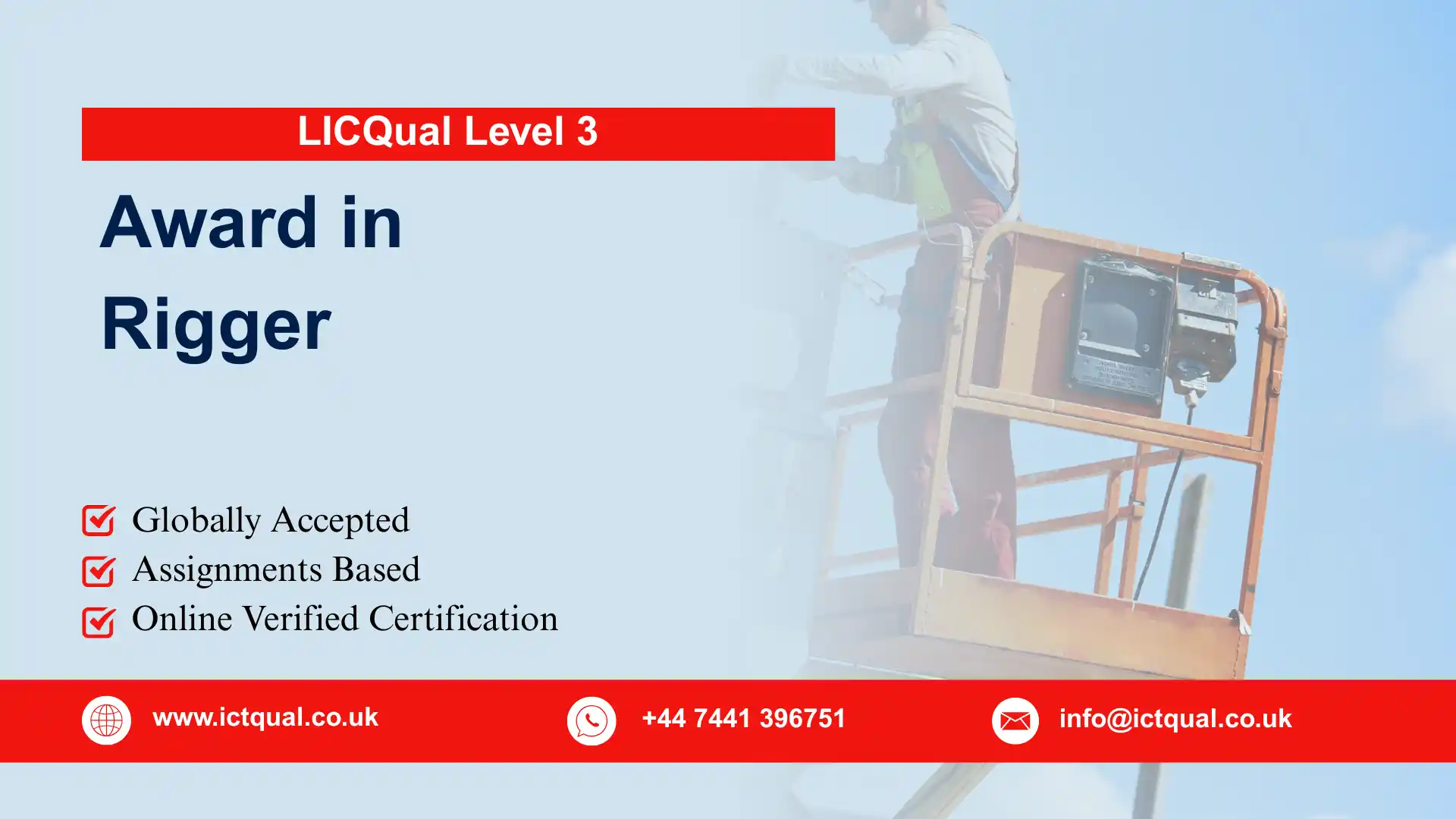
The LICQual Level 3 Award in Rigger is a globally recognized qualification tailored for individuals who are ready to move into advanced rigging roles within high-risk and heavy-lifting industries. This course is designed to develop expert-level knowledge and practical skills in safe rigging practices, equipment control, and team leadership under challenging operational conditions.
As industrial projects continue to grow in complexity and safety requirements become more stringent, this course addresses the urgent need for qualified riggers who can manage rigging operations confidently and competently. LICQual Level 3 Award in Rigger provides learners with in-depth training in load control, rigging plan interpretation, equipment inspection, and adherence to global safety protocols.
Delivered by industry veterans and certified instructors, the course combines technical instruction with real-world scenarios. Participants will gain hands-on experience using specialized rigging equipment in simulated environments that mirror real jobsite conditions. This ensures that graduates are fully prepared for the operational demands of their profession.
The curriculum also includes advanced risk assessment techniques, communication strategies for team coordination, and troubleshooting methods for unforeseen lifting challenges. These elements equip learners with the decision-making skills necessary to supervise or manage complex lifts safely and efficiently.
Upon completion, participants receive the LICQual Level 3 Award in Rigger, a credential that not only boosts employability but also positions them for leadership roles in construction, oil & gas, offshore, and heavy engineering industries across the globe.
The LICQual Level 3 Award in Rigger focuses on the practical application of rigging principles at a senior level. Learners will engage in tasks that require precise load estimation, critical thinking, and collaboration with other lifting professionals. The program ensures they are capable of executing advanced rigging plans with precision and in full compliance with international standards.
A core emphasis of the course is placed on understanding and selecting the right equipment for the task, assessing its condition, and determining the correct configurations to ensure safety and stability during lifts. Learners will also explore load path planning, center of gravity identification, and the implementation of rigging procedures in both routine and non-routine operations.
This award is ideal for professionals aiming to move into supervisory rigging roles or work in environments where elevated safety and technical expertise are required. Whether you are transitioning to offshore work or advancing within an industrial plant, this certification validates your expertise and readiness for high-level rigging challenges.
The LICQual Level 3 Award in Rigger qualification consists of 6 mandatory units required for completion.
Mandatory Units
| Unit# | Unit Title |
| 1 | Advanced Rigging Equipment |
| 2 | Safe Rigging Practices |
| 3 | Rigging Load Calculation |
| 4 | Working with Cranes and Hoists |
| 5 | Rigging Communication Systems |
| 6 | Project Planning and Supervision |
The LICQual Level 3 Award in Rigger is specifically designed for professionals who want to upgrade their skills and take on advanced responsibilities in rigging operations. This course is ideal for:
- Experienced riggers aiming to move into supervisory or senior technical roles within construction, offshore, or heavy industry sectors.
- Riggers with Level 1 or Level 2 qualifications who want to progress and gain a globally recognized credential at an advanced level.
- Personnel working in oil & gas, marine, shipyards, or industrial sites where critical and complex lifting operations are a daily requirement.
- Site supervisors, team leaders, or foremen involved in lifting tasks who need formal training in advanced rigging and risk management practices.
- Health and Safety professionals seeking to deepen their understanding of rigging hazards, inspection protocols, and equipment use.
- Freelancers and international workers who need formal documentation of their rigging expertise to access better job opportunities abroad.
- Military, utility, or infrastructure workers involved in transportation, installation, or movement of heavy loads and structural components.
LICQual Level 3 Award in Rigger course is well-suited for individuals who are serious about developing their technical knowledge, improving operational safety, and qualifying for leadership roles in the rigging profession.
Upon completing this Course students will be able to:
Advanced Rigging Equipment
- Identify and describe the different types of advanced rigging equipment used in complex lifting operations.
- Understand the functionality and application of specialized rigging tools and machinery.
- Demonstrate the ability to safely inspect and maintain advanced rigging equipment to ensure it meets safety standards.
- Select appropriate rigging equipment based on load requirements and operational conditions.
Safe Rigging Practices
- Explain the importance of safety standards and regulations in rigging operations.
- Demonstrate the ability to perform risk assessments and identify potential hazards during rigging tasks.
- Apply safe rigging practices to prevent accidents and ensure a secure working environment.
- Implement safety measures in line with industry best practices, including the use of PPE (Personal Protective Equipment) and safety protocols.
Rigging Load Calculatio
- Understand and apply fundamental principles of load calculations for rigging operations.
- Calculate the safe working load (SWL) of rigging equipment based on load weight, angles, and other variables.
- Determine the correct rigging configurations for different types of loads.
- Assess load distribution and the impact of load movement on the stability and safety of the rigging system.
Working with Cranes and Hoists
- Understand the types and functions of cranes and hoists used in rigging operations.
- Safely operate cranes and hoists in conjunction with rigging equipment.
- Demonstrate the ability to assess lifting capacities and ensure the safe execution of lifting tasks.
- Identify and manage potential hazards when working with cranes and hoists, ensuring the safety of personnel and equipment.
Rigging Communication Systems
- Understand the role of communication systems in rigging operations and their importance in ensuring safety.
- Demonstrate the use of standard communication signals, both verbal and non-verbal, during lifting operations.
- Apply effective communication techniques to coordinate rigging tasks between team members and crane operators.
- Understand and follow signaling procedures for complex rigging operations in challenging environments.
Project Planning and Supervision
- Develop rigging project plans, including scheduling, resource allocation, and risk assessment.
- Demonstrate the ability to supervise and coordinate rigging teams during complex projects.
- Ensure that all rigging activities are carried out in accordance with safety regulations, company policies, and project specifications.
- Evaluate and adjust project plans as necessary to accommodate changing conditions or unexpected challenges during the execution of rigging tasks.