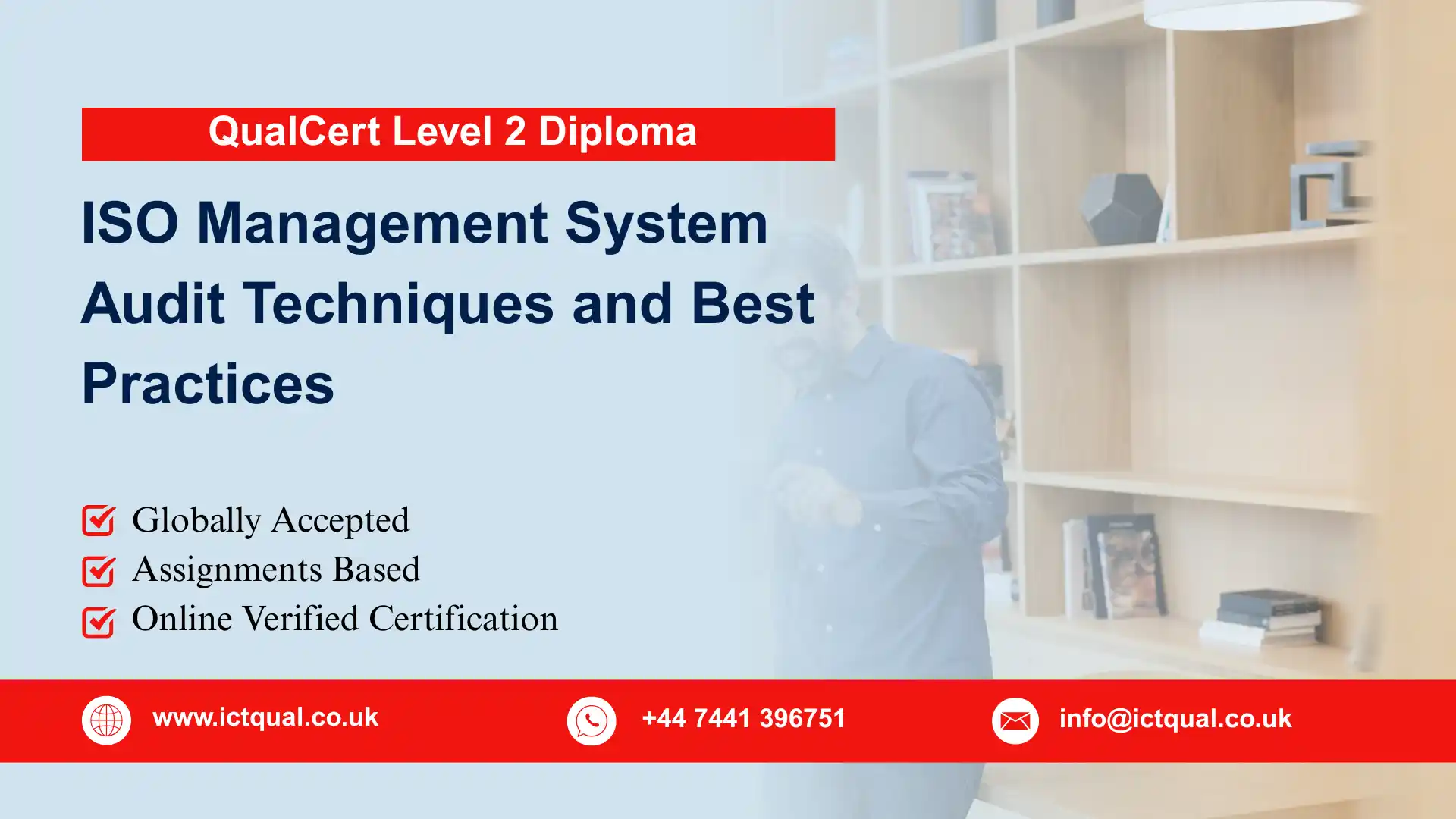
The QualCert Level 2 Diploma in ISO Management System Audit Techniques and Best Practices is a UK-based, assignment-driven qualification designed for individuals who want to strengthen their auditing knowledge and practical skills. This diploma provides a strong foundation in auditing principles, methods, and international standards, making it an excellent choice for those aspiring to pursue a career in auditing or enhance their role within quality, safety, environmental, or other management systems.
This diploma focuses on building core competencies in ISO management system auditing while introducing learners to globally recognized best practices. It highlights essential auditing skills such as planning, conducting, reporting, and following up on audits. Learners gain a clear understanding of how ISO standards function and how audit processes contribute to continual improvement, compliance, and organizational success.
The course emphasizes real-world applications of audit techniques, enabling learners to develop confidence in assessing compliance and identifying areas of improvement. With its practical approach, this qualification prepares individuals to support organizations in achieving and maintaining ISO certification. Whether applied to ISO 9001 Quality Management, ISO 14001 Environmental Management, ISO 45001 Occupational Health and Safety, or other standards, the diploma offers versatility across multiple sectors.
Key learning areas covered in the QualCert Level 2 Diploma in ISO Management System Audit Techniques and Best Practices include the fundamentals of ISO standards, principles of auditing, audit planning and execution, communication skills during audits, reporting findings, and ensuring corrective actions are followed effectively. These components equip learners with the knowledge and techniques required to conduct audits in alignment with international standards and organizational policies.
This qualification is suitable for beginners and professionals alike. New entrants to the auditing field benefit from gaining foundational knowledge, while professionals working in quality assurance, compliance, and management systems can further strengthen their auditing expertise. It also serves as a stepping stone for higher-level auditing qualifications, including lead auditor training and advanced ISO certifications.
The QualCert Level 2 Diploma in ISO Management System Audit Techniques and Best Practices not only enhances technical skills but also develops critical thinking, attention to detail, and problem-solving abilities. These attributes are essential for ensuring effective audits and supporting continuous organizational improvement.
The QualCert Level 2 Diploma in ISO Management System Audit Techniques and Best Practices is a UK-based qualification designed to introduce learners to the fundamental principles and methods of auditing within ISO management systems. This course provides a solid foundation for individuals who are new to auditing or professionals seeking to enhance their knowledge of audit processes aligned with international standards.
The program covers essential auditing techniques, including audit planning, conducting audits, reporting findings, and ensuring follow-up actions. Learners gain practical insights into how ISO standards such as ISO 9001, ISO 14001, and ISO 45001 are implemented and monitored, with a focus on applying industry-recognized best practices.
Delivered through an assignment-based approach, this diploma emphasizes both theoretical understanding and real-world application, enabling learners to develop confidence in assessing compliance and identifying opportunities for improvement. It equips participants with the communication, observation, and analytical skills required to perform effective audits across various sectors.
By completing this course, learners will be prepared to contribute to organizational compliance, support continual improvement, and progress towards higher-level auditing qualifications.
The QualCert Level 2 Diploma in ISO Management System Audit Techniques and Best Practices, achieve the qualification candidates must achieve all of the mandatory units:
The QualCert Level 2 Diploma in ISO Management System Audit Techniques and Best Practices is ideal for individuals who are looking to begin or advance their career in auditing and compliance. It is suitable for:
- Beginners who want to develop a solid understanding of ISO management system auditing techniques and principles.
- Quality assurance and compliance staff who need to strengthen their auditing knowledge and support their organization’s certification processes.
- Employees working in industries such as manufacturing, construction, healthcare, energy, and services where ISO management systems are implemented.
- Professionals seeking to expand their skills and progress to higher-level auditing qualifications, including lead auditor training.
- Organizations aiming to upskill their staff in auditing best practices to support continual improvement and regulatory compliance.
This course is designed to be accessible to learners at entry level while also providing valuable insights for those already working in quality, health and safety, or environmental management roles.
Upon completing the QualCert Level 2 Diploma in Mechanical Technology, students will be able to:
Understanding ISO 9001, ISO 14001, and ISO 45001 Management Systems
- Recognize the purpose and structure of ISO 9001, ISO 14001, and ISO 45001 standards
- Explain the key requirements of quality, environmental, and occupational health and safety management systems
- Identify how ISO standards contribute to organizational compliance and continual improvement
- Understand the interrelationship between different ISO management systems
Audit Life Cycle and Risk-Based Audit Planning
- Describe the stages of the audit life cycle from initiation to closure
- Apply risk-based thinking to audit planning and execution
- Develop audit objectives, scope, and criteria aligned with ISO requirements
- Prepare effective audit plans considering organizational risks and priorities
Internal Audit Execution and Documentation Techniques
- Conduct internal audits using systematic and evidence-based approaches
- Collect, verify, and evaluate audit evidence effectively
- Apply documentation methods to record audit findings accurately
- Demonstrate objectivity and impartiality during the audit process
Audit Reporting, Follow-Up, and Corrective Action Plans
- Prepare clear, concise, and factual audit reports
- Communicate audit results to relevant stakeholders with professionalism
- Monitor and follow up on corrective actions to ensure effectiveness
- Support organizations in achieving compliance and closing non-conformities
Root Cause Analysis and Preventive Measures in Audits
- Apply root cause analysis tools to identify underlying issues in non-conformities
- Distinguish between symptoms and root causes in audit findings
- Recommend preventive measures to avoid recurrence of issues
- Support continual improvement through corrective and preventive actions
Effective Communication and Conflict Resolution in Auditing Contexts
- Demonstrate professional communication skills during audits
- Manage challenging situations and resolve conflicts constructively
- Build trust and cooperation between auditors and auditees
- Apply questioning and listening techniques to gather reliable information