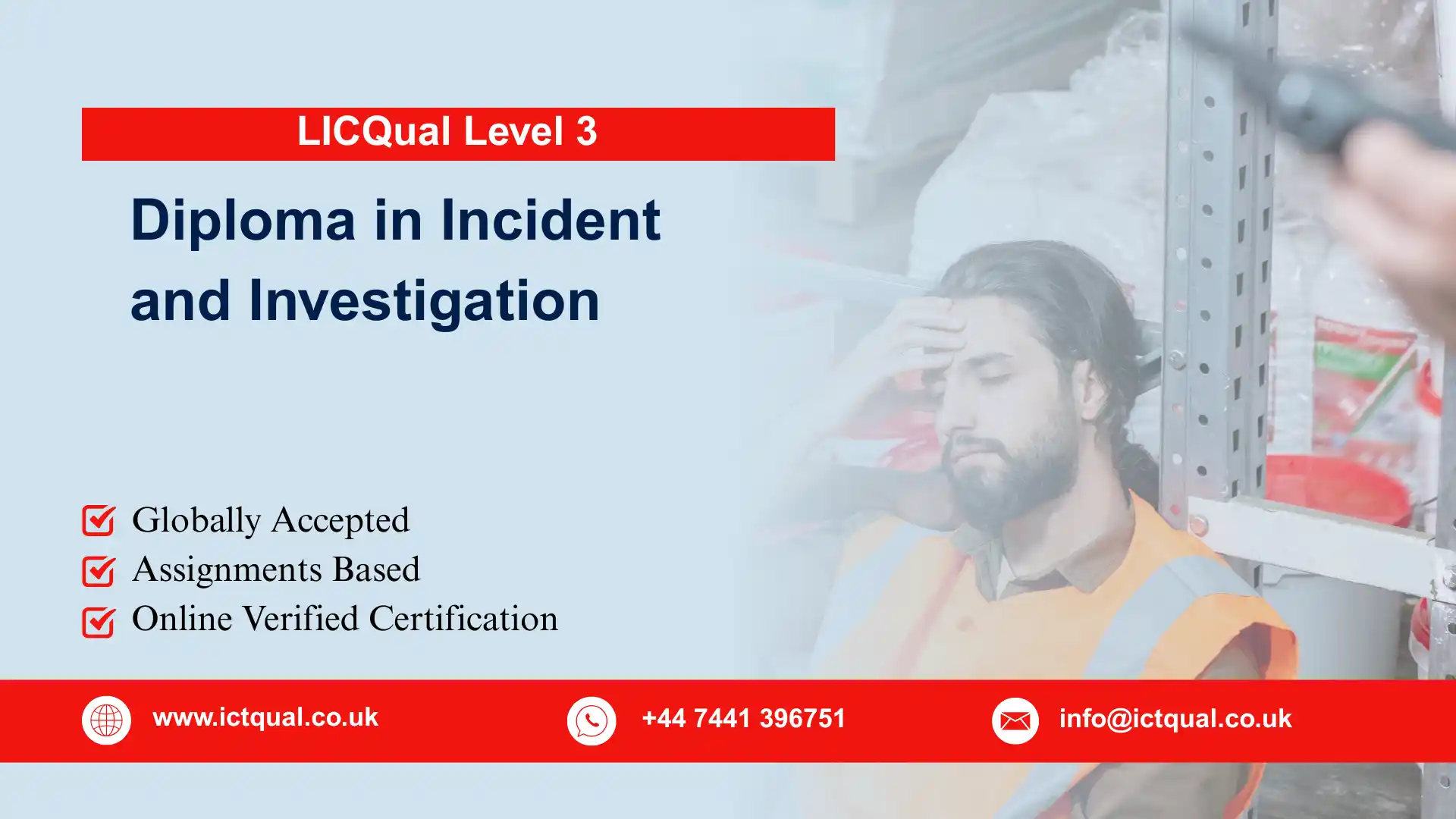
The LICQual Level 3 Diploma in Incident and Investigation is a comprehensive and internationally aligned qualification designed to equip professionals with advanced skills in managing, investigating, and preventing workplace incidents. With a focus on both practical application and strategic oversight, this diploma enables learners to deeply understand the root causes of incidents and implement effective controls to minimize risks. The course emphasizes the importance of thorough investigation procedures, ethical considerations, and systematic analysis aligned with global occupational health and safety standards.
In today’s increasingly complex work environments, organizations must proactively address potential hazards, near misses, and accidents. This course helps learners master tools such as root cause analysis, incident reporting systems, and corrective action planning to enhance operational safety and compliance. Through real-world case studies and evidence-based practices, the diploma fosters analytical thinking and decision-making required in high-pressure situations. Learners gain insights into global investigation frameworks such as the Five Whys, TapRooT, and the Swiss Cheese Model, empowering them to lead professional investigations in any industry.
The diploma is ideal for individuals working in sectors such as construction, oil and gas, healthcare, logistics, engineering, and manufacturing—where safety and risk control are paramount. It prepares learners to assume roles such as safety officers, supervisors, compliance managers, and investigation leads by equipping them with the competency to manage incidents from detection to reporting and preventive strategy formulation. Emphasis is placed on ensuring incident learning is integrated into broader organizational culture for continuous improvement.
One of the unique strengths of the LICQual Level 3 Diploma in Incident and Investigation is its balanced approach between reactive investigation and proactive risk assessment. Students are encouraged to explore the legal implications, ethical boundaries, and cross-functional communication strategies that shape effective incident response protocols. This approach aligns with contemporary corporate governance frameworks and supports learners in contributing to sustainable safety management systems.
This diploma also serves as a stepping stone for further professional development in the fields of health and safety, quality assurance, and organizational risk management. Graduates gain not only a qualification but also a competitive edge, enabling them to make informed safety decisions, drive incident reduction strategies, and align operational performance with industry best practices.
The LICQual Level 3 Diploma in Incident and Investigation offers a dynamic and practical curriculum tailored for safety-focused professionals aiming to enhance their investigative and analytical competencies. Learners explore structured methodologies for identifying the causes and consequences of workplace incidents, developing robust response strategies, and fostering a culture of accountability and continuous learning. The program integrates both theoretical principles and real-time applications to ensure learners can handle complex incidents with clarity and precision.
This qualification takes a strategic view of how incidents influence business continuity, reputation, and legal compliance. Learners will assess incident trends, analyze near-misses, and design customized control measures for diverse work environments. A significant part of the curriculum is dedicated to post-incident analysis, evidence preservation, and interviewing techniques that are crucial in developing credible investigation reports. The course enables participants to not only respond to incidents effectively but to proactively prevent them.
The course structure is modular, allowing for focused learning on key areas such as data collection, risk analysis, incident reporting standards, and behavioral safety. Participants will benefit from scenario-based learning and simulated investigations to apply concepts in a realistic context. The diploma also supports professional skill development in areas like leadership, critical thinking, and regulatory compliance—making graduates assets to any risk management team.
Upon successful completion, learners will possess the expertise to conduct thorough, unbiased investigations and communicate findings with clarity to stakeholders at all organizational levels. This diploma equips professionals with the confidence and qualifications necessary to champion safety improvements, drive operational efficiency, and contribute to a culture of risk awareness and legal integrity across industries.
The LICQual Level 3 Diploma in Incident and Investigation qualification consists of 6 mandatory units required for completion.
Mandatory Units
| Unit# | Unit Title |
| 1 | Principles of Incident Investigation |
| 2 | Legal and Regulatory Framework |
| 3 | Incident Reporting and Documentation |
| 4 | Evidence Collection and Analysis |
| 5 | Root Cause Analysis |
| 6 | Corrective and Preventive Actions |
- Health and safety officers seeking to advance their investigative and reporting skills
- Incident response team members responsible for managing workplace accidents and near misses
- Supervisors and team leaders looking to enhance their knowledge of incident management frameworks
- Safety auditors and compliance professionals involved in regulatory or internal investigations
- Quality assurance personnel who want to integrate incident findings into continuous improvement processes
- Risk managers aiming to develop a more systematic approach to incident root cause analysis
- Environmental, Health, and Safety (EHS) specialists managing operational safety programs
- HR professionals involved in workplace accident documentation and disciplinary procedures
- Facility and operations managers responsible for workplace hazard control and mitigation
- Security officers and emergency response coordinators handling incident escalation protocols
- Industrial engineers and site coordinators in charge of health and safety compliance
- Professionals working in high-risk sectors such as construction, oil & gas, mining, and manufacturing
- Individuals aspiring to transition into roles in occupational safety, risk management, or compliance
- Consultants who advise organizations on safety audits, investigations, or legal compliance
- Graduates or diploma holders in health and safety looking for a progression pathway into specialized incident investigation roles
Upon completing this Course students will be able to:
- Principles of Incident Investigation
- Understand the key principles and methodologies used in effective incident investigation.
- Demonstrate the ability to manage the investigation process from initial reporting to final resolution.
- Legal and Regulatory Framework
- Recognize and understand the relevant legal and regulatory frameworks that govern incident investigations and safety standards.
- Apply legal considerations when conducting investigations, ensuring compliance with industry standards and legislation.
- Incident Reporting and Documentation
- Understand the importance of accurate incident reporting and documentation for legal, safety, and organizational purposes.
- Develop and implement a systematic approach to recording and documenting incident details, ensuring clarity and completeness.
- Evidence Collection and Analysis
- Identify, collect, and preserve evidence during an incident investigation in accordance with best practices.
- Analyze evidence effectively to draw meaningful conclusions and establish facts surrounding the incident.
- Root Cause Analysis
- Apply various root cause analysis techniques to determine the underlying causes of incidents.
- Conduct thorough investigations that go beyond immediate causes to identify systemic issues that may have contributed to the incident.
- Corrective and Preventive Actions
- Recommend corrective actions to address identified root causes and prevent recurrence of similar incidents.
- Develop and implement preventive measures to improve safety protocols and minimize future risks.