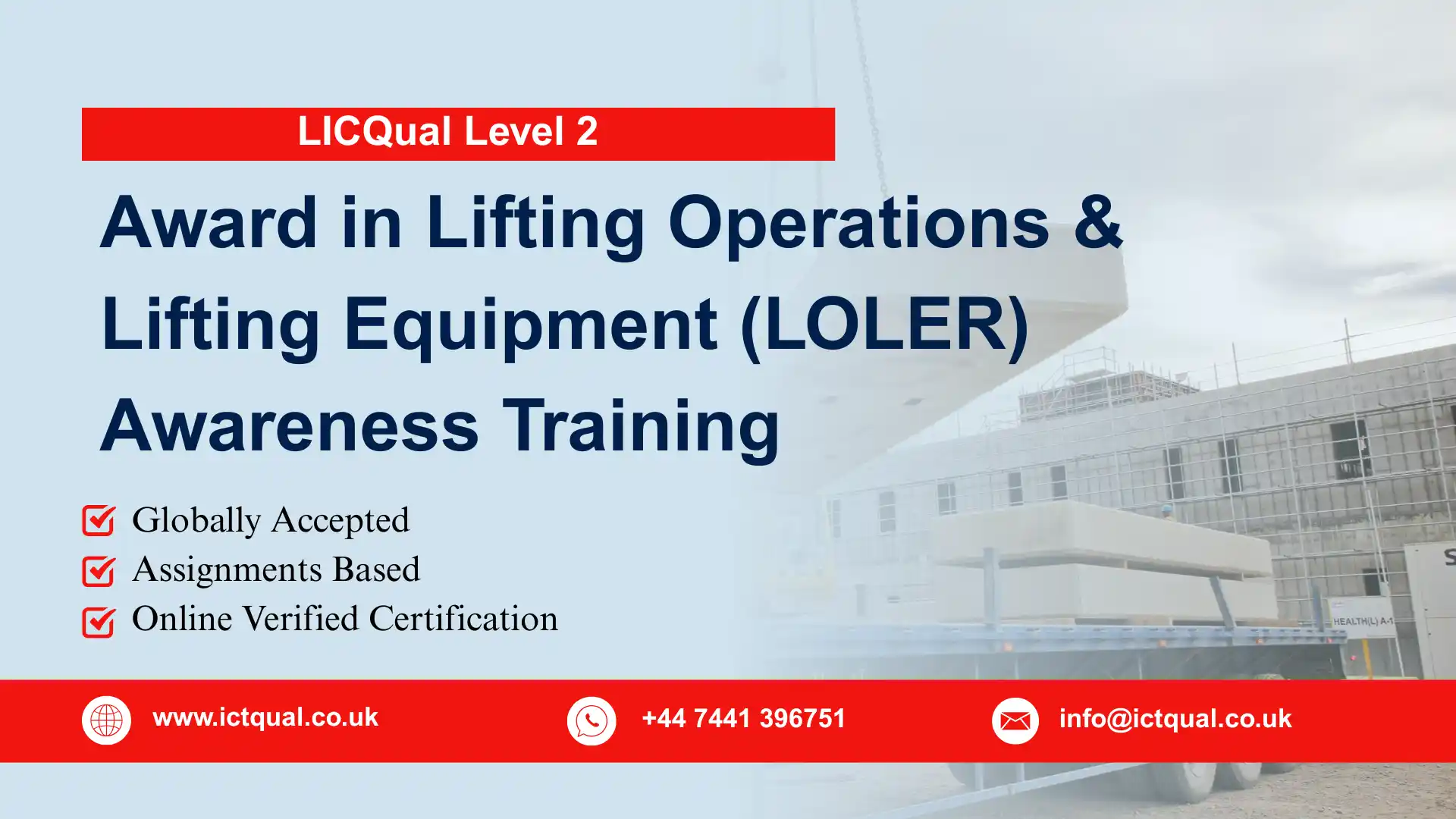
The LICQual Level 2 Award in Lifting Operations & Lifting Equipment (LOLER) Awareness Training is an internationally recognized qualification designed to promote safety, compliance, and operational excellence in lifting environments. This comprehensive training course equips learners with essential knowledge about lifting operations and legal responsibilities under LOLER (Lifting Operations and Lifting Equipment Regulations). It is particularly valuable for personnel involved in planning, supervising, or executing lifting tasks in any industry where mechanical lifting equipment is used.
In high-risk industries such as construction, logistics, oil & gas, and manufacturing, improper lifting practices can lead to serious accidents and costly downtime. This course provides a solid foundation for understanding the safe use of cranes, hoists, slings, and other lifting equipment in accordance with current regulations and international standards. Participants will gain critical insights into how to assess lifting risks, inspect equipment, and ensure that lifting operations are properly planned and supervised.
Delivered by qualified instructors with real-world experience, the LICQual Level 2 LOLER Awareness Training balances theoretical knowledge with practical understanding. The course emphasizes legal compliance, duty of care, and the responsibilities of employers and employees under health and safety law. This ensures that learners not only understand how to conduct lifting operations safely but also how to identify non-compliance and avoid legal consequences.
Upon successful completion of the course, learners will receive the LICQual Level 2 Award in Lifting Operations & Lifting Equipment (LOLER) Awareness, certifying their awareness of key safety procedures, legal duties, and industry-standard practices. This qualification enhances employability, boosts confidence in workplace safety, and is a valuable asset for individuals and organizations committed to excellence in lifting operations.
The LICQual Level 2 Award in Lifting Operations & Lifting Equipment (LOLER) Awareness Training offers a structured and in-depth overview of safe lifting practices and regulatory requirements. The course curriculum covers a wide range of topics including types of lifting equipment, responsibilities of personnel, risk assessment, and key elements of the LOLER and PUWER (Provision and Use of Work Equipment Regulations) frameworks. Learners will understand how to ensure compliance at every stage of lifting operations—from planning and supervision to execution and post-operation checks.
Participants will engage in interactive lessons, visual demonstrations, and case studies to reinforce critical safety concepts. The training highlights the importance of equipment inspection, load control, communication during lifts, and emergency response procedures. Emphasis is also placed on understanding load charts, selecting appropriate lifting accessories, and recognizing hazards that could compromise safety or equipment integrity.
This course is suitable for site supervisors, lifting coordinators, crane operators, riggers, and safety officers who are directly or indirectly involved in lifting activities. It is also highly beneficial for employers and team leaders who want to ensure their lifting operations align with legal requirements and best industry practices. The LICQual certification demonstrates a strong commitment to health, safety, and compliance in any professional setting where lifting operations are performed.
The LICQual Level 2 Award in Lifting Operations & Lifting Equipment (LOLER) Awareness Training qualification consists of 6 mandatory units required for completion.
Mandatory Units
| Unit# | Unit Title |
| 1 | Introduction to LOLER Regulations and Legal Requirements |
| 2 | Types of Lifting Equipment and Their Applications |
| 3 | Safe Lifting Techniques and Load Assessments |
| 4 | Hazards and Risk Management in Lifting Operations |
| 5 | Equipment Maintenance and Inspection Procedures |
| 6 | Implementing LOLER Guidelines in the Workplace |
The LICQual Level 2 Award in Lifting Operations & Lifting Equipment (LOLER) Awareness Training is ideal for professionals across multiple industries who are directly or indirectly involved in lifting operations. This includes:
- Lifting supervisors and coordinators responsible for planning and supervising lifting activities
- Crane operators, hoist operators, and machine handlers involved in executing lifting operations
- Rigging and slinging personnel working with lifting accessories and equipment setup
- Health and safety officers overseeing lifting safety and compliance
- Site managers, foremen, and project leaders managing on-site lifting operations
- Engineers (mechanical, civil, and project) involved in designing or approving lifting tasks
- Warehouse, shipping, and logistics staff using mechanical lifting equipment for materials handling
- Construction and industrial workers participating in lifting-related duties
- Employers, contractors, and team leaders aiming to ensure regulatory compliance and worker safety
- Individuals seeking awareness of LOLER regulations to enhance qualifications and job prospects
This course is suitable for anyone working in construction, oil & gas, manufacturing, logistics, shipping, or infrastructure development, where safe lifting operations are essential.
Upon completing this Course students will be able to:
Introduction to LOLER Regulations and Legal Requirements
Upon completion of this unit, learners will be able to:
- Understand the key principles of the Lifting Operations and Lifting Equipment Regulations (LOLER).
- Recognize the legal obligations associated with lifting operations in various industries.
- Identify the responsibilities of employers, employees, and other stakeholders under LOLER.
Types of Lifting Equipment and Their Applications
By the end of this unit, learners will be able to:
- Identify various types of lifting equipment, such as cranes, hoists, and forklifts.
- Understand the specific applications of different lifting equipment in various industries.
- Choose the appropriate lifting equipment based on the requirements of specific lifting operations.
Safe Lifting Techniques and Load Assessments
After completing this unit, learners will be able to:
- Apply safe lifting techniques to prevent injury and ensure the safe handling of loads.
- Conduct load assessments to determine the weight, stability, and suitability of the load for lifting operations.
- Demonstrate understanding of safe working loads (SWL) and the factors affecting safe lifting.
Hazards and Risk Management in Lifting Operations
Upon completion of this unit, learners will be able to:
- Identify common hazards associated with lifting operations, such as mechanical failure, human error, and environmental factors.
- Understand and implement effective risk management strategies to mitigate hazards in lifting operations.
- Conduct a risk assessment for lifting operations and apply control measures to ensure safety.
Equipment Maintenance and Inspection Procedures
By the end of this unit, learners will be able to:
- Recognize the importance of regular inspection and maintenance of lifting equipment to ensure operational safety.
- Understand the procedures for inspecting lifting equipment, identifying faults, and ensuring compliance with LOLER requirements.
- Demonstrate knowledge of the record-keeping requirements for inspections and maintenance of lifting equipment.
Implementing LOLER Guidelines in the Workplace
After completing this unit, learners will be able to:
- Apply LOLER regulations effectively within the workplace to ensure compliance and safety.
- Develop and implement safe lifting procedures, risk assessments, and maintenance schedules.
- Train and support other workers in adhering to LOLER guidelines, ensuring that safe lifting practices are followed across the workplace.