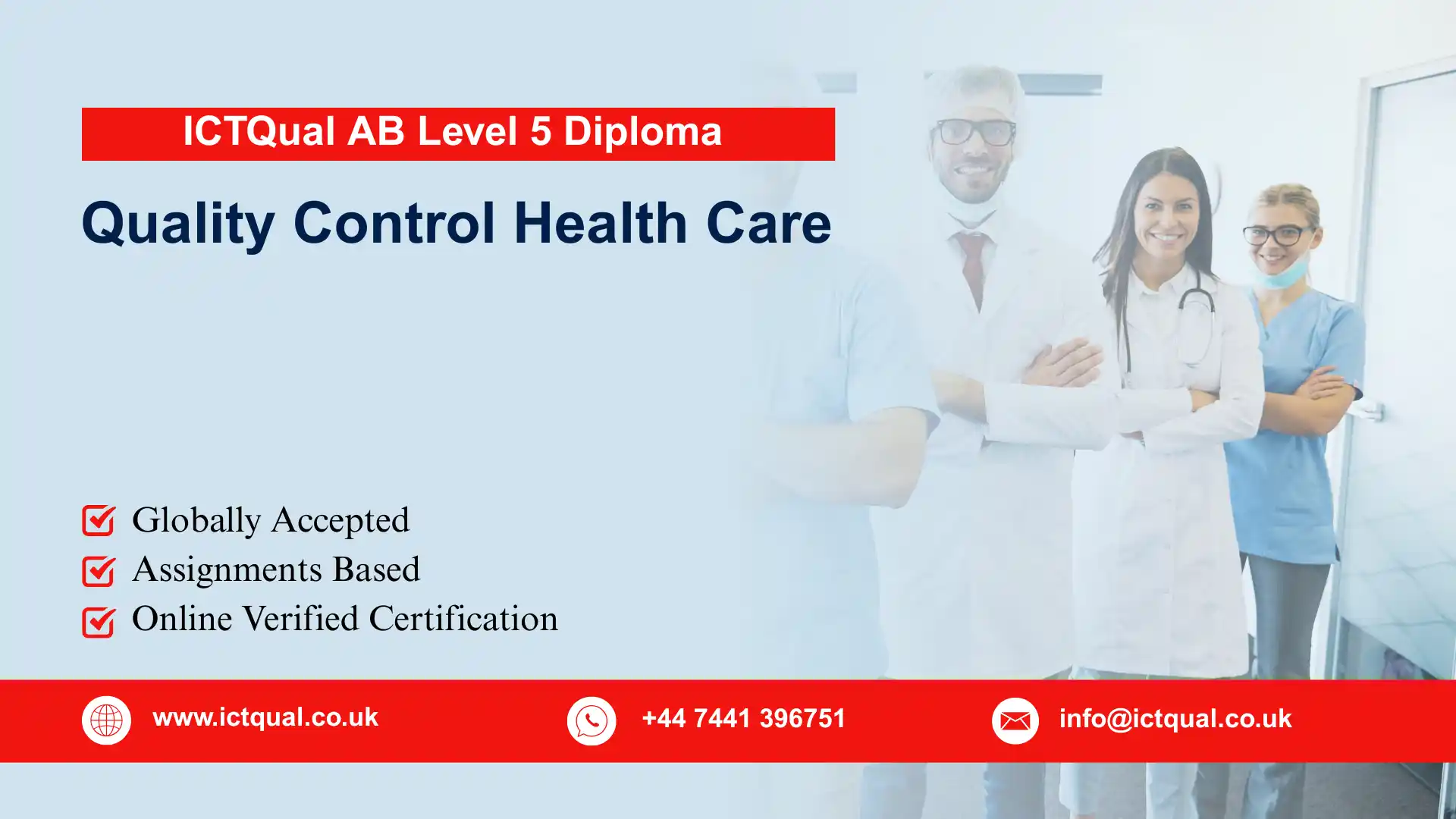
The ICTQual AB Level 5 Diploma in Quality Control Health Care is a comprehensive qualification designed for professionals aiming to enhance quality assurance practices within healthcare environments. This advanced-level course focuses on equipping learners with the knowledge and skills required to ensure patient safety, regulatory compliance, and continuous improvement across health service delivery. It addresses the growing demand for structured quality control systems in hospitals, clinics, laboratories, and health support services.
The course delves into advanced quality management frameworks such as Total Quality Management (TQM), Six Sigma, and ISO healthcare standards, guiding learners on how to implement, monitor, and evaluate quality indicators in both clinical and non-clinical settings. Learners will also explore topics such as risk management, internal audits, incident reporting, root cause analysis, and patient feedback systems—tools vital for maintaining high standards of care and service delivery in healthcare institutions.
Ideal for experienced healthcare workers, managers, and quality professionals, this diploma fosters a culture of excellence and accountability in health service operations. Graduates will be empowered to lead quality improvement initiatives, support regulatory inspections, and contribute to the strategic goals of their organizations. The qualification also opens pathways to senior quality management roles in hospitals, public health bodies, and private healthcare providers.
Inspire College of Technologies UK is Directly Approved Training Centre of ICTQual AB
The ICTQual AB Level 5 Diploma in Quality Control Health Care offers an in-depth understanding of quality management principles and practices tailored to the healthcare sector. This course is designed to develop the advanced competencies needed to design, implement, and oversee quality control systems in hospitals, clinics, diagnostic labs, and other healthcare institutions. It emphasizes the importance of maintaining high standards of patient care, compliance with health regulations, and continuous service improvement.
The curriculum covers a wide range of topics, including healthcare quality frameworks, process auditing, patient safety protocols, clinical governance, and risk management. Learners will also gain hands-on knowledge of quality tools like root cause analysis (RCA), Key Performance Indicators (KPIs), Six Sigma, and ISO standards relevant to the healthcare sector. Emphasis is placed on documentation, regulatory compliance, and how to handle non-conformities in clinical and operational procedures.
Throughout the program, students will build their ability to assess service delivery, lead quality initiatives, and support accreditation processes such as JCI and NABH. This diploma prepares learners for leadership roles in quality control, enabling them to contribute effectively to improving patient outcomes, institutional reputation, and operational efficiency within healthcare settings.
This qualification, the ICTQual AB Level 5 Diploma in Quality Control Health Care, consists of 10 mandatory units.
Mandatory Units
| Sr# | Unit Title | Level |
|---|---|---|
| 1 | Advanced Principles of Quality Control in Health Care | 5 |
| 2 | Clinical Risk Assessment and Incident Reporting | 5 |
| 3 | Health Care Regulations and Accreditation Standards | 5 |
| 4 | Quality Management Systems in Health Services | 5 |
| 5 | Internal Audit and Compliance Monitoring | 5 |
| 6 | Data Integrity and Electronic Health Records | 5 |
| 7 | Root Cause Analysis and CAPA in Clinical Settings | 5 |
| 8 | Infection Prevention and Control Audits | 5 |
| 9 | Patient Experience and Continuous Quality Improvement | 5 |
| 10 | Preparing for External Inspections and Certifications | 5 |
This course is ideal for:
- Healthcare professionals who are responsible for maintaining or improving quality standards within medical and health service settings.
- Quality control officers and auditors looking to specialize in the healthcare industry and expand their qualifications.
- Supervisors, managers, and administrators in hospitals, clinics, laboratories, and healthcare manufacturing units seeking formal training in healthcare quality systems.
- Graduates in medical, life sciences, or allied health fields who want to build a career in healthcare quality assurance.
- Individuals working in regulatory compliance, health inspection, or accreditation bodies who wish to enhance their credentials and understanding of quality control in healthcare environments.
Learning Outcomes for the Study Units:
1. Advanced Principles of Quality Control in Health Care
- Demonstrate in-depth knowledge of advanced quality control methodologies specific to healthcare environments.
- Evaluate and apply quality assurance frameworks to improve clinical outcomes and service efficiency.
2. Clinical Risk Assessment and Incident Reporting
- Conduct comprehensive clinical risk assessments in line with industry standards.
- Develop and implement effective incident reporting systems to support a culture of safety.
3. Health Care Regulations and Accreditation Standards
- Interpret key healthcare regulations and compliance requirements in national and international contexts.
- Apply accreditation standards to maintain service quality and organisational accountability.
4. Quality Management Systems in Health Services
- Design, implement, and manage Quality Management Systems (QMS) tailored to health service settings.
- Monitor and evaluate QMS effectiveness to support continuous improvement.
5. Internal Audit and Compliance Monitoring
- Plan and conduct internal audits to assess compliance with healthcare policies and protocols.
- Analyse audit findings and initiate follow-up actions to maintain regulatory alignment.
6. Data Integrity and Electronic Health Records
- Ensure integrity, accuracy, and confidentiality in managing electronic health records.
- Apply data governance principles to protect patient information and meet compliance obligations.
7. Root Cause Analysis and CAPA in Clinical Settings
- Perform effective root cause analysis to identify underlying issues in quality lapses.
- Develop and implement Corrective and Preventive Actions (CAPA) to minimise future risks.
8. Infection Prevention and Control Audits
- Conduct systematic audits of infection control practices across healthcare units.
- Recommend and monitor remedial actions to mitigate infection-related risks.
9. Patient Experience and Continuous Quality Improvement
- Evaluate patient satisfaction data to identify improvement opportunities.
- Integrate patient feedback into strategic quality improvement initiatives.
10. Preparing for External Inspections and Certifications
- Prepare healthcare facilities and staff for external regulatory inspections.
- Ensure all documentation, systems, and operational practices meet certification requirements.