
What is Fire Safety?
What is Fire Safety? A Complete Guide for Homes & Workplaces
Fire safety is a critical discipline dedicated to preventing fires, reducing fire-related risks, and safeguarding lives, property, and the environment from the devastating consequences of fire. Globally, fires account for thousands of injuries, fatalities, and billions of dollars in property damage each year, making fire safety an essential concern in every setting—from homes and schools to workplaces and public spaces. Understanding fire safety is not just a regulatory requirement but a fundamental aspect of responsible living and organizational management.
True fire safety goes far beyond simply installing smoke alarms or keeping fire extinguishers on hand. It is a comprehensive, proactive system that integrates multiple layers of protection, including:
- Prevention: Identifying and mitigating potential fire hazards before they ignite.
- Detection: Early warning systems like smoke and heat detectors that alert occupants and emergency services.
- Protection: Tools and infrastructure such as fire extinguishers, sprinkler systems, and fire-resistant materials designed to contain or suppress fires.
- Emergency Planning: Clear evacuation routes, assembly points, and action protocols for rapid response.
- Training and Awareness: Educating people on fire behavior, proper use of safety equipment, and emergency response procedures.
This multi-layered approach ensures a safer environment and reduces the likelihood of injuries, fatalities, or significant property loss. Fire safety is also governed by strict local and international standards, such as the UK’s Regulatory Reform (Fire Safety) Order, the US NFPA codes, and other global regulations, which establish guidelines for both individuals and organizations.
The Key Components of Fire Safety
Fire safety is not a single action but a comprehensive system of measures designed to prevent fires, detect them early, protect people and property, and respond effectively when incidents occur. Each component works together to form a holistic approach that ensures safety in homes, workplaces, schools, and public spaces. The primary components of fire safety include prevention, detection, protection, emergency planning, and training & awareness.
1. Fire Prevention
Preventing a fire before it starts is the most effective way to reduce risk. Fire prevention focuses on identifying potential hazards and implementing measures to eliminate or control them. Key preventive measures include:
- Electrical Safety: Avoiding overloaded circuits, damaged wiring, and faulty appliances. Regular inspections of electrical systems can prevent sparks and short circuits.
- Safe Storage of Flammable Materials: Chemicals, fuels, and combustible materials must be stored in secure, ventilated, and clearly marked areas away from ignition sources.
- Proper Use of Heating Appliances and Cooking Equipment: Ensure stoves, heaters, and ovens are used safely and never left unattended. Kitchen fires are one of the most common causes of domestic fires worldwide.
- Routine Maintenance: Regularly servicing electrical, heating, and mechanical systems reduces malfunction risks that could lead to fires.
- Smoking Policies: Establishing no-smoking zones in sensitive areas like laboratories, factories, or offices significantly lowers the risk of accidental ignition.
- General Housekeeping: Keeping spaces clean and clutter-free prevents the accumulation of combustible materials and maintains clear exit routes.
By adopting these preventive strategies, individuals and organizations can significantly minimize the likelihood of fire incidents.
2. Fire Detection
Early detection is vital in preventing fire escalation and saving lives. A fire that is detected promptly allows people to evacuate safely and emergency services to respond quickly. Common fire detection measures include:
- Smoke Detectors: Devices that sense smoke particles in the air, triggering alarms to warn occupants. They are essential in bedrooms, hallways, and common areas.
- Heat Sensors: Detect sudden temperature increases, which can indicate a fire even before smoke is visible.
- Fire Alarm Systems: Integrated alarms connected to monitoring centers ensure rapid alerts and coordination with local fire services.
- Automatic Sprinklers: In larger buildings, sprinkler systems can automatically activate to contain or suppress the fire, limiting damage and providing more time for evacuation.
Early detection systems are particularly important in commercial buildings, hospitals, and educational institutions, where many people may be at risk and response time is critical.
3. Fire Protection
Fire protection measures are designed to control, suppress, or contain fires once they occur, preventing further spread and reducing damage. Key protection methods include:
- Fire Extinguishers: Different types are used depending on the fire class—water, foam, CO2, dry powder, or wet chemical—each designed to tackle specific fire hazards.
- Sprinkler Systems: Automated water or chemical-based systems help control fires in commercial buildings, warehouses, and public spaces.
- Fire-Resistant Materials: Using flame-retardant doors, walls, and construction materials slows fire progression and provides safer evacuation routes.
- Fire Blankets: Effective for small fires, such as kitchen grease fires, by smothering flames and cutting off oxygen supply.
- Compartmentalization: Design strategies in buildings that isolate sections to prevent fire from spreading rapidly.
Effective fire protection minimizes damage and increases survival rates, giving occupants more time to evacuate safely.
4. Emergency Planning
Even with prevention and protection measures, fires can still occur. A well-prepared emergency plan is critical to ensure safety and efficient response. Key elements include:
- Evacuation Plans: Clearly marked escape routes, assembly points, and emergency exits tailored to the building layout.
- Regular Fire Drills: Conducted periodically in homes, offices, schools, and public buildings to ensure occupants know how to respond under pressure.
- Emergency Contact Lists: Easily accessible information for local fire services, medical assistance, and internal safety personnel.
- Role Assignments: Designating fire wardens or responsible personnel to guide evacuations, check areas, and report hazards.
- Communication Systems: Alarms, public address systems, or notification apps to alert people quickly in large or complex facilities.
Emergency planning reduces panic, prevents injuries, and ensures organized evacuation, which is especially critical in crowded or high-risk areas.
5. Training & Awareness
Knowledge and preparedness are at the heart of effective fire safety. Training and awareness programs empower individuals to respond appropriately during fire emergencies and reduce risk through informed actions. Key strategies include:
- Fire Safety Training: Educating staff, students, or family members on recognizing fire hazards, using extinguishers, and following evacuation procedures.
- Hands-On Drills: Practical exercises with equipment like fire extinguishers, blankets, and emergency alarms.
- Awareness Campaigns: Posters, workshops, and e-learning modules highlighting risks and preventive measures.
- Continuous Updates: Fire safety protocols must be regularly updated to comply with local regulations and technological advancements.
- Community Engagement: Promoting fire safety awareness in neighborhoods, residential complexes, and workplaces to create a culture of prevention and vigilance.
Training and awareness ensure that everyone knows their role during a fire incident, minimizing confusion, injuries, and property damage.
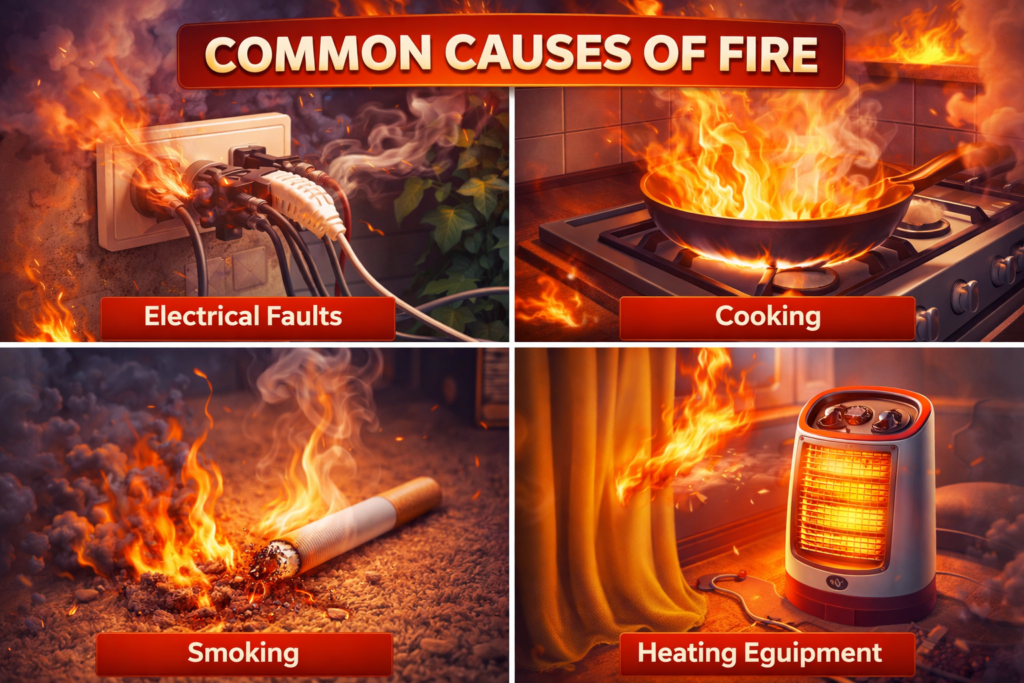
Common Causes of Fire
Understanding the most frequent causes of fire is a critical step in prevention and safety planning. Fires can start unexpectedly and escalate rapidly, causing injuries, fatalities, and extensive property damage. By identifying common causes, individuals and organizations can implement effective safety measures to minimize risk.
1. Electrical Faults
Electrical issues are one of the leading causes of fires in homes and workplaces. Faulty wiring, short circuits, overloaded sockets, damaged cables, and malfunctioning appliances can all ignite fires. Poorly maintained electrical systems or DIY installations that do not meet safety standards are particularly hazardous.
Prevention Tips:
- Regularly inspect electrical wiring and outlets.
- Avoid overloading circuits with multiple high-power appliances.
- Replace damaged cords and faulty devices promptly.
- Ensure electrical installations comply with safety regulations.
2. Cooking Accidents
Cooking-related fires are among the most common in residential settings. Unattended stoves, overheating oil, and grease buildup can quickly result in a fire. Kitchens are particularly vulnerable because many combustible materials—like paper towels, cloth, or food packaging—are present.
Prevention Tips:
- Never leave cooking unattended, especially when frying or grilling.
- Keep flammable items away from heat sources.
- Use fire-resistant mitts and utensils.
- Install a smoke detector in or near the kitchen.
3. Smoking
Cigarettes, cigars, and other smoking materials are a frequent cause of accidental fires, particularly when disposed of carelessly. Fires can start when a lit cigarette comes into contact with flammable surfaces such as carpets, bedding, paper, or furniture.
Prevention Tips:
- Use proper ashtrays that are non-combustible and stable.
- Ensure cigarettes are completely extinguished before disposal.
- Implement no-smoking areas in workplaces and public buildings.
4. Heating Equipment
Portable heaters, fireplaces, and central heating systems are common sources of fire, especially during colder months. Fires can result from placing heaters too close to combustible objects, lack of maintenance, or malfunctioning equipment.
Prevention Tips:
- Keep heaters and fireplaces at a safe distance from flammable materials.
- Have heating systems inspected annually.
- Never leave portable heaters unattended while in use.
5. Flammable Chemicals
In both workplaces and homes, flammable liquids and chemicals pose a significant fire risk. Improper storage, mishandling, or accidental spills can ignite fires instantly. This risk is particularly high in laboratories, factories, warehouses, and garages.
Prevention Tips:
- Store chemicals in designated, ventilated, and labeled containers.
- Follow manufacturer guidelines for safe handling.
- Keep flammable materials away from heat sources, sparks, or open flames.
6. Other Common Causes
Other causes include:
- Candles left unattended.
- Barbecue equipment and outdoor fires.
- Faulty appliances like dryers and microwaves.
- Arson or deliberate fire-setting in urban or industrial areas.
Real-Life Example: In 2022, a small kitchen fire in a residential apartment caused significant smoke damage because the stove was left unattended. Quick response with a fire blanket prevented further escalation.
Fire Safety Equipment and Tools
Effective fire safety relies not only on awareness and planning but also on having the right equipment in place. Properly selected and maintained tools can prevent small fires from escalating, protect lives, and minimize property damage. Fire safety equipment varies in type and purpose, and understanding their correct use is crucial.
1. Fire Extinguishers
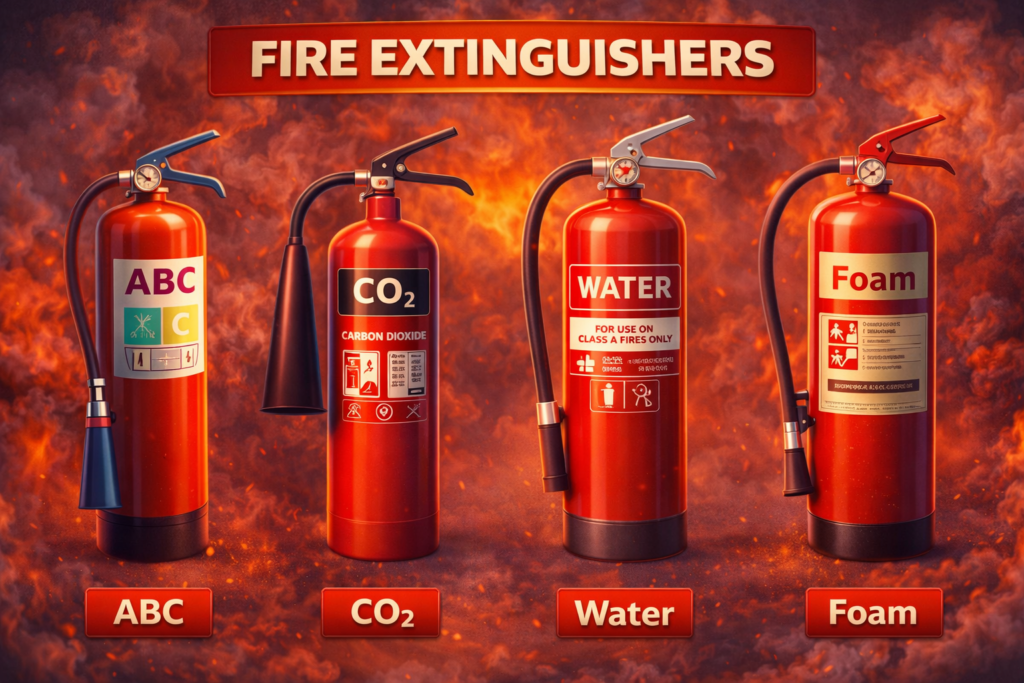
Fire extinguishers are one of the most common and essential tools for immediate fire suppression. Different types of fires require specific extinguishers to be effective:
- Water Extinguishers (Class A): Designed for fires involving solid combustible materials like wood, paper, and textiles. These extinguishers work by cooling the burning material and reducing the temperature below ignition point.
- Foam Extinguishers (Class A & B): Suitable for both solid materials and flammable liquids such as gasoline or paint. Foam forms a barrier over the fire, preventing oxygen from fueling the flames.
- CO2 Extinguishers (Class B & Electrical): Ideal for electrical fires and flammable liquids, as CO2 displaces oxygen without leaving residue, minimizing damage to equipment.
- Dry Powder Extinguishers (Class A, B, C): Multipurpose extinguishers effective for solids, liquids, and gas fires. Commonly used in industrial settings due to versatility.
- Wet Chemical Extinguishers (Class F): Specifically designed for cooking oil and fat fires in kitchens. They work by creating a chemical reaction that cools the oil and smothers flames.
Best Practices:
- Ensure extinguishers are regularly inspected and serviced according to local regulations.
- Train staff and family members in correct handling techniques.
- Place extinguishers in accessible and visible locations.
2. Smoke and Heat Detectors
Early detection can dramatically reduce response time and save lives. Detectors sense changes in air quality or temperature and trigger alarms to alert occupants:
- Smoke Detectors: Detect fine particles produced during combustion. Common in homes, offices, schools, and hospitals. They are particularly effective in early-stage fires before flames are visible.
- Heat Detectors: Trigger alarms when a rapid temperature rise is detected. Useful in areas like kitchens or boiler rooms where smoke detectors may give false alarms.
- Integrated Alarm Systems: In commercial buildings, detectors are often connected to centralized monitoring systems that can automatically notify fire services, security teams, and building occupants.
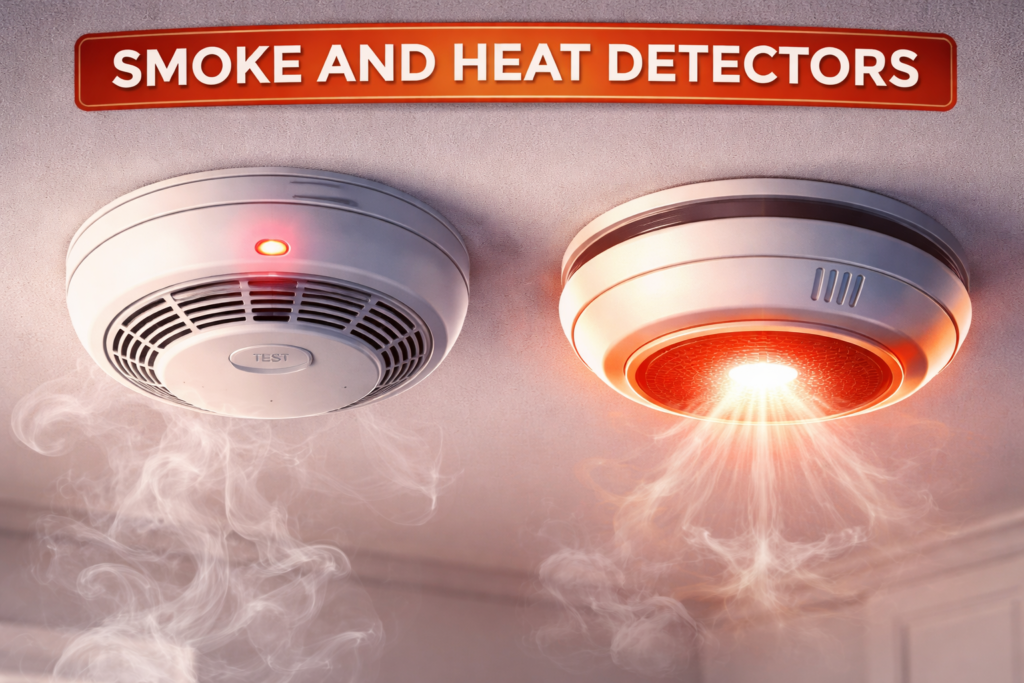
Pro Tip: Installing detectors in every bedroom, corridor, and critical area increases the chance of early fire detection and safe evacuation.
3. Sprinkler Systems
Sprinkler systems are an automated fire suppression method, particularly effective in large buildings, industrial sites, and public spaces. These systems release water or chemical suppressants when heat or smoke is detected:
- Reduce the spread of fire, protecting both occupants and property.
- Can be designed for specific hazards, such as chemical storage areas, laboratories, or high-rise buildings.
- Often legally mandated in commercial and public buildings in many countries, including the UK and US.
- Integration with fire alarm systems ensures a coordinated response during emergencies.
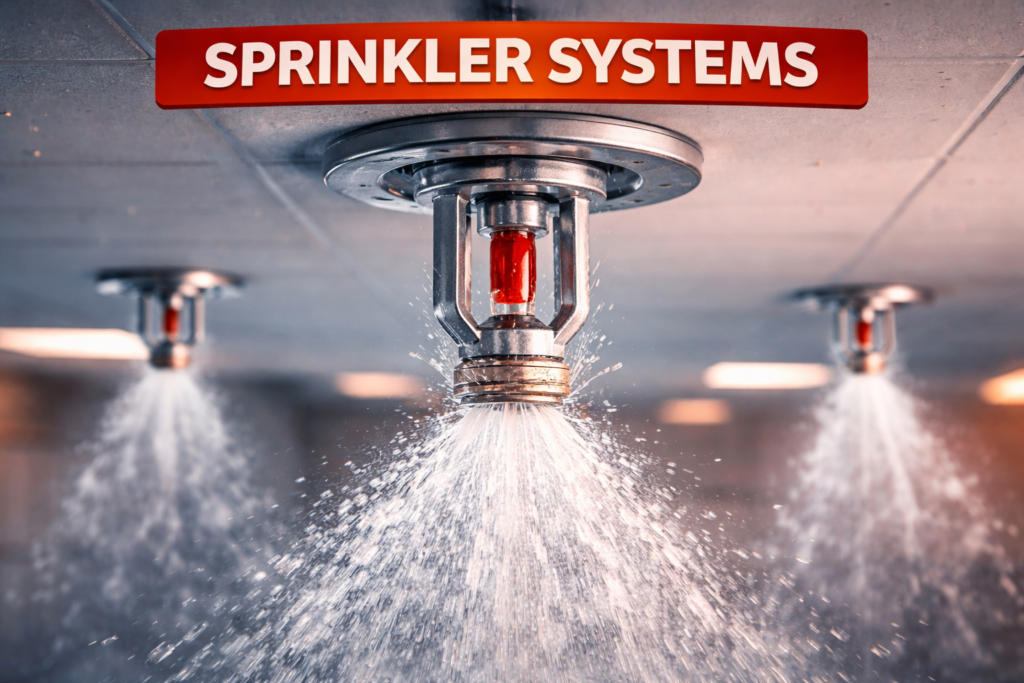
Sprinklers are proven to significantly reduce property damage and increase survival rates in commercial and residential fires.
4. Fire Blankets and Fire Doors
Fire blankets and fire doors provide passive fire protection, complementing active systems like extinguishers and sprinklers:
- Fire Blankets: Made of fire-resistant material, they smother small fires by cutting off oxygen supply. Ideal for kitchen fires or clothing fires.
- Fire Doors: Installed in buildings to prevent fire and smoke from spreading between compartments. Fire doors create safe evacuation routes and buy critical time for occupants and firefighters.
- Construction Materials: Fire-resistant walls, ceilings, and insulation work in tandem with doors to slow the progression of fire.
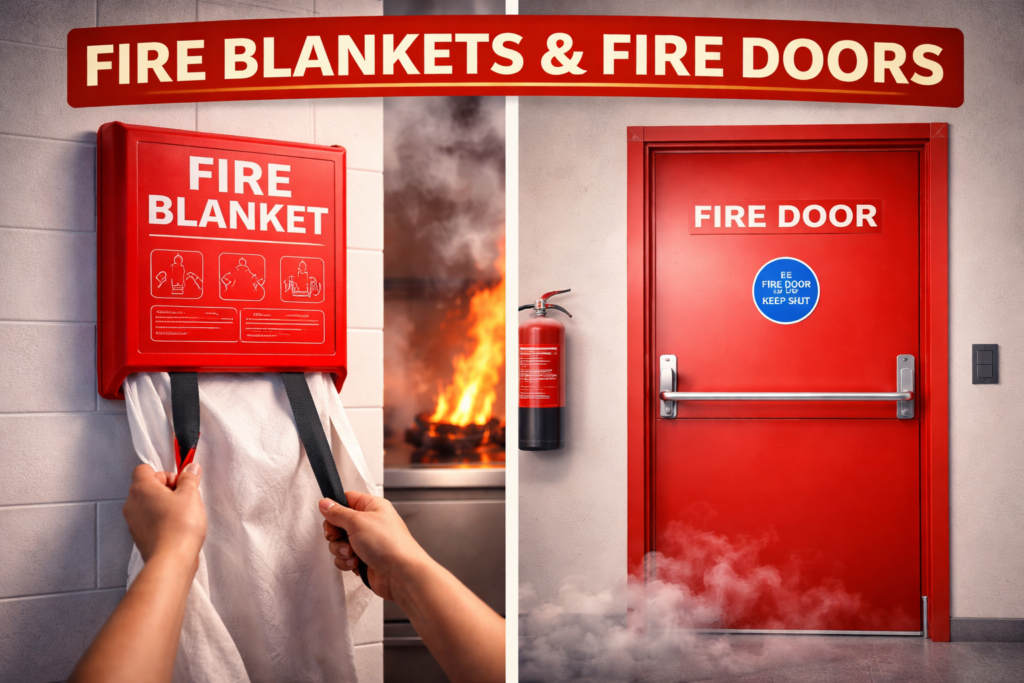
Additional Tip: Combining fire doors with smoke seals and automatic closing mechanisms enhances protection, especially in multi-story buildings and high-occupancy areas.
5. Additional Tools and Safety Devices
Beyond the core equipment, other devices enhance fire safety:
- Emergency Lighting and Exit Signs: Clearly indicate escape routes during power failure or smoke-filled conditions.
- Fire Hose Reels: Provide a steady water supply for trained personnel in commercial buildings.
- Fire Suppression Systems for Specialized Areas: Gas-based or foam-based suppression systems are used in server rooms, chemical storage areas, and laboratories.
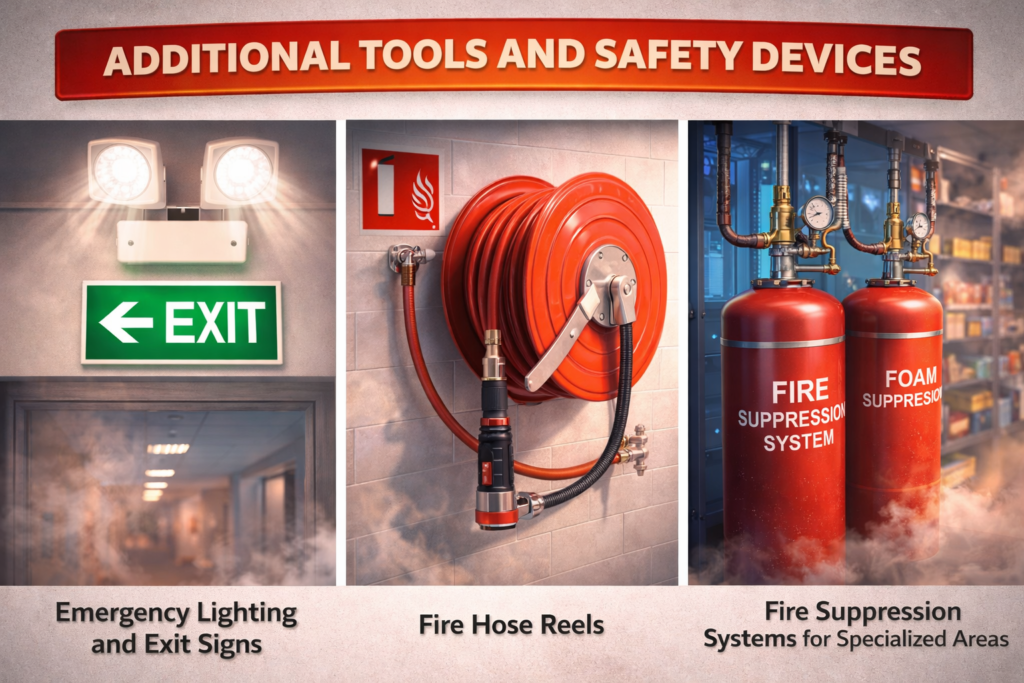
Practical Insight: A well-equipped facility integrates both active and passive fire safety tools, supported by proper training and maintenance schedules. This ensures maximum protection against diverse fire scenarios.
Fire Safety in Homes
Homes are common locations for fires, and proactive measures are essential:
- Kitchen safety: Never leave cooking unattended, keep flammable items away from stoves.
- Electrical safety: Regularly check wiring, avoid overloading sockets.
- Heating safety: Maintain heaters, fireplaces, and chimneys.
- Escape plans: Create a home fire escape map and practice it with all family members.
- Smoke alarms: Install in all bedrooms, hallways, and living spaces.
Fire Safety in Workplaces
Workplaces are legally required to maintain fire safety standards:
- Fire risk assessments: Identify hazards specific to your workplace.
- Emergency evacuation plans: Clearly marked exits, regular drills, and signage.
- Staff training: Ensure employees know how to respond in case of fire.
- Equipment maintenance: Sprinklers, alarms, and extinguishers should be regularly checked.
- Special hazards: Labs, factories, or kitchens may have additional risks that require customized measures.
Example: A warehouse fire was prevented from spreading due to proper staff training and functional sprinkler systems.
International Fire Safety Standards
Fire safety is a critical global concern, and countries around the world have established strict regulations and standards to protect people, property, and the environment. Understanding these standards is essential for organizations, safety professionals, and individuals working in high-risk environments. Compliance ensures legal protection, minimizes liability, and fosters a culture of safety.
1. United Kingdom (UK)
In the UK, fire safety is governed by comprehensive legislation and guidelines:
- Regulatory Reform (Fire Safety) Order 2005: Applies to non-domestic premises such as offices, schools, hospitals, and factories. It mandates risk assessments, proper maintenance of safety equipment, and staff training.
- Health and Safety Executive (HSE) Guidelines: Provide detailed instructions on conducting fire risk assessments, identifying hazards, and implementing preventive and protective measures.
- Local Authority Enforcement: Fire and rescue services inspect premises to ensure compliance, issue notices for violations, and provide guidance on improving safety.
2. United States (US)
The US implements fire safety through a combination of federal regulations, state laws, and industry standards:
- Occupational Safety and Health Administration (OSHA): Sets workplace safety standards, including fire prevention plans, emergency procedures, and fire protection training.
- National Fire Protection Association (NFPA): Develops widely recognized codes and standards for fire prevention, fire alarm systems, sprinklers, and emergency response. NFPA standards are adopted internationally in commercial, industrial, and residential sectors.
- State and Local Codes: Additional regulations vary by state, covering building codes, fire exits, alarm systems, and occupancy limits.
3. European Union (EU), United Arab Emirates (UAE), and Australia
Many countries outside the UK and US also enforce strict fire safety regulations, particularly for high-rise buildings, public spaces, and industrial facilities:
- European Union (EU): EU member states enforce harmonized building codes and fire safety directives to ensure minimum fire protection standards across all countries. Fire safety training and risk assessments are mandatory for workplaces and public facilities.
- United Arab Emirates (UAE): Strong fire regulations, especially in high-rise developments and commercial centers. Inspections, permits, and fire safety certifications are strictly enforced.
- Australia: National and state regulations govern fire detection, suppression, emergency planning, and building materials. Fire safety is particularly emphasized in regions prone to wildfires.
| Region | Key Law / Authority | Main Focus | Enforcement |
|---|---|---|---|
| UK | Regulatory Reform (Fire Safety) Order 2005 | Risk assessment, safety measures | Fire & Rescue Services |
| UK | HSE Guidelines | Hazard control & prevention | Government bodies |
| USA | OSHA | Workplace fire safety | Federal inspections |
| USA | NFPA | Fire codes & standards | Widely adopted globally |
| EU | EU Fire Directives | Building & workplace safety | Member states |
| UAE | Civil Defence | High-rise & commercial safety | Strict inspections |
| Australia | National Fire Codes | Fire prevention & wildfire safety | State authorities |
Fire Safety Career Opportunities:
| Role | Key Responsibilities | Required Skills | Work Environment |
|---|---|---|---|
| Fire Risk Assessor | Conduct fire risk assessments, identify hazards, recommend safety measures | Risk analysis, inspection skills, knowledge of fire laws | Offices, buildings, industrial sites |
| Fire Safety Consultant | Advise organizations on fire safety compliance, systems, and policies | Regulatory knowledge, communication, problem-solving | Consultancy firms, corporate sector |
| Fire Protection Engineer | Design fire detection, suppression, and protection systems | Engineering skills, technical design, safety standards | Construction projects, industries |
| Emergency Planner | Develop evacuation plans and emergency response strategies | Planning, coordination, crisis management | Government agencies, large organizations |
| Fire Safety Trainer | Train staff and individuals on fire prevention and emergency response | Teaching skills, practical knowledge, communication | Training institutes, workplaces |
| Fire Inspector | Inspect buildings for compliance with fire safety regulations | Attention to detail, legal knowledge, reporting | Government departments, municipalities |
| Health & Safety Officer | Ensure overall workplace safety including fire prevention measures | Safety management, risk assessment, compliance | Industries, offices, construction sites |
Fire Safety Myths vs Facts
Many misconceptions exist around fire safety. Here are common ones:
| Myth | Fact |
|---|---|
| Water extinguishes all fires | Water is unsafe for electrical or oil fires |
| Fires only happen in kitchens | Fires can occur anywhere, including offices and public spaces |
| Smoke alarms are optional | Smoke alarms save lives and are legally required in many regions |
| Fire drills aren’t important | Regular drills save lives by preparing people to respond calmly |
Creating a Comprehensive Fire Safety Plan
A well-structured fire safety plan is essential for protecting lives, property, and ensuring regulatory compliance in both residential and organizational settings. Whether at home, in the workplace, or in public spaces, having a proactive and clearly defined plan can significantly reduce risks and improve emergency response. A fire safety plan should combine hazard identification, preventive measures, emergency procedures, training, and continuous review.
1. Identify Fire Hazards
The first step in creating a fire safety plan is conducting a thorough assessment of potential fire risks:
- Examine electrical systems for overloaded circuits, faulty wiring, or malfunctioning appliances.
- Identify flammable materials, chemicals, or fuels in kitchens, workshops, laboratories, or storage areas.
- Assess heating appliances, fireplaces, and fuel-based devices for safe operation.
- Consider environmental factors, such as nearby vegetation in wildfire-prone areas or industrial hazards in factories.
2. Install and Maintain Fire Safety Equipment
After identifying hazards, ensure that the right fire safety equipment is installed and maintained:
- Fire Extinguishers: Choose types suitable for the environment (water, foam, CO2, dry powder, wet chemical) and place them in accessible locations.
- Smoke and Heat Detectors: Install in all bedrooms, hallways, kitchens, and high-risk areas. Consider interconnected alarms for larger buildings so that the entire facility is alerted simultaneously.
- Sprinkler Systems: Essential for commercial buildings, high-rises, and areas storing flammable materials.
- Fire Blankets and Fire Doors: Use blankets in kitchens or small areas, and ensure fire doors are functional with automatic closing mechanisms in workplaces and public buildings.
Maintenance Tip: Conduct monthly inspections and annual servicing for all equipment to ensure functionality during emergencies.
3. Educate Occupants
A fire safety plan is only effective if everyone knows their role and responsibilities:
- Conduct training sessions for staff, family members, or students, covering fire hazards, alarm systems, and correct use of fire extinguishers.
- Educate occupants about preventive measures, such as safe storage of flammable materials and electrical safety practices.
- Assign responsibilities, such as fire wardens or emergency coordinators, to guide evacuations and monitor safety compliance.
Example: In a school setting, teachers trained in fire safety can guide students calmly during an evacuation, preventing panic and ensuring a smooth exit.
4. Develop Evacuation Routes and Assembly Points
Clear evacuation plans are crucial for ensuring everyone reaches safety quickly:
- Map multiple exit routes from all rooms, floors, and areas, considering accessibility for children, elderly, and differently-abled individuals.
- Designate assembly points at a safe distance from the building or hazard zone.
- Post visual signage showing escape routes, emergency exits, and location of fire safety equipment.
Best Practice: Conduct a walkthrough to ensure paths are unobstructed, exits open easily, and all personnel understand the routes.
5. Practice Regular Drills and Review the Plan
Even a well-designed plan is ineffective if it is not practiced regularly:
- Schedule fire drills at least twice a year for homes, schools, or workplaces. In high-risk industries, quarterly drills are recommended.
- Simulate various scenarios, including blocked exits, equipment failure, or smoke-filled areas, to ensure preparedness.
- Review and update the fire safety plan annually, or whenever there are changes in occupancy, building layout, equipment, or local regulations.
6. Integrating Technology and Modern Solutions
Modern fire safety plans increasingly leverage technology to enhance prevention and response:
- Smart Smoke Detectors: Connect to mobile devices to alert occupants remotely.
- Automated Fire Suppression Systems: Use AI-enabled monitoring to trigger sprinklers or suppression mechanisms.
- Digital Fire Safety Checklists: Maintain records of inspections, maintenance, and training for compliance audits.
Benefits of Fire Safety
Investing in fire safety is not just a legal requirement—it is a strategic and moral responsibility that offers both tangible and intangible benefits. Effective fire safety measures protect people, property, and organizations, while also enhancing operational resilience and confidence in daily life.
1. Protection of Lives
The primary and most important benefit of fire safety is the protection of human life:
- Proper fire safety measures, including smoke alarms, fire extinguishers, and evacuation plans, ensure that occupants can escape safely during emergencies.
- In workplaces and public spaces, trained personnel and regular drills reduce panic, prevent injuries, and save lives.
- Even in homes, simple practices such as installing detectors and keeping exits clear can make the difference between a minor incident and a fatal fire.
Example: In 2022, a commercial building fire in the UK resulted in zero casualties because of functioning alarms and a well-practiced evacuation plan.
2. Reduction of Property and Asset Loss
Fires can cause extensive damage to buildings, equipment, and personal property. Fire safety measures help to minimize destruction and financial loss:
- Sprinkler systems, fire extinguishers, and fire-resistant materials can contain or suppress fires before they escalate.
- Storing flammable materials properly and adhering to fire codes reduces the risk of catastrophic property damage.
- Early detection and response save not just physical assets but also critical business data and intellectual property.
3. Legal Compliance and Avoidance of Penalties
Adhering to fire safety regulations is legally mandated in many countries:
- Non-compliance can lead to fines, closure notices, or legal action in workplaces, public buildings, and rental properties.
- Countries like the UK, US, Australia, and UAE have strict codes, inspections, and fire risk assessment requirements.
- Maintaining compliance ensures organizations avoid penalties while demonstrating responsibility to employees, clients, and the public.
4. Business Continuity and Operational Resilience
For organizations, fire safety is directly linked to operational continuity:
- Fires can disrupt business operations, leading to loss of revenue, clients, and reputation.
- Effective fire safety planning—including prevention, detection, and emergency response—minimizes downtime, allowing rapid recovery after incidents.
- Insurance premiums may also be reduced for businesses with robust fire safety systems, lowering operational costs.
Example: A warehouse fire was contained within minutes due to functional sprinklers and staff response, allowing the business to resume operations the following day with minimal disruption.
5. Peace of Mind and Confidence
Fire safety provides an often overlooked but crucial psychological benefit:
- Knowing that risks are assessed and controlled provides comfort to homeowners, employees, and the public.
- Staff trained in fire response feel empowered and confident, improving workplace morale and safety culture.
- Residents in fire-safe buildings experience reduced anxiety, particularly in high-risk environments like kitchens, labs, or industrial areas.
6. Enhanced Reputation and Community Trust
For organizations and institutions, implementing robust fire safety measures also enhances credibility and public trust:
- Customers, tenants, and investors are more likely to engage with businesses or facilities that demonstrate a commitment to safety.
- Schools, hospitals, and public venues with visible fire safety measures promote confidence among parents, patients, and visitors.
Conclusion
Fire safety is an essential part of modern life. From homes to workplaces and public spaces, understanding hazards, using proper equipment, and practicing emergency plans saves lives and property. By going beyond basic compliance and implementing best practices, you can create a safer environment for everyone.