
What is Fire Risk Assessment?
What is Fire Risk Assessment? UK Workplace Safety Guide
Fire safety is one of the most critical responsibilities for businesses, organisations, and property managers across the United Kingdom. Every year, workplace fires result in not only serious injuries and loss of life but also significant financial losses due to property damage, operational downtime, and disruption to business continuity. In fact, even minor fire incidents can lead to costly repairs, loss of reputation, and potential legal consequences for failing to maintain a safe working environment. These risks underscore the need for proactive fire prevention strategies, robust safety measures, and regular assessments to ensure that workplaces remain safe for employees, visitors, and other occupants.
One of the most effective and legally mandated ways to manage fire safety is through a Fire Risk Assessment. This is a structured, systematic process that involves identifying potential fire hazards, assessing the risks associated with them, implementing control measures to reduce or eliminate those risks, and reviewing safety procedures regularly. In the UK, fire risk assessments are a legal requirement for all non-domestic premises, placing a clear responsibility on employers, business owners, and responsible persons to maintain compliance with fire safety legislation, safeguard human life, and protect property.
This comprehensive guide is designed to provide a clear understanding of fire risk assessments, including their purpose, importance, detailed step-by-step process, and the legal framework governing them. Additionally, it highlights common mistakes to avoid, industry-specific considerations, and the value of professional fire safety training. By reading this guide, you will gain the knowledge needed to effectively conduct fire risk assessments, enhance workplace safety, and ensure compliance with UK fire safety laws, ultimately protecting both people and business assets from the devastating impact of fire.
What is Fire Risk Assessment?
A fire risk assessment is a systematic and comprehensive evaluation of a workplace or building to identify potential fire hazards, assess the level of risk, and implement effective measures to prevent fire incidents. It is not simply a checklist; rather, it is a proactive process that ensures the safety of all occupants, protects property, and helps organisations comply with UK fire safety legislation.
This assessment examines every aspect of the workplace, including electrical systems, heating equipment, storage of flammable materials, emergency exits, and human behavior that could contribute to fire risks. It is designed to anticipate potential fire scenarios, reduce the likelihood of fire outbreaks, and prepare both staff and management for safe emergency response if a fire occurs.
Fire risk assessments are particularly critical because they combine prevention, preparation, and compliance. By identifying hazards before they lead to incidents, organisations can take practical steps to mitigate risks, ensure that staff are trained and aware of safety procedures, and maintain compliance with the Regulatory Reform (Fire Safety) Order 2005 in the UK.
Purpose of a Fire Risk Assessment
The main purpose of a fire risk assessment is to provide a structured approach to fire safety management. This includes:
- Identifying Fire Hazards:
- Potential sources of ignition such as electrical faults, heating equipment, open flames, or machinery
- Presence of flammable or combustible materials, including chemicals, paper, and fuel
- Environmental factors that could contribute to the spread of fire
- Recognizing Individuals at Risk:
- Employees working in the area
- Visitors, contractors, and temporary staff
- Vulnerable individuals such as the elderly, disabled, or those with limited mobility
- Evaluating Likelihood and Potential Impact:
- Assessing how likely a fire is to occur
- Considering the severity of consequences if a fire breaks out
- Prioritizing risks based on their potential impact on life, property, and operations
- Recording Findings and Implementing Control Measures:
- Documenting hazards, risk levels, and safety measures in a structured report
- Installing safety controls such as fire alarms, detection systems, emergency exits, and fire extinguishers
- Ensuring proper storage and handling of flammable materials
- Reviewing and Updating Regularly:
- Keeping the assessment up-to-date to reflect workplace changes, renovations, or new equipment
- Conducting periodic reviews to maintain compliance with legal obligations
- Incorporating lessons from fire drills or near-miss incidents
Why is Fire Risk Assessment Important?
Fire risk assessments are vital for both safety and legal compliance. They provide a proactive approach to preventing fire incidents rather than reacting after a fire occurs.
Key Reasons Why Fire Risk Assessment is Important
- Protect Lives: Ensures employees and visitors can safely evacuate during an emergency
- Prevent Property Damage: Minimizes the risk of destruction to buildings and equipment
- Legal Compliance: Helps businesses meet UK fire safety regulations
- Business Continuity: Reduces operational downtime due to fire incidents
- Promotes Safety Culture: Encourages awareness and responsibility among employees
A well-conducted fire risk assessment reduces the likelihood of fire-related incidents, protects the organisation from legal repercussions, and ensures a safer workplace environment.
| Benefit | Explanation | Example |
|---|---|---|
| Protect Lives | Ensures safe evacuation | Employees exit safely during fire drill |
| Prevent Property Damage | Reduces equipment/building loss | Fire extinguishers prevent fire spread |
| Legal Compliance | Meets UK regulations | Compliance with Regulatory Reform Order 2005 |
| Business Continuity | Reduces downtime | Warehouse continues operations after small fire |
| Promotes Safety Culture | Staff awareness | Employees report hazards promptly |
Legal Requirements for Fire Risk Assessment in the UK
Fire safety in the United Kingdom is strictly regulated under the Regulatory Reform (Fire Safety) Order 2005, which applies to all non-domestic premises, including offices, factories, shops, schools, hospitals, and public buildings. The legislation was introduced to consolidate and simplify fire safety laws, placing clear responsibilities on employers, business owners, and other responsible persons to ensure the safety of all occupants.
The primary objective of these legal requirements is to prevent fire incidents, protect lives, and minimise property damage, while ensuring that organisations maintain compliance and demonstrate due diligence in managing fire risks.
Key Legal Duties
Under UK law, every non-domestic premises must adhere to several key fire safety duties:
- Conduct a Fire Risk Assessment and Document Findings
- Organisations must identify potential fire hazards, evaluate risks to employees, visitors, and vulnerable individuals, and implement control measures.
- Documentation should clearly outline identified hazards, actions taken, and safety measures implemented.
- This documented assessment serves as evidence of compliance in case of inspections or investigations.
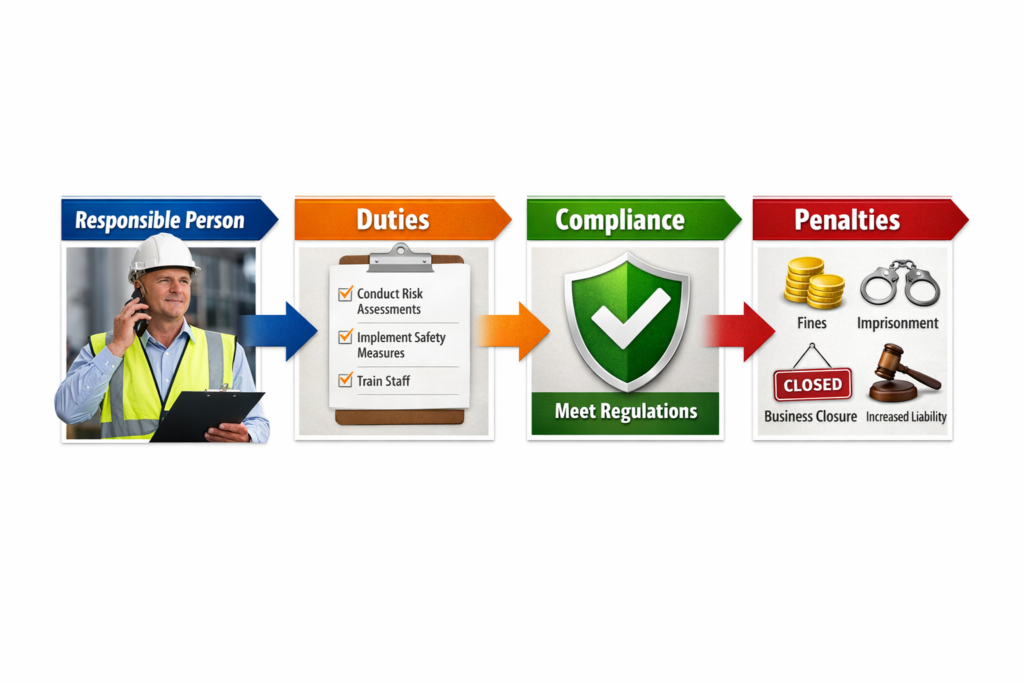
- Appoint a Responsible Person
- The “responsible person” is legally accountable for fire safety within the premises.
- This is usually the employer, business owner, or property manager.
- Responsibilities include ensuring the fire risk assessment is completed, maintaining safety measures, and training staff on fire procedures.
- Implement Appropriate Fire Safety Measures
- Install and maintain fire detection systems, alarms, smoke detectors, and sprinklers where necessary.
- Provide fire-fighting equipment such as extinguishers and ensure it is regularly maintained.
- Maintain clear and accessible emergency exits, escape routes, and evacuation signage.
- Train Employees in Fire Safety Procedures
- All staff must be trained to recognise fire hazards, respond appropriately during emergencies, and understand evacuation procedures.
- Regular fire drills and refresher courses are recommended to ensure preparedness.
- Regularly Review and Update the Fire Risk Assessment
- Fire risk assessments must be reviewed periodically, especially when significant changes occur, such as:
- Renovations or expansion of the premises
- Introduction of new machinery, equipment, or chemicals
- Changes in workforce or occupancy levels
- Continuous monitoring and updates help maintain compliance and reduce fire risks over time.
- Fire risk assessments must be reviewed periodically, especially when significant changes occur, such as:
Penalties for Non-Compliance
Failure to comply with fire safety legislation can have severe consequences for organisations and responsible individuals. Potential penalties include:
- Large Fines: Organisations can face substantial financial penalties for failing to conduct or maintain a proper fire risk assessment.
- Business Closure: In extreme cases, authorities may close premises until fire safety compliance is achieved.
- Legal Action or Imprisonment: Responsible persons can face criminal prosecution, fines, and imprisonment if negligence leads to fire incidents causing injury, death, or property damage.
Compliance with fire safety laws is not optional. It is both a legal requirement and a moral obligation to protect human life, safeguard property, and ensure the long-term continuity of business operations.
Who is the Responsible Person?
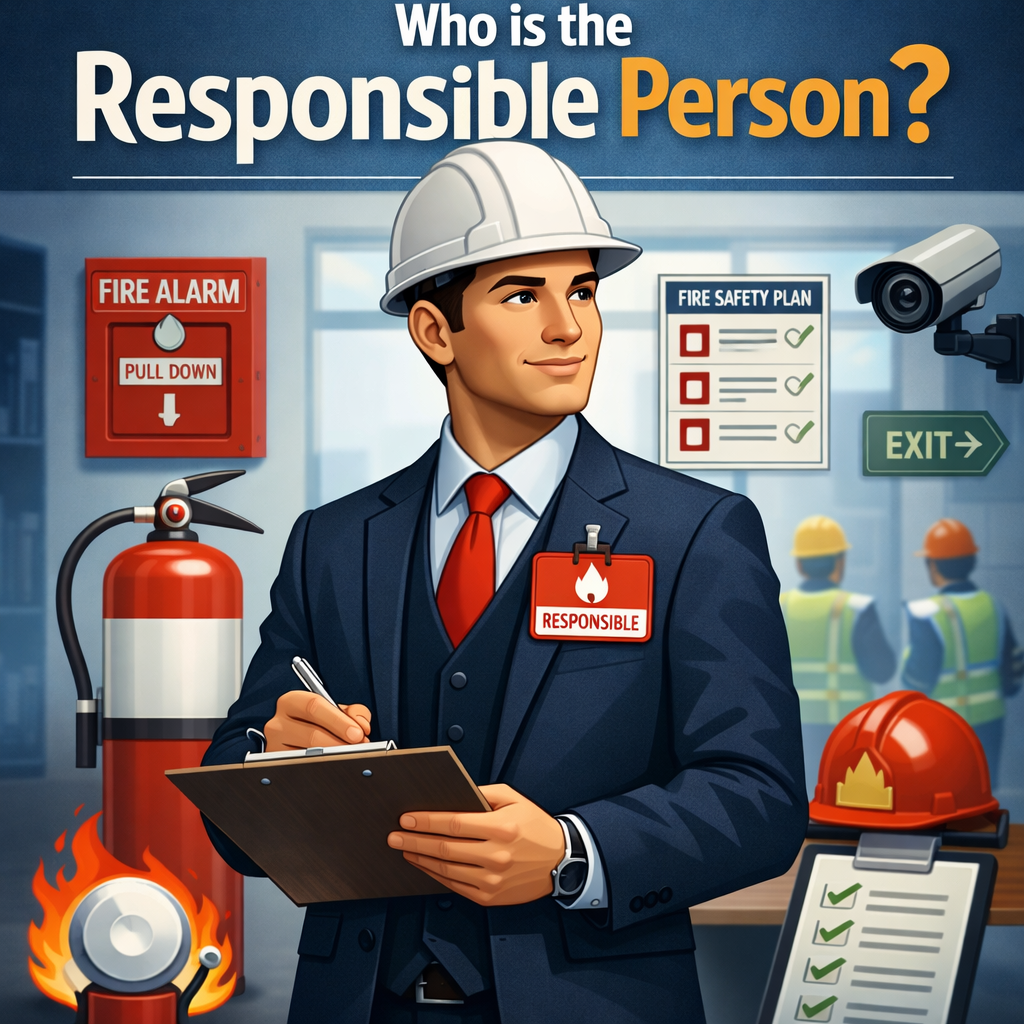
In the context of UK fire safety, the responsible person is the individual legally accountable for ensuring that all fire safety measures are in place and effectively managed within a workplace or non-domestic premises. This role is critical because the responsible person is ultimately answerable for protecting the lives of employees, visitors, contractors, and anyone present on the premises in the event of a fire.
Who Can Be a Responsible Person?
The designation of the responsible person typically falls to one of the following:
- Employer: In most workplaces, the employer is automatically considered the responsible person and must ensure compliance with fire safety legislation.
- Business Owner: For businesses without formal employment structures, the owner of the premises holds this responsibility.
- Property Manager or Landlord: If the premises are leased or rented, the landlord or property manager may share responsibility for maintaining structural fire safety, emergency exits, and communal areas.
In some cases, particularly in large organisations or multi-tenant buildings, the responsibilities may be delegated to a trained fire safety officer or facilities manager, but legal accountability ultimately remains with the responsible person.
Key Responsibilities of the Responsible Person
The responsible person has a wide range of duties that ensure a safe working environment and compliance with UK fire safety laws:
- Conduct or Commission a Fire Risk Assessment
- The responsible person must either carry out or hire a qualified professional to conduct a thorough fire risk assessment.
- This assessment identifies potential hazards, evaluates risks, and recommends measures to prevent fires.
- Implement Fire Safety Measures and Controls
- Install fire detection systems, smoke alarms, and fire suppression equipment where necessary.
- Ensure emergency exits are clearly marked, accessible, and free from obstructions.
- Maintain fire extinguishers, fire doors, and other safety equipment in good working order.
- Ensure Staff Receive Adequate Training
- Employees must be educated on fire hazards, evacuation procedures, and proper use of fire-fighting equipment.
- Organise regular fire drills to ensure staff know how to respond during an emergency.
- Maintain Documentation and Review Assessments Regularly
- Keep detailed records of fire risk assessments, safety measures implemented, training sessions, and drills conducted.
- Regularly review and update the fire risk assessment to reflect changes in the workplace, new equipment, or updated legislation.
- Monitor Compliance and Safety Practices
- Ensure that all safety procedures are followed daily and that any hazards reported by employees are promptly addressed.
- Act as the point of contact for regulatory inspections, audits, and fire authority recommendations.
Why Clearly Defining the Responsible Person is Important
Defining the responsible person ensures accountability within the organisation. When everyone knows who is responsible for fire safety, actions can be coordinated effectively, risks are more likely to be mitigated, and legal compliance is easier to maintain. This clarity also reduces confusion during emergencies, ensuring faster decision-making and safer outcomes for all occupants.
Example: In a large office building, the property manager was assigned as the responsible person, while a dedicated safety officer implemented day-to-day fire drills and inspections. This clear division of accountability ensured compliance with UK fire safety laws and created a safer work environment.
How Often Should a Fire Risk Assessment Be Reviewed?
Regular reviews are essential for maintaining an effective fire safety system.
Recommended Review Frequency
- Annually for standard workplaces
- Whenever there are significant changes to the workplace (new equipment, construction work, or layout changes)
- After any fire incident or near-miss
- When fire safety legislation or guidance is updated
Regular review ensures risks are continually managed and compliance is maintained.
Types of Fire Risk Assessments
Depending on the size and complexity of the workplace, fire risk assessments can vary:
- Basic Assessment
- For small, low-risk workplaces
- Focuses on simple hazards and basic controls
- Comprehensive Assessment
- For large or high-risk premises (factories, hospitals, warehouses)
- Includes detailed hazard analysis, evacuation planning, and fire safety systems
- Industry-Specific Assessment
- Tailored to sectors like construction, healthcare, or manufacturing
- Addresses unique fire hazards and compliance requirements
Fire Risk Assessment Process (Step-by-Step)
A thorough fire risk assessment follows these five steps:
Step 1: Identify Fire Hazards
- Sources of ignition (electrical faults, machinery, open flames)
- Flammable materials (paper, chemicals, fuel)
- Sources of oxygen that may fuel fires
Step 2: Identify People at Risk
- Employees
- Visitors
- Vulnerable individuals (elderly, disabled)
Step 3: Evaluate and Reduce Risks
- Remove or reduce hazards
- Install fire alarms and detection systems
- Ensure safe storage of flammable materials
Step 4: Record Findings
- Document identified hazards
- Specify control measures
- Maintain records for legal compliance
Step 5: Review and Update
- Regularly update the assessment
- Include changes in layout, equipment, or staffing
Common Fire Hazards in the Workplace
Understanding and identifying potential fire hazards is a critical step in reducing risks and ensuring workplace safety. Fire hazards are elements or conditions that can ignite, fuel, or spread a fire. Recognising these hazards allows organisations to implement preventive measures, protect employees, and maintain compliance with UK fire safety regulations.
Below are some of the most common fire hazards in workplaces and practical examples of how they can occur:
1. Electrical Equipment Faults
Electrical appliances and machinery are major sources of fire in workplaces. Faulty equipment, frayed wiring, damaged plugs, or improperly maintained machines can easily cause sparks that ignite flammable materials.
Example: A malfunctioning office printer overheated and caused smoke to fill the room because it was placed too close to paper stacks.
2. Overloaded Circuits
Overloading electrical circuits or power strips is a common hazard, especially in offices and industrial settings with high equipment usage. Overloaded circuits can overheat, short-circuit, and cause fires.
Example: Multiple computers, printers, and chargers plugged into a single extension cord overheated, sparking a fire hazard.
3. Flammable Liquids and Chemicals
Workplaces that store flammable liquids or chemicals, such as solvents, fuels, cleaning agents, or laboratory chemicals, are at increased risk of fire. Improper storage, leaks, or spillage can easily lead to ignition.
Example: A cleaning cupboard containing aerosol sprays and solvents caught fire due to a nearby electrical spark.
4. Poor Housekeeping
Cluttered spaces, accumulation of paper, packaging materials, or waste can fuel fires and increase the speed at which a fire spreads. Blocked access routes, stacked materials near heat sources, or trash left near electrical panels also pose significant risks.
Example: Cardboard boxes piled near a heater caught fire and spread quickly across the storage area.
5. Blocked or Obstructed Fire Exits
Emergency exits that are blocked or locked can prevent safe evacuation and increase the danger during a fire. Fire doors left propped open, storage near exit routes, or improperly marked exits are common hazards.
Example: In a warehouse, a blocked emergency exit forced workers to take a longer route during a fire drill, delaying evacuation.
6. Human Negligence
Human behavior is a major contributor to fire risk. Leaving appliances on, smoking in prohibited areas, improper use of electrical equipment, or careless handling of flammable materials can all lead to fire incidents.
Example: An employee left a kettle on unattended near paper documents, creating a fire hazard.
7. Other Potential Hazards
- Heating equipment such as radiators or portable heaters placed near flammable materials
- Open flames in laboratories, kitchens, or workshops
- Hot work operations like welding or soldering without safety precautions
- Combustible building materials that accelerate fire spread
| Hazard | Example | Prevention |
|---|---|---|
| Electrical faults | Overloaded power strips | Regular inspection & maintenance |
| Flammable liquids | Solvents, fuels | Store in ventilated, fire-resistant cabinets |
| Poor housekeeping | Cluttered storage | Remove combustible materials regularly |
| Blocked exits | Obstructed doors | Keep routes clear at all times |
| Human negligence | Leaving appliances on | Staff training & awareness |
Fire Risk Assessment Checklist
A fire risk assessment checklist is an essential tool for ensuring that all potential fire hazards are identified and properly managed. Using a structured checklist improves the accuracy of your assessment, helps maintain compliance with UK fire safety regulations, and ensures that preventive measures are consistently implemented across the workplace.
Below is a detailed and comprehensive checklist designed for offices, warehouses, factories, and other non-domestic workplaces:
1. Fire Exits Accessibility and Signage
- Ensure all fire exits are unobstructed and easy to open from the inside.
- Check that emergency exit doors are clearly marked with visible signage.
- Verify that escape routes lead to a safe assembly point.
- Confirm that doors self-close where required to prevent fire spread.
2. Smoke Alarms and Fire Detection Systems
- Test all smoke alarms and fire detection systems to ensure they are fully operational.
- Confirm that alarms are audible throughout the building, including remote or high-noise areas.
- Ensure fire detection systems are regularly serviced according to manufacturer and legal guidelines.
- Check that fire alarm panels display no faults or warnings.
3. Firefighting Equipment
- Verify that fire extinguishers are present, correctly placed, and accessible.
- Ensure extinguishers are suitable for the types of fire hazards in the area (electrical, flammable liquids, paper, etc.).
- Confirm regular maintenance, inspection, and servicing of extinguishers, fire blankets, and hose reels.
- Check that staff are trained to use fire-fighting equipment safely and effectively.
4. Staff Fire Safety Training
- Confirm that all employees, contractors, and temporary staff have received adequate fire safety training.
- Ensure staff know the location of fire exits, extinguishers, and alarm points.
- Conduct regular fire drills to assess preparedness and response times.
- Provide refresher training after new equipment installation, workplace changes, or incidents.
5. Safe Storage of Flammable Materials
- Ensure flammable liquids, chemicals, and combustible materials are stored in designated, fire-resistant areas.
- Check that storage complies with safety guidelines and manufacturer recommendations.
- Prevent flammable items from being placed near heaters, open flames, or electrical equipment.
6. Emergency Routes and Access
- Confirm that corridors, stairwells, and pathways are clear of obstructions.
- Check that emergency access for fire services is unhindered.
- Ensure emergency lighting is functional and illuminates escape routes during power outages.
7. Fire Evacuation Plans
- Ensure a well-documented fire evacuation plan is in place.
- Display evacuation procedures visibly throughout the premises.
- Assign specific roles for staff during emergencies, such as fire wardens or first-aid coordinators.
- Conduct periodic evacuation drills to evaluate response effectiveness.
8. Additional Checklist Items
- Inspect electrical systems for overloaded circuits or faulty wiring.
- Ensure fire doors are functional and not wedged open.
- Verify storage of combustible waste is regularly removed and properly managed.
- Assess areas where hot work operations (welding, soldering) take place for fire safety compliance.
- Confirm emergency contact numbers and procedures are up-to-date and accessible.
Benefits of Using a Checklist
- Ensures no hazards are overlooked
- Standardises fire risk assessments across multiple sites
- Helps demonstrate compliance during inspections
- Provides a reference for updates and improvements
- Improves overall workplace safety culture
| Item | Yes | No | Action Required |
|---|---|---|---|
| Fire exits clear | ✅ | ⬜ | Remove obstacles |
| Smoke alarms functional | ✅ | ⬜ | Test and repair |
| Fire extinguishers available | ✅ | ⬜ | Replace or service |
| Staff trained | ✅ | ⬜ | Organize training |
| Flammable materials stored safely | ✅ | ⬜ | Relocate items |
| Evacuation plan in place | ✅ | ⬜ | Update plan |
Cost of Fire Risk Assessment (UK – 2026)
Understanding the cost of a fire risk assessment is essential for businesses to plan their budgets and ensure compliance with UK fire safety regulations. The cost varies depending on the size, type, and risk profile of the premises, as well as the complexity of operations and the level of professional expertise required.
Typical Costs by Building Type (2026)
- Small Shop, Office, or Single-Story Premises: £200 – £350
- Small HMO (2–3 Storeys) or Small Warehouse: £250 – £600
- Large Commercial Units or High-Risk Premises: £1,000 – £2,500+
- Residential Communal Areas (Flats): £119 – £300+
Factors Affecting Cost
Several factors influence the final cost of a fire risk assessment:
- Premises Size: Larger buildings require more time and resources to assess.
- Risk Level: High-risk operations, such as warehouses with flammable materials, laboratories, or industrial facilities, incur higher costs.
- Complexity of Operations: Premises with multiple floors, equipment, or high occupancy require detailed assessment.
- Professional Consultancy Fees: Hiring certified fire safety professionals ensures compliance but may increase costs.
Why Fire Risk Assessment is Worth the Investment
Investing in a fire risk assessment is a small cost compared to the potential losses caused by a fire, including:
- Property damage
- Business interruption
- Injuries or fatalities
- Legal penalties for non-compliance
By understanding typical costs and planning accordingly, businesses can ensure that they are fully prepared, compliant, and able to protect their staff, visitors, and assets from fire hazards.
Can You Conduct a Fire Risk Assessment Yourself?
Yes, it is possible for businesses to conduct their own fire risk assessment, especially in small or low-risk workplaces. However, the ability to carry out an assessment effectively depends on the size of the premises, the complexity of operations, and the level of fire safety knowledge available within the organisation.
When You Can Conduct Your Own Assessment
Small businesses or low-risk workplaces may be able to perform their own fire risk assessments if the following conditions are met:
- The Workplace is Low-Risk
- Offices, small shops, or single-story buildings with minimal flammable materials are generally suitable for self-assessment.
- Low-risk environments have fewer hazards, simpler layouts, and limited equipment that could cause fire incidents.
- Staff are Trained in Basic Fire Safety
- Employees or the designated responsible person must have a solid understanding of fire hazards, emergency procedures, and workplace fire safety requirements.
- Training ensures that hazards are properly identified, risks are accurately evaluated, and control measures are appropriately implemented.
- Documentation and Regular Review are Maintained
- Even if a self-assessment is conducted, it is vital to document all findings, control measures, and procedures.
- The assessment should be reviewed periodically and updated whenever significant changes occur in the workplace, such as new equipment, staff, or building modifications.
When to Hire a Professional Fire Safety Consultant
For larger, complex, or high-risk premises, it is strongly recommended to hire a certified fire safety professional. Professional assessments ensure full compliance with UK legislation, reduce liability, and provide expert guidance on risk control measures.
Examples of Premises That Should Use Professionals:
- Warehouses storing flammable chemicals or materials
- Hospitals, care homes, or laboratories with special hazards
- Multi-story office buildings or HMO properties with multiple occupants
- Industrial facilities with machinery, heating systems, or hot work operations
A professional fire risk assessment may also include:
- Advanced fire detection and suppression system evaluations
- Detailed evacuation modelling
- Industry-specific compliance guidance
- Recommendations for staff training and fire drills
Benefits of Conducting Your Own Assessment
- Cost-effective for small businesses
- Increases staff awareness and engagement with fire safety
- Ensures compliance with basic fire safety regulations
- Provides a structured record of identified hazards and control measures
Risks of Self-Assessment
- Overlooking hidden hazards in complex workplaces
- Inadequate evaluation of high-risk areas
- Possible non-compliance with UK fire safety legislation
- Increased liability in case of a fire incident
Benefits of Fire Risk Assessment
- Legal Compliance: Meets UK safety regulations
- Protects Lives: Ensures employees and visitors are safe
- Reduces Fire Risk: Identifies hazards before they cause incidents
- Improves Preparedness: Staff know how to respond to emergencies
- Insurance Advantages: May reduce premiums
- Business Continuity: Minimizes operational disruptions
Fire Risk Assessment vs Fire Safety Training
While closely related, these serve different purposes:
| Fire Risk Assessment | Fire Safety Training |
|---|---|
| Identifies hazards and risks | Educates employees on fire response |
| Conducted by responsible person | Conducted by qualified trainers |
| Focuses on prevention | Focuses on reaction and awareness |
| Documented and reviewed | Practical skill development |
Both are essential for a comprehensive fire safety strategy.
Industry-Specific Fire Risks
Fire hazards vary significantly depending on the type of workplace, the materials used, and the operational environment. Understanding these industry-specific risks is crucial for tailoring fire risk assessments and implementing effective safety measures. A one-size-fits-all approach may leave gaps in safety, whereas addressing hazards unique to each industry ensures maximum protection for employees, visitors, and property.
1. Offices
Office environments may appear low-risk, but they have several fire hazards:
- Electrical Equipment: Computers, printers, servers, and other electrical devices can overheat or short-circuit.
- Paper Storage: Large volumes of paper, cardboard, and office supplies can fuel a fire.
- Kitchen Appliances: Microwaves, kettles, and coffee machines can pose ignition risks if misused.
Prevention Tips:
- Regular inspection and maintenance of electrical devices
- Proper storage of paper and cardboard away from heat sources
- Clear signage for fire exits and regularly tested alarms
2. Construction Sites
Construction sites present a high-risk environment due to their dynamic nature:
- Hot Work: Welding, soldering, and cutting operations generate sparks that can ignite nearby combustible materials.
- Flammable Materials: Paints, solvents, fuels, and other chemicals are commonly used on-site.
- Machinery: Heavy equipment and electrical tools can overheat or cause sparks.
Prevention Tips:
- Implement fire watch protocols during hot work
- Store flammable substances in secure, ventilated areas
- Maintain safe distances between machinery, materials, and ignition sources
3. Warehouses
Warehouses often store large quantities of stock, which can create unique fire hazards:
- Stock Storage: Cardboard boxes, pallets, and packaging materials are highly combustible.
- Chemical Hazards: Cleaning chemicals or flammable materials may be stored in bulk.
- High Racking Systems: Fires can spread quickly vertically if shelves are densely packed.
Prevention Tips:
- Maintain clear aisles and accessible emergency exits
- Install fire detection and sprinkler systems appropriate for high racking
- Conduct regular checks of chemical storage areas
4. Healthcare Facilities
Hospitals, care homes, and laboratories have specialized fire risks due to the nature of their operations:
- Oxygen Supply: High concentrations of oxygen can accelerate fire spread.
- Laboratory Chemicals: Volatile chemicals and flammable liquids are frequently used.
- Sensitive Equipment: Life-support machines and electrical devices require careful management.
Prevention Tips:
- Strictly follow oxygen storage and usage guidelines
- Implement chemical handling protocols in labs
- Train staff to respond quickly in areas with vulnerable patients
5. Other Industry-Specific Considerations
- Hotels and Hospitality: Kitchens, guest rooms with electrical devices, and laundry areas
- Retail: Stock rooms with packaging materials, displays, and electrical lighting systems
- Manufacturing: Machinery, welding operations, and flammable raw materials
- Education: Laboratories, science classrooms, and maintenance workshops
Real-Life Examples
- Example 1: An office with blocked fire exits increased evacuation time—assessment prevented potential disaster.
- Example 2: A warehouse storing flammable chemicals implemented storage controls after an assessment, preventing a fire incident.
Including case studies helps users relate and see the practical importance.
Common Mistakes in Fire Risk Assessment
Even with the best intentions, many organisations make mistakes during fire risk assessments that can compromise workplace safety and legal compliance. Recognising these common errors is essential for improving assessment quality, protecting employees, and avoiding potential fines or legal consequences.
1. Not Updating Assessments Regularly
Fire risk assessments are not a one-time task. Workplaces change frequently—new equipment is installed, layouts are modified, staff numbers fluctuate, and operational activities evolve.
Example: A warehouse added a new storage area for flammable materials but failed to update the fire risk assessment. During a routine inspection, auditors identified unassessed hazards, resulting in compliance issues.
2. Ignoring Certain Hazards
Some hazards may seem minor or unlikely but can pose serious risks if left unchecked. These include cluttered storage, poorly maintained electrical equipment, or chemicals stored near heat sources.
Example: An office ignored the risk of an overloaded power strip behind a desk. A short circuit caused a small fire that could have been prevented.
3. Poor Documentation
Inadequate or incomplete documentation can undermine the effectiveness of a fire risk assessment. Without proper records, it is difficult to track hazards, monitor implemented control measures, or demonstrate compliance to regulators.
Example: A small business performed an assessment verbally but did not document findings. When inspected by authorities, they could not prove that fire risks were properly managed.
4. Lack of Staff Training
Even the best assessment is ineffective if employees are unaware of fire hazards or how to respond in an emergency. Insufficient training increases the likelihood of human error during incidents.
Example: Staff did not know the location of fire extinguishers or evacuation routes, causing confusion during a drill.
5. Inadequate Emergency Planning
A fire risk assessment without a robust emergency plan is incomplete. Emergency procedures, evacuation routes, assembly points, and responsibilities for staff must be clearly defined.
Example: A building had no designated assembly point, leading to chaos during an evacuation drill.
6. Overlooking Industry-Specific Risks
Generic assessments may miss hazards unique to a particular industry, such as chemical storage in laboratories, oxygen use in healthcare, or welding sparks on construction sites.
7. Relying Solely on Self-Assessment in Complex Settings
While small businesses can perform simple assessments, complex or high-risk workplaces require professional evaluation. Failing to involve experts can result in missed hazards and regulatory non-compliance.
Why Choose ICTQual Fire Safety Courses
ICTQual offers professional fire safety courses that go beyond basic assessment knowledge:
- Internationally recognized certification
- Practical and knowledge-based learning
- Industry-relevant curriculum
- Compliance-focused training
- Career advancement opportunities
Enrolling in training ensures both assessment accuracy and effective emergency response.