LICQual Level 6 Diploma in Pharmacy for Developing Countries 🌍💊
Access to safe and effective medicines is one of the greatest challenges facing healthcare systems in low‑ and middle‑income nations. Limited resources, fragile supply chains, and gaps in regulatory oversight often mean that patients in these regions struggle to receive the care they deserve. This is where pharmacy in developing countries becomes a critical area of focus. It is not simply about dispensing medicines—it is about building resilient systems, ensuring drug safety, and creating sustainable healthcare solutions that can withstand economic and social pressures.
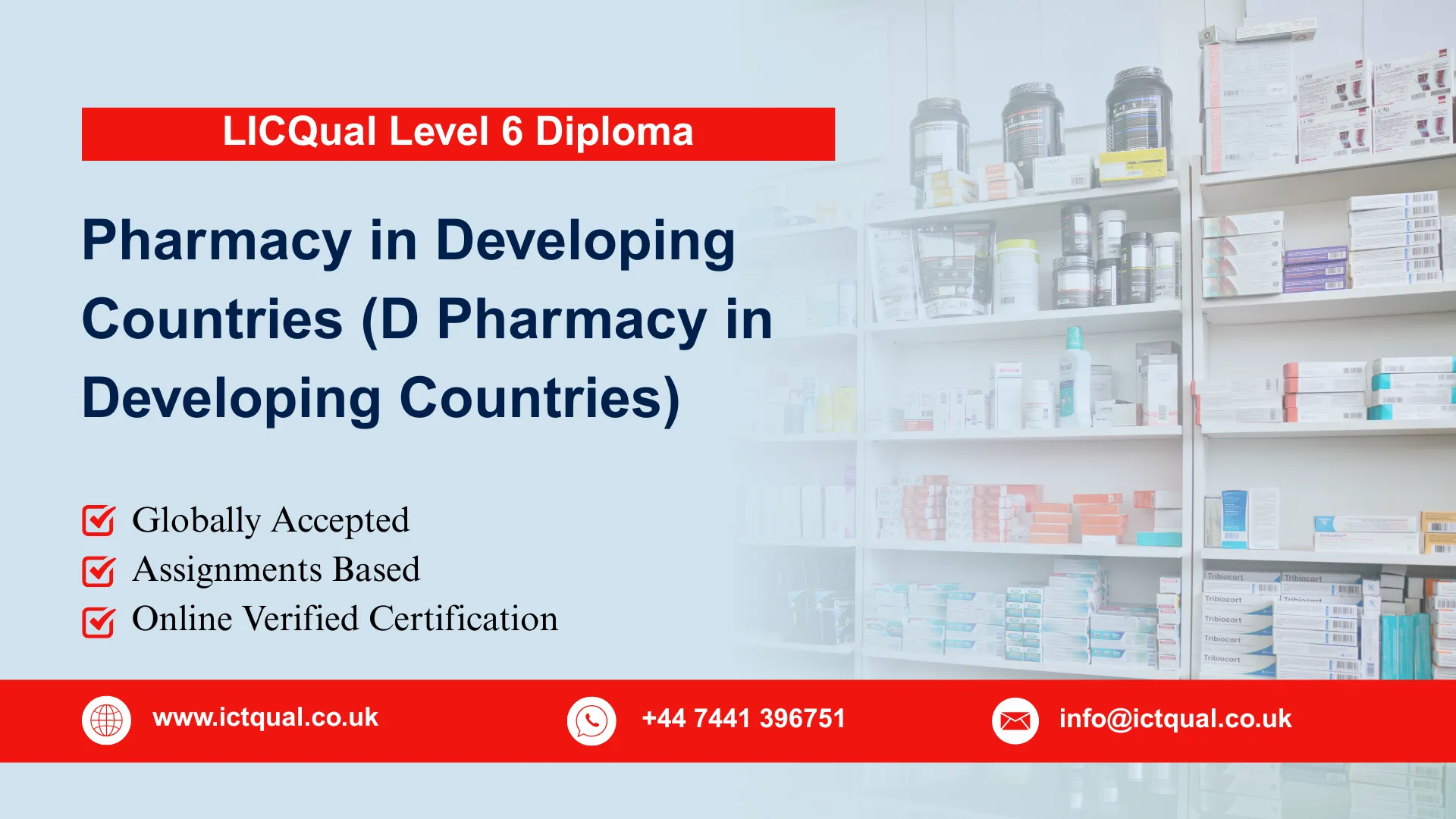
The LICQual Level 6 Diploma in Pharmacy in Developing Countries (D Pharmacy in Developing Countries) highlights the importance of equipping professionals with the knowledge and skills to address these unique challenges. Pharmacy in developing countries requires innovation, adaptability, and a deep understanding of global health disparities. As the demand for equitable healthcare grows, professionals trained in this discipline are essential for bridging the gap between pharmaceutical science and real‑world patient needs. For learners, engaging with this subject is more than academic—it is an opportunity to contribute to stronger healthcare systems, enhance professional credibility, and play a pivotal role in improving lives across underserved communities.
Program Outline
The LICQual Level 6 Diploma in Pharmacy in Developing Countries (D Pharmacy in Developing Countries) is a structured qualification designed to provide learners with advanced knowledge of pharmaceutical practice in resource‑limited settings. Comprising 6 specialized units and worth 120 credits, the program introduces learners to areas such as drug distribution systems, healthcare policy, patient safety frameworks, compliance with international standards, ethical considerations, and innovative approaches to pharmacy in developing countries.
This section explains how the course equips learners with the ability to understand pharmacy in developing countries, apply evidence‑based approaches, and align with global standards effectively. It highlights the type of learners the program is aimed at, the skills they will gain, and the career pathways available upon completion. Readers will also discover how this internationally recognized qualification opens opportunities in hospitals, community pharmacies, NGOs, pharmaceutical companies, and research institutions, making it a valuable credential for anyone aspiring to build a career in pharmacy in developing countries.
Unit Structure
| Qualification | Unit Title | Credits | GLH |
| LICQ2201221-1 | Healthcare Systems in Developing Countries | 20 | 80 |
| LICQ2201221-2 | Pharmaceutical Supply Chain and Resource Management | 20 | 80 |
| LICQ2201221-3 | Regulatory Frameworks and Quality Assurance | 20 | 80 |
| LICQ2201221-4 | Public Health and Community Pharmacy Practice | 20 | 80 |
| LICQ2201221-5 | Pharmacy Innovation and Technology in Low-Resource Settings | 20 | 80 |
| LICQ2201221-6 | Research, Professional Development, and CPD | 20 | 80 |
Who Can Benefit
The LICQual Level 6 Diploma in Pharmacy in Developing Countries (D Pharmacy in Developing Countries) is designed for individuals who want to specialize in pharmaceutical practice within resource‑limited healthcare systems. This program is particularly valuable for those who aim to address challenges such as drug accessibility, patient safety, and compliance with international standards. It helps learners strengthen their expertise, improve employability, and prepare for roles where pharmacy in developing countries is central to healthcare delivery.
Ideal Learners
- Students aspiring to enter pharmaceutical sciences with a focus on global health.
- Entry‑level professionals seeking structured training in pharmacy in developing countries.
- Pharmacy assistants wanting to expand knowledge of medicine distribution and patient care.
- Community pharmacy staff preparing for responsibilities in underserved regions.
- Hospital pharmacy technicians aiming to strengthen skills in monitoring and compliance.
- Healthcare professionals transitioning into pharmacy in developing countries roles.
- Career changers interested in humanitarian healthcare and pharmaceutical innovation.
- Ambitious learners who want to develop practical skills for pharmacy in developing countries careers.
What You’ll Be Able to Do
Unit 1: Healthcare Systems in Developing Countries
By the end of this unit, learners will be able to:
- Analyse healthcare infrastructure, policies, and service delivery models in developing countries
- Evaluate the impact of socio-economic and cultural factors on access to pharmaceutical services
- Identify challenges and opportunities for pharmacy practice within resource-limited healthcare systems
Unit 2: Pharmaceutical Supply Chain and Resource Management
By the end of this unit, learners will be able to:
- Implement effective strategies for procurement, storage, and distribution of medicines
- Optimise supply chain processes to ensure availability and affordability of essential medicines
- Evaluate resource management practices to improve operational efficiency in pharmacy services
Unit 3: Regulatory Frameworks and Quality Assurance
By the end of this unit, learners will be able to:
- Apply local and international regulatory requirements to pharmacy practice in developing countries
- Implement quality assurance and control measures to maintain safety and efficacy of medicines
- Ensure ethical compliance and adherence to professional standards in pharmaceutical provision
Unit 4: Public Health and Community Pharmacy Practice
By the end of this unit, learners will be able to:
- Develop strategies to promote healthcare education, disease prevention, and community health awareness
- Evaluate the role of pharmacists in supporting public health initiatives and improving patient outcomes
- Address specific public health challenges prevalent in developing countries through pharmacy practice
Unit 5: Pharmacy Innovation and Technology in Low-Resource Settings
By the end of this unit, learners will be able to:
- Apply innovative and technological solutions to improve pharmacy operations and service delivery
- Utilise digital platforms, mobile health solutions, and data management systems effectively
- Enhance patient care and operational efficiency through technology-enabled pharmacy practices
Unit 6: Research, Professional Development, and CPD
By the end of this unit, learners will be able to:
- Conduct research to support evidence-based improvements in pharmacy practice and healthcare outcomes
- Develop leadership, analytical, and strategic skills for effective pharmacy management in developing countries
- Engage in Continuing Professional Development (CPD) to maintain and advance professional expertise