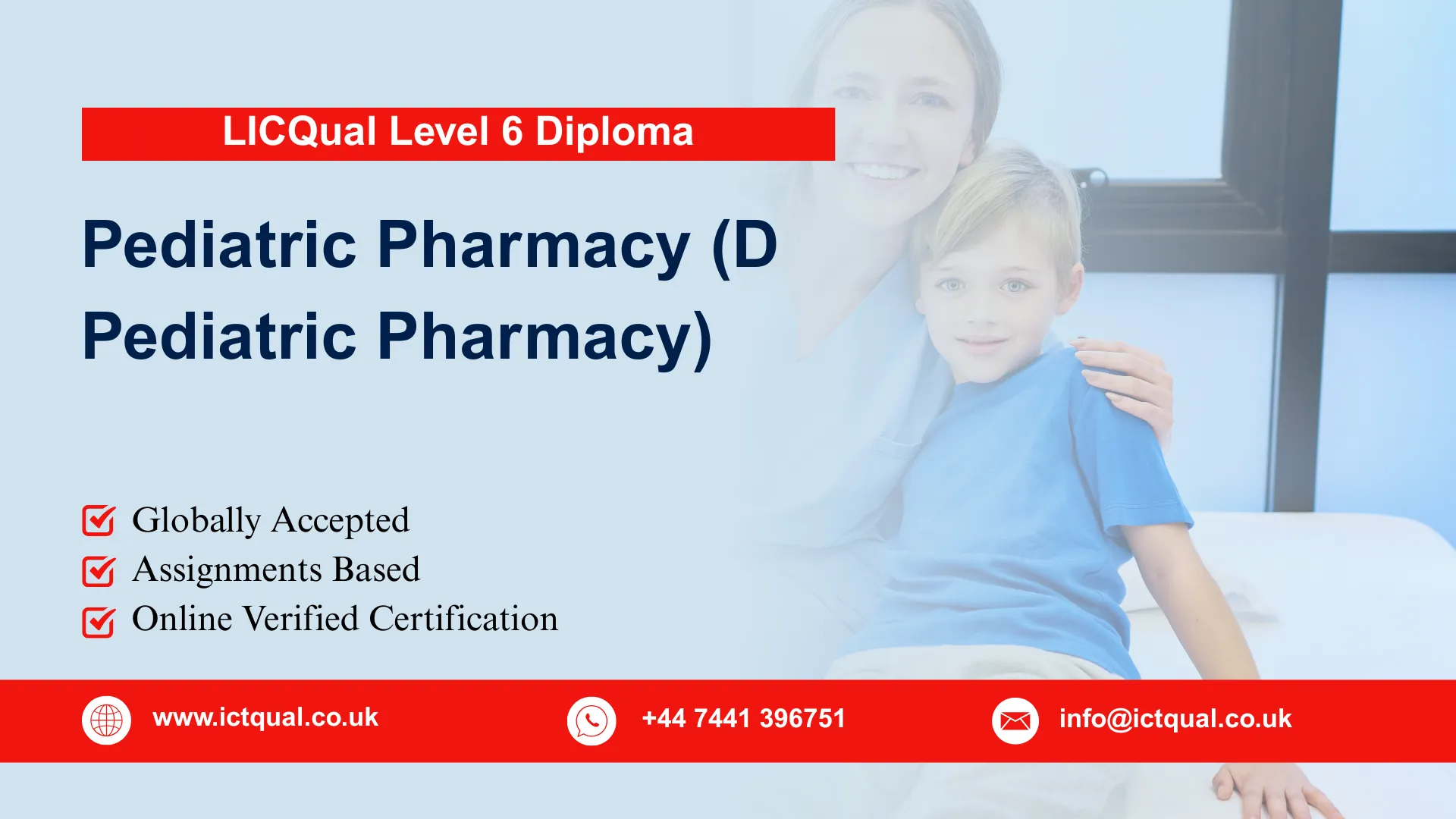
LICQual Level 6 Diploma in Pediatric Pharmacy
Children are not simply small adults when it comes to medicine. Their bodies process drugs differently, their needs are unique, and their safety requires specialized attention. From premature infants to adolescents, pediatric patients demand pharmaceutical care that is precise, compassionate, and evidence‑based. This is where pediatric pharmacy becomes essential. It is not just about adjusting doses—it is about ensuring that every child receives the right treatment at the right time, with minimal risk and maximum benefit.
The LICQual Level 6 Diploma in Pediatric Pharmacy (D Pediatric Pharmacy) highlights the growing importance of this discipline in modern healthcare. Pediatric pharmacy plays a vital role in bridging pharmaceutical science with child‑focused care, supporting doctors, nurses, and healthcare teams in delivering safe and effective therapies. As childhood illnesses, chronic conditions, and complex treatments continue to rise, professionals trained in this field are indispensable for improving outcomes and protecting vulnerable patients. For learners, engaging with this subject is more than academic—it is an opportunity to contribute to life‑changing care, enhance professional credibility, and play a pivotal role in shaping the future of child health.
Program Outline
The LICQual Level 6 Diploma in Pediatric Pharmacy (D Pediatric Pharmacy) is a structured qualification designed to provide learners with advanced knowledge of child‑focused pharmaceutical care. Comprising 6 specialized units and worth 120 credits, the program introduces learners to areas such as pediatric pharmacology, dosage calculations, patient safety frameworks, compliance standards, ethical considerations, and international healthcare policies in pediatric pharmacy.
This section explains how the course equips learners with the ability to understand pediatric pharmacy, apply evidence‑based approaches, and align with global standards effectively. It highlights the type of learners the program is aimed at, the skills they will gain, and the career pathways available upon completion. Readers will also discover how this internationally recognized qualification opens opportunities in hospitals, children’s clinics, community pharmacies, and research institutions, making it a valuable credential for anyone aspiring to build a career in pediatric pharmacy.
Unit Structure
| Qualification | Unit Title | Credits | GLH |
| LICQ2201204-1 | Advanced Principles of Paediatric Pharmacology | 20 | 80 |
| LICQ2201204-2 | Clinical Practice in Paediatric Pharmacy | 20 | 80 |
| LICQ2201204-3 | Paediatric Medication Formulation and Delivery Systems | 20 | 80 |
| LICQ2201204-4 | Regulatory Standards and Ethical Considerations in Paediatric Pharmacy | 20 | 80 |
| LICQ2201204-5 | Research Methods and Evidence-Based Practice in Paediatric Pharmacy | 20 | 80 |
| LICQ2201204-6 | Leadership, Management, and Professional Development in Pharmacy | 20 | 80 |
Who Can Benefit
The LICQual Level 6 Diploma in Pediatric Pharmacy (D Pediatric Pharmacy) is designed for individuals who want to specialize in pharmaceutical care for children. This program is particularly valuable for those who aim to address challenges such as safe dosing, treatment adherence, and compliance with international standards. It helps learners strengthen their expertise, improve employability, and prepare for roles where pediatric pharmacy is central to healthcare delivery.
Ideal Learners
- Students aspiring to enter pharmaceutical sciences with a focus on child health.
- Entry‑level professionals seeking structured training in pediatric pharmacy.
- Pharmacy assistants wanting to expand knowledge of pediatric medication management.
- Community pharmacy staff preparing for responsibilities in children’s healthcare.
- Hospital pharmacy technicians aiming to strengthen skills in pediatric dosing and patient safety.
- Healthcare professionals transitioning into pediatric pharmacy roles.
- Career changers interested in child health and pharmaceutical practice.
- Ambitious learners who want to develop practical skills for pediatric pharmacy careers.
What You’ll Be Able to Do
Unit 1: Advanced Principles of Paediatric Pharmacology
- Demonstrate a critical understanding of pharmacokinetics and pharmacodynamics in paediatric patients.
- Analyse the impact of developmental physiology on drug absorption, distribution, metabolism, and excretion.
- Apply safe prescribing principles to optimise therapeutic outcomes in children.
Unit 2: Clinical Practice in Paediatric Pharmacy
- Assess paediatric patients’ medication needs using evidence-based guidelines.
- Implement effective strategies to ensure medication safety in clinical practice.
- Evaluate therapeutic interventions to improve pharmaceutical care for children.
Unit 3: Paediatric Medication Formulation and Delivery Systems
- Explain the principles of paediatric drug formulation and dosage adjustment.
- Compare different drug delivery systems suitable for infants and children.
- Design and recommend age-appropriate pharmaceutical preparations.
Unit 4: Regulatory Standards and Ethical Considerations in Paediatric Pharmacy
- Interpret international regulatory frameworks governing paediatric medicines.
- Apply ethical principles to decision-making in paediatric pharmaceutical care.
- Critically evaluate policies and guidelines to ensure compliance and patient safety.
Unit 5: Research Methods and Evidence-Based Practice in Paediatric Pharmacy
- Develop research proposals relevant to paediatric pharmaceutical care.
- Critically analyse data and interpret findings to inform clinical practice.
- Apply evidence-based approaches to improve paediatric pharmacy services.
Unit 6: Leadership, Management, and Professional Development in Pharmacy
- Demonstrate advanced leadership and management skills within paediatric pharmacy practice.
- Apply strategic approaches to enhance service delivery and organisational performance.
- Engage in Continuing Professional Development (CPD) to support career progression and lifelong learning.