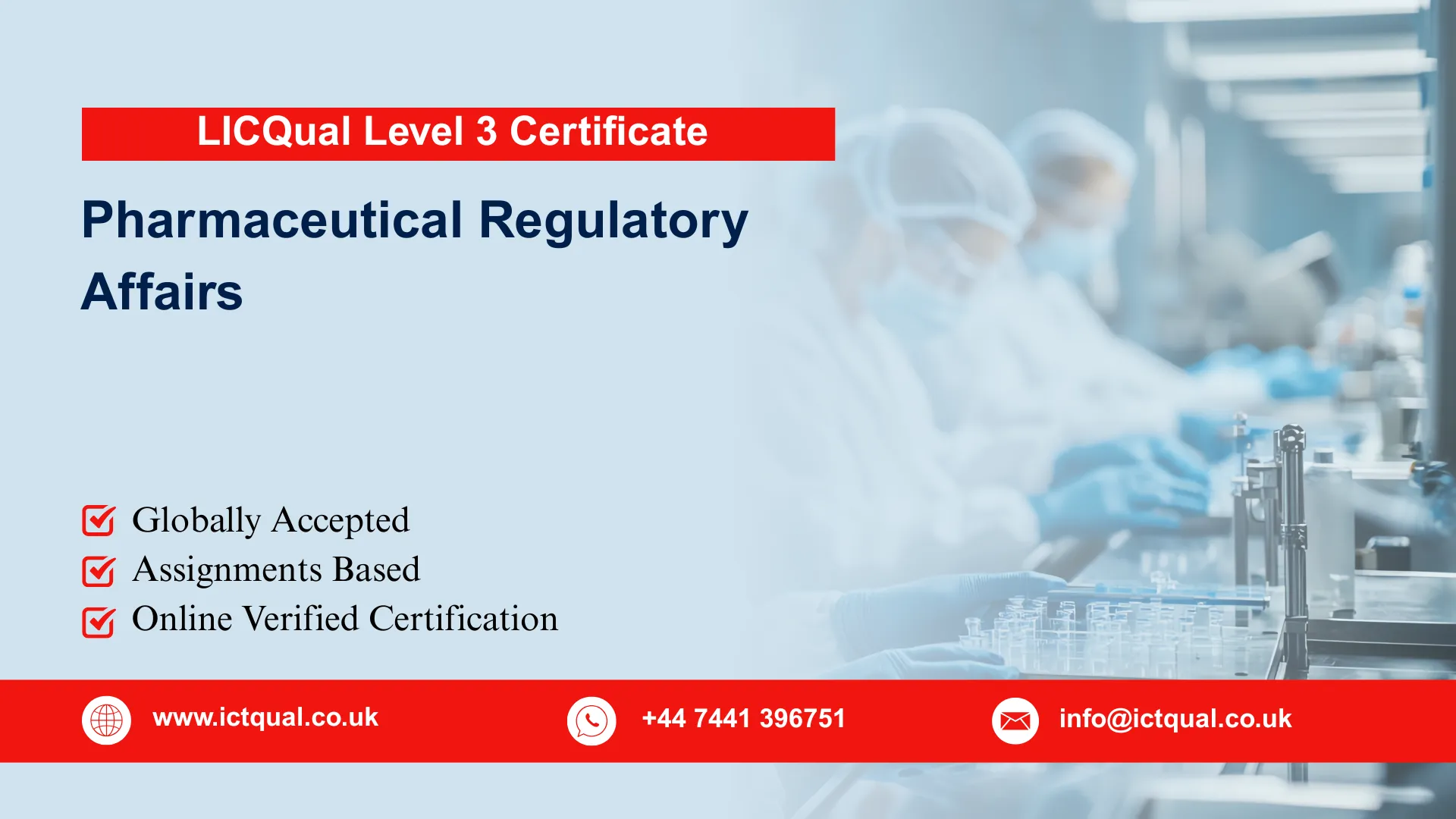
LICQual Cert Level 3 in Pharmaceutical Regulatory Affairs
Medicines save lives, but their journey from laboratory to patient is governed by strict rules that protect public health. Every drug, vaccine, or therapy must pass through rigorous checks to ensure safety, quality, and effectiveness before reaching the market. This is where pharmaceutical regulatory affairs becomes indispensable. It is the discipline that ensures compliance with national and international standards, guiding pharmaceutical companies through complex approval processes and safeguarding patients from risk. Without regulatory affairs, healthcare systems would face unsafe products, legal disputes, and loss of public trust.
The LICQual Level 3 Certificate in Pharmaceutical Regulatory Affairs (Cert Regulatory Affairs) highlights the importance of building foundational knowledge in this critical field. Regulatory affairs professionals are the guardians of compliance, ensuring that medicines meet scientific, ethical, and legal requirements. As new therapies, biotechnologies, and stricter regulations reshape the pharmaceutical industry, the demand for skilled individuals in regulatory affairs continues to rise. For learners, mastering this subject is not just about understanding rules—it is about contributing to safer healthcare, protecting communities, and supporting innovation in global medicine.
Program Outline
The LICQual Level 3 Certificate in Pharmaceutical Regulatory Affairs is a structured qualification designed to provide learners with essential knowledge of compliance and regulation in the pharmaceutical industry. Comprising 6 specialized units and worth 24 credits, the program introduces learners to key areas such as drug approval processes, documentation standards, quality assurance, and international regulatory frameworks.
This section of the article explains how the course equips learners with the ability to interpret regulatory guidelines, manage compliance procedures, and apply industry standards effectively. It highlights the type of learners the program is aimed at, the skills they will gain, and the career pathways available upon completion. Readers will also discover how this internationally recognized qualification opens opportunities in pharmaceutical companies, healthcare organizations, research institutions, and regulatory bodies, making it a valuable credential for anyone aspiring to build a career in pharmaceutical regulatory affairs.
Unit Structure
| Qualification | Unit Title | Credits | GLH |
| LICQ2201130-1 | Introduction to Pharmaceutical Regulatory Affairs | 4 | 20 |
| LICQ2201130-2 | Regulatory Frameworks and Guidelines | 4 | 20 |
| LICQ2201130-3 | Compliance and Quality Assurance | 4 | 20 |
| LICQ2201130-4 | Regulatory Submission and Documentation | 4 | 20 |
| LICQ2201130-5 | Risk Management and Pharmacovigilance | 4 | 20 |
| LICQ2201130-6 | Professional Development and CPD in Regulatory Affairs | 4 | 20 |
Who Can Benefit
The LICQual Level 3 Certificate in Pharmaceutical Regulatory Affairs is designed for individuals who want to strengthen their careers in healthcare, pharmacy, and pharmaceutical industries. This program is especially valuable for those who face challenges such as understanding drug approval processes, managing compliance, or applying regulatory frameworks to real‑world scenarios. It helps learners gain confidence, improve employability, and prepare for roles where regulatory affairs are central to pharmaceutical success.
Ideal Learners
- Students aspiring to start a career in pharmaceutical regulatory affairs.
- Entry‑level professionals seeking structured training in compliance and regulation.
- Pharmacy assistants wanting to expand their knowledge of documentation and approval processes.
- Community pharmacy staff preparing for advanced responsibilities in compliance.
- Hospital pharmacy technicians looking to strengthen regulatory and quality assurance skills.
- Professionals in pharmaceutical companies seeking insight into international regulatory frameworks.
- Career changers interested in healthcare and pharmaceutical compliance roles.
- Ambitious learners who want to develop practical skills for safer and more effective medicines.
What You’ll Be Able to Do
Unit 1: Introduction to Pharmaceutical Regulatory Affairs
By the end of this unit, learners will be able to:
- Explain the principles and scope of pharmaceutical regulatory affairs
- Describe the role of regulatory authorities in ensuring medicine safety, efficacy, and quality
- Analyse the impact of regulation on pharmaceutical development and healthcare delivery
Unit 2: Regulatory Frameworks and Guidelines
By the end of this unit, learners will be able to:
- Identify national and international regulatory frameworks and guidelines governing pharmaceuticals
- Explain legislation relevant to the development, approval, and distribution of medicines
- Apply regulatory standards to ensure compliance in pharmaceutical operations
Unit 3: Compliance and Quality Assurance
By the end of this unit, learners will be able to:
- Explain the principles of compliance monitoring and quality management systems in pharmaceuticals
- Apply Good Manufacturing Practice (GMP) standards to operational processes
- Evaluate audit procedures and strategies for maintaining regulatory compliance
Unit 4: Regulatory Submission and Documentation
By the end of this unit, learners will be able to:
- Prepare and manage regulatory submissions and documentation
- Demonstrate knowledge of dossier preparation and record-keeping requirements
- Communicate effectively with regulatory authorities regarding product approval and compliance matters
Unit 5: Risk Management and Pharmacovigilance
By the end of this unit, learners will be able to:
- Identify risks associated with pharmaceutical products and operational processes
- Implement safety monitoring and adverse event reporting procedures
- Analyse strategies to ensure ongoing compliance and patient safety
Unit 6: Professional Development and CPD in Regulatory Affairs
By the end of this unit, learners will be able to:
- Reflect on personal practice and identify areas for professional growth in regulatory affairs
- Develop a plan for continuous professional development (CPD)
- Apply ethical principles and professional standards in regulatory decision-making and practice