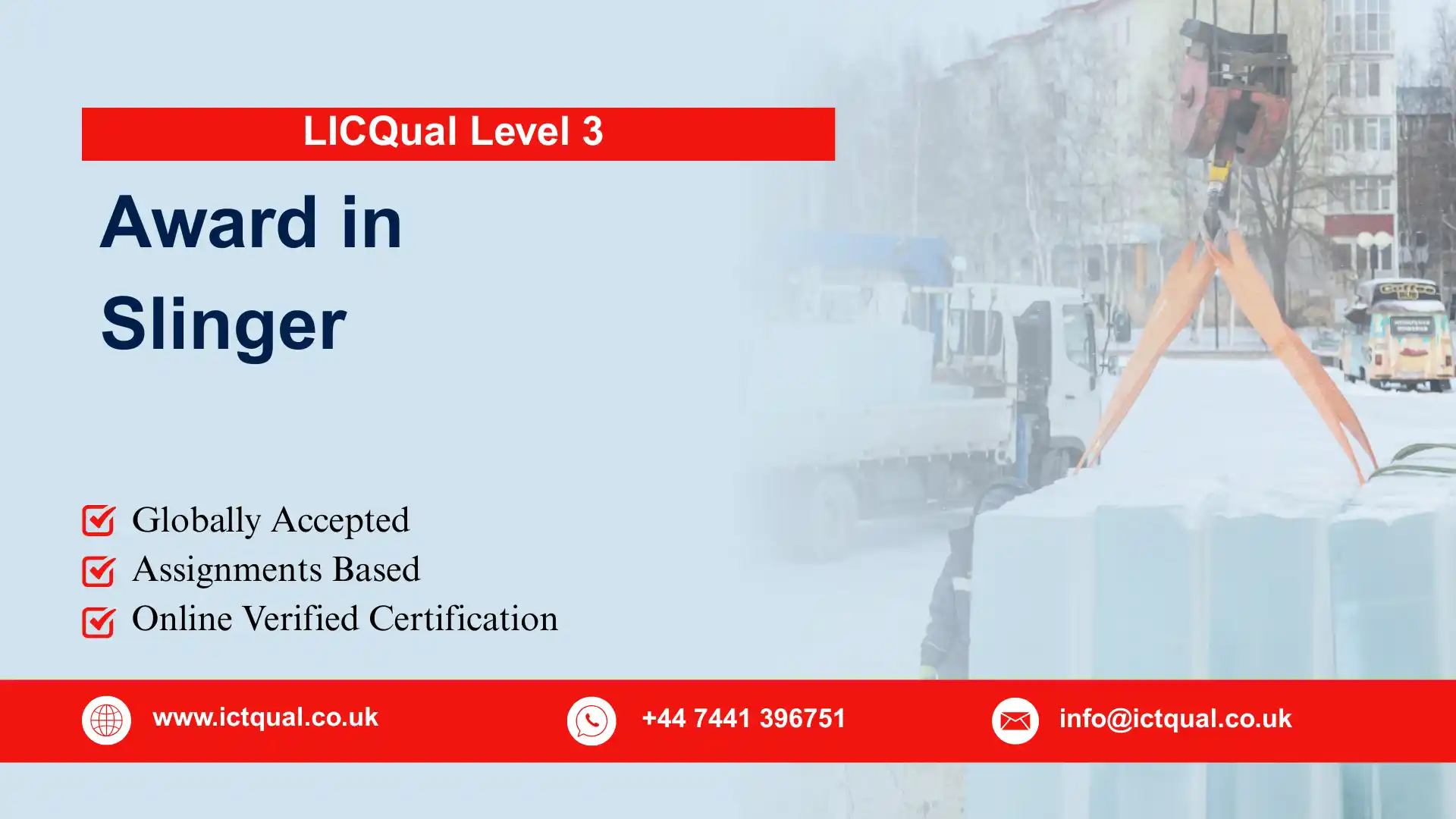
The LICQual Level 1 Certificate in Slinger is an essential qualification for individuals entering the world of lifting operations, particularly in industries like construction, logistics, and manufacturing. This entry-level course provides the foundational skills and knowledge necessary to safely perform slinging and signaling duties, making it ideal for those beginning their careers in the lifting sector. Upon completion, participants will be equipped to work competently on-site, under the supervision of qualified personnel, ensuring safe lifting practices are always followed.
As the demand for skilled professionals in lifting operations continues to rise globally, the LICQual Level 1 Certificate in Slinger provides a strong starting point for individuals seeking to build a career in a highly regulated, safety-conscious industry. LICQual Level 1 Certificate in Slinger course covers the essential aspects of load handling, rigging basics, and safe lifting techniques, ensuring that learners can assist in load movement tasks while maintaining the highest standards of safety.
LICQual Level 1 Certificate in Slinger course emphasizes practical skills, including the correct use of slinging equipment, understanding different load types, and effective communication with crane operators. Learners will gain hands-on experience with lifting gear and equipment, giving them the confidence to safely execute their responsibilities in real-world scenarios. Importantly, the course is structured to ensure that participants grasp the critical importance of health and safety regulations and comply with legal requirements related to lifting operations.
In addition to technical skills, the LICQual Level 1 Certificate in Slinger helps learners understand the risks associated with lifting operations, how to identify hazards, and how to avoid accidents. This knowledge is crucial not only for personal safety but also for contributing to a safe working environment. The qualification is aligned with international safety standards and provides learners with the necessary foundation for advancing in the industry.
Whether you are new to the workforce or transitioning into the lifting sector, the LICQual Level 1 Certificate in Slinger offers a structured, globally recognized path to building your career. This qualification also serves as the first step in progressing to more advanced slinging and lifting certifications, opening doors to new professional opportunities as you develop your skills.
The LICQual Level 1 Certificate in Slinger offers an introduction to slinging and signaling, focusing on the core skills required for safe and efficient load handling. This qualification covers the basics of rigging and lifting operations, making it perfect for individuals just beginning their careers in industries that rely on lifting equipment. Participants will learn how to select appropriate lifting gear, understand load weights, and safely communicate with crane operators to ensure a smooth operation.
LICQual Level 1 Certificate in Slinger course is structured to provide learners with both theoretical knowledge and practical experience. This combination ensures participants can confidently assist in lifting operations while understanding safety regulations and protocols. The practical training includes the correct inspection of lifting equipment, handling loads of different types, and developing awareness of the safety implications of each operation.
This entry-level qualification is recognized internationally and lays a solid foundation for individuals looking to develop their careers in construction, logistics, or manufacturing industries. By the end of the LICQual Level 1 Certificate in Slinger, learners will possess the knowledge to operate responsibly under supervision, with the confidence to take the next steps in their professional journey.
The LICQual Level 1 Certificate in Slinger qualification consists of 6 mandatory units required for completion.
Mandatory Units
| Unit# | Unit Title |
| 1 | Introduction to Slinging and Signalling |
| 2 | Safe Lifting Practices |
| 3 | Selection and Inspection of Lifting Equipment |
| 4 | Lifting and Rigging Techniques |
| 5 | Communication Skills for Lifting Operations |
| 6 | Understanding Safety Regulations in Lifting |
The LICQual Level 1 Certificate in Slinger is designed for individuals who are new to lifting operations or those seeking to formalize their knowledge of safe and effective slinging practices. This entry-level qualification provides the essential skills and understanding required to assist in lifting operations, particularly in industries such as construction, logistics, and warehousing. If you are looking to start a career in the lifting sector or transition into a more safety-focused role, this course offers the perfect foundation.
This course is ideal for:
- Aspiring Slingers and Signalers – Individuals who are new to the lifting industry and wish to gain foundational knowledge in slinging and signaling for crane operations.
- Construction Workers – On-site personnel who want to build safe lifting and rigging practices into their skill set, ensuring proper load handling in a construction environment.
- Warehouse and Logistics Operatives – Those involved in the movement of goods and materials, looking to safely assist in loading, unloading, and transporting heavy items using lifting equipment.
- Entry-Level Workers – Individuals looking to break into the lifting and rigging industry with formal training that boosts employability and enhances safety awareness.
- Health and Safety Enthusiasts – Professionals or individuals interested in understanding and promoting workplace safety through the safe use of lifting equipment in operational environments.
- Supervisors or Site Managers (Junior Level) – Those who wish to supervise or manage lifting operations and ensure compliance with basic safety and operational procedures.
The LICQual Level 1 Certificate in Slinger equips learners with the core skills needed to ensure safe and effective lifting operations under supervision. Whether you’re starting your career or looking to enhance your current skill set, this course will help you build a strong foundation for future career growth in the lifting and construction sectors.
Upon completing this Course students will be able to:
1. Introduction to Slinging and Signalling
- Understand the role and responsibilities of a slinger/signaller in lifting operations.
- Identify the different types of slinging and signalling equipment used in lifting tasks.
- Recognize the importance of clear communication and safety in slinging and signalling activities.
- Demonstrate the ability to apply basic slinging and signalling techniques in a controlled environment.
- Understand the impact of incorrect slinging and signalling on safety and operational efficiency.
2. Safe Lifting Practices
- Recognize and assess the key safety hazards associated with lifting operations.
- Demonstrate the correct use of personal protective equipment (PPE) when participating in lifting tasks.
- Understand the importance of conducting pre-lift checks and risk assessments.
- Apply safe lifting practices to ensure the safety of personnel and equipment during lifting operations.
- Understand how to deal with potential lifting hazards and ensure risk mitigation measures are in place.
3. Selection and Inspection of Lifting Equipmen
- Identify different types of lifting equipment, including slings, shackles, hooks, and chains.
- Demonstrate the correct procedures for inspecting lifting equipment before use.
- Understand the factors to consider when selecting lifting equipment based on load size, shape, and weight.
- Recognize signs of wear and damage in lifting equipment and take appropriate actions to ensure safety.
- Understand the maintenance and storage requirements for lifting equipment to ensure its longevity and effectiveness.
4. Lifting and Rigging Techniques
- Learn how to apply different rigging techniques based on load type, shape, and weight.
- Understand the importance of load stability and how to secure loads effectively during lifting operations.
- Demonstrate safe and effective rigging techniques for a variety of lifting tasks.
- Understand the relationship between lifting angles, rigging configurations, and load distribution.
- Identify common rigging mistakes and how to avoid them to ensure a smooth and safe lifting operation.
5. Communication Skills for Lifting Operations
- Understand the importance of clear and concise communication between the slinger, crane operator, and other team members.
- Demonstrate the ability to use hand signals and verbal communication methods correctly during lifting operations.
- Develop skills to relay instructions effectively and interpret signals accurately in various lifting scenarios.
- Recognize the role of effective communication in ensuring safety and preventing accidents during lifting tasks.
- Understand how to report problems or changes in a lifting plan promptly and clearly to all team members.
6. Understanding Safety Regulations in Lifting
- Understand the legal and regulatory requirements governing lifting operations, including national and international standards.
- Demonstrate knowledge of workplace safety regulations and how to apply them to lifting operations.
- Recognize the responsibilities of employers and employees in ensuring a safe working environment for lifting tasks.
- Understand the importance of maintaining documentation and records to demonstrate compliance with safety standards.
- Apply safety regulations in lifting operations to ensure risk management, compliance, and the overall safety of personnel and equipment.